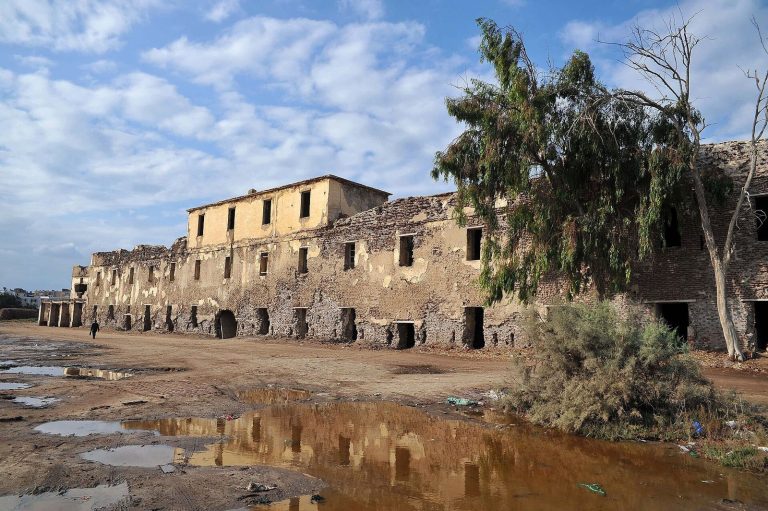
Mendes: An Ancient Egyptian Provincial and Religious Center
Site at a Glance
- Popularity
- High
- Country
- Egypt
- Primary era
- Bronze Age
- Eras represented
- Bronze Age, Iron Age, Classical
- Civilizations
- Egyptian, Ptolemaic
- Site type
- City
On this page14 sections
History
Mendes was an ancient Egyptian city at Tell el-Ruba in Egypt, an important provincial and religious center that briefly served as the country’s capital during the 29th Dynasty (399-379 BCE).
Provincial and religious center
The city stood in the eastern Nile Delta beside the Mendesian branch of the Nile, near its meeting with Lake Tanis. It was the center of the 16th administrative district of Lower Egypt and an important provincial town from the early pharaonic period. Ancient Egyptian names for Mendes included Djedet and Per-Banebdjedet. Anpet is also given as a name for Mendes and associated with the neighboring settlement later called Thmuis.
Hatmehit, a fish goddess, was an early principal deity at Mendes. The ram god Banebdjedet later became the chief focus of worship. He was regarded as a spiritual aspect of Osiris and, with Hatmehit and their child Har-pa-khered, or Horus the Child, formed the Mendesian triad. Banebdjedet was also associated with Ra, Geb, Shu, and Osiris, while the Greeks linked him with Pan.
Herodotus wrote that people in Mendes sacrificed sheep rather than goats. In a separate account of worship at Thebes, he described Zeus with a ram’s head and fleece and recounted an annual rite in which a ram was killed, its fleece placed on a statue, and its body buried in a sacred tomb. Mendes also produced a perfume known as Mendesium unguentum. In Classical times, the district was assigned to the Calasires, a division of the native Egyptian army.
Capital, conquest, and decline
Mendes briefly became Egypt’s capital during the 29th Dynasty, a short-lived line of pharaohs dated to 399-379 BCE. The dynasty’s rulers may have established a royal residence in the city. Nepherites I, the dynasty’s first pharaoh, was associated with Mendes.
The city suffered major destruction after the Persian conquest of Egypt. Its later decline was probably linked to changes in local waterways and canals neglected during Macedonian rule, the period that followed Alexander the Great’s conquest. When Augustus, Rome’s first emperor, oversaw canal repairs, Thmuis had already drawn trade and residents away. The urban focus shifted there, and Mendes ceased to be a significant town during the first century CE. It is nevertheless identified as a district capital under the Roman emperor Vespasian, even though Thmuis had become the principal town.
Later survival and excavation
Substantial ruins may still have stood at Mendes in the fifteenth century. American and Canadian teams excavated the site from 1960 to 1981 and returned during the 1990s. The work included teams from New York University, the University of Toronto, and Pennsylvania State University, with Donald Redford concentrating on the main temple and surrounding areas. A joint University of Washington and University of Toronto team uncovered Nepherites I’s tomb in 1992-1993. Redford concluded that Persian forces had destroyed it.
Remains
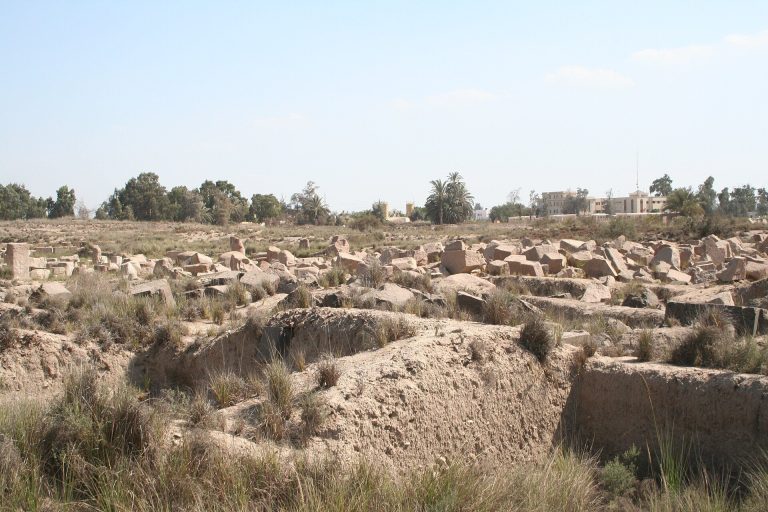
Mendes is the largest surviving tell, or mound formed by successive settlement, in the Nile Delta. The archaeological site includes Tell el-Ruba and its main temple area, as well as Tell el-Timai, the settlement of Thmuis to the south. It extends about 3 km from north to south and averages about 900 m across from east to west; the ancient city occupied at least two mounds. The site lies beside the now-silted Mendesian branch of the Nile, near its former meeting with Lake Tanis.
Settlement layers
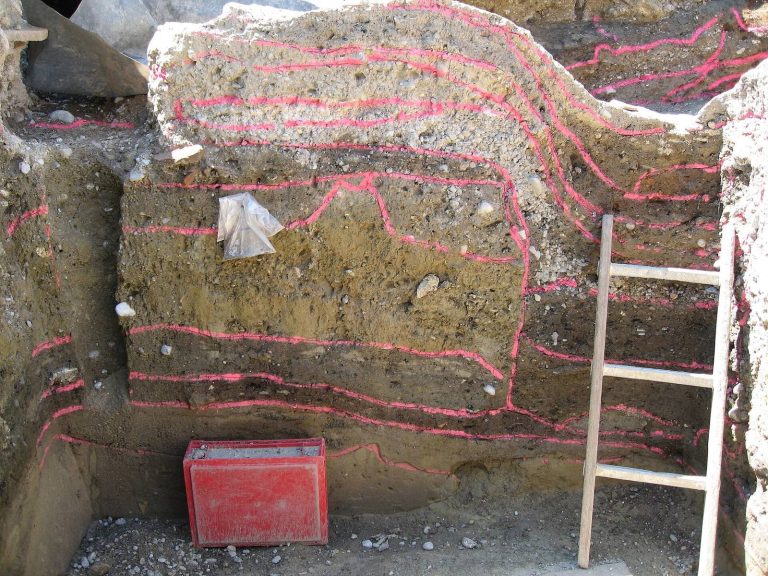
Occupation at Mendes reaches back to Naqada II, an archaeological period in the fourth millennium BCE. A test excavation at the edge of the temple mound revealed continuous layers from the First Dynasty through the Middle Kingdom. Samples from deeper cores suggest that deposits may extend to the earlier Buto-Maadi culture of the Nile Delta. The sequence excavated so far is the longest uninterrupted one in the Nile Delta and may also be the longest in Egypt.
Burial grounds
Old Kingdom cemetery
The Old Kingdom necropolis is estimated to contain more than 9,000 burials. Old Kingdom mastabas, low, flat-topped tombs, have also been found at Mendes.
Sacred ram cemetery
A cemetery for sacred rams occupied the northwest corner of Tell el-Ruba. The animals were buried in black sarcophagi.
Temple precinct
Main temple
The main temple was set on a north-south axis and measured about 70 by 120 m. Its processional plan was arranged for ceremonial movement through the complex, which had four monumental gateways. Objects placed in the foundations indicate building phases reaching at least the Middle Kingdom. A deposit associated with Merneptah lay beneath the second gateway. Later builders buried, incorporated, or built over earlier structures.
Sanctuaries and shrines
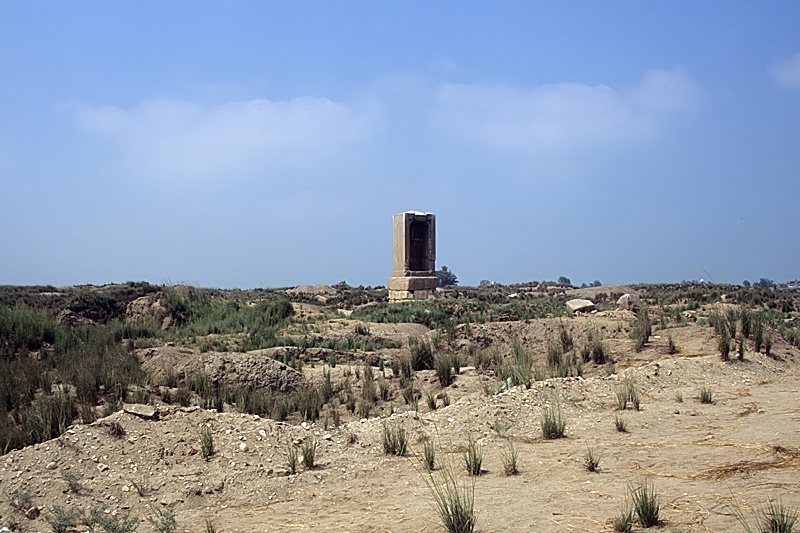
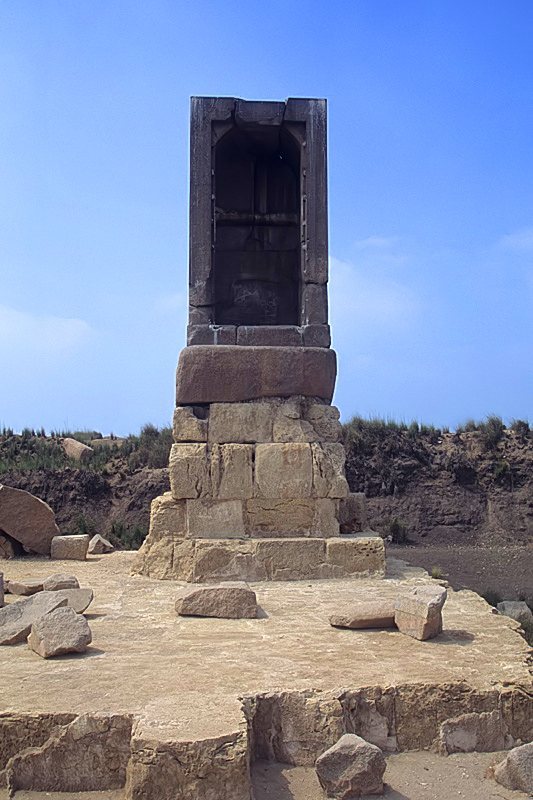
A temple dedicated to Banebdjedet was destroyed by fire around 2200 BCE. Much later, Amasis II built a temple over an earlier sanctuary dedicated to Ra, Osiris, Shu, and Geb. Its four shrines were each carved from a single block and associated with those gods. The surviving red-granite shrine linked to Shu stands nearly 8 m high in the southwest of the complex. Ptolemy II Philadelphus later restored the temple and added papyrus-shaped columns made of red granite.
Sacred lake and ports
A sacred lake lay southeast of the temple, outside its main enclosure. The city’s port complex included the remains of two ports and their warehouses.
Royal tomb and monuments
The remains of Nepherites I’s royal tomb lie in the southeastern corner of the temple precinct. Monuments bearing the names of Ramesses II, Merneptah, and Ramesses III have also been found at the site.