Cist in the Feldmark Rade: A Prehistoric Burial Chamber
Site at a Glance
- Popularity
- Very Low
- Country
- Germany
- Primary era
- Bronze Age
- Eras represented
- Stone Age, Bronze Age
- Civilizations
- Unclassified
- Site type
- Burial
- Remains
- Tomb
On this page7 sections
History
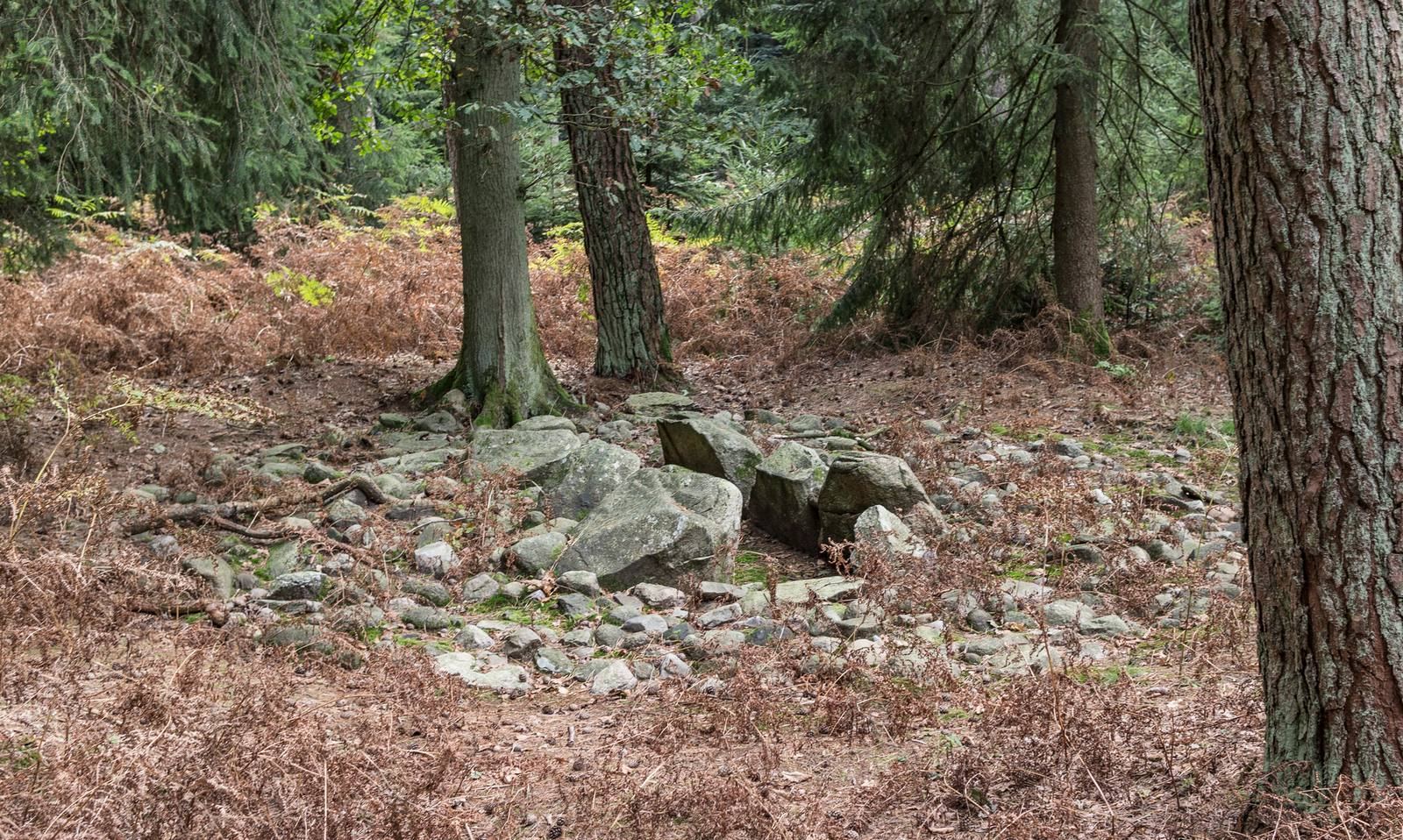
The cist in the Feldmark Rade is a prehistoric stone-built burial chamber in Germany, dated to the final phase of the Neolithic, corresponding here to the first stage of the Central European Bronze Age. Its rare form represents the final stage in the development of stone cists.
Discovery and dating
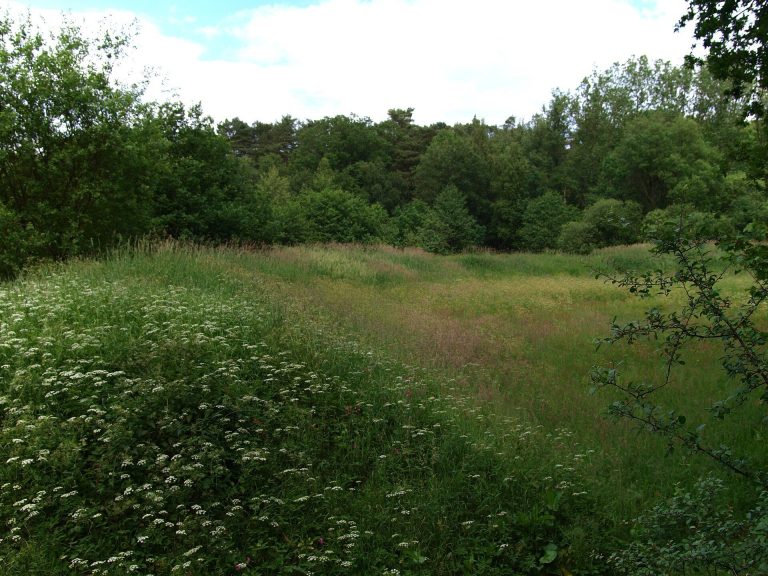
In 1949, W. Rüland found a stone setting in the southeast corner of Grauener Bauernholz near Rade. It indicated that a cist might lie beneath the ground. Removing a thin layer of topsoil exposed the stones packed around the chamber. The grave goods suggest an association with the Single Grave culture, a prehistoric tradition linked to individual burials.
Later deposits and conservation
The chamber’s fill appears to have accumulated in more than one episode. Cremated bone fragments in its middle layer may represent a later burial and probably relate to a separate event from the grave goods. Their small quantity does not rule out a burial, since plant roots can break down cremated remains scattered loosely in soil.
In 2014, the Harburg District Working Group for Practical Archaeology carried out maintenance at the site. After investigation, workers returned an excavated wall stone to a gap on the southwest side and covered the cist with earth to protect its paved floor.
Remains
Chamber and stone setting
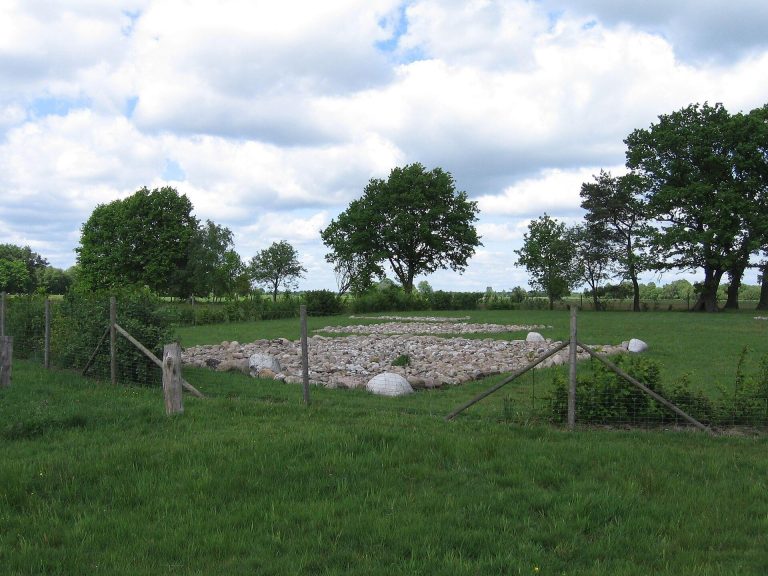
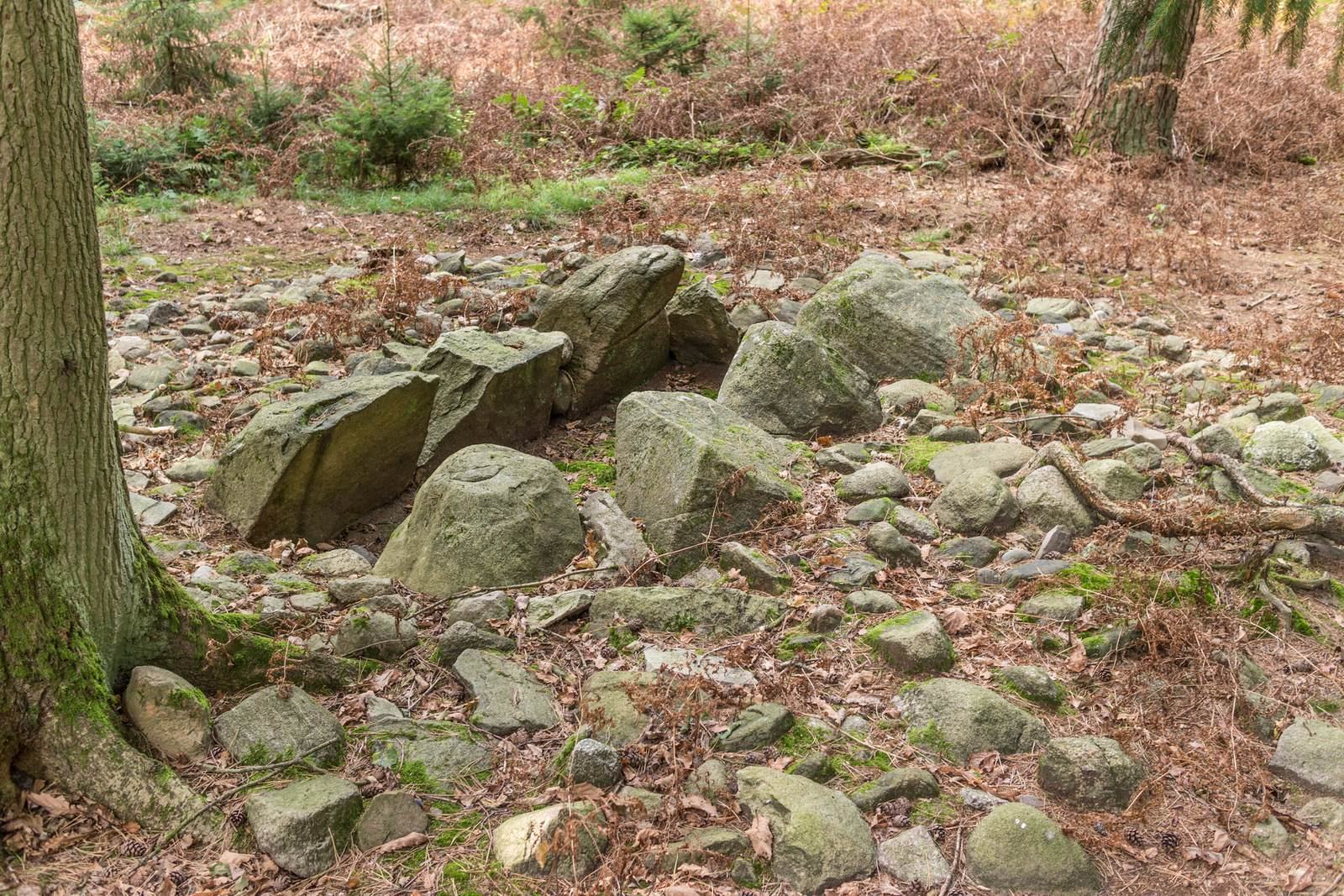
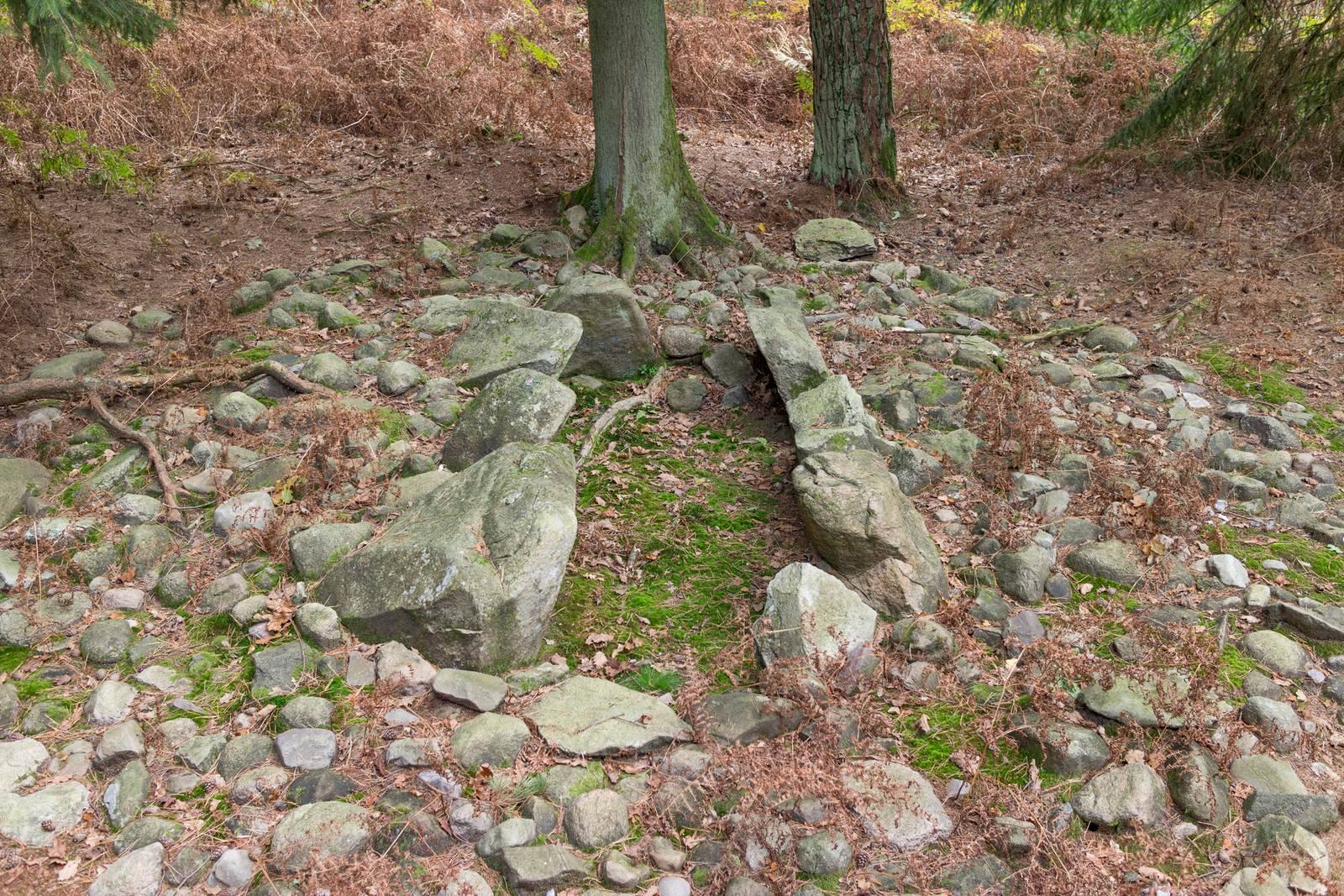
Sunk into the natural ground, the chamber measures 2.8 metres long, averages 1.5 metres wide, and is 0.8 metres high. Rounded stones form an outer setting six metres in diameter. The long sides were arranged with three supporting stones apiece, their flat faces turned inward. The supports lean sharply inward at similar angles, perhaps allowing shorter capstones; narrow gaps or infill stonework close the spaces between them. Two narrow stones form the southeast end. One reaches only halfway up the adjoining support and may have served as an entrance. Rounded stones close the northwest end. The closest comparison for the cist’s overall form is the one at Fehrenbruch, while a rounded-stone end closure is also found at the cist at Deinste in Stade District.
Floor and chamber fill
Flat, unworked fieldstones, split by fire, pave the chamber floor. Loamy sand from the surrounding area filled the space to the level of the natural ground. Its upper 10 centimetres formed a uniformly hard layer, in places like a tamped threshing floor; beneath it lay light-brown sand with lighter and darker patches. The lower fill held many broken flint pieces, some burnt. Burnt flint was concentrated between the paving stones and formed small heaps in places. The fill also contained charcoal fragments, 30 small pieces of cremated bone, found in the middle layer, and seven small pottery sherds.
Burial objects
In the northwest part of the chamber, a large tubular amber bead with lengthwise and crosswise perforations lay above a small clay bowl. The bowl was upside down and broken into two pieces. Four other amber beads, tubular or disk-shaped, were recovered. A small flint axe lay a few centimetres above the paving, while a flint blade with a worked front edge was found somewhat higher. It remains uncertain whether the bowl, axe, blade, and amber beads belonged to one burial assemblage.