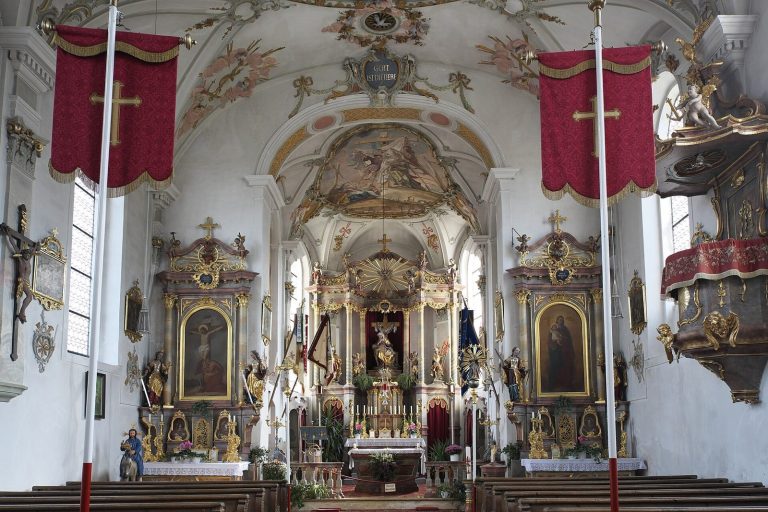
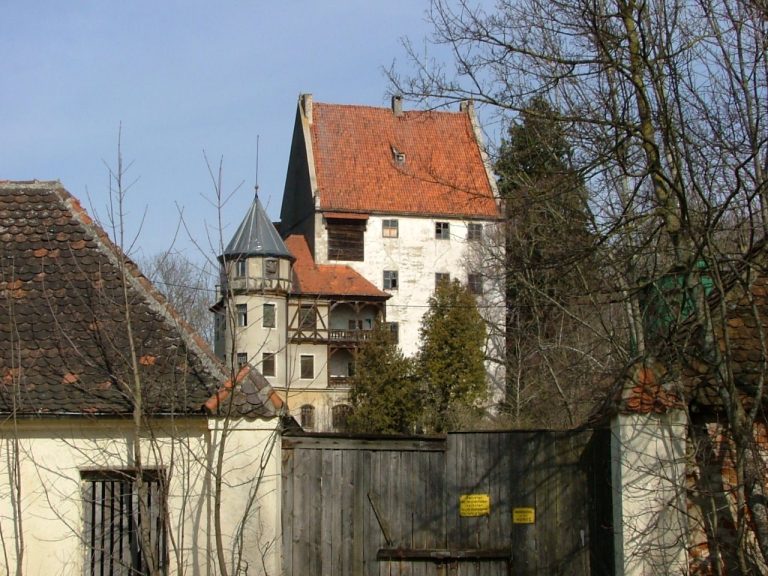
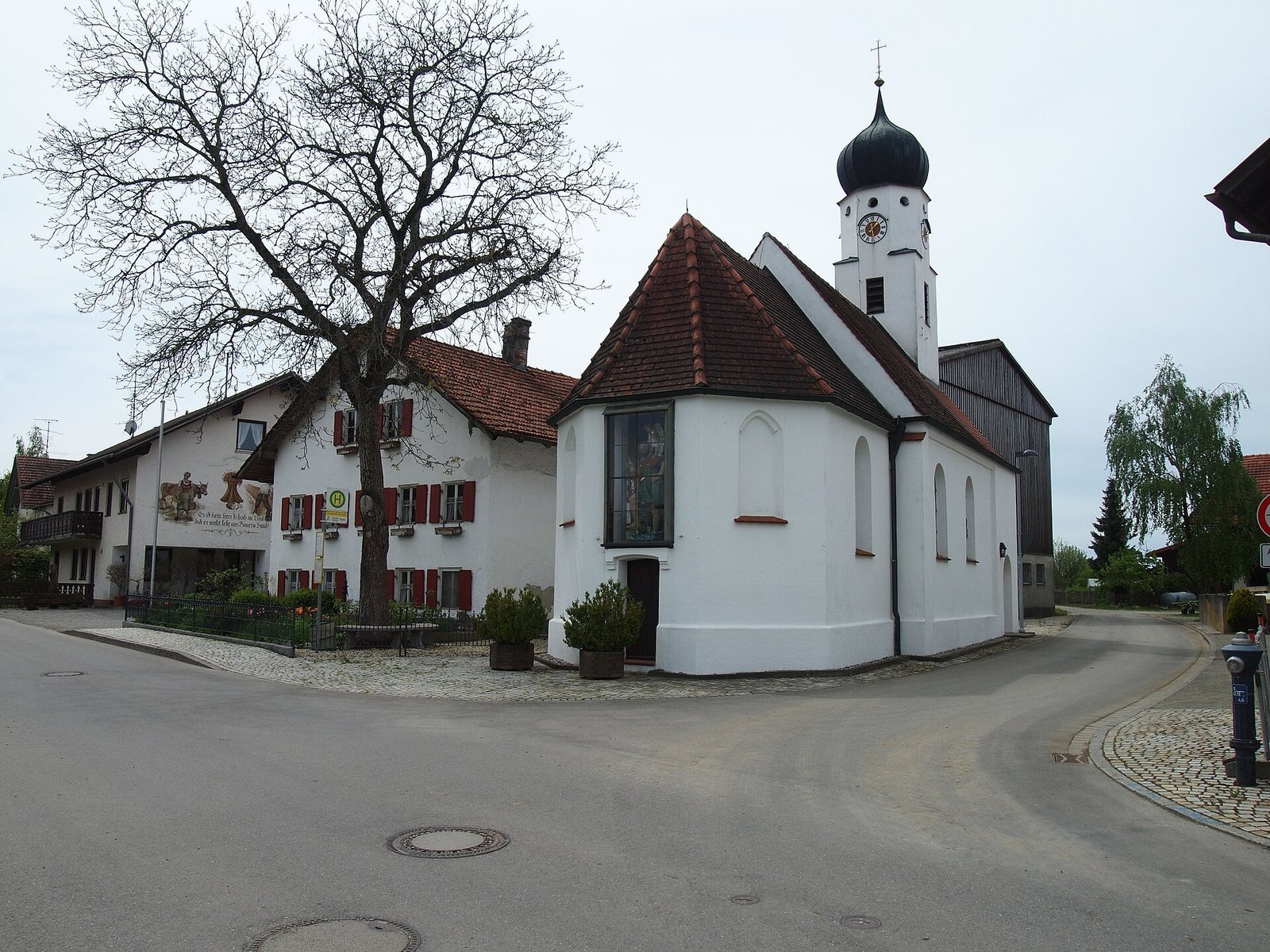
St. Christophorus Chapel in Frankenhofen, Germany
Site at a Glance
- Popularity
- Very Low
- Country
- Germany
- Primary era
- Medieval
- Eras represented
- Medieval, Early Modern, Modern
- Civilizations
- German, Holy Roman Empire
- Site type
- Religious
- Remains
- Chapel
On this page12 sections
History
St. Christophorus Chapel is a Roman Catholic chapel in Frankenhofen, a district of Bad Wörishofen in Swabia, Germany. It belongs to the parish of St. Martin in Schlingen, within the Diocese of Augsburg, and its patronal feast is celebrated on July 24.
Medieval origins and consecration
The chapel’s core probably dates to the late Middle Ages. The present building occupies the site of a late-medieval predecessor, fragments of which survive. A renovation around 1690 preceded the chapel’s consecration in 1697.
Later additions and changes
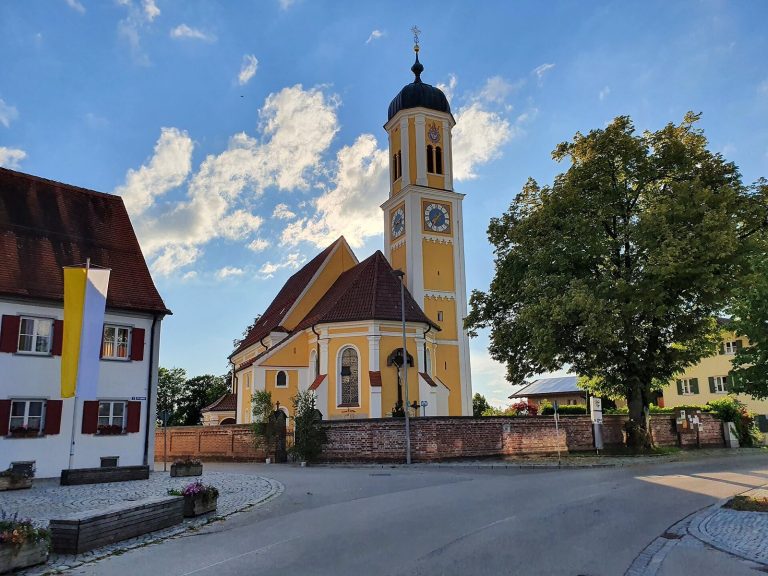
A roof turret topped by a cupola was added in 1745 and renewed in 1818. The tower and entrance porch date to 1949.
In 1899, the community of Schlingen gave the chapel one of its former bells after acquiring a new set. The smaller bell, cast in 1675 by Otto Sartor of Kempten and dedicated to St. Christopher, traditionally invoked as a protector of travelers, was surrendered in 1939 and melted down for wartime use. A replacement was acquired in 1948 from Untereichen. It had been donated to that village by the parish priest Zanker, who was born there, and recast in 1936.
Remains
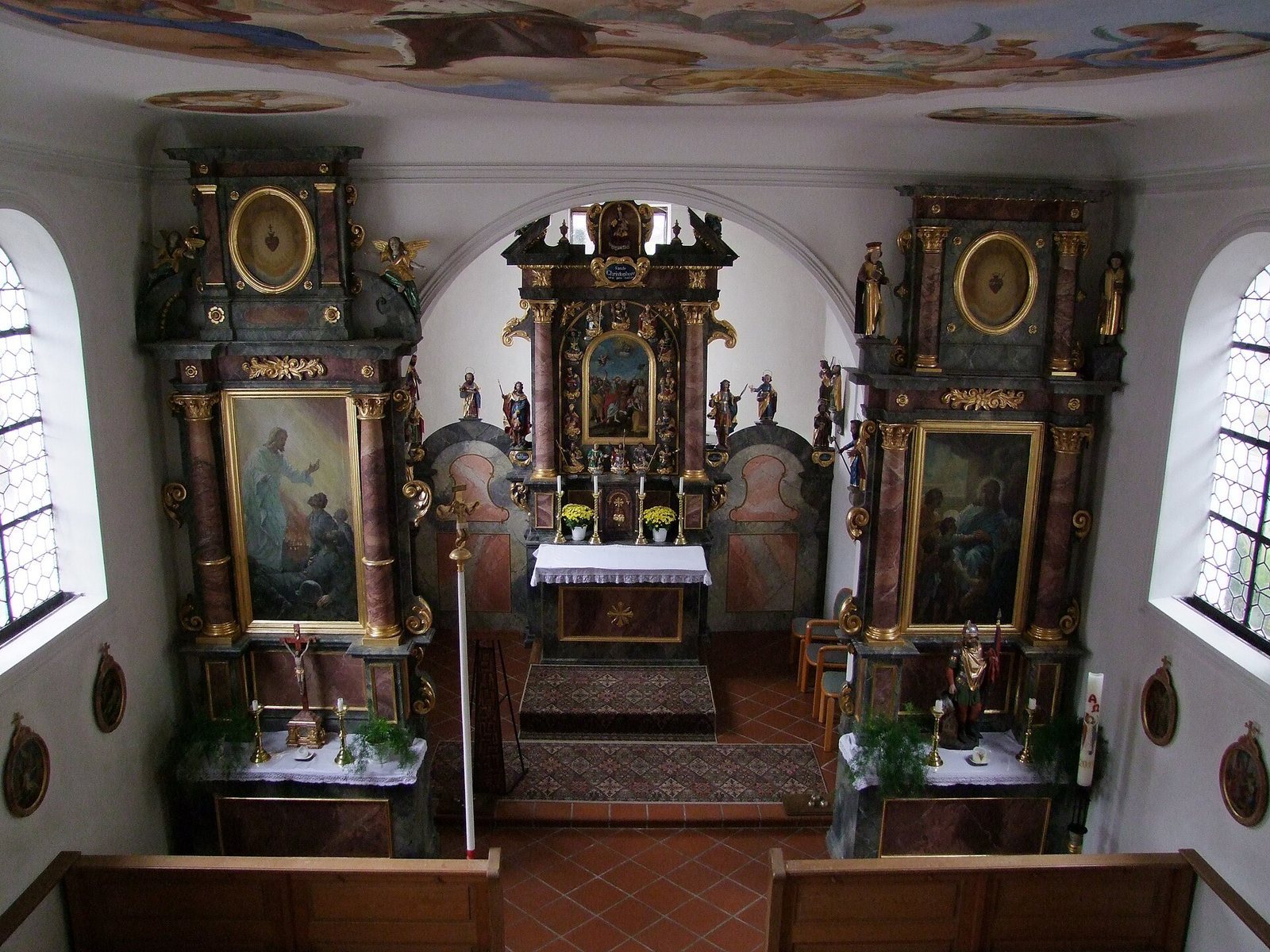
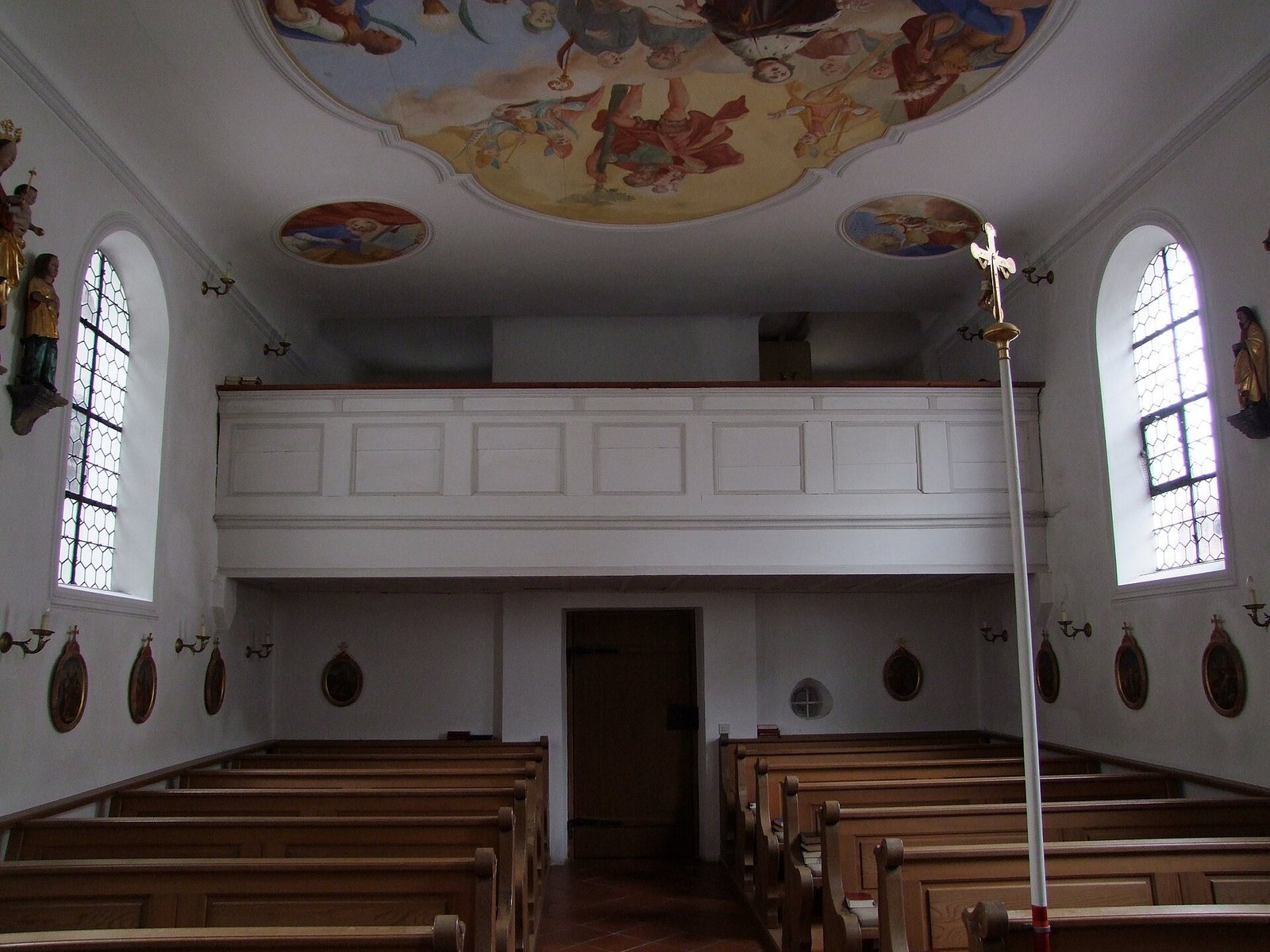
The chapel has a two-bay nave, the main worship space, and a narrower, single-section choir around the altar. The choir ends in a polygon formed by three sides of an eight-sided plan. Both spaces have flat ceilings, with a curved transition above the choir. The windows are round-arched; pointed-arch windows in the choir’s sloping walls are blocked on the exterior. Shallow vertical strips resembling columns mark the nave’s corners. At the west end, a gallery has simple paneling and renewed decorative painting. The eighteenth-century pews have broadly curved sides.
Exterior features and bells
The roof turret has a cupola, while the tower and entrance porch are separate features. Two bells hang in the tower. The smaller bell is the replacement acquired from Untereichen; it was cast in Kempten and weighs about 250 kilograms. Its inscription honors St. Joseph and St. Anthony, commemorates heroes, seeks St. Michael’s protection, and asks for the repose of souls.
Painted decoration and stucco
Stucco is confined to the choir. Dating to around 1740, it combines interlaced strap-like forms and lattice patterns with floral garlands. Anton Joseph Walch, an eighteenth-century German painter, created the ceiling paintings in 1745. The choir painting shows Mary sheltering people beneath her cloak, with views of Frankenhofen and Schlingen. The principal nave painting depicts the glory of the Fourteen Holy Helpers, a group of saints collectively invoked against illness and danger; an inscription names Walch and the year 1745. Oval corner paintings show the Four Church Fathers, major early Christian theologians whose writings helped shape Christian doctrine.
Altars
High altar
The high altar was consecrated in 1697. Its wooden structure is finished to resemble marble and decorated with gilded carved leaves. The altarpiece shows Christ and the Apostles, surrounded by small wooden figures of the Fourteen Holy Helpers. The names attached to these figures were rewritten and corrected several times; the figure labeled Hubert is St. Giles, himself one of the Helpers. Projecting columns flank the figures. On either side, St. Sebastian and St. Roch stand on brackets beneath canopy arches, while angels sit along the straight edges of the upper gable. A round-arched niche above contains a seated Madonna, and round-arched openings flank the altar table.
Side altars
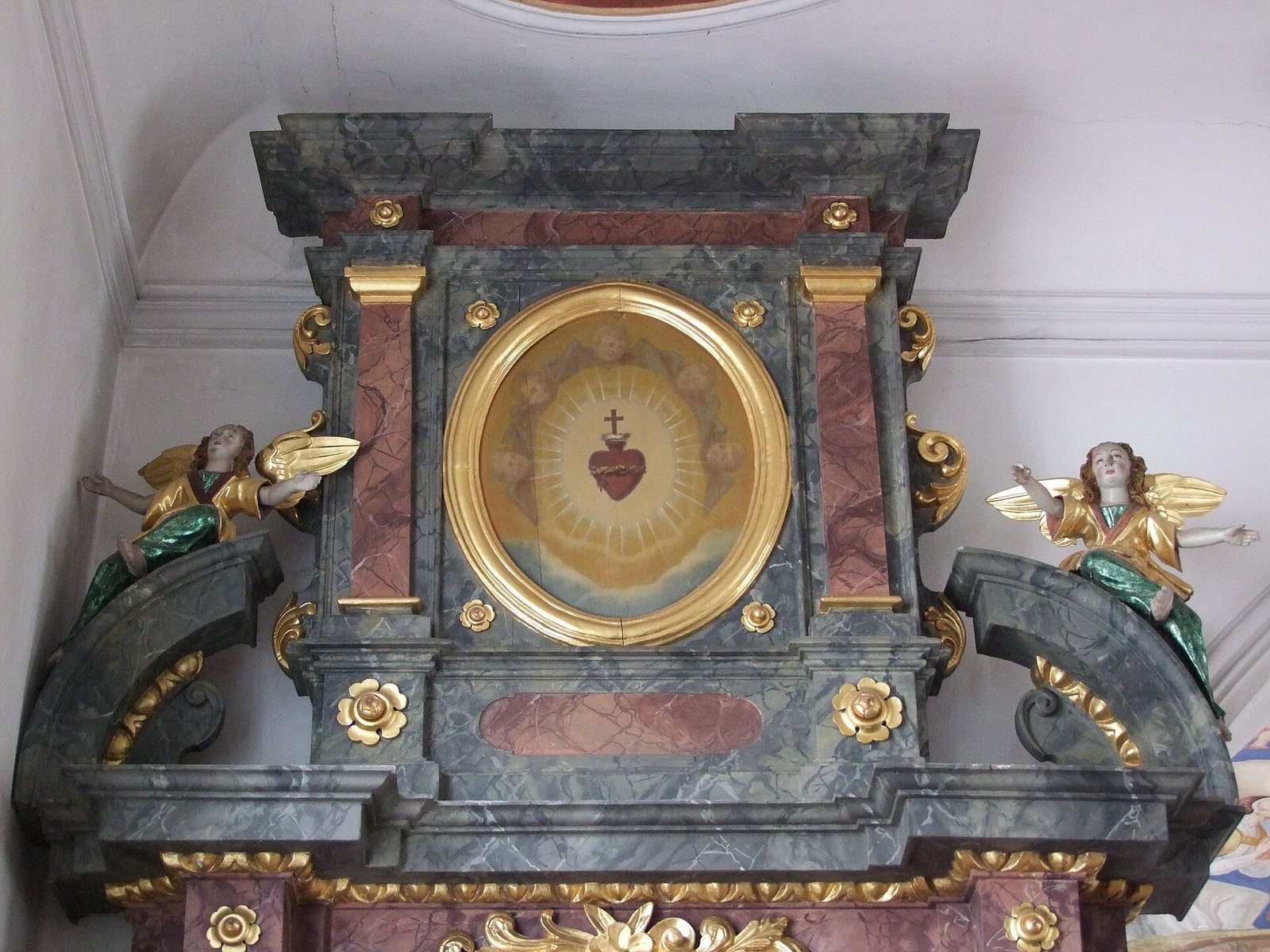
The wooden side altars are painted to resemble marble, and columns flank their altar paintings. The right altar’s upper section contains an oval image of the Heart of Mary, between two small wooden figures of Cosmas and Damian. These late-fifteenth-century twin physicians were venerated as patrons of medicine. The upper section of the north altar has a broken pediment, a divided ornamental top, and shallow wall columns around an oval image of the Heart of Jesus. In 1925, Würzburg painter Peter Würth’s works replaced the older side-altarpieces. The right painting depicts Jesus as the Friend of Children, while the left shows a Dying Warrior.
Sculpture and devotional furnishings
Wooden figures
Figures of the Savior, St. Paul, and the twelve Apostles date to the second half of the seventeenth century, as do two angels. The figures of Our Lady of Sorrows and John date to 1510 to 1520, while a standing Madonna was made around 1520.
Stations of the Cross
The Stations of the Cross came from the parish church in Baisweil. The first bears the name L. C. Weiss and the date 1838; the thirteenth is marked with the name Matthäus Schneider and the date 1903.