Lesconil Gallery Grave: A Late Neolithic Covered Passage
Site at a Glance
- Popularity
- Low
- Country
- France
- Primary era
- Stone Age
- Eras represented
- Stone Age
- Civilizations
- Unclassified
- Site type
- Burial
- Remains
- Tomb
On this page7 sections
History
The Lesconil gallery grave is a prehistoric covered passage in Poullan-sur-Mer, France, dated broadly to 3500–2000 BC. It belongs to the Late Neolithic, the final phase of the Stone Age, and is associated with the Bell Beaker culture, named for its characteristic bell-shaped pottery. Later occupation is associated with the Bronze Age, a prehistoric period characterized by the use of bronze.
In Breton, the names Ti ar c’horriged and Ti-ar-c’horriquet mean “house of the korrigans.” Korrigans are supernatural beings in Breton folklore. A local tale says they played a puck-throwing game on the monument’s stones, accounting for the many stones in nearby fields.
Investigation and protection
M. Halleguen first brought the monument to attention. Jean-Marie Abgrall, a Breton priest and antiquarian, described it and excavated it in July 1881. In August 1891, Abgrall and archaeologist Paul du Châtellier carried out a more extensive excavation.
Du Châtellier sought historic-monument status for the site in 1884. It received that classification by order on 18 March 1922, following the efforts of military officer Alfred Devoir and prehistorian Louis Capitan. The French state acquired the monument in the early 1970s.
Remains
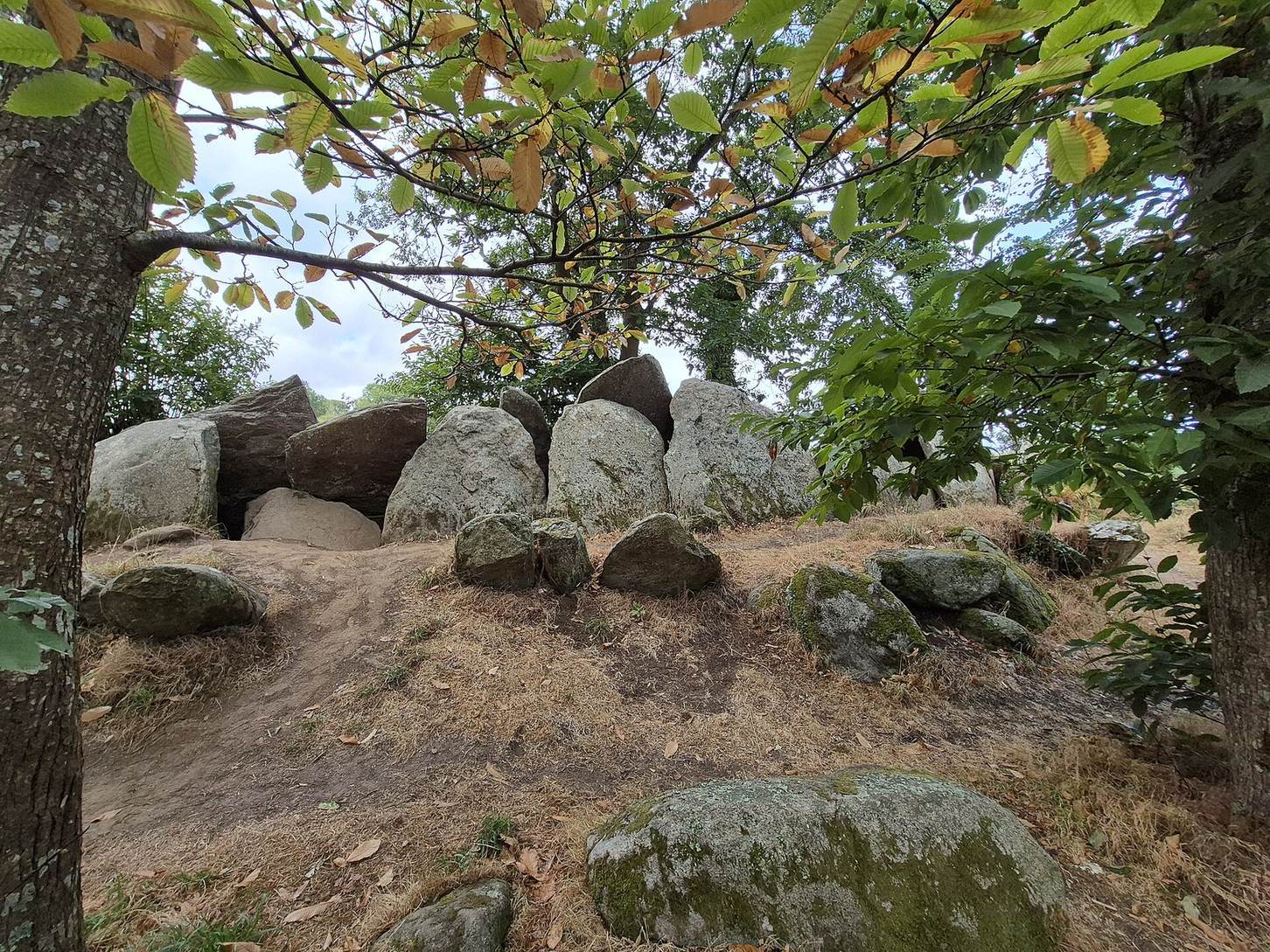
The passage stands on a hill at about 78 m elevation, roughly 200 m northeast of a high point. Its long axis runs southwest to northeast, with a ring of stones surrounding the structure.
Passage and mound
Covered passage
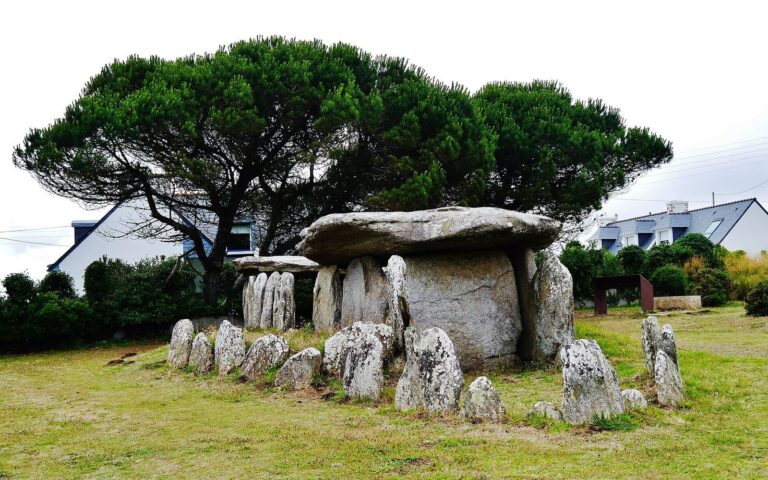
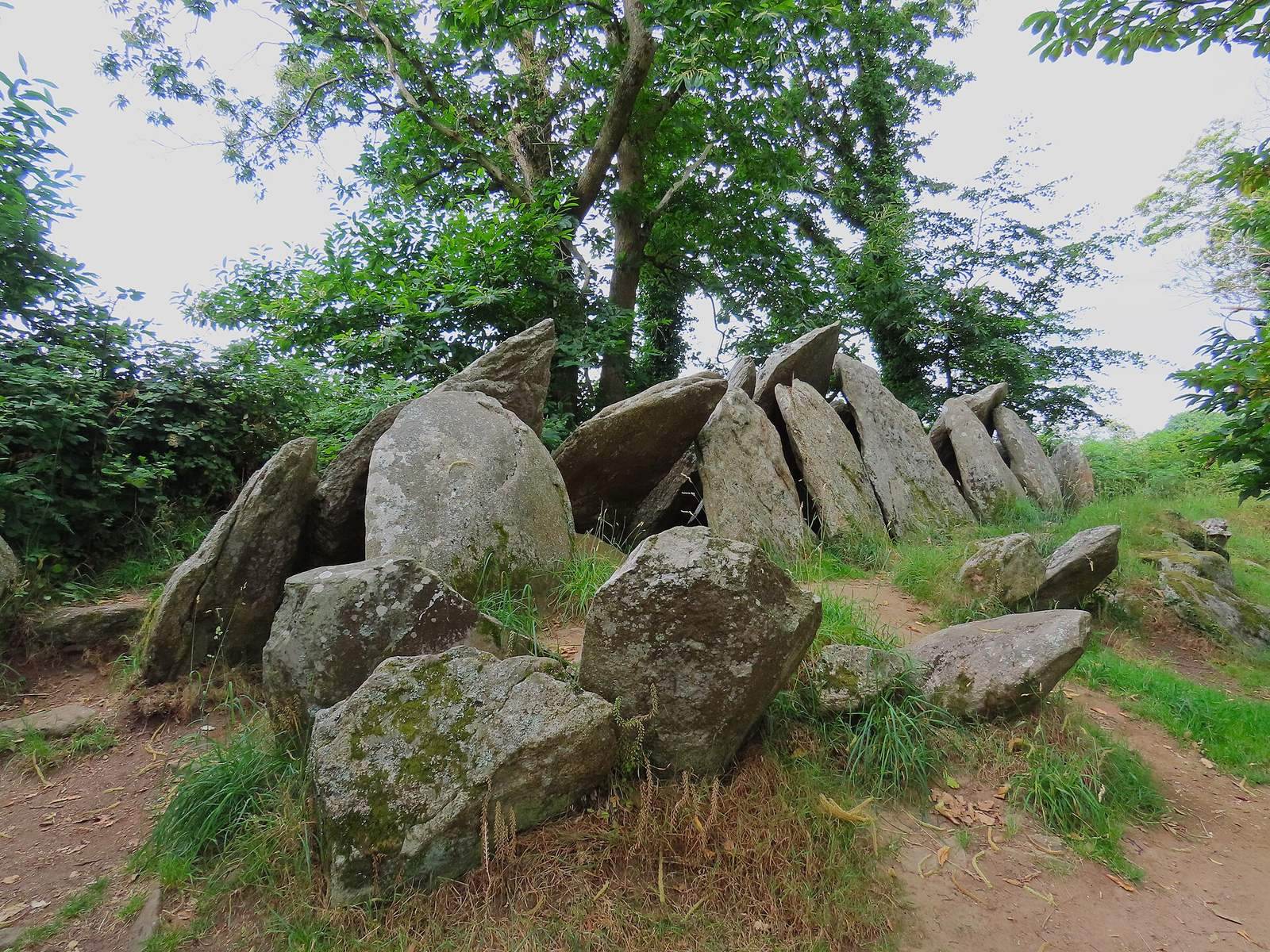
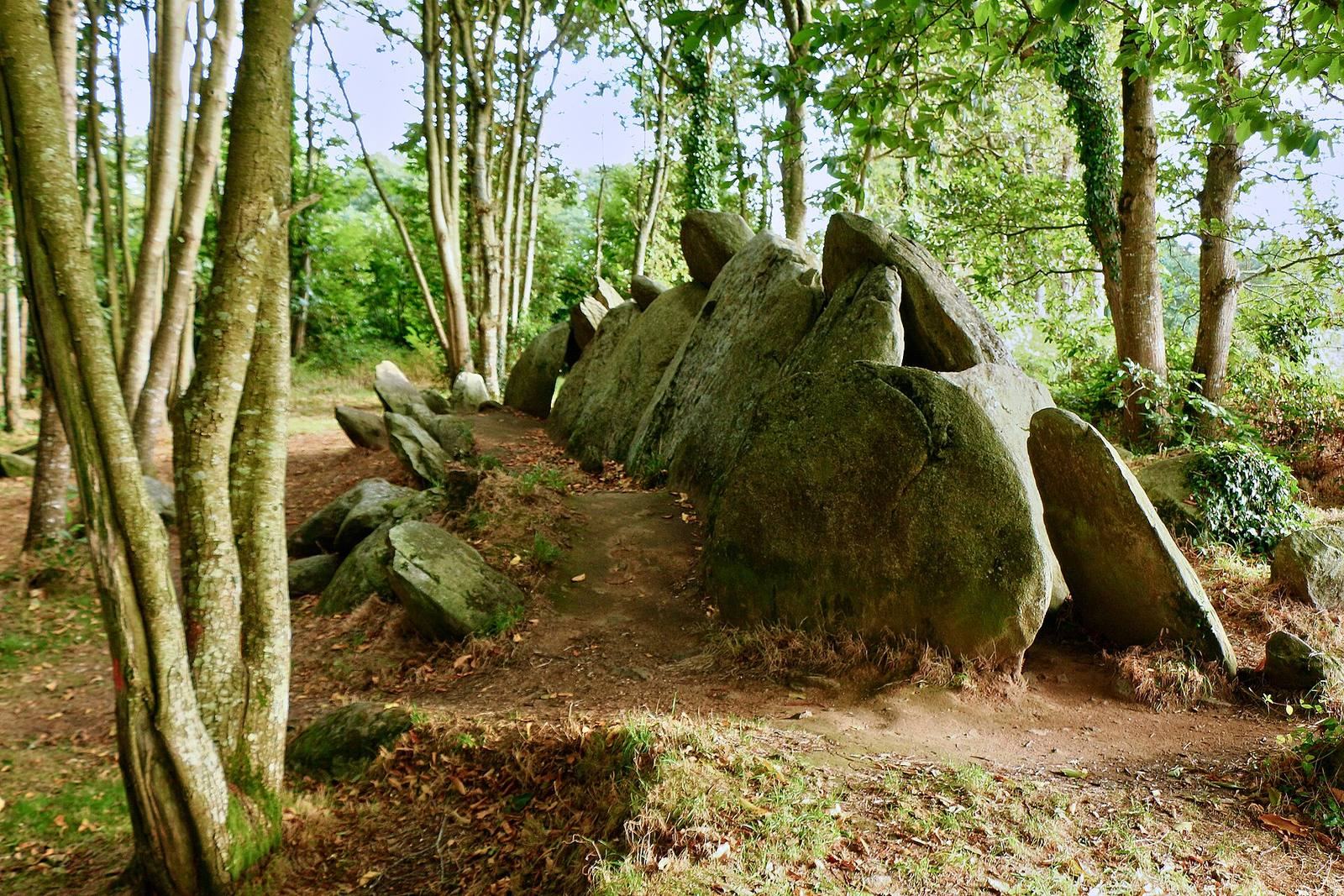
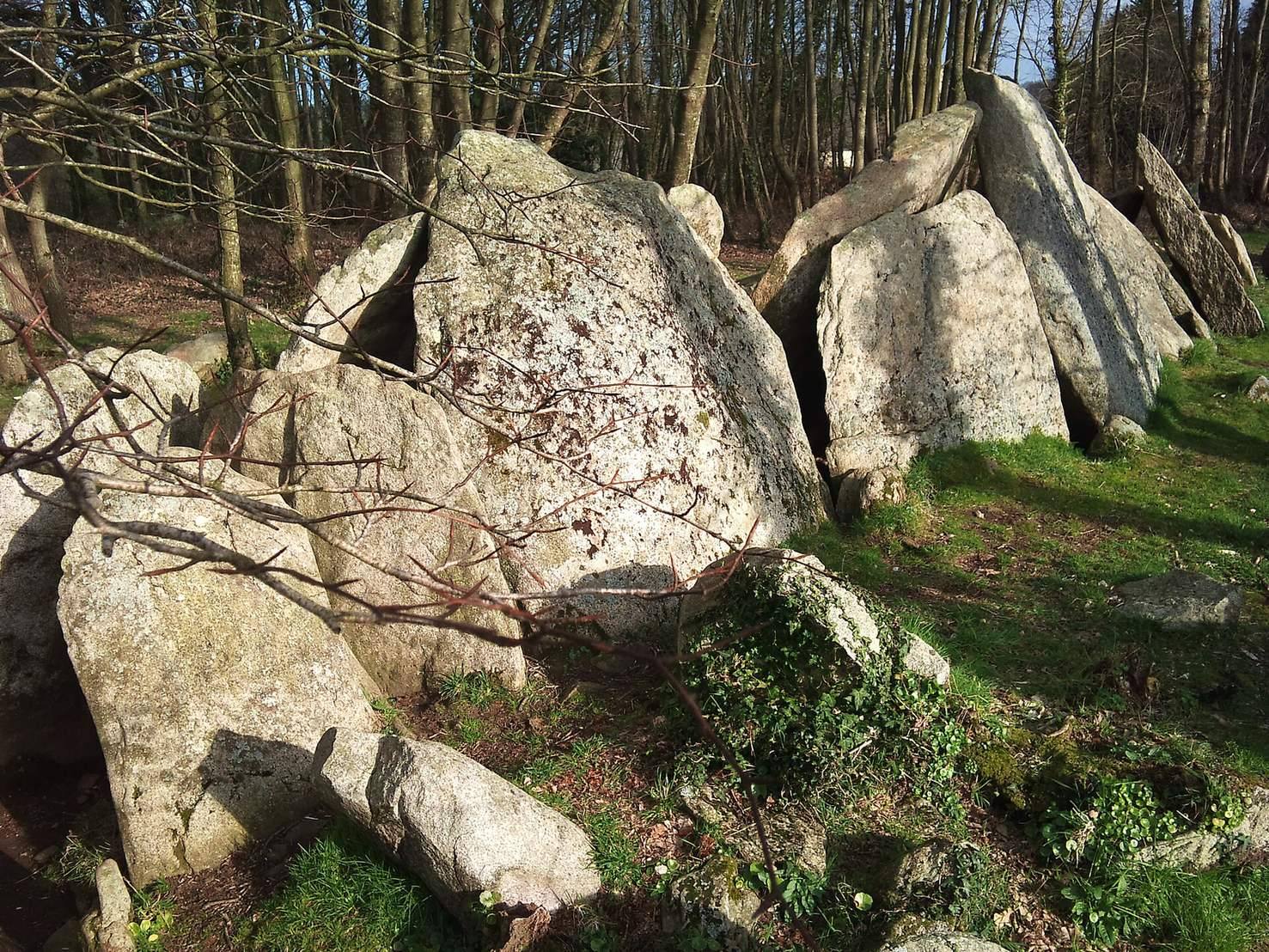
The passage is built from granodiorite, a type of stone, and formed by eighteen upright slabs. Seven stones line each side, two close the ends, and two create a small terminal chamber at the northeastern end. The side slabs lean inward and meet overhead, forming the vaulted roof. Du Châtellier measured the structure as 12.5 m long, 2.15 m wide on average at the bases of the uprights, and 2.4 m high beneath the vault. This inclined-slab construction is described as occurring only in Brittany.
Stone ring and mound
A ring of 27 stones lies about 0.75 m from the passage and served as a buttress. Thirteen stones are on its northwest side and fourteen on the southeast. A cairn, or mound of stones, once filled the space between the passage and the ring. The ring marked an oval mound measuring 14 by 5 m; the mound was later removed.
Excavators found the entrance blocked with rubble. Du Châtellier proposed that the obstruction could have been added much later, when stones were cleared from nearby fields.
Excavated finds
Abgrall found a wheel-made urn containing cremated remains and assigned it to the Gallo-Roman period, the era of Roman rule and cultural influence in Gaul. The later excavation uncovered yellow clay mixed with ash deposits about 0.25 m deep. Its finds included two Bell Beaker vessels, one round-bottomed and the other flat-bottomed, along with pottery fragments. Other objects comprised a polished diorite axe, a small fibrolite axe, a partly polished diorite hammerstone, a stone used for crushing grain, and a slate arrowhead.