Aarhus Cathedral School: A Historic School for Church and Higher Education
Site at a Glance
- Popularity
- Medium
- Country
- Denmark
- Primary era
- Modern
- Eras represented
- Medieval, Early Modern, Modern
- Civilizations
- Danish
- Site type
- Civic
- Remains
- School
On this page13 sections
History
Aarhus Cathedral School is an educational institution in Aarhus, Denmark, known to have existed by 9 February 1195. Its precise foundation date is unknown. On that date, Bishop Peder Vognsen donated books to the school. Formerly called Aarhus Latinskole, it has operated continuously since then and remained on the same site.
Medieval origins and church service
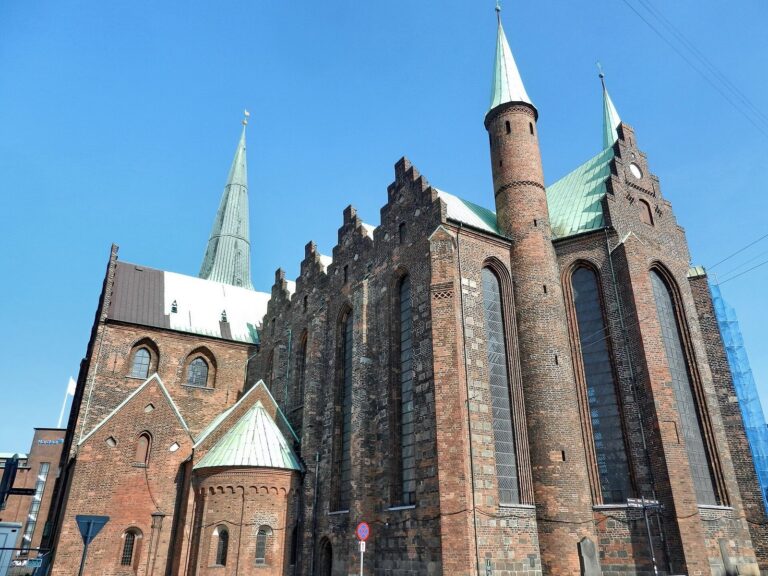
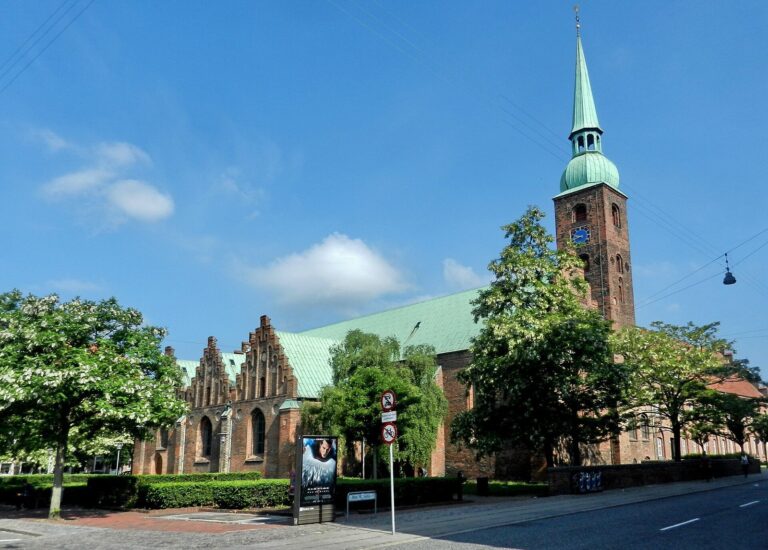
As a Catholic church school, Aarhus Cathedral School prepared pupils for service at the Church of St. Clement. Construction of the church began around 1200, and by about 1300 it had become Aarhus’s new cathedral.
Morten Børup, a former pupil, served as rector around 1490 to 1520 and is described as the school’s first rector. Steen Steensen Blicher’s poem In Skanderborg’s Meadows, about Børup, refers to the institution by its former name, Aarhus Latinskole.
Education and public life
The school remained Aarhus’s only institution of higher learning until other schools were established. Den Videnskabelige Realskole operated from 1839 to 1853, and Marselisborg School followed in 1898. Ole Rømer graduated from Aarhus Cathedral School in 1662, while N. F. S. Grundtvig studied there from 1798 to 1800.
Ownership and modern role
During the Reformation, the religious movement that led to Protestant churches in much of northern Europe, the Danish monarchy confiscated the school. Ownership passed to Aarhus County, a county-level local authority, on 1 January 1986. After Denmark abolished its counties in 2007, the school became an independent institution that owns its own assets.
The school’s buildings received legal protection in 1996, with a few exceptions. Aarhus Cathedral School offers Denmark’s three-year STX programme, a general upper-secondary matriculation programme, with electives in natural sciences, social sciences, and the arts.
Remains
The school stands in the Latin Quarter of Aarhus’s Midtbyen neighbourhood, within an area bounded by Mejlgade, Kystvejen, and Skolegyde. Its first buildings were completed around 1200. The oldest identified remains are medieval foundations of a gate building.
School buildings from the eighteenth to twentieth centuries
The white building
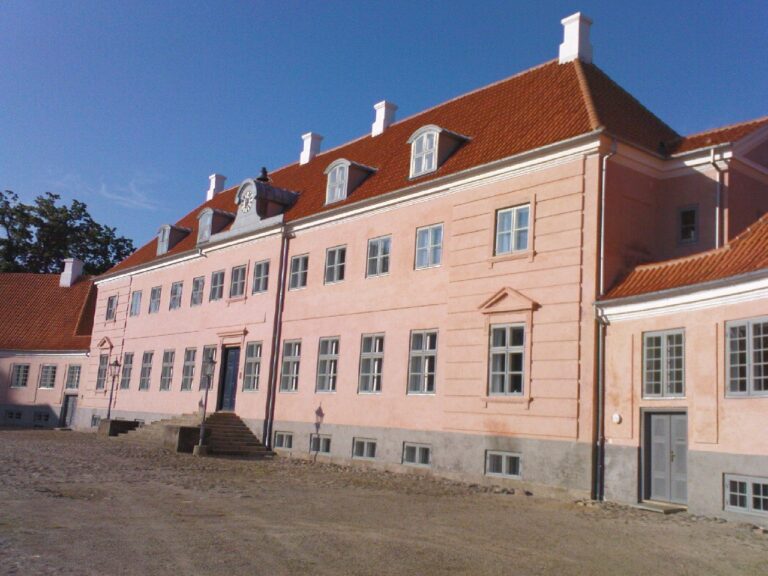
Designed by Christian Jensen Mørup and dated to the mid-1760s, the white building was originally Classicist, a style drawing on ancient Greek and Roman forms. Jørgen Hansen Koch extensively remodelled it in 1849, giving it a Neoclassical appearance, a later revival of classical design.
The rector’s house at Mejlgade 6
Dated to 1808, this rector’s house is Classicist in style and draws on the use of that style in Copenhagen.
The yellow building
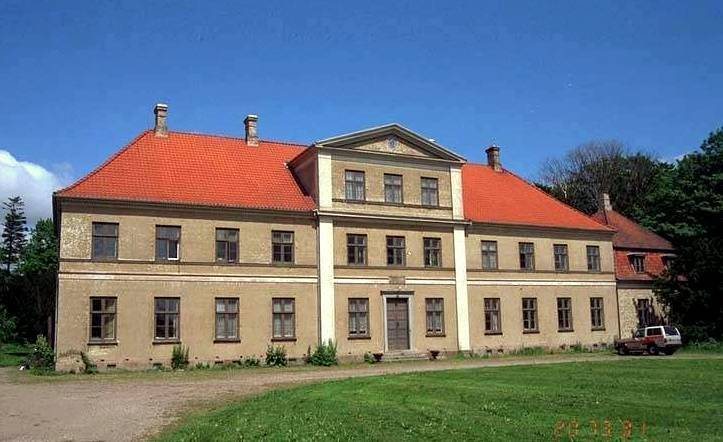
This building dates to around 1800 and has undergone several remodellings. It first served as a rector’s residence and became part of the school in 1957.
The rector’s residence of 1865
Another rector’s residence, dated to 1865, is attributed to the architect V. Th. Walther.
The red building
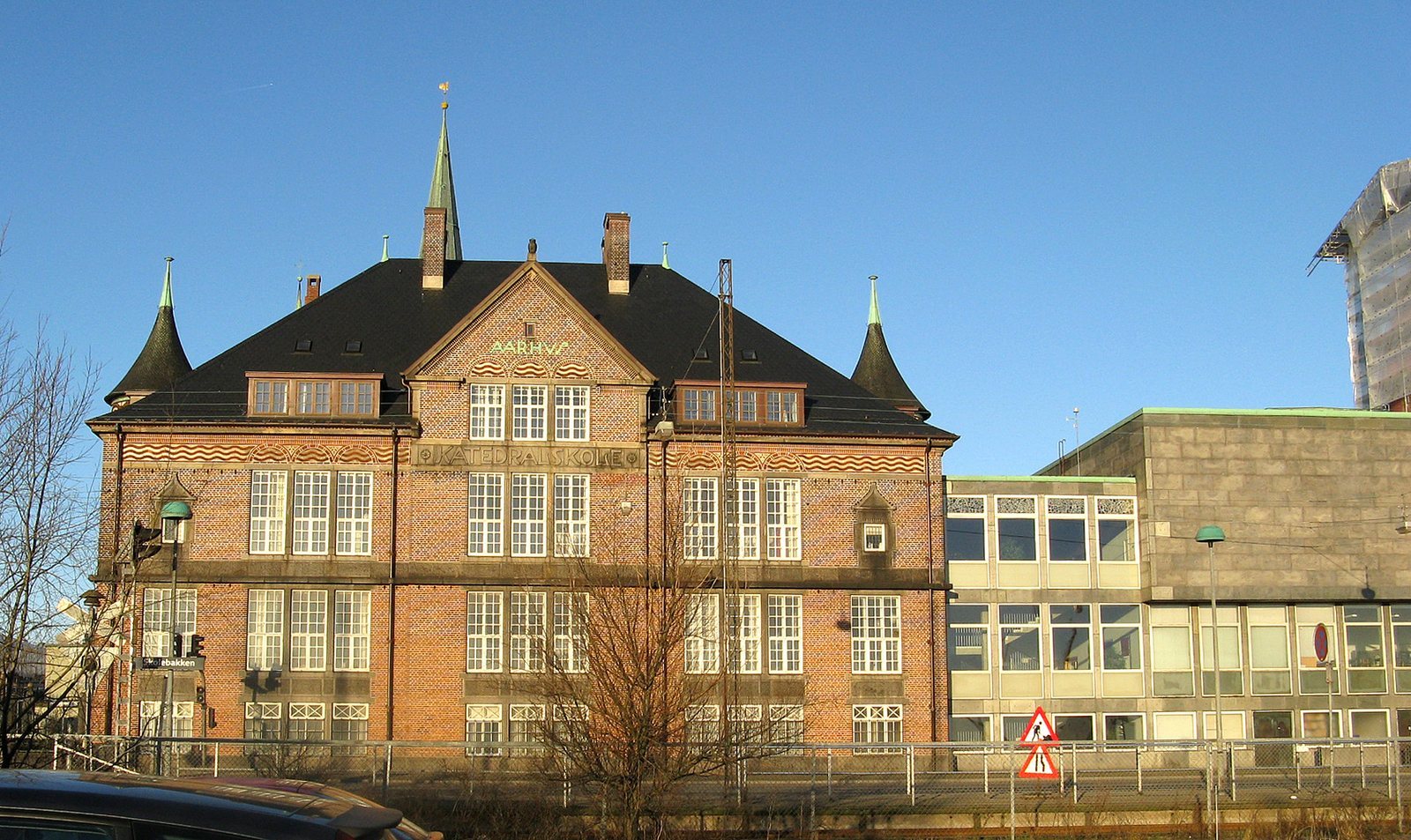
Designed by Hack Kampmann and dated to the early twentieth century, the red building is in the Art Nouveau style, associated with flowing lines and organic ornament.
The grey, or new, building
Designed by C. F. Møller and built in 1956 to 1957, the grey building has a modernist design with simplified forms. Its minimalist, functionalist approach limits ornament and emphasizes practical use. The building also bears some resemblance to Aarhus City Hall.
Inscription
On a wall facing the cathedral, a motto reads Nil non mortale tenemus pectoris exceptis ingenii bonis, meaning “We possess nothing immortal except the good qualities of heart and mind.” The quotation comes from book 3, poem 7 of Tristia, a collection of elegiac poems written during the Roman poet Ovid’s exile.