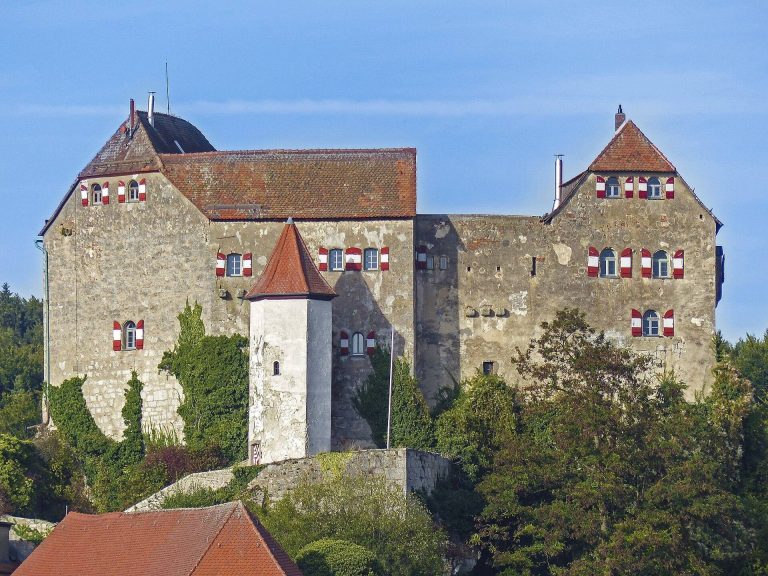
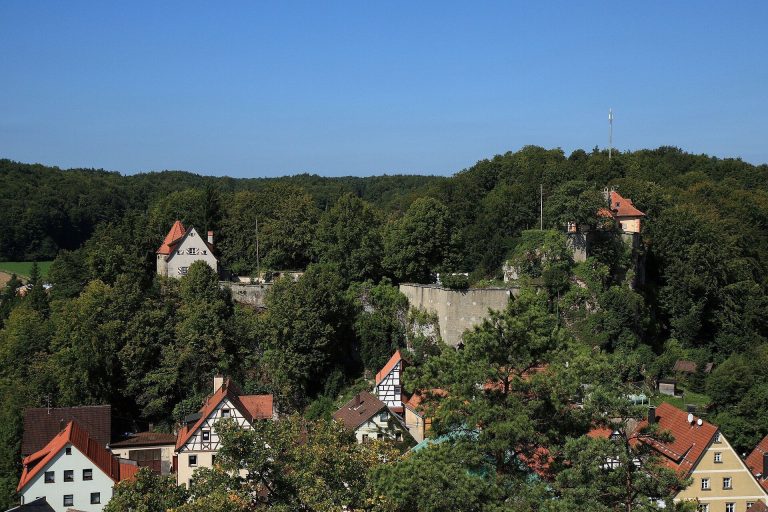
Strahlenfels Castle: A Medieval Fortress in Germany
Site at a Glance
- Rating
- 4.4
- Popularity
- Very Low
- Country
- Germany
- Primary era
- Medieval
- Eras represented
- Medieval
- Civilizations
- Holy Roman Empire
- Site type
- Military
- Remains
- Castle
On this page10 sections
History
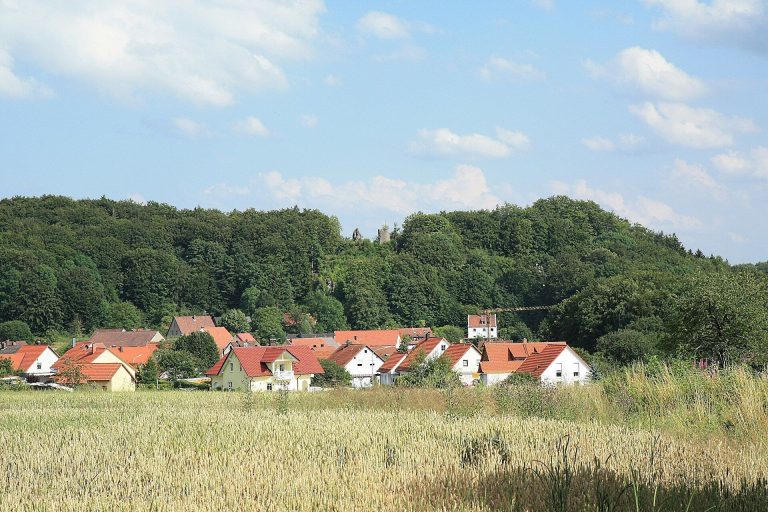
Strahlenfels Castle was a medieval fortress above Strahlenfels village near Simmelsdorf, Germany, probably built around 1250. Its name appears in a 1254 document that lists Heinricus de Stralenvels as a witness. The castle later served as a residence and administrative centre under several noble and royal authorities.
Origins and transfer to the Wildensteins
In the late thirteenth century, the rising Wildenstein family built Wildenfels within sight of Strahlenfels. The owners of Strahlenfels stood in the family’s way. Around 1310, the Strahlenfels family apparently moved its base to a newly built water castle at Reichenschwand. During the first quarter of the fourteenth century, it transferred Strahlenfels to the Wildensteins.
Heinrich V of Wildenstein was living at Strahlenfels in 1330, while his brother Dietrich III lived at nearby Wildenfels. Heinrich was again associated with Strahlenfels in 1335. On 21 January 1354, he changed the castle from land held freely into a Bohemian fief, meaning land held under the authority of the King of Bohemia, and granted the king access to it. On 4 December 1360, Heinrich sold the fortress to Charles IV, King of Bohemia and Holy Roman Emperor, for 1,900 pounds of Heller, a medieval unit of account based on the Heller coin. Charles directed Nuremberg to pay Heinrich and his sons Dietrich VI and Heinrich VIII from imperial tax revenues. The family acknowledged receiving the money in 1362. Strahlenfels served as a Bohemian administrative seat in 1366–68.
Palatine rule and the Wildenstein return
During the conflict between Rupert, King of the Romans, and Wenceslas, King of Bohemia, Rupert apparently captured the castle in 1400. The following year, Albrecht von Egloffstein received it as a pledge. Strahlenfels was nevertheless to remain an “open house” for the Palatinate, allowing Rupert’s forces to use it in wartime.
After an inheritance division among Rupert’s sons, the Strahlenfels administrative district passed to Count Palatine John of Neumarkt, a high-ranking territorial prince of the Holy Roman Empire. John pledged it to the knight Hermann von Freudenberg. The pledge was later redeemed, and John sold Strahlenfels to the Wildensteins in 1426. The owner was probably Martin von Wildenstein, who died in 1466. The family entrusted the castle’s administration to a bailiff, an official who managed an estate or district.
On 9 March 1450, during the First Margrave War, a conflict involving Nuremberg and the Margraves of Brandenburg-Ansbach, Nuremberg forces captured the outer bailey. This fortified outer enclosure probably stood at the rock’s southern foot.
Decline and later ownership
After the Landshut War of Succession, a conflict over the inheritance of the Duchy of Bavaria-Landshut, the Wildensteins apparently lost interest in Strahlenfels and stopped maintaining it during the sixteenth century. Major structural damage was recorded in 1547. By 1589 the castle was barely habitable, and it was abandoned soon afterward because the manor did not earn enough to cover the bailiff’s salary. Stone was apparently being quarried from the castle by the early seventeenth century.
After the Battle of White Mountain in 1620, a Habsburg victory over Bohemian forces near Prague, Bavaria occupied the Upper Palatinate. Elector Maximilian I, Bavaria’s ruler and one of the princes entitled to participate in choosing the Holy Roman Emperor, confiscated the Wildensteins’ property and granted the Strahlenfels manor to the Catholic Eytel Hanns Truchsess von Höfingen. His death in 1637 led to an inheritance dispute. In 1655 the manor returned to the Wildenstein brothers Hans Christoph and Friedrich Oktavian, who had converted to Catholicism.
In 1759, Ernst Ludwig von Wildenstein sold the manor to the merchant Johann Friedrich Wilhelm Buirette von Oehlefeld. The Buirette family attained baronial rank in 1771 and retained the property within the family. By 1829, a small number of castle remnants remained visible. The Bavarian State Office for Monument Preservation lists the site as both a building monument and an archaeological monument, with medieval and early-modern archaeological evidence.
Remains
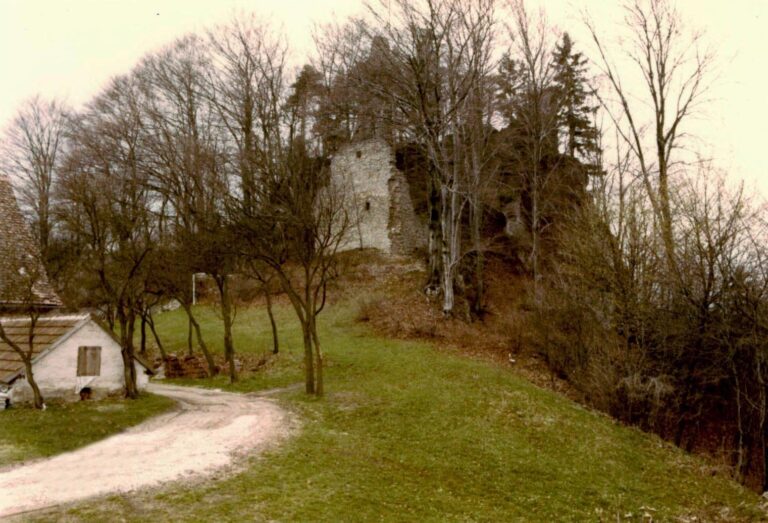
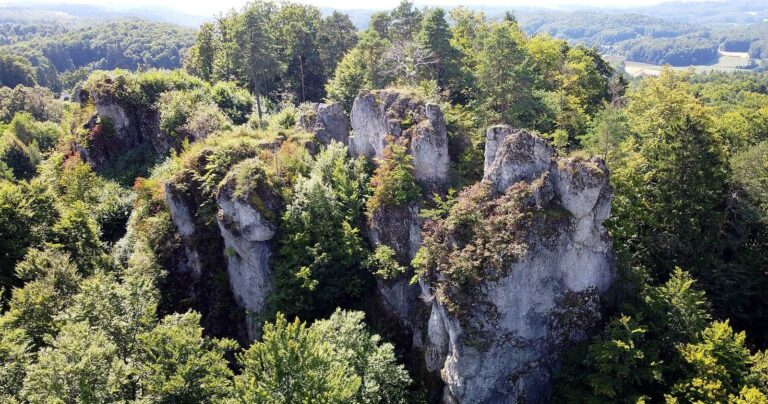
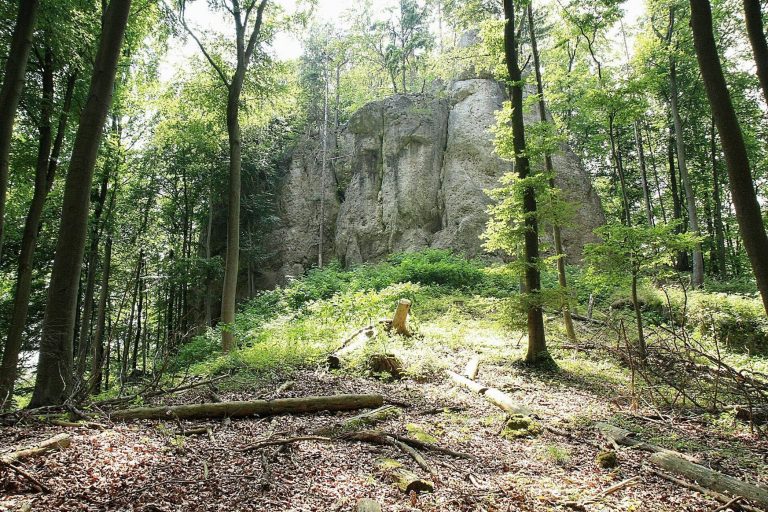
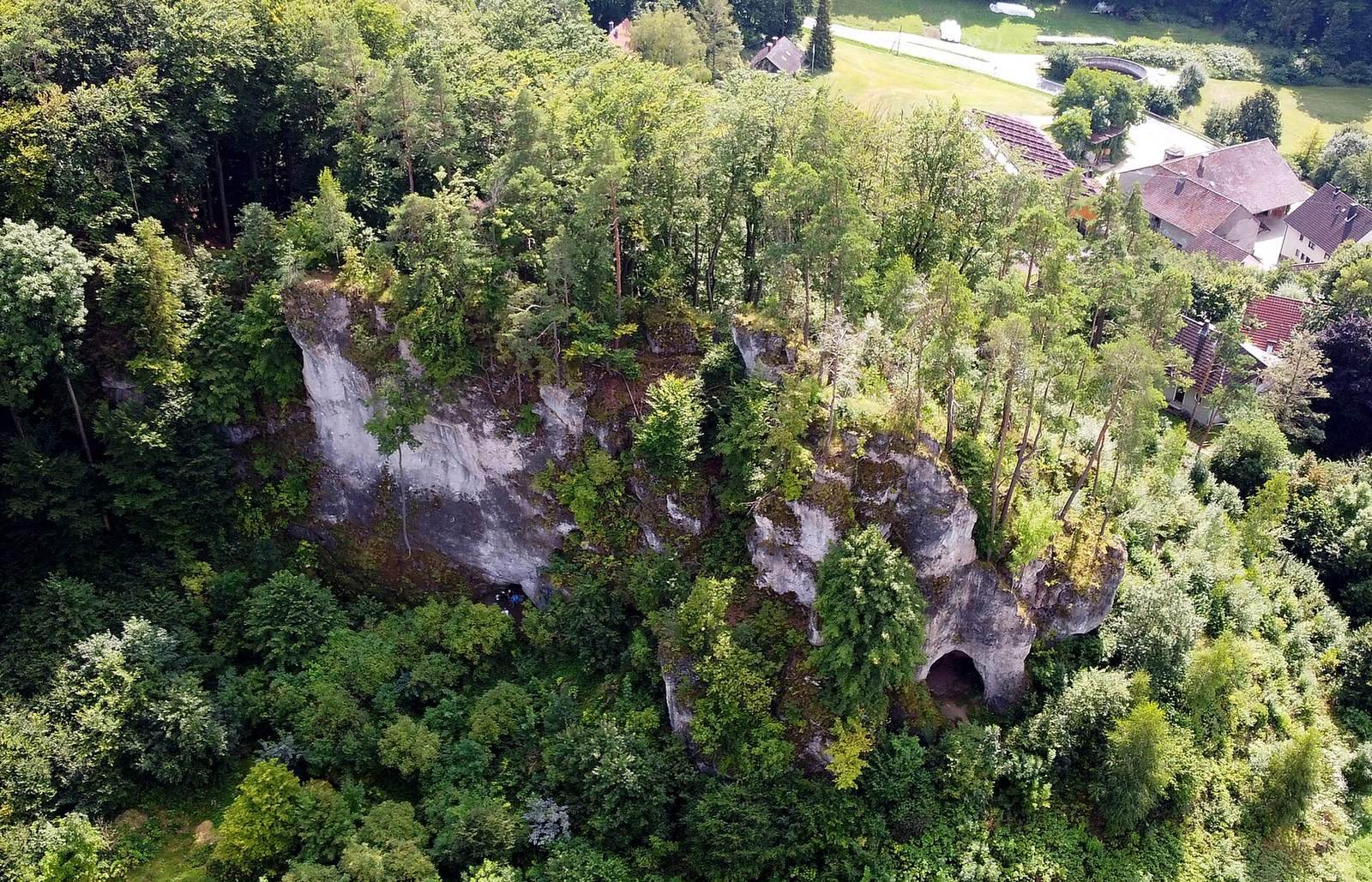
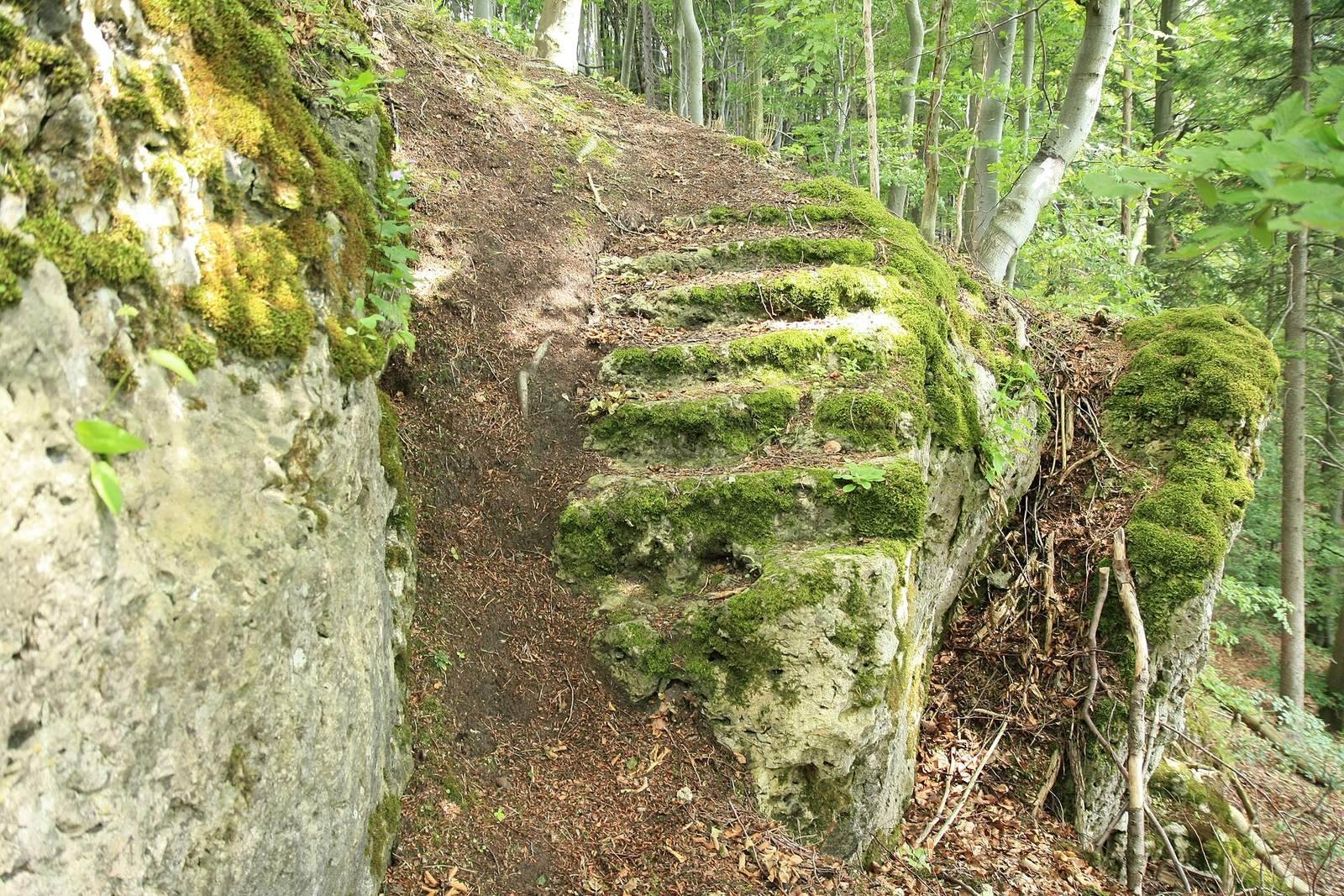
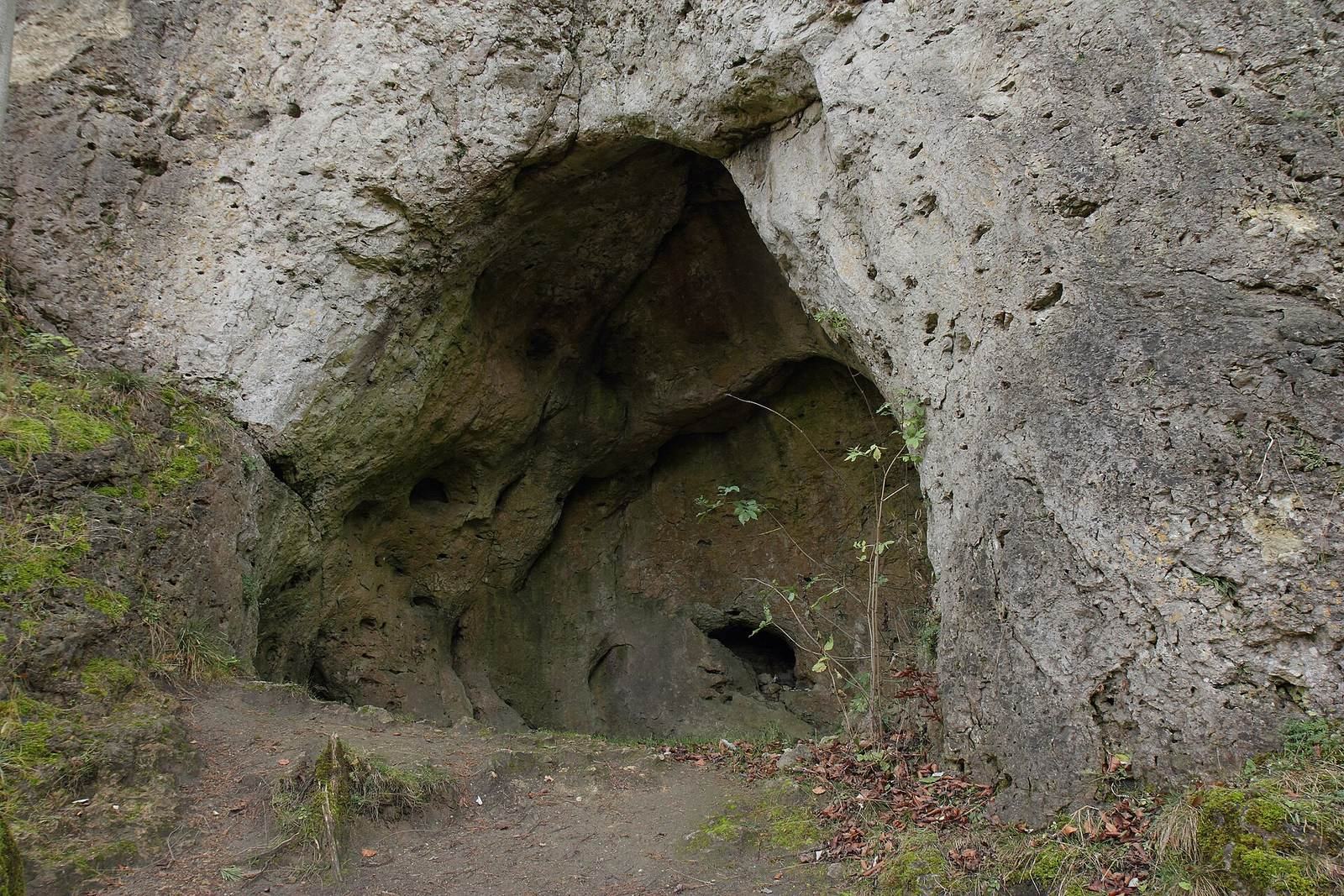
The castle occupied a west-projecting rock spur on Schlossberg, in the Franconian Jura’s southern Franconian Switzerland. The hill reaches 587 metres, while the castle site lies at about 570 metres, roughly 15 metres above Strahlenfels village. The spur’s steep rock sides shaped its defenses, and the surviving features include masonry fragments, a rock-cut staircase, a cistern, and a cave below the enclosure.
Rock spur and approach
The spur extends about 100 metres west. Its north side drops almost vertically for roughly 15 metres, while the west and south sides also descend steeply by about 15 metres. On the east, the spur joins the slightly higher Schlossberg, where fortification was needed. A ditch at this junction may have formed naturally and may have served as a defensive barrier.
The approach climbed from the south by a staircase of seven steps cut into the rock, then continued uphill along a narrow path. A level area about 15 metres below the spur on the south may have held the outer fortified enclosure.
Buildings and surviving features
Residential and service buildings
A description from 1589 records a residential building and, opposite it, a separate masonry building with a cellar and chapel, topped by a granary. These details indicate the buildings present during the castle’s late period of use.
Wall fragments and cistern
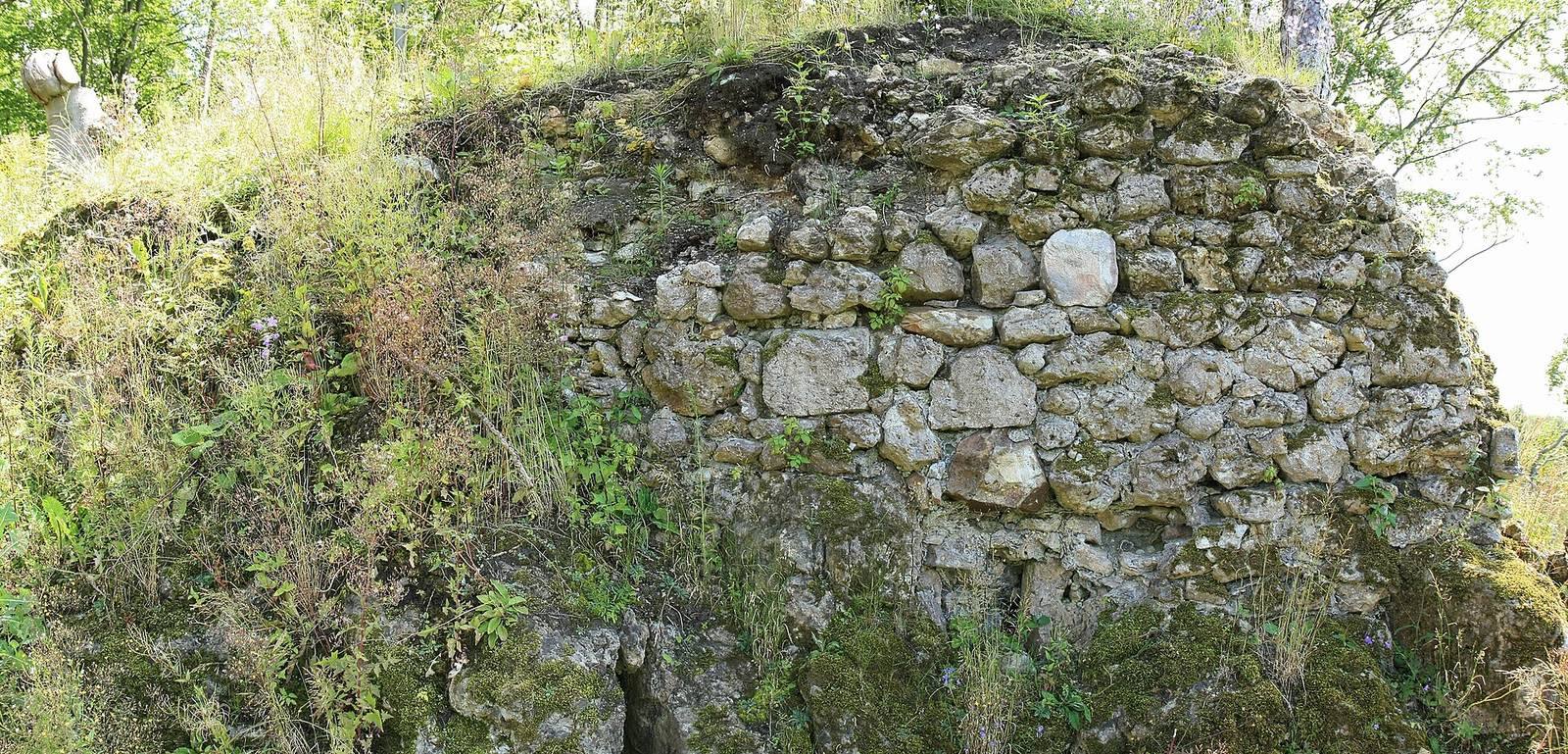
A western wall fragment measures about six metres long and two metres high. Two smaller masonry remains lie on the eastern side. A round cistern on the castle plateau measures about half a metre across and half a metre deep.
Cave below the spur
Outside the enclosure, at the northwest foot of the spur, a small cave has masonry at its entrance and within a fissure. Walls once closed it off from the outside. It probably served as a storage space for the castle’s inhabitants.