Lagenberg Castle: Seat of the Lordship of Laax
Site at a Glance
- Rating
- 5
- Popularity
- Very Low
- Country
- Switzerland
- Primary era
- Medieval
- External website
- Open
- Eras represented
- Medieval
- Civilizations
- Habsburg, Holy Roman Empire
- Site type
- Military
- Remains
- Castle
On this page5 sections
History
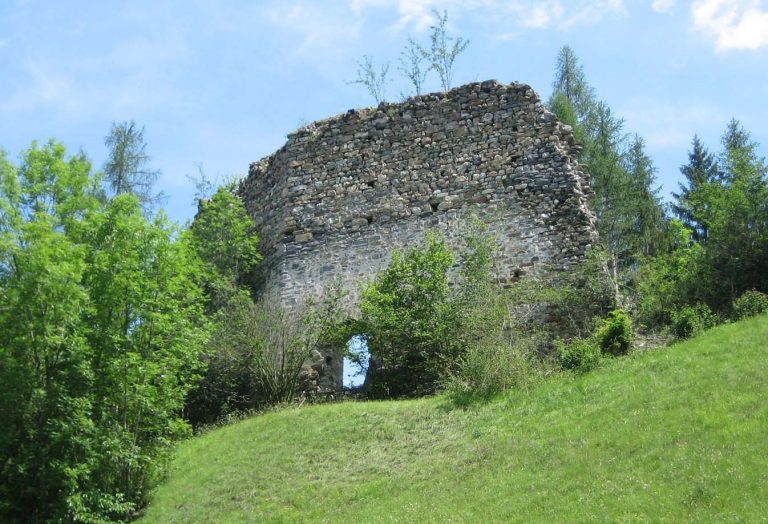
Lagenberg Castle is a medieval ruin on a wooded hill north of Laax, Switzerland; its surviving walls indicate construction in the second half of the thirteenth century. It became the center of the Lordship of Laax, formed around 1280 by the Freemen, a regional group of free nobles in the Upper Grisons, and granted to the House of Austria, the Habsburg ruling dynasty.
Records and names
The castle first appears in a Habsburg urbar, a medieval register of estate lands and their associated rights or revenues, in 1303. Earlier chronicles call it Langenberg, possibly a reference to the elongated hill. Another proposed explanation links Lagenberg to nearby Laax, whose name has been associated with the Latin lacus, meaning “lake.” On this interpretation, German-speaking owners may have referred to the stronghold as Laax Castle.
Destruction and aftermath
During a feud in 1323, Donat von Vaz captured and destroyed the castle. An arbitration award issued in 1348 states that it had been broken while in his possession. After Donat died in 1337, the castle passed through his sister Ursula von Vaz to her husband, Rudolf von Werdenberg-Sargans. It was not rebuilt.
Homesteads below the castle included the area south of the hill, where an annual market was formerly held on the feast day of St Gall, an early medieval Irish monk and missionary associated with the Christianization of the Lake Constance region. The southern area is still called Il marcau, meaning “the market.”
Remains
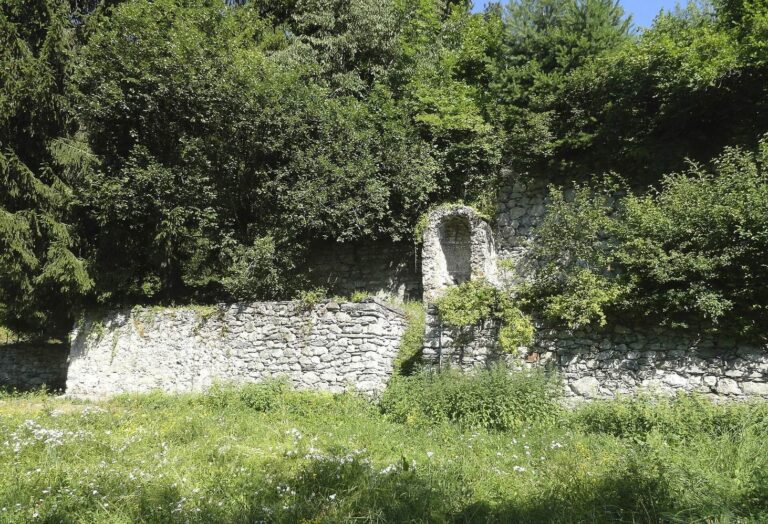
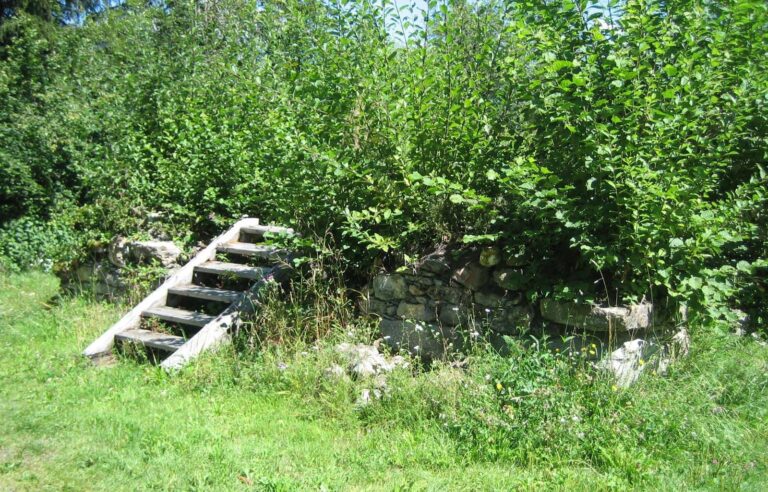
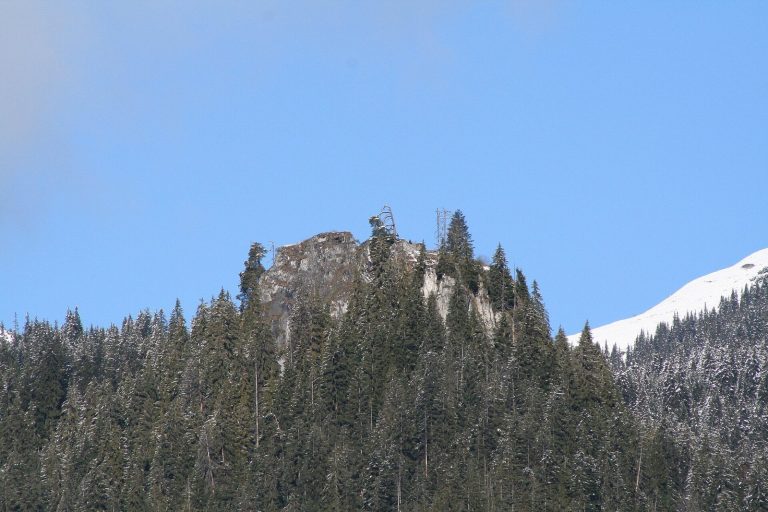
Castle layout and construction
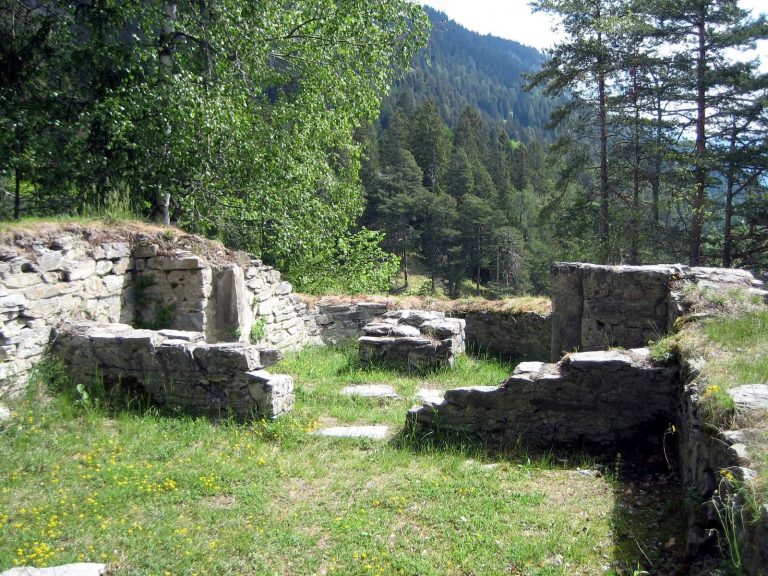
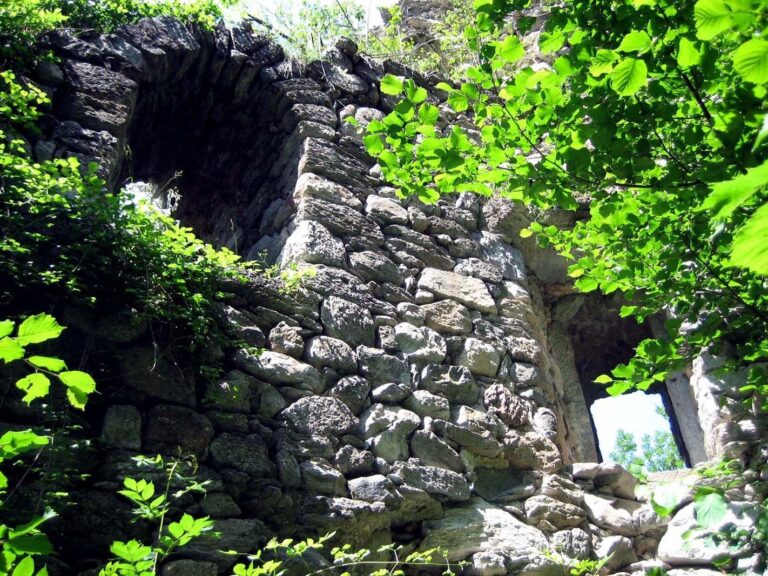
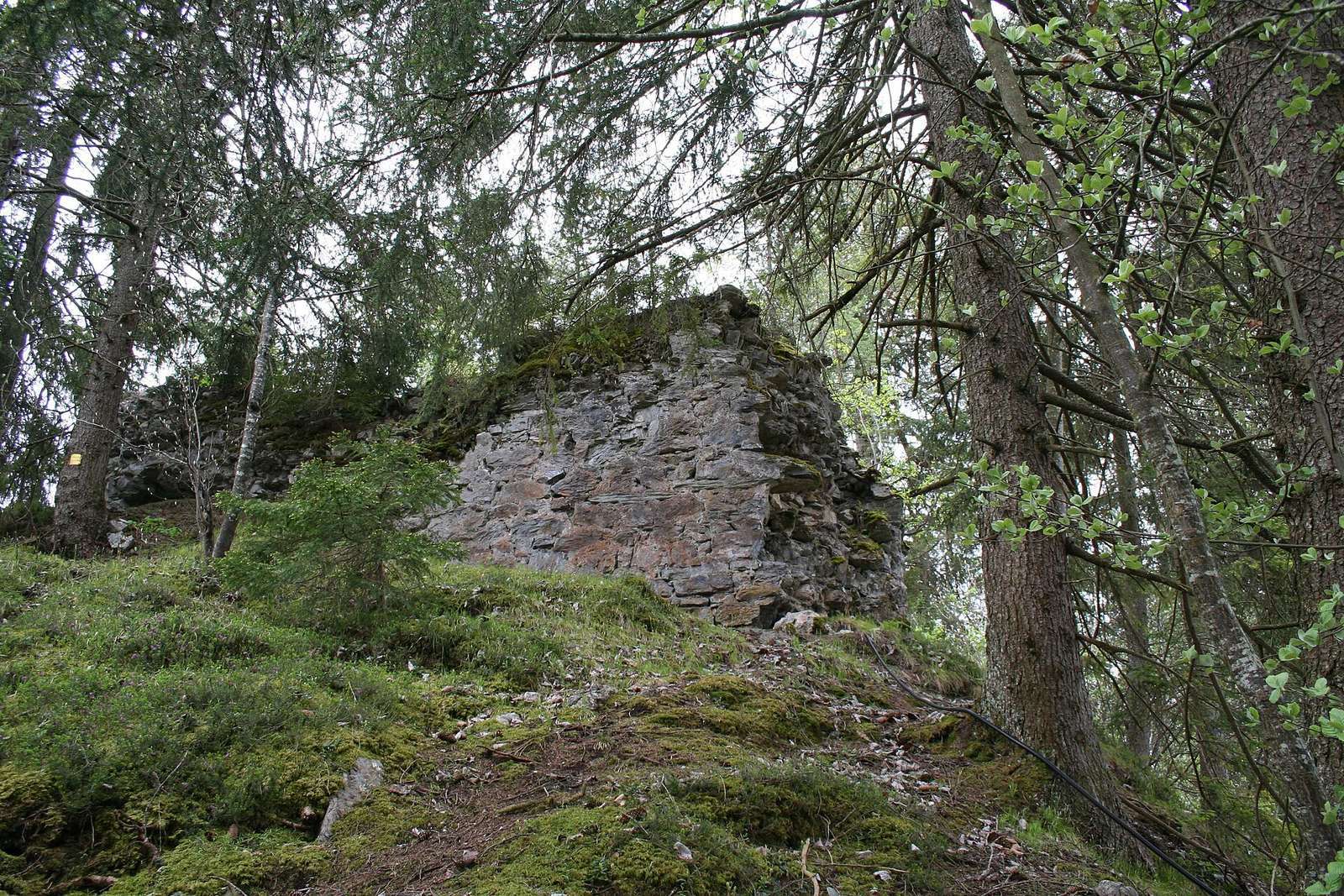
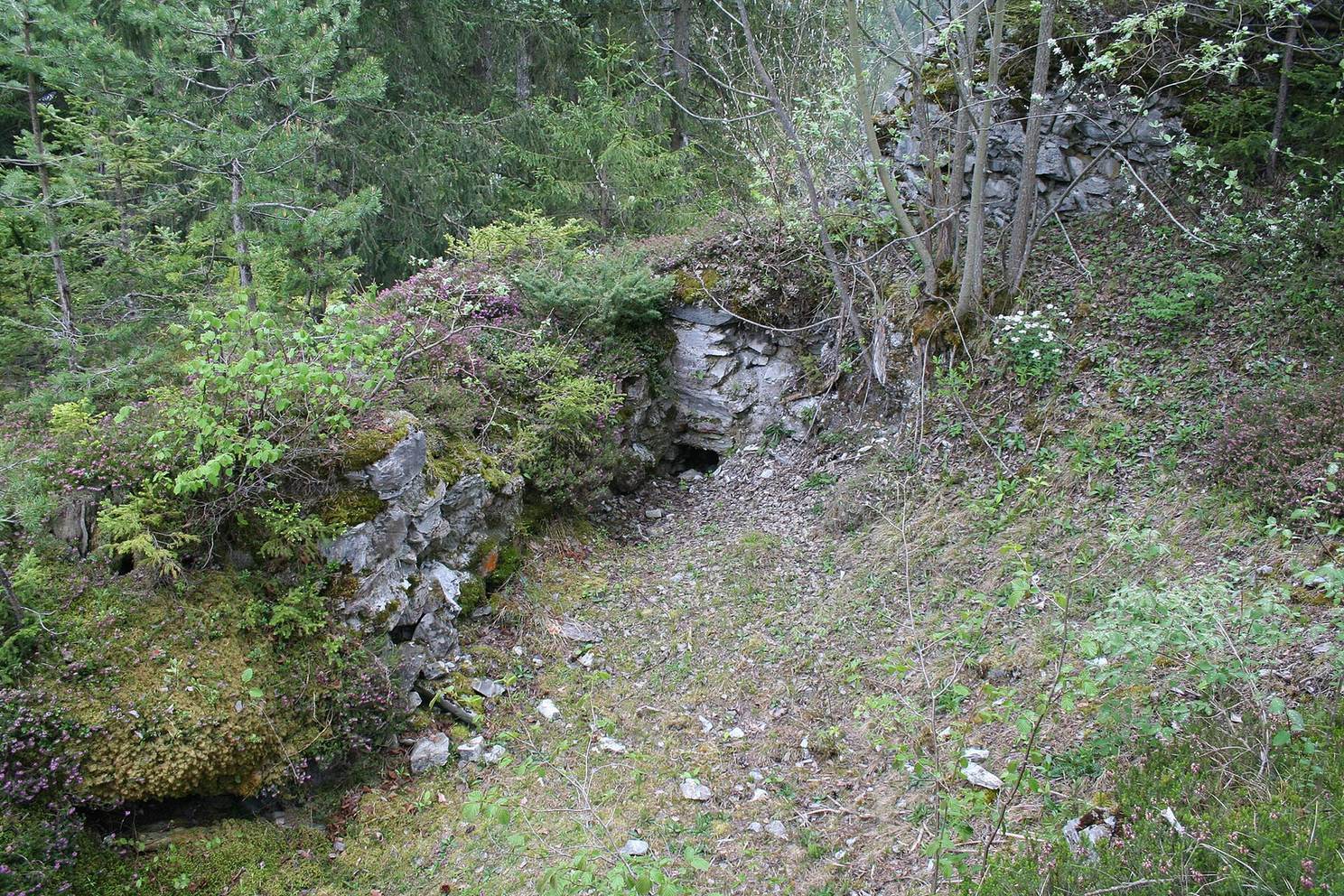
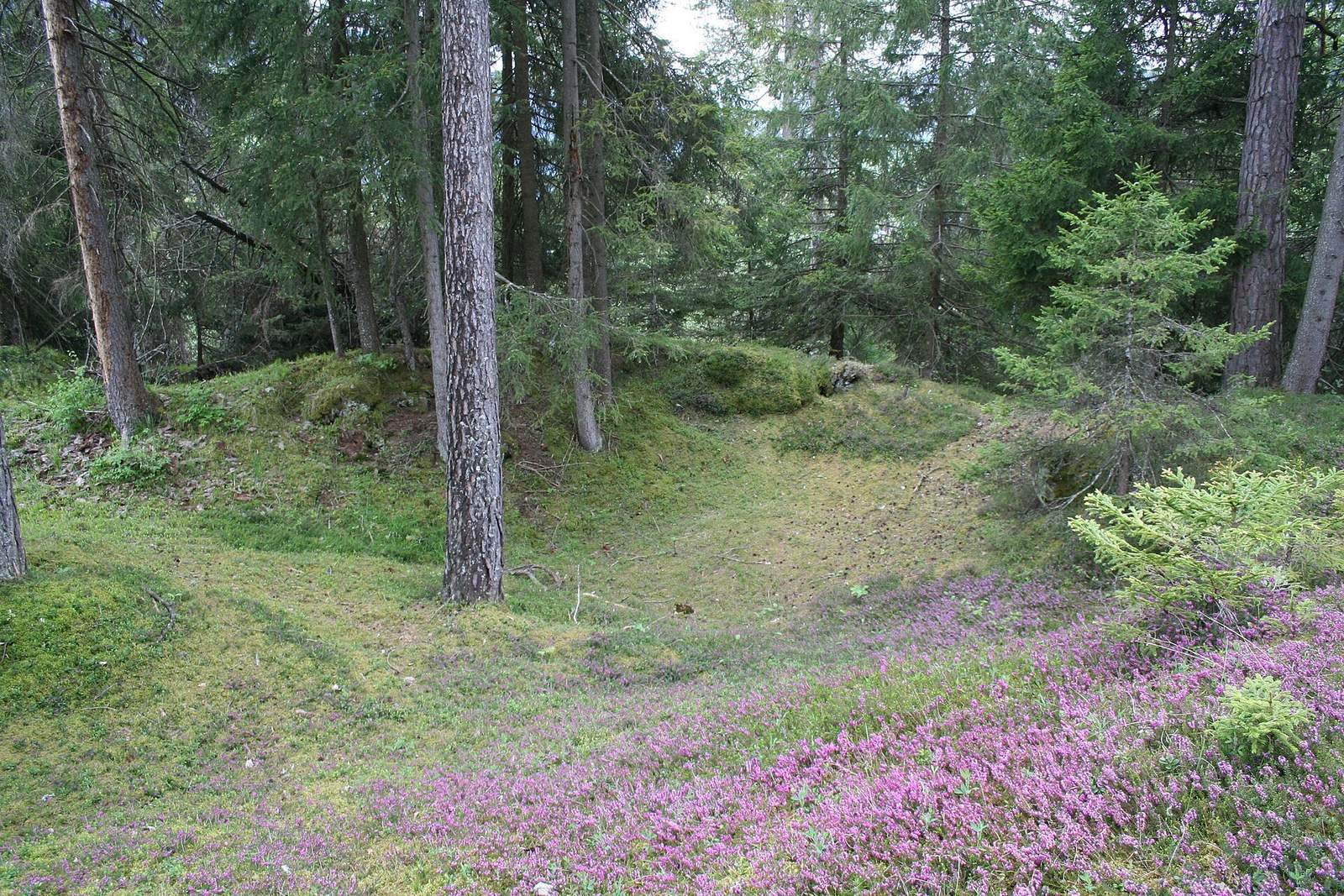
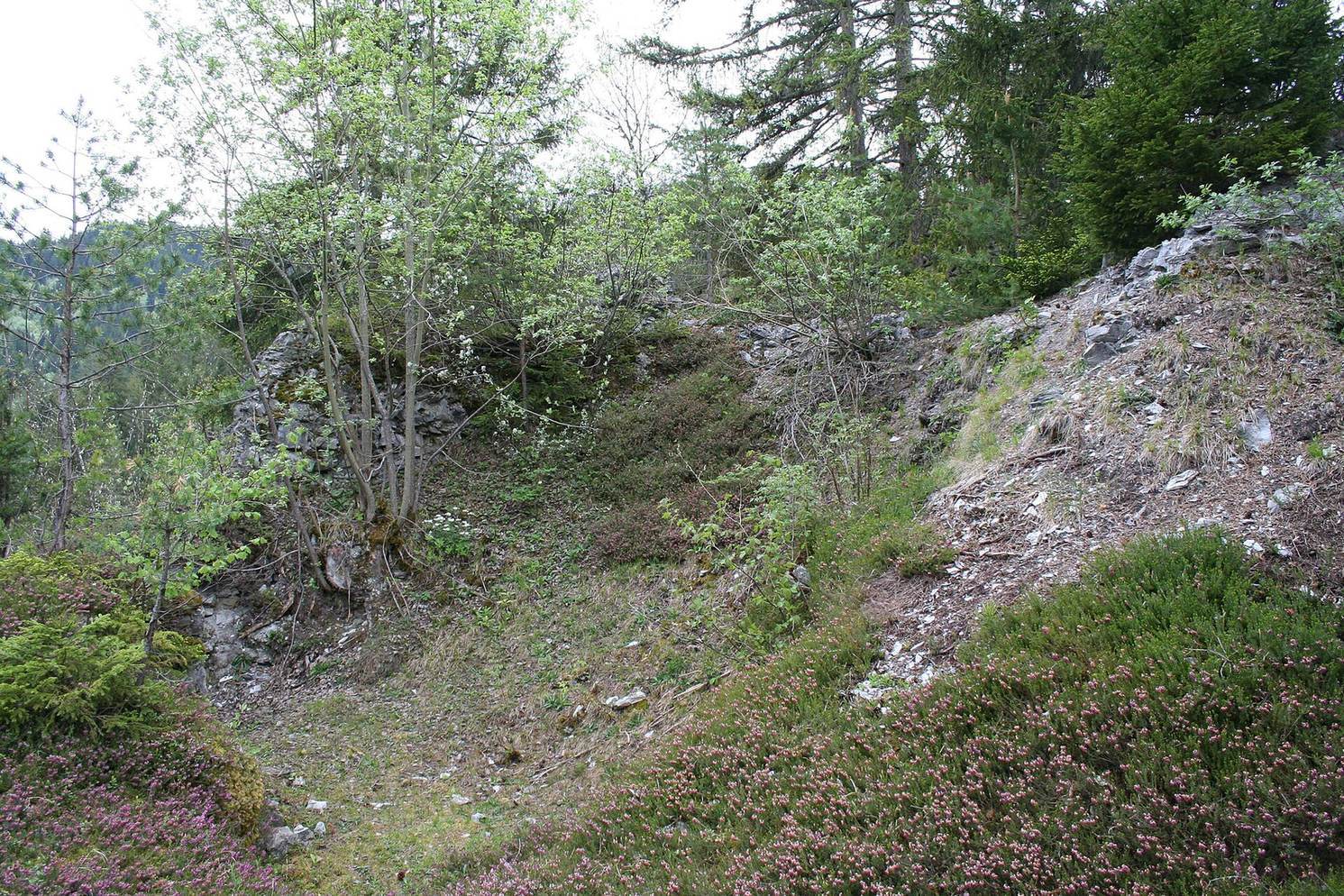
The ruin stands at 1,127 metres above sea level on a wooded hill between the Laax-Cons and Murschetg districts. Its surviving walls, built of small rubble stones with abundant filling material, point to an extensive complex. The main castle occupied the northern part: a tower stood at its north end, with another building to the south and probably a courtyard between them. A spacious secondary enclosure lay south of the main castle, separated from it by a defensive ditch cut across the narrow part of the hill.