Castle Castrisch: A Medieval Hilltop Castle in Switzerland
Site at a Glance
- Popularity
- Very Low
- Country
- Switzerland
- Primary era
- Medieval
- External website
- Open
- Eras represented
- Medieval
- Civilizations
- Carolingian, Holy Roman Empire
- Site type
- Military
- Remains
- Castle
On this page7 sections
History
Early history
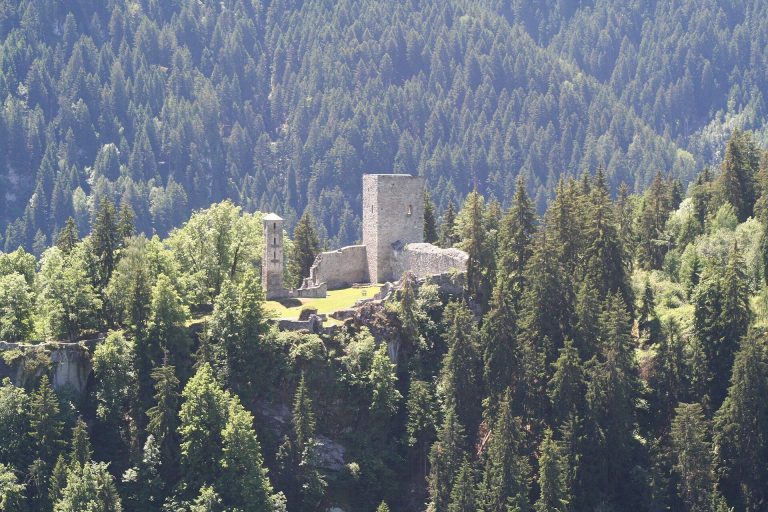
Castle Castrisch is a medieval hilltop castle east of the village of Castrisch in Ilanz/Glion, Switzerland, conventionally dated to around 1100. A feudal castle may have existed there as early as the 10th century. An imperial register from 842 lists the village church and its tithe as imperial property, suggesting that an early fortified church complex preceded the castle’s later development. Properties at Castrice are also mentioned in the testament of Tello, bishop of Chur.
In 1137, Hugo and Heinricus de Castrisis appear in documents from Gamertingen. Their family was among the earliest noble houses recorded in Raetia, the historical name for an Alpine region whose boundaries changed over time. Their appearance supports the likelihood that a feudal castle was already established at Castrisch. Lords of Castrisch are recorded in the 13th century, although their origins are unclear; their name seems to have derived from their residence.
Changing lordship
In the 14th century, the castle belonged to the Lords of Belmont. In 1371, Adelheid of Montalt, born into the Belmont family, issued a document at the fortress. After the death of the last Belmont, Ulrich Walter, on 11 July that year, Ulrich Brun acquired pledge rights to the castle from Walter’s widow, Floribella of Sax. In 1380, Brun exchanged his claims for rights to the castle at Domat/Ems with Elisabeth of Sax-Rhäzüns.
In 1390, Elisabeth transferred her rights to Castrisch’s village and fortress to the Bishop of Chur, who returned them to her as a fief, meaning land or rights held under a superior lord. A record from 1410 likewise describes the fortress as a fief of the bishopric. The Sax-Misox family stipulated that, if its line became extinct, subjects of the bishopric could take possession of Castrisch and its lordship. In 1483, the League of the House of God, one of three political alliances in the region, bought the lordships of Belmont and Castrisch from Peter of Sax-Misox.
Ruin and place-name
By about 1550, in the lifetime of the Graubünden chronicler Ulrich Campell, the castle had already fallen into ruin. The name Castrisch derives from the Latin castrum, meaning “fortress”; the nearby field-name Casti also recalls the castle.
Remains
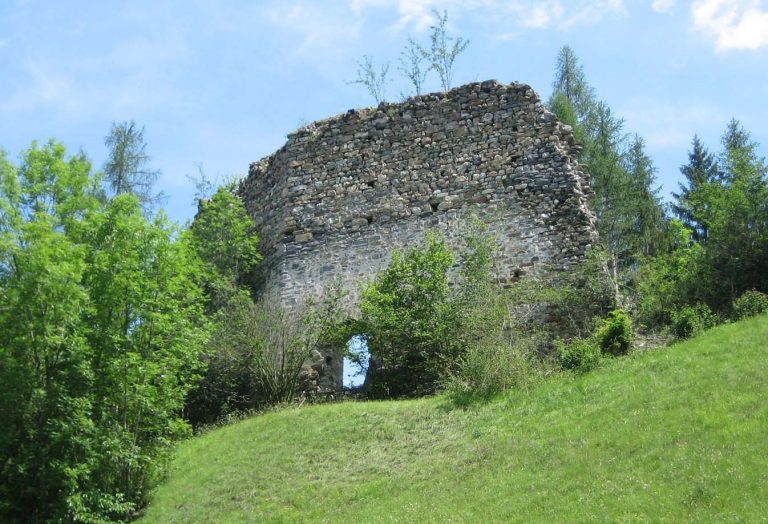
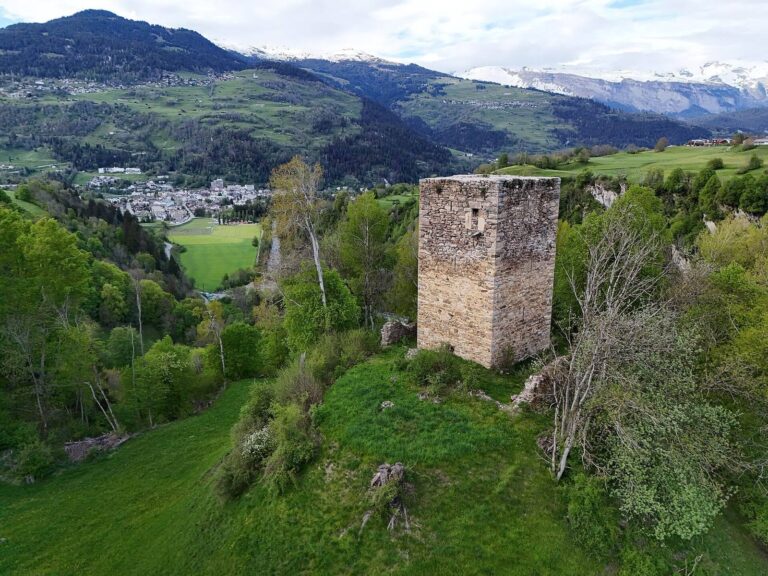
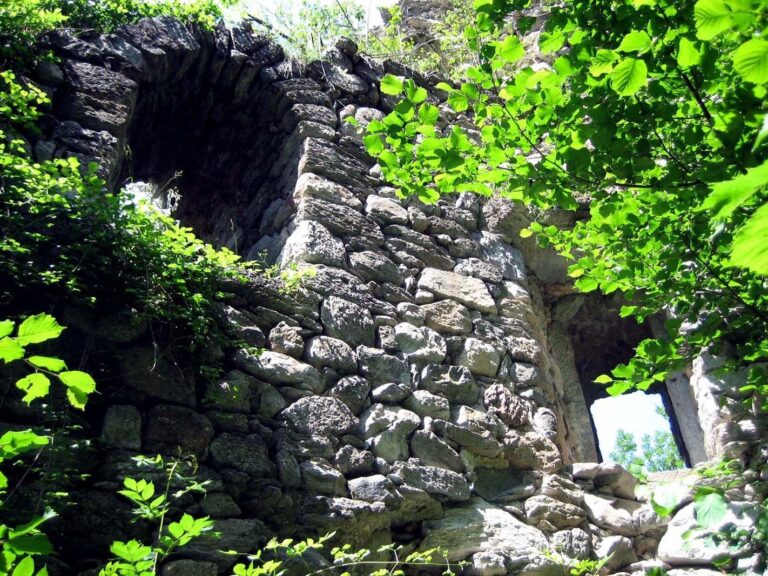
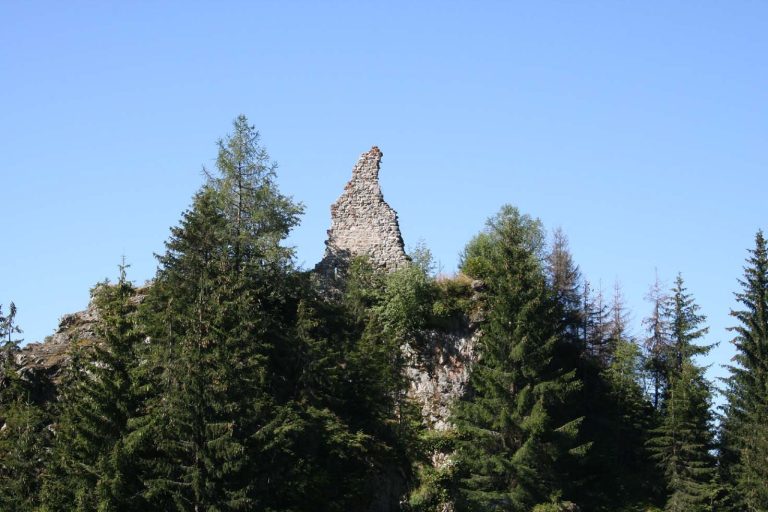
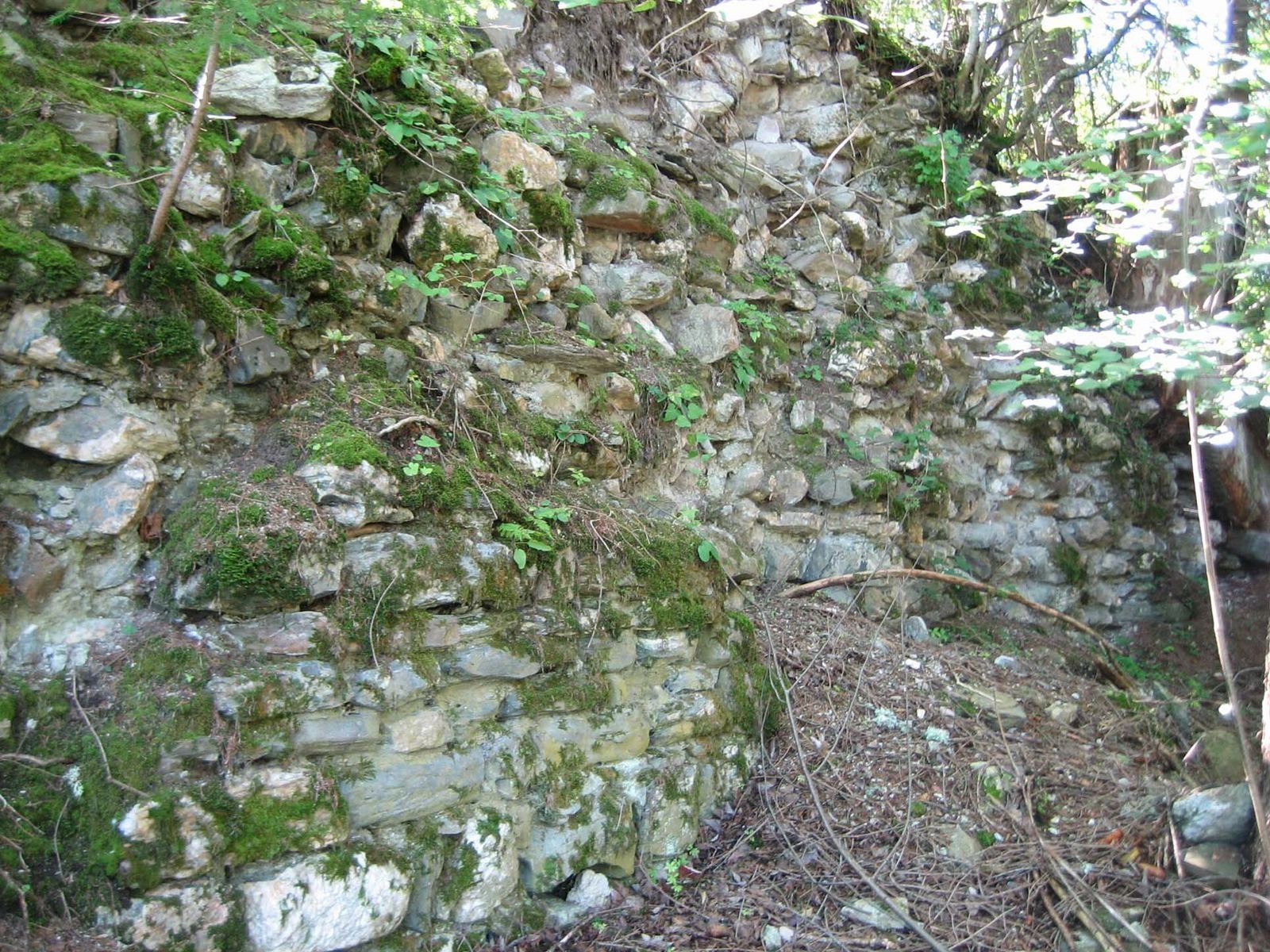
The sparse remains occupy a rocky spur at about 820 metres above sea level, east of the village and above the road from Castrisch to Valendas. Rubble stonework and debris mark two distinct sections, one on the higher western ground and the other on a lower eastern plateau.
Western section
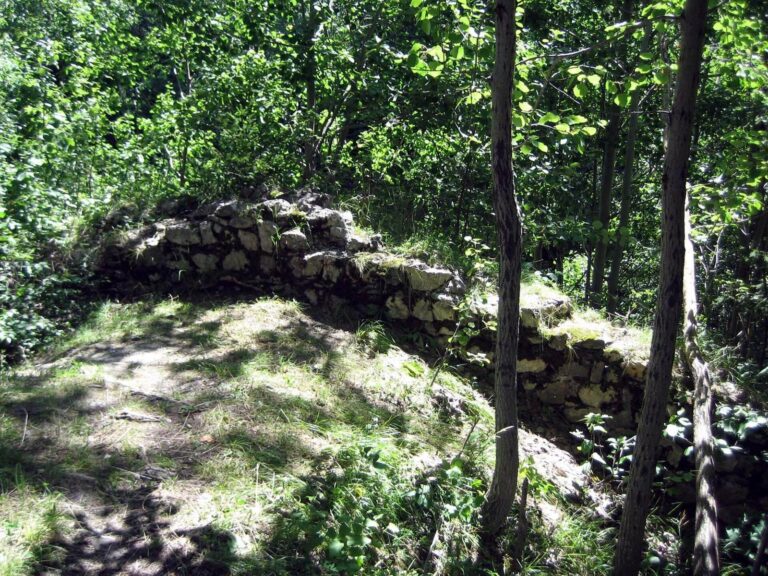
Scattered traces of a wall run parallel across the higher western section. They may belong to an enclosing wall or an outer defensive enclosure, within which buildings appear to have stood. A forest road crosses the ditch at the spur’s western end.
Eastern section
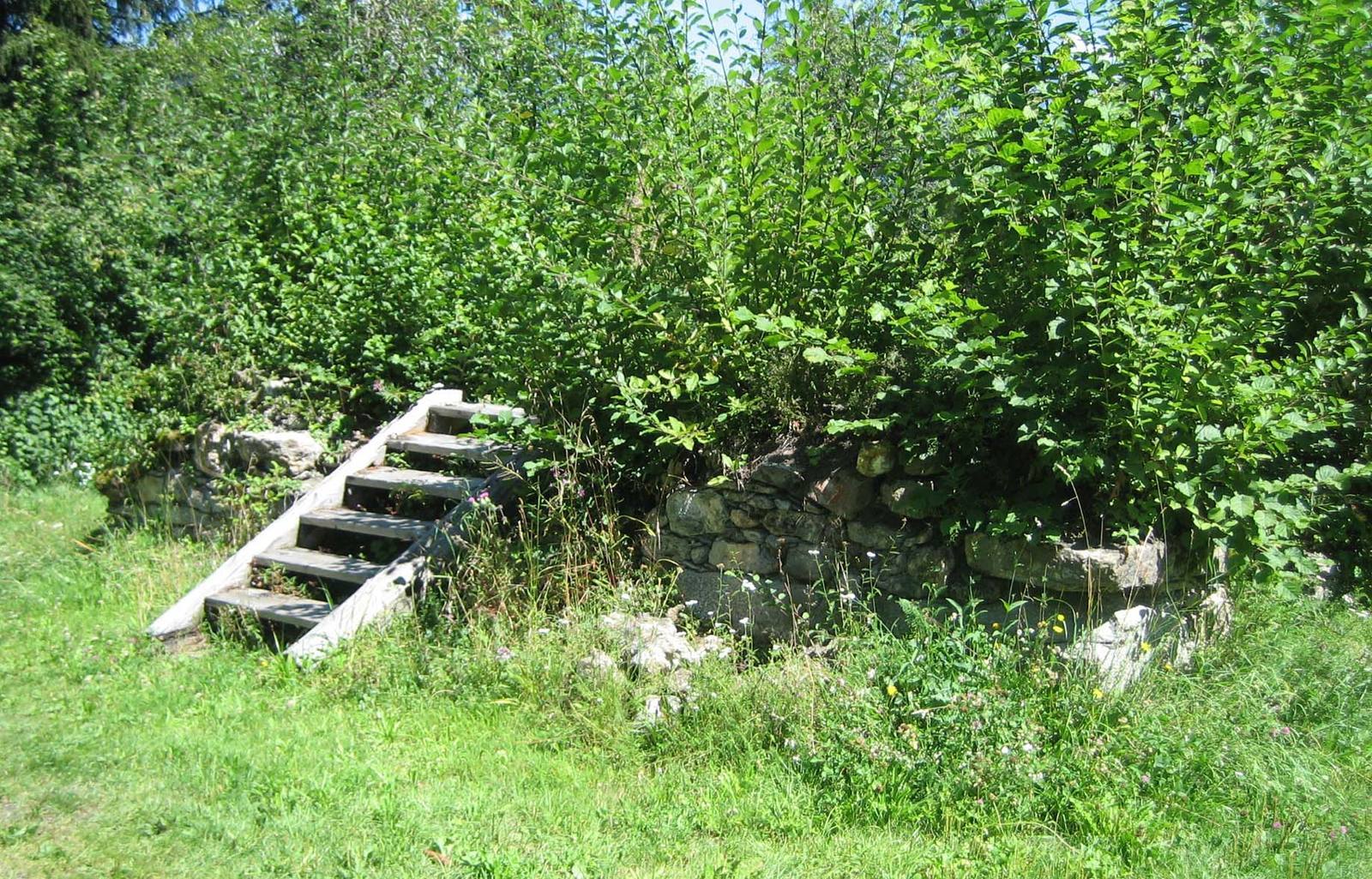
A wall follows the edge of the lower eastern plateau. Near its centre are the remains of a church dedicated to St Michael, the archangel in Christian tradition. Its ground plan measures about 14 by 7 metres; rubble fills the interior, which is heavily overgrown. Human bones from the former cemetery were found during uncontrolled digging in the northeastern corner. A thick fragment of wall at the far eastern end once suggested the position of a tower, and a shooting-club hut now stands there.