Löwenberg Castle: A Medieval Hilltop Castle in Switzerland
Site at a Glance
- Popularity
- Low
- Country
- Switzerland
- Primary era
- Medieval
- Eras represented
- Medieval
- Civilizations
- Holy Roman Empire
- Site type
- Military
- Remains
- Castle
On this page7 sections
History
Medieval lords and inheritance
Löwenberg Castle is a medieval hilltop castle above Schluein in Switzerland, probably established in the 12th century, perhaps around its middle. It served as the seat of the free noble family of Löwenberg, associated with the von Montalt family. Free nobles held rank independently of service to a lord. A Walter von Löwenberg is named in 1160, and another Walter appears in a record from 1257. That document names Symon de Muntalt and his son Walther, indicating that Symon held Montalt while his son held Löwenberg. Montalt Castle, a watchtower near Prad, was thought to be the family’s ancestral home. It stood beside an old valley route into Lugnez and over Güner Lückli.
After Symon died around 1351, Count Rudolf of Werdenberg-Sargans reached an agreement about Löwenberg with Heinrich von Rüssegg, probably Symon’s son-in-law. Heinrich von Muntalt, the last of his line, died around 1378. A dispute over the inheritance between the Rüssegg and Haldenstein families ended with the castle going to the Rüsseggs in return for compensation. Elisabeth von Haldenstein, born a Montalt, sold her family’s lordship rights to the Freiherren von Rhäzüns. After the Haldensteins renounced their claim, Löwenberg passed to the Werdenberg-Sargans family in 1383.
That year, Johann von Werdenberg-Sargans issued a document from the castle. In 1395, he joined the Ilanz League with Löwenberg, a regional political alliance later known as the Grey League. The Werdenbergs were last recorded as lords on 31 July 1428, when they sold the castle to Heinrich von Lumerins, to whom it was already pledged. Lumerins family members are named as its lords in 1440 and 1455.
Later owners and changing use
By 1512, the castle belonged to the von Mont family of Vella, who retained it until the mid-16th century. In 1512, Gaudenz von Mont pledged it as security for the morning gift he gave his wife, Barbara von Marmels. A morning gift was property or wealth provided by a husband to his wife, with the castle serving as a guarantee. Between 1551 and 1594, Löwenberg changed hands several times; its owners included the influential Capol and Planta families.
After a fire, the castle was partly remodelled in 1685 in the Baroque style, an ornate European style popular in the 17th and 18th centuries. Its main tower was taken down. The building later housed a boys’ school in 1832–33 and the Roman Catholic Missionaries of the Precious Blood from 1838 to 1850. An episcopal orphanage was established there in 1851.
Destruction and later institutions
On 14 April 1889, fire destroyed the castle. The orphanage moved to a new building nearby, and the castle’s masonry was largely dismantled for its construction. The orphanage closed in 1972. From 1988 until September 2019, the later building served as a transit centre for asylum seekers.
After the transit centre closed, the nonprofit Löwenberg – Surselva Impact Lab acquired the building through an arrangement allowing it to use a building on land belonging to another party. The organization’s aim was to preserve the historic structure. It now accommodates a startup and innovation centre, studios for nine artists, a science, technology, engineering and mathematics academy for primary-school pupils, coworking spaces, meeting rooms and residential studios.
Remains
Castle site and surviving fabric
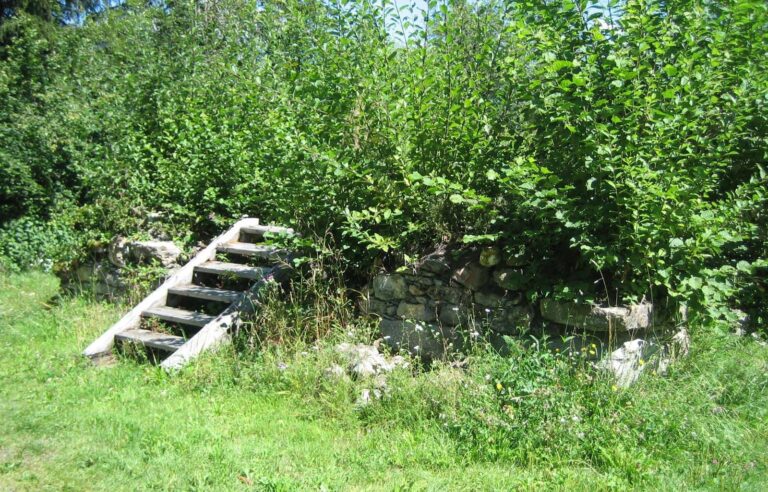
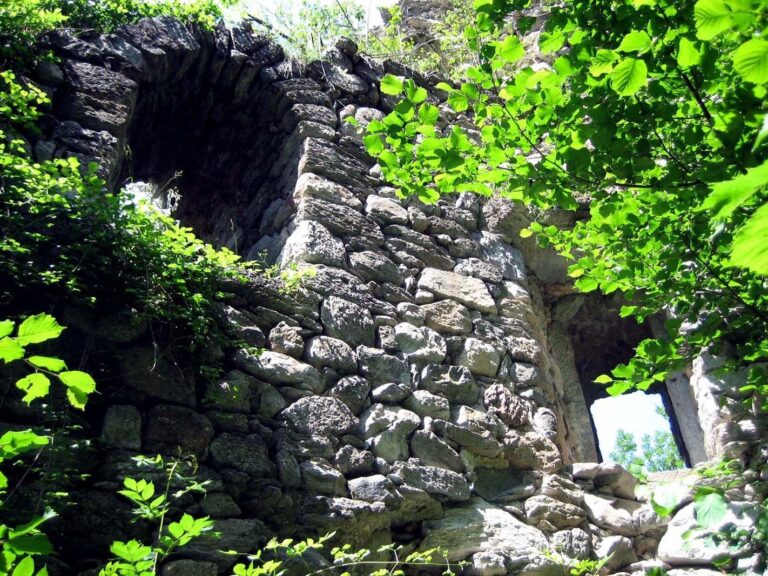
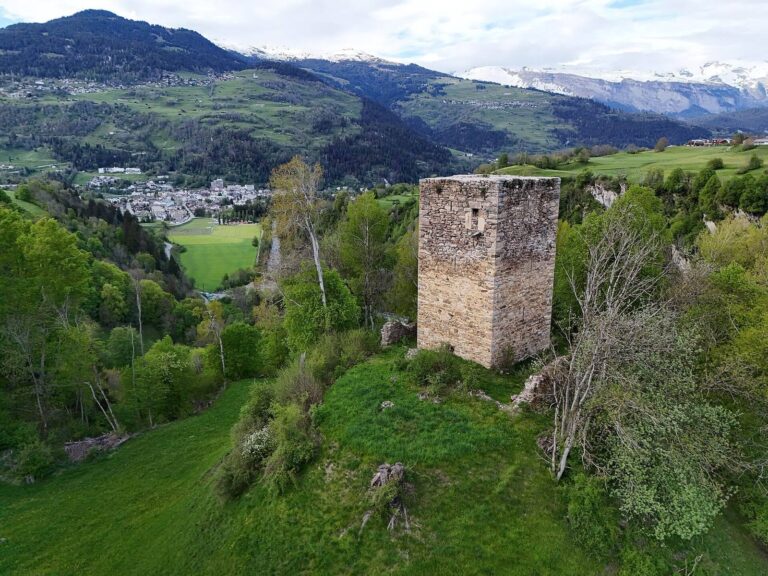
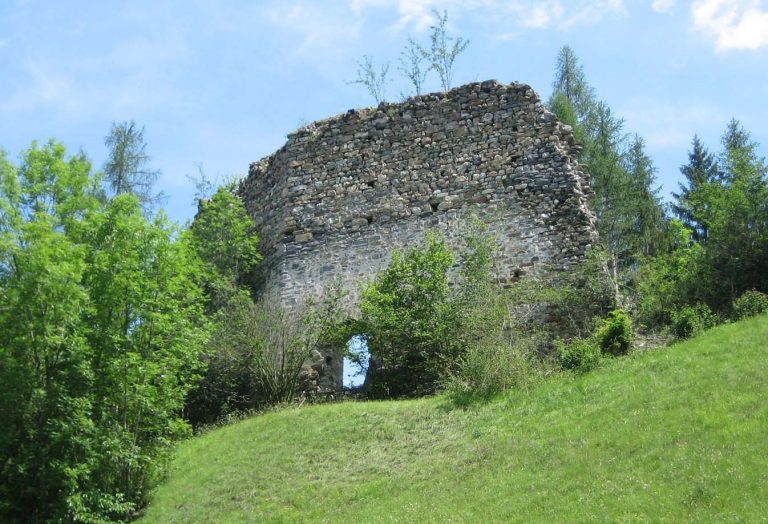
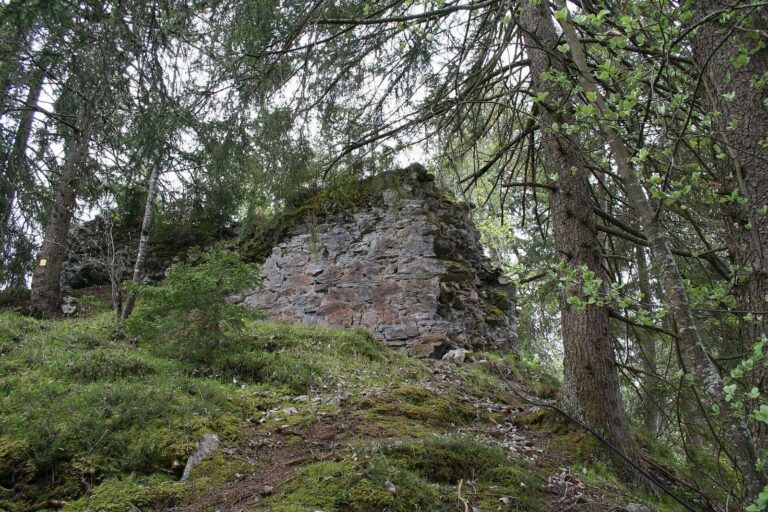
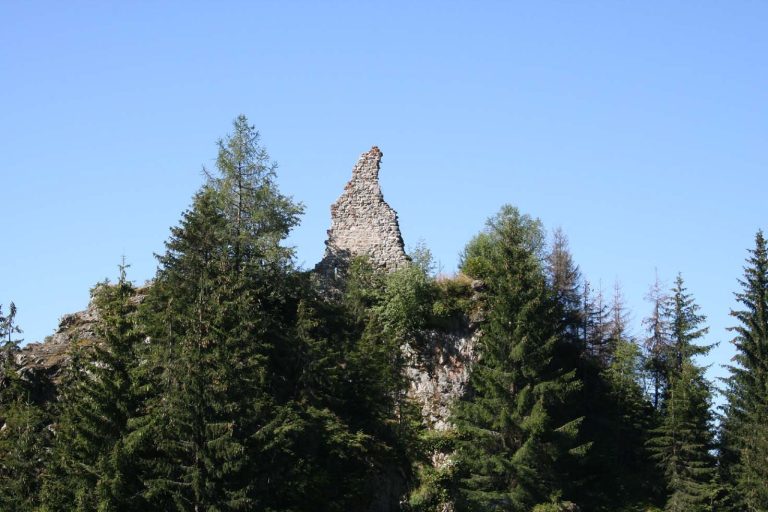
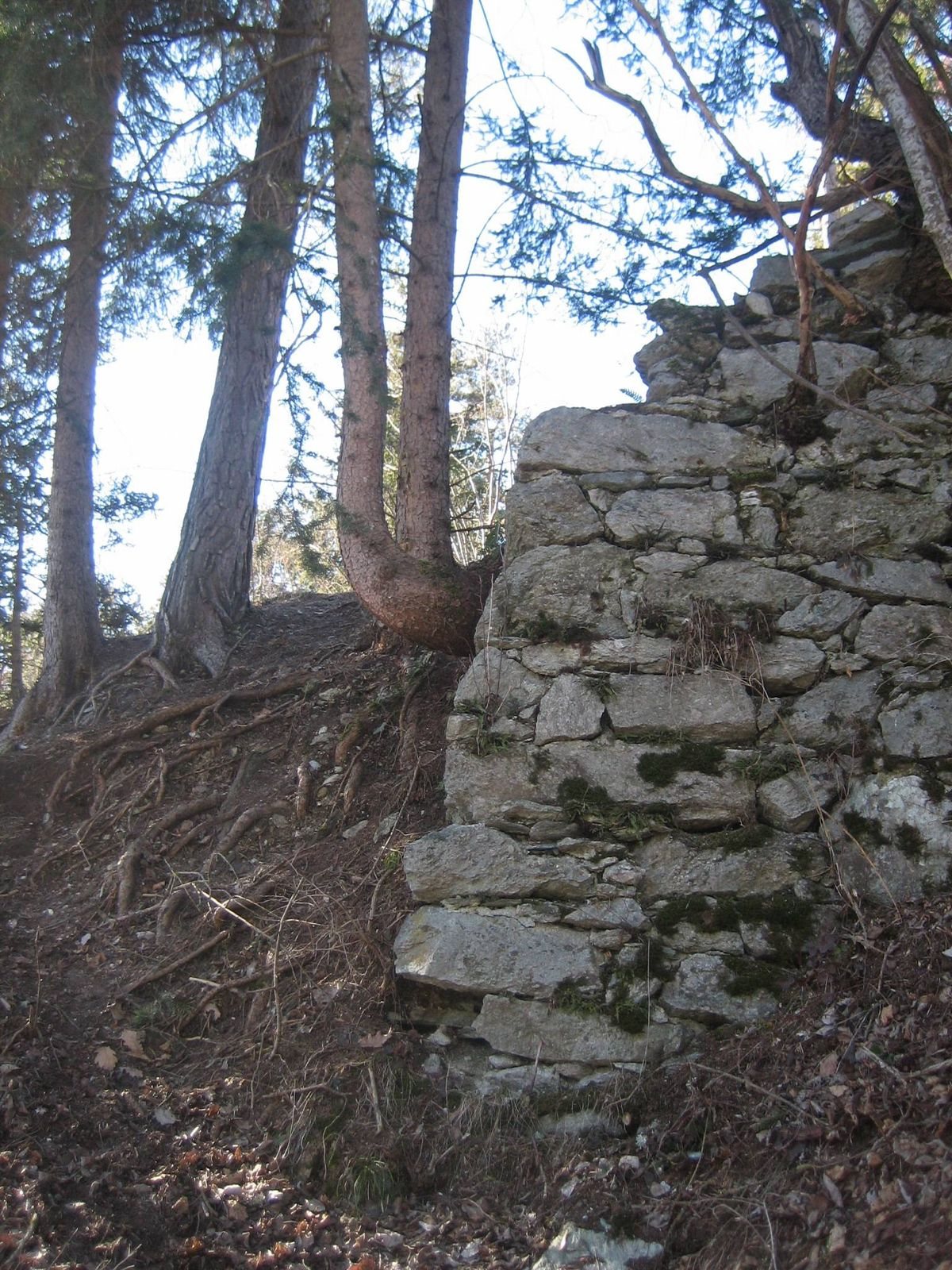
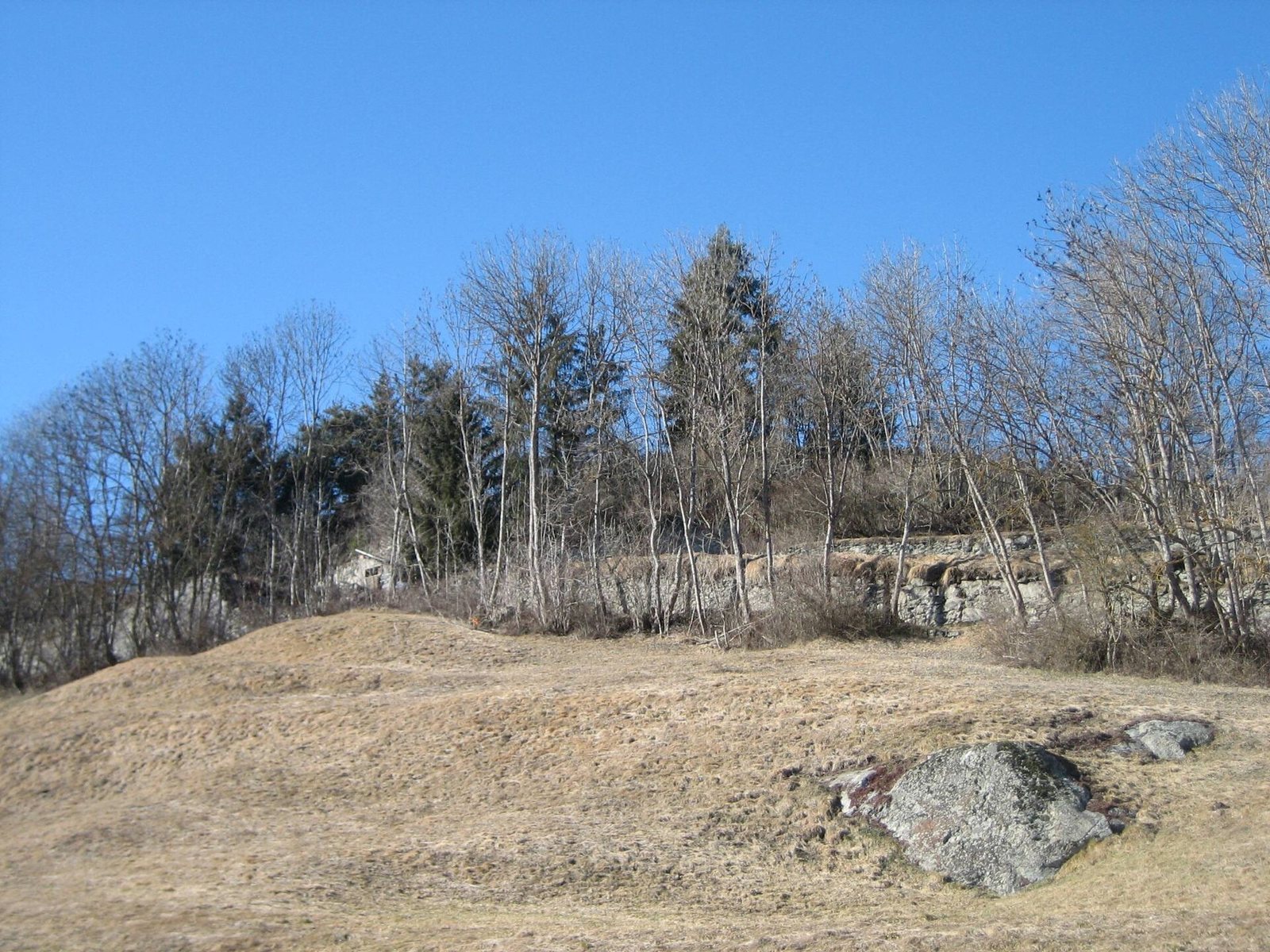
The ruined castle stands at about 820 metres above sea level on a rocky outcrop west of and above Schluein. It was a hilltop structure built of rubble stone. A corner of a foundation wall survives. A print by Johann Caspar Ulinger, dated around 1755, shows the castle in a form different from Heinrich Kraneck’s 1830 drawing. Kraneck’s image closely resembles a photograph taken shortly after the 1889 fire, leaving open the possibility that the castle was completely rebuilt between 1755 and 1830.
The later building
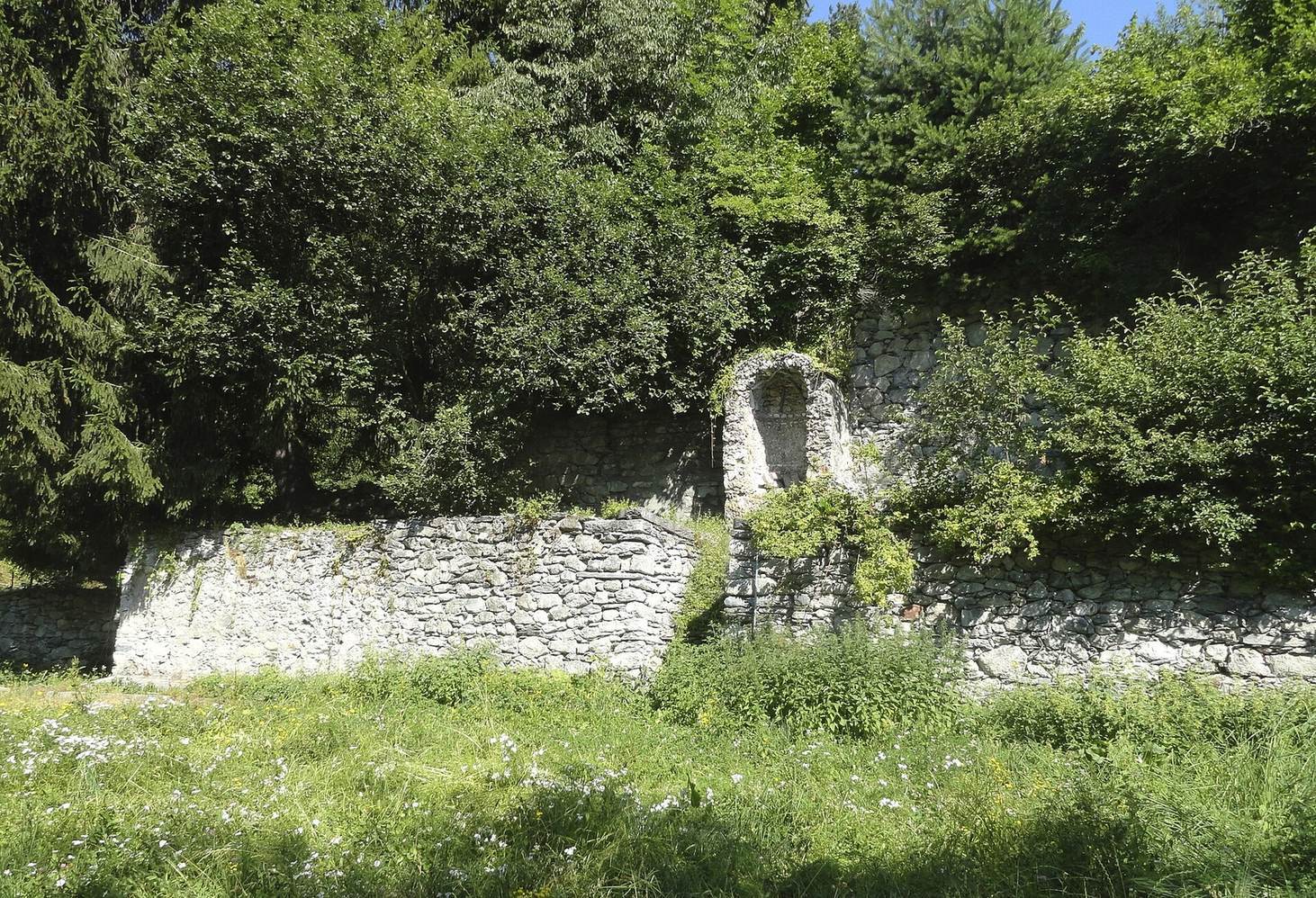
The replacement building stands about 150 metres southwest of the castle site, on the former service-farmstead site. Its construction incorporated stone from the castle, and a coat of arms of Löwenberg is displayed on the building.