Nether Largie South Chambered Cairn: A Megalithic Tomb in Scotland
Site at a Glance
- Popularity
- Very Low
- Country
- United Kingdom
- Primary era
- Stone Age
- Eras represented
- Stone Age
- Civilizations
- Unclassified
- Site type
- Burial
- Remains
- Burial Mound
On this page11 sections
History
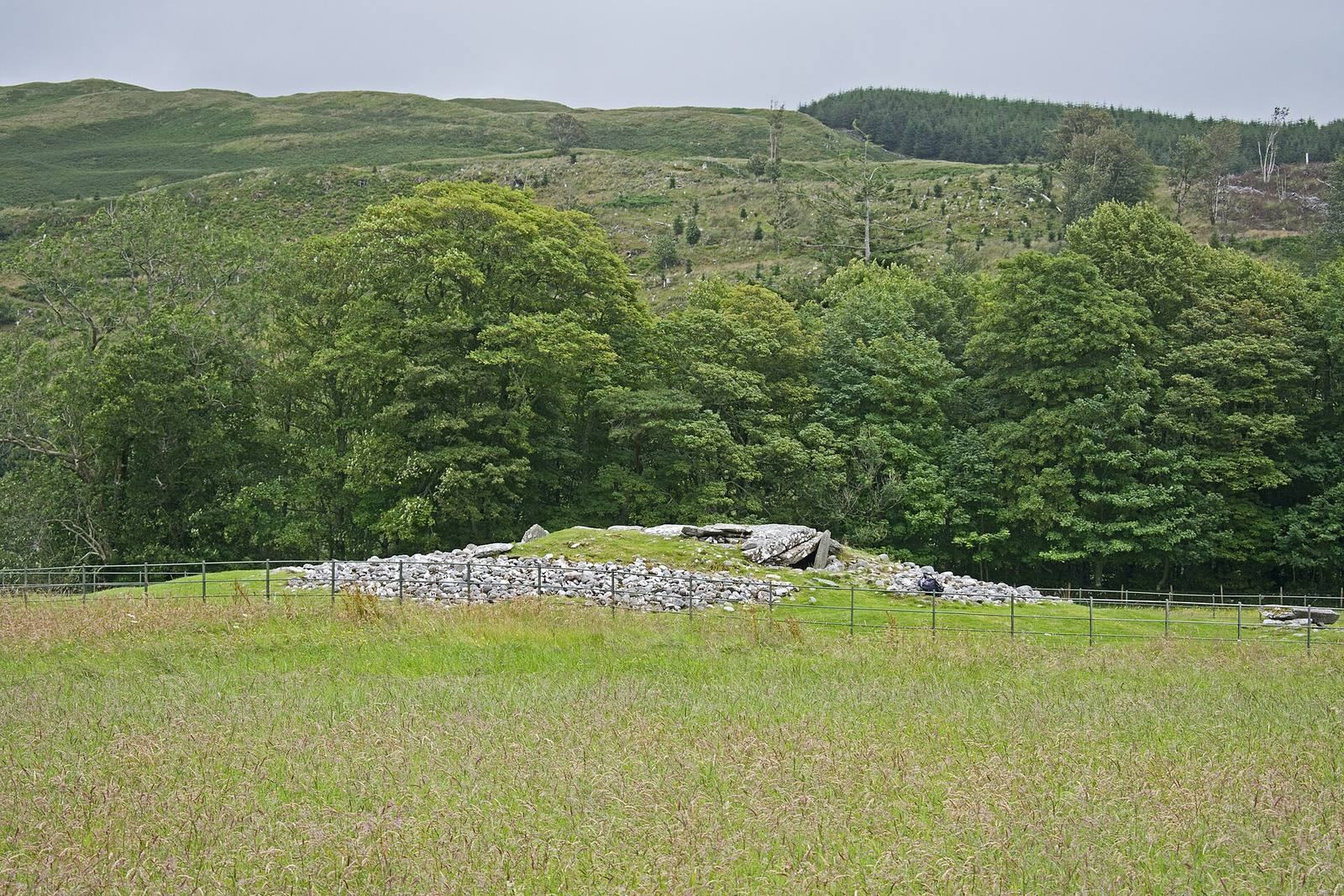
Nether Largie South Chambered Cairn is a megalithic tomb in the Lochgilphead area of Argyll and Bute, Scotland, United Kingdom. It belongs to the Clyde type, a form of chambered tomb associated with western Scotland. A cairn is a mound made chiefly of stone.
British archaeologist and antiquary William Greenwell excavated the cairn in 1864. Earlier disturbance had removed stone from the mound for other uses. Two secondary cists were found within the cairn material, and the mound may have been enlarged to cover them.
Remains
Cairn and central chamber
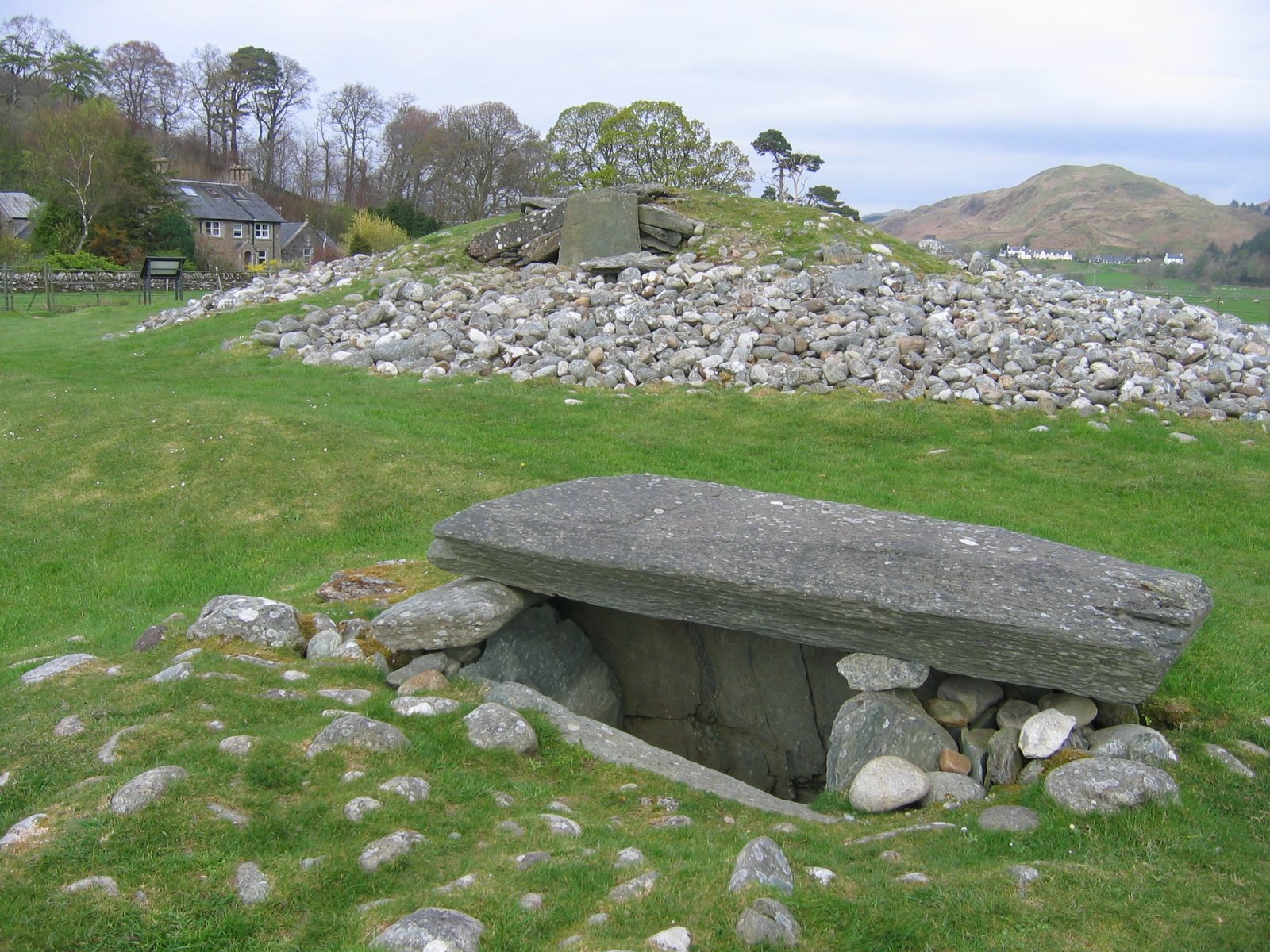
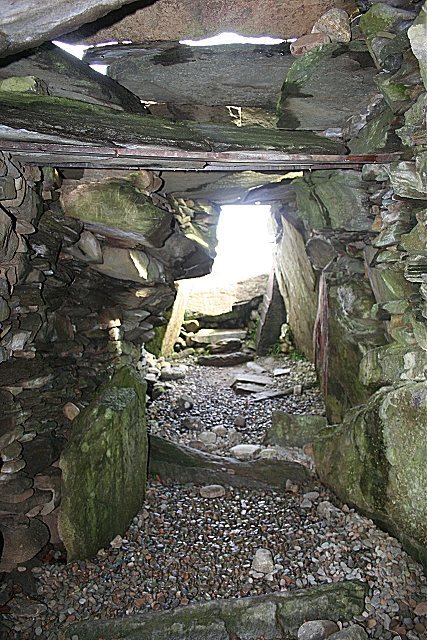
The cairn is one of several arranged in a straight line near Kilmartin. At its centre is a four-compartment chamber aligned northeast to southwest, with its entrance at the northeast end. Large upright stones and dry-stone masonry, stonework laid without mortar, form the chamber.
The cairn
The mound was originally round, more than 4 m high and about 34–40 m across. It now survives as an irregular, grass-covered mass of stone measuring about 34 by 27 m.
The chamber and entrance
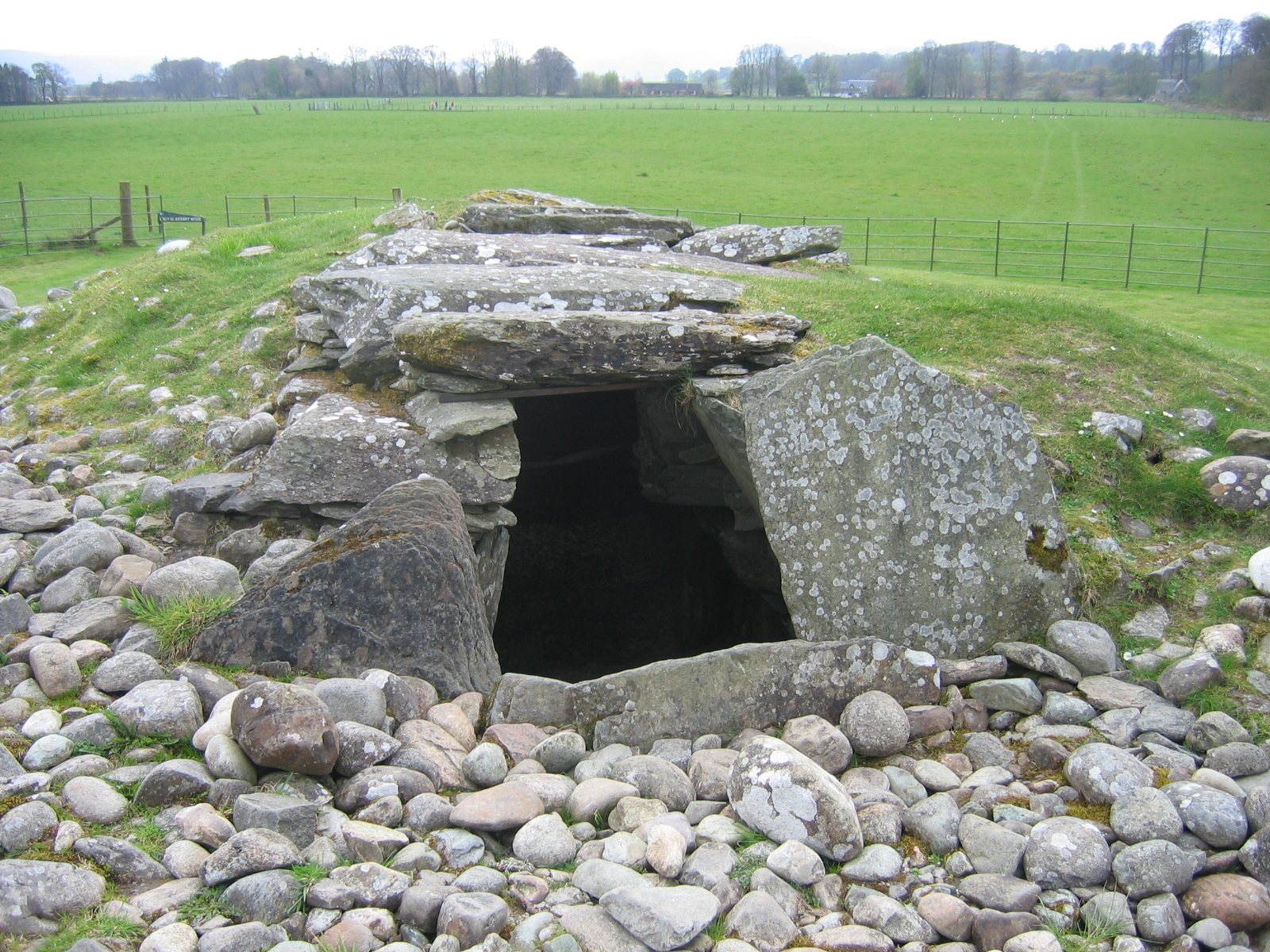
The chamber is trapezoidal, 6.1 m long, 1.9 m wide at the entrance and about 1 m wide at its southwest end. Upright slabs divide it into four compartments. These divisions now rise only slightly above the gravel floor; Greenwell’s records describe them as about 0.8 m high, with the original floor lower than the present one. Seven of the chamber’s original eight capstones remain.
The front compartment is 1.9 m wide and 1.2 m deep. Two portal stones, upright stones flanking the entrance, stand about 0.9 m apart. One is 1.85 m high; the other is broken and now measures 1.4 m, though it was probably once as tall as its partner. The threshold barely projects above ground level. Two flat slabs and dry-stone masonry partly close the entrance, forming part of its original sealing. The side slabs reach the height of the chamber’s capstone, while the end slab rises higher.
In the rest of the chamber, capstones rest on dry-stone masonry about 1.7 m above the present floor. Some slabs on the southeast side overlap like roof tiles. On the northwest side, dry-stone masonry forms the upper wall except at the two ends; it incorporates a large polygonal slab that rises 1.37 m above the floor. A stone on the floor of the third compartment may be part of a lintel, a horizontal stone spanning an opening.
At the chamber’s end, a slab about 0.3 m thick is wedged between the side walls and the end slab. Its present height is about 0.3 m. Greenwell described it at a height of about 0.8 m above the chamber floor, supported at either end by upright stones. Scottish archaeologist Henshall considered the slab structurally important.
Cists and chamber deposits
Secondary cists
One secondary cist, a stone-built burial box, lay about 7 m north of the cairn’s centre. It measured 1.6 m long, 0.94 m wide and 1.2 m deep. Its capstone was in place when examined, and vessel fragments were found. A second cist lies 8.5 m south-southwest of the chamber. Four massive slabs support its large capstone; the box measures 1.15 by 0.8 m and is 0.83 m deep.
Cist in the rear compartment
A smaller cist stood in the southeast corner of the chamber’s rear compartment. It was built from four side slabs, a base slab and a capstone. It had been opened, and its lid lay nearby. Greenwell thought that sherds from drinking cups and scattered unburnt bones around it might have been its original contents. Several layers of fill lay beneath the cist. Just north of it, another slab at the level of its base covered a cremation deposit.
Rear-compartment deposits
A carefully arranged line of small pebbles, about 23 cm wide and finished with flat stones at both ends, ran through the centre of the rear compartment. Beneath it, dark earth held cremated bones; larger bones lay between the pebble line and the chamber walls. The earth also contained three intact and two broken arrowheads, several flint tools, numerous broken quartz pebbles and a cattle tooth. It covered a second pebble line on the compartment floor. A drinking-cup fragment lay on the black earth west of the cist, while a round-bottomed Neolithic vessel, from the later Stone Age, was found beneath undisturbed black earth near the north wall.
Third-compartment deposits
In the third compartment, another dark-earth layer containing cremated bones rested on a pebble line. Sherds from three drinking cups lay above it, including a fragment of the vessel represented in the rear compartment. The deposits were poorly preserved and also yielded human and cattle bones, along with fragments of a coarse, dark, undecorated urn.
Front-compartment finds
Scattered unburnt bones and pottery came from the upper layer of the front compartment. Two flints were found on the chamber floor. The excavated finds are held at the British Museum in London.