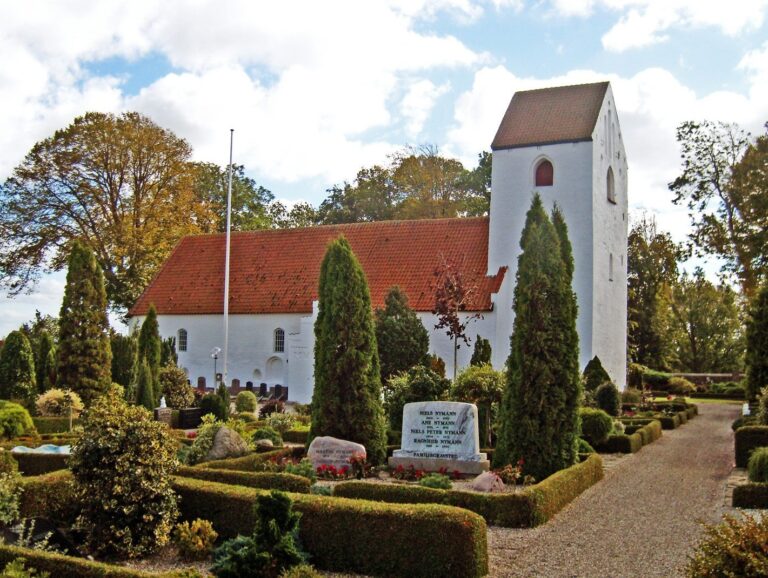
Sulsted Church: A Romanesque Parish Church in Denmark
Site at a Glance
- Popularity
- Very Low
- Country
- Denmark
- Primary era
- Medieval
- Eras represented
- Medieval, Early Modern
- Civilizations
- Danish
- Site type
- Religious
- Remains
- Church
On this page11 sections
History
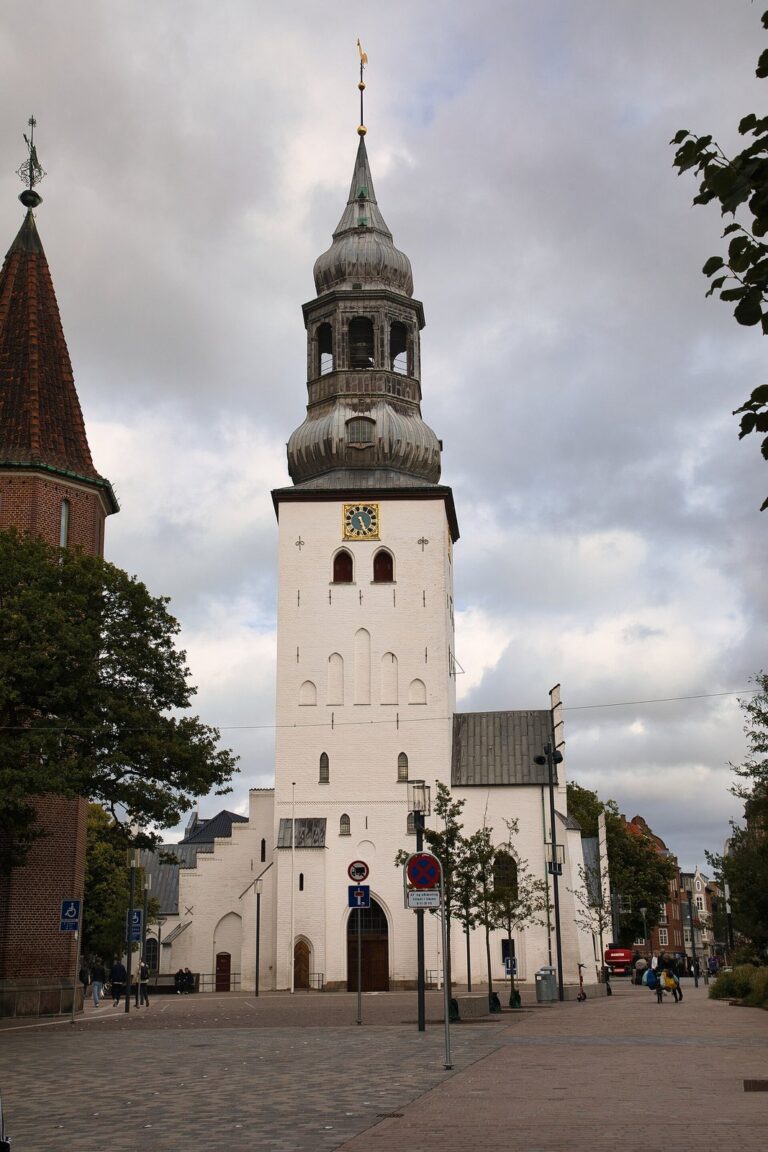
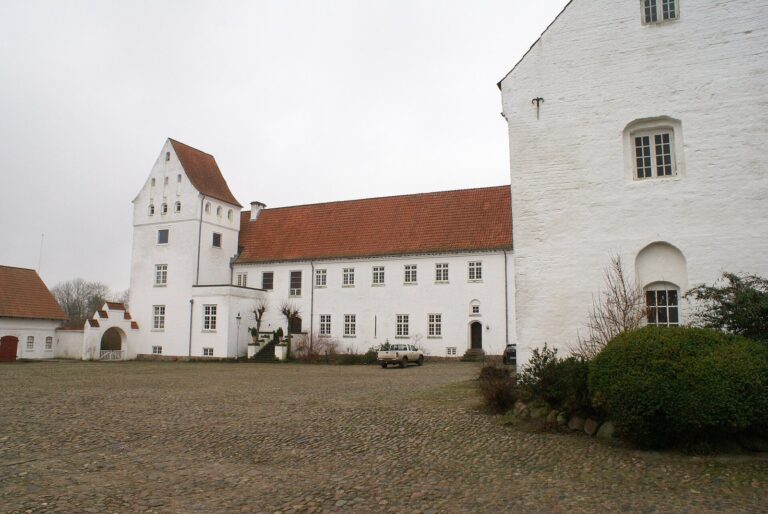
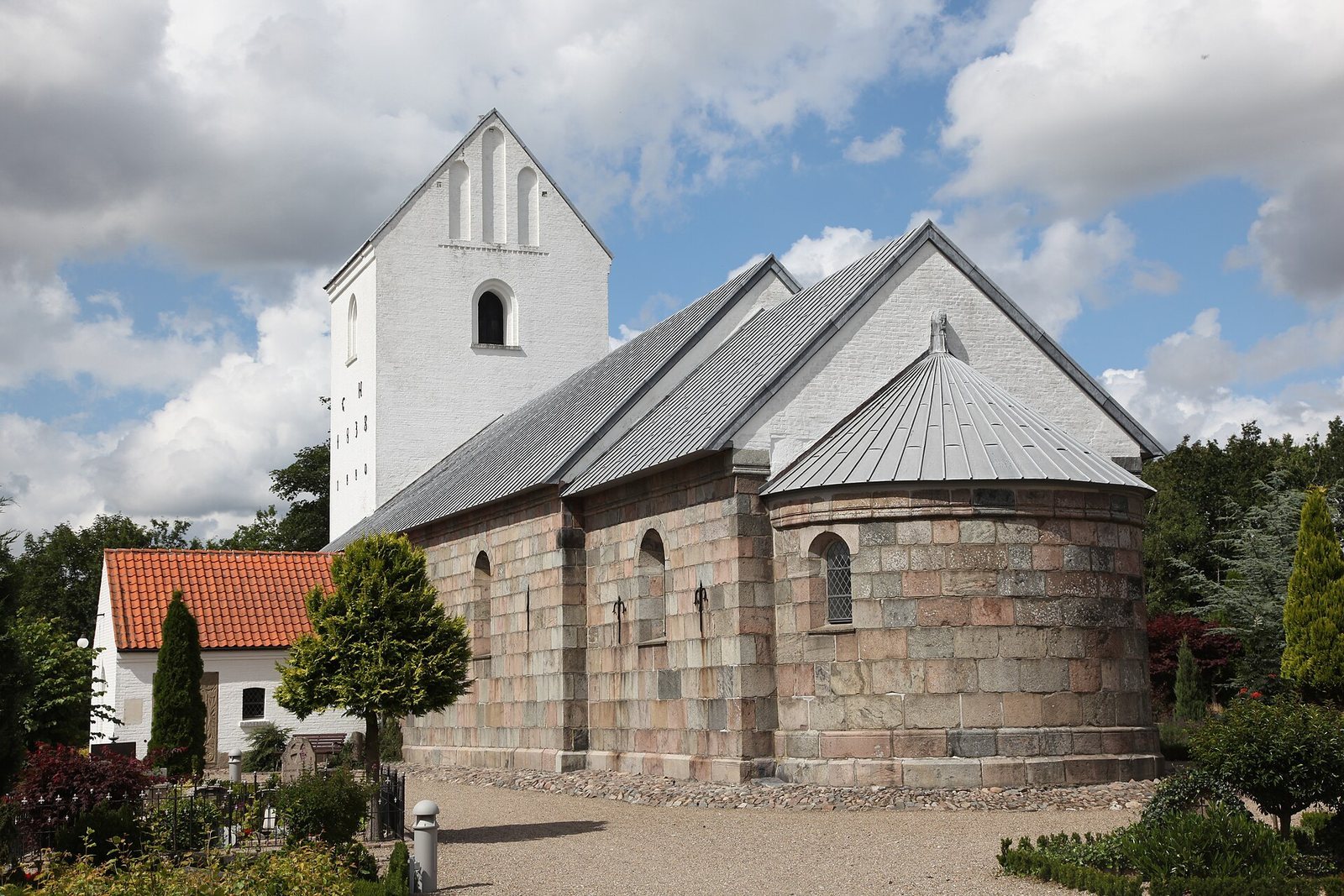
Sulsted Church is a parish church in Sulsted, Denmark, built around 1150–1200 in the Romanesque style, a medieval architectural style distinct from Gothic. Today it is a Lutheran church in the Church of Denmark, within Sulsted Parish, Aalborg Diocese, and Aalborg Nordre Deanery.
Medieval building and painted decoration
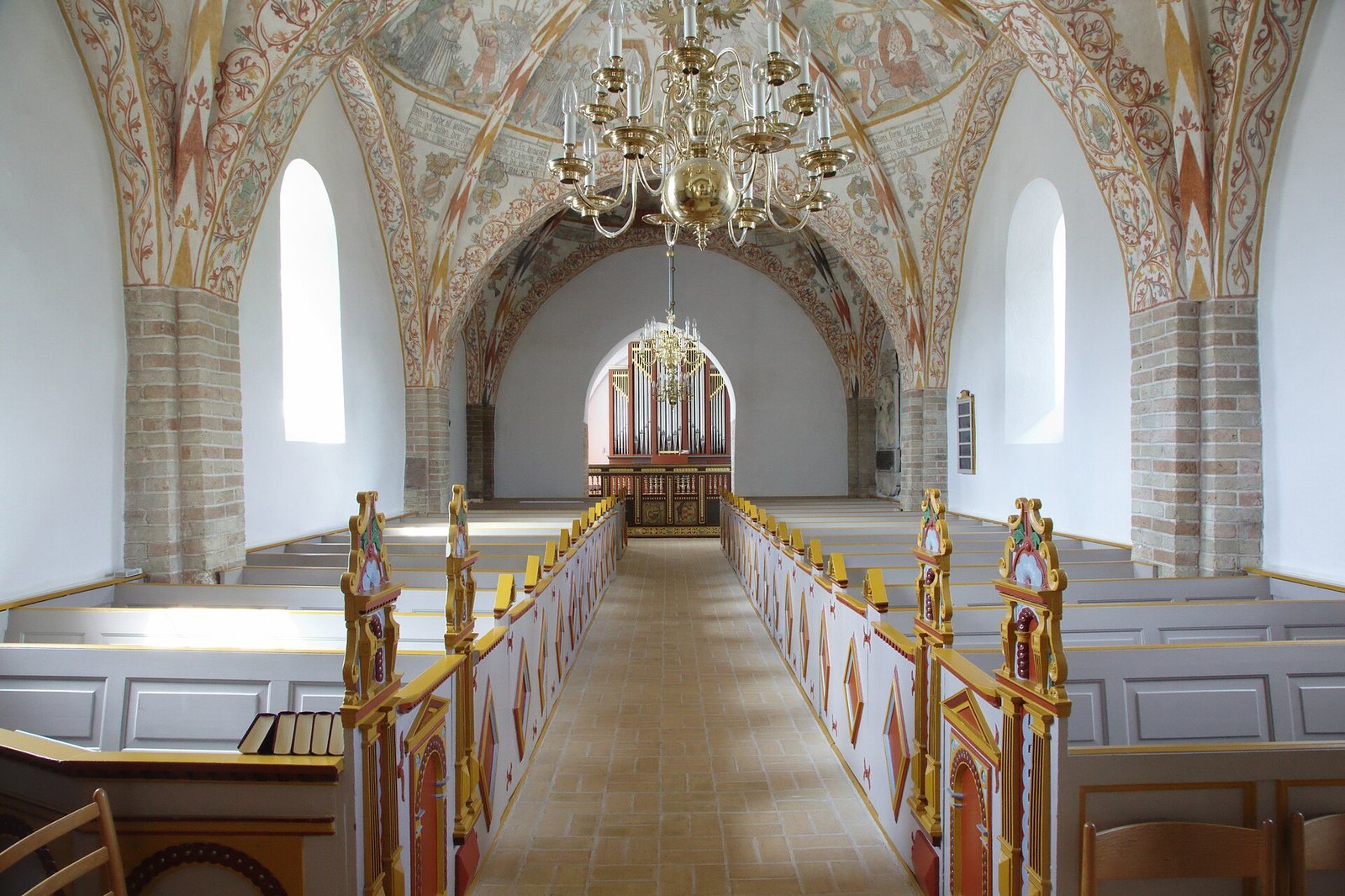
Gothic vaults, curved ceilings characteristic of a medieval style distinct from Romanesque, were added in the early sixteenth century. In 1548, Hans Maler of Randers painted the church’s frescoes, pictures made on wet plaster.
The paintings were left uncovered after the Reformation, the sixteenth-century movement that led to the establishment of Protestant churches in Europe. About fifty years after they were painted, the figures’ clothing was changed to reflect contemporary fashion. The 1882–85 church restoration removed those alterations. The pulpit was restored separately in 1888–89.
Høg family patronage
The Høg family of Vang, also spelled Høeg, owned the church for seven generations and strongly influenced its development. Around 1600, Stygge Høg, a member of the Danish nobility, paid for the altarpiece, pulpit, and baptismal font.
Remains
The church’s Romanesque structure is built chiefly of ashlar, carefully cut stone laid in regular blocks. Later Gothic vaults cover the nave and choir, while paintings and richly decorated furnishings shape the interior.
Church fabric and painted vaults
Masonry and vaults
The nave vault is divided into three sections, and the choir also has a painted vault. Together, the vaulted ceilings form the main surface for the church’s extensive painted decoration.
Fresco cycle
The paintings across the vaults present episodes from the life of Jesus in chronological order. In the nave, the sequence begins with the Annunciation, when Gabriel tells Mary she will bear Jesus, and continues through the Passion, the events leading to his crucifixion, to his death and burial. Scenes include the Massacre of the Innocents, the Gospel story of Herod’s order to kill young boys in Bethlehem; Jesus washing his disciples’ feet; and Pontius Pilate presenting Jesus to the people. Pilate was the Roman prefect of Judaea in the Gospel accounts of Jesus’ trial.
Other nave scenes show Jesus being taken down from the cross and laid in a tomb. The choir vaults carry further New Testament episodes connected with the Creed, a concise statement of Christian belief, and the Virgin Mary. Paintings also appear above the altar.
Liturgical furnishings
Altarpiece
The carved and gilded altarpiece is in the High Renaissance style, known for balanced compositions and idealized forms. Its central scene shows the Crucifixion. Mary stands among the mourning women; one Roman soldier on horseback pierces Jesus’ side with a lance, while another offers him a sponge soaked in vinegar. At lower right, soldiers cast lots for Jesus’ tunic, and Jerusalem appears in the background.
The left panels depict the Annunciation, with Gabriel and a dove representing the Holy Spirit, and the Nativity. In the Nativity, rays of light surround the infant Jesus as Mary stands behind him. Joseph holds one of Jesus’ red stockings, animals look on, and crowned shepherds stand behind them, one playing a flute. The right panels show the Circumcision and the baptism of Jesus by John.
The predella, the lower section of the altarpiece, depicts the Last Supper at the moment Jesus identifies his betrayer. A lamb, chalice, and bread accompany the scene; Judas is identified by his moneybag, while the other apostles react with alarm. Reliefs above the central Crucifixion include the Resurrection and another New Testament episode.
Pulpit
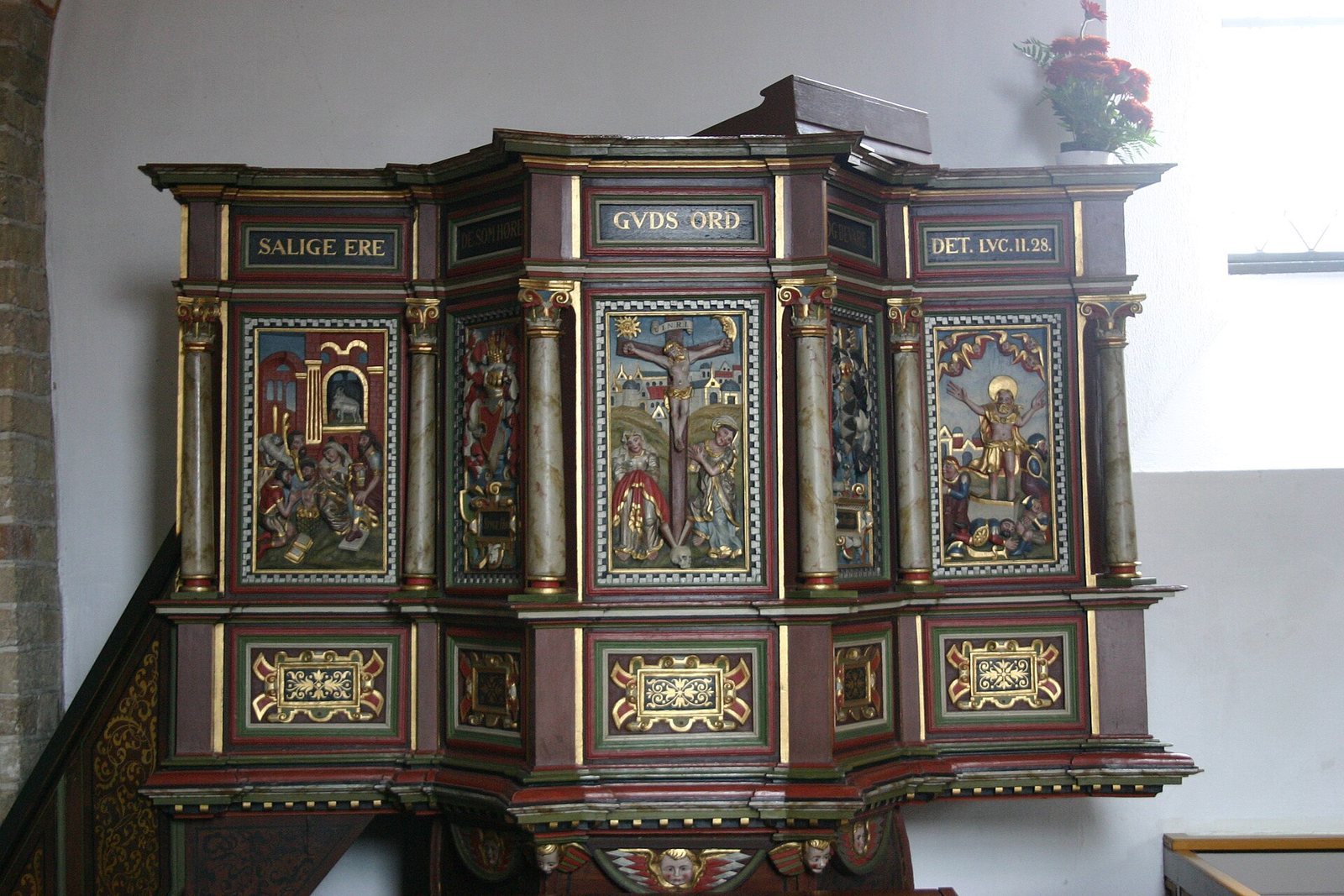
Five panels across the pulpit front combine carved scenes with the coats of arms of Stygge Høg and his wife, Anne Gregersdatter Ulfstand. The scenes show the visit of the three wise men, the Crucifixion, and the Resurrection. In the Crucifixion relief, Jesus’ hands are nailed to the cross and his side wound is open. Gold highlights his loincloth, hair, beard, and crown of thorns. A skull at the foot of the cross refers to Golgotha, the place identified in Christian tradition as the site of the Crucifixion. Mary, Jesus’ mother, and Mary Magdalene stand beside the cross in white head coverings edged with gold.
In the Resurrection scene, Jesus rises from the tomb with a halo. Six angel heads appear in the sky above two sleeping soldiers, one seated and the other lying on the ground. A dark-bearded man stands to one side and a woman to the other. A panel on the pulpit’s right side depicts the Ascension, with the lower part of Jesus rising between two angels, his footprints below, and the disciples gathered beneath. An inscription along the upper edge quotes Luke 11:28: ‘Blessed are those who hear the word of God and keep it.’
Baptismal font
The baptismal font’s basin has alternating angel heads and flowers around its upper edge, with lion heads and flowers below. Busts on tapering columns decorate the base. Its simpler canopy was once mounted so it could be raised and lowered. The church may earlier have had a granite font, possibly at its west end.