Sebber Priory: A Medieval Nunnery in Denmark
Site at a Glance
- Popularity
- Very Low
- Country
- Denmark
- Primary era
- Medieval
- Eras represented
- Medieval
- Civilizations
- Danish
- Site type
- Religious
- Remains
- Church
On this page9 sections
History
Before the priory
Sebbersund was already a village during the Viking Age, the period of Scandinavian seafaring, settlement, and trade conventionally dated from the late eighth to the eleventh centuries. Ships travelling the Limfjord, a waterway in northern Jutland, used the settlement as a trading place on routes between the North Sea and the Baltic. The area also appears to have held religious importance before the arrival of Christianity.
Foundation and religious community
Sebber Priory, also known as Sebber Kloster, was a nunnery in Denmark, established by 1268 and possibly as early as 1250. Its foundation history is uncertain. It became a house for Benedictine nuns, members of a monastic community following the Rule of Saint Benedict, although it may have begun as an Augustinian house, belonging to a tradition shaped by the teachings and rules associated with Saint Augustine. The priory was dedicated to Saint Lawrence, an early Christian martyr traditionally associated with Rome.
Dissolution and estate ownership
The priory ended in October 1536, when King Christian III and the State Council adopted the Lutheran Ordinances. These regulations established Lutheranism, a Protestant Christian tradition, as Denmark’s state church. The priory and its estate returned to the Crown, which granted them to Christian Friis, a nobleman from Aalborg.
In 1581 the estate passed to Oluf Brockenhuus, who lived there until his death in 1608. Major General Casper Christoffer Brockenhuus became its sole owner in 1677. He sold the farm in 1697 to a merchant born in 1647, who died in 1707. Sebber Abbey later passed to Jørgen Jensen Gleerup (1748–1798). Subsequent generations strengthened the estate’s finances and improved its management.
Later changes
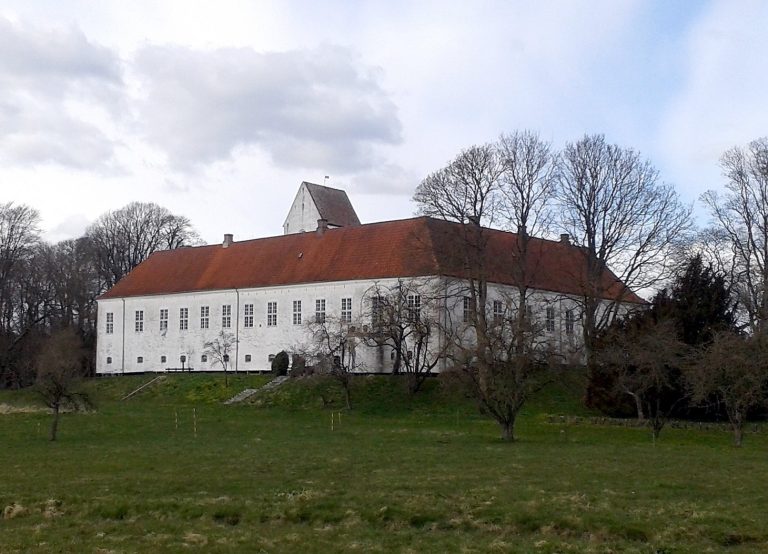
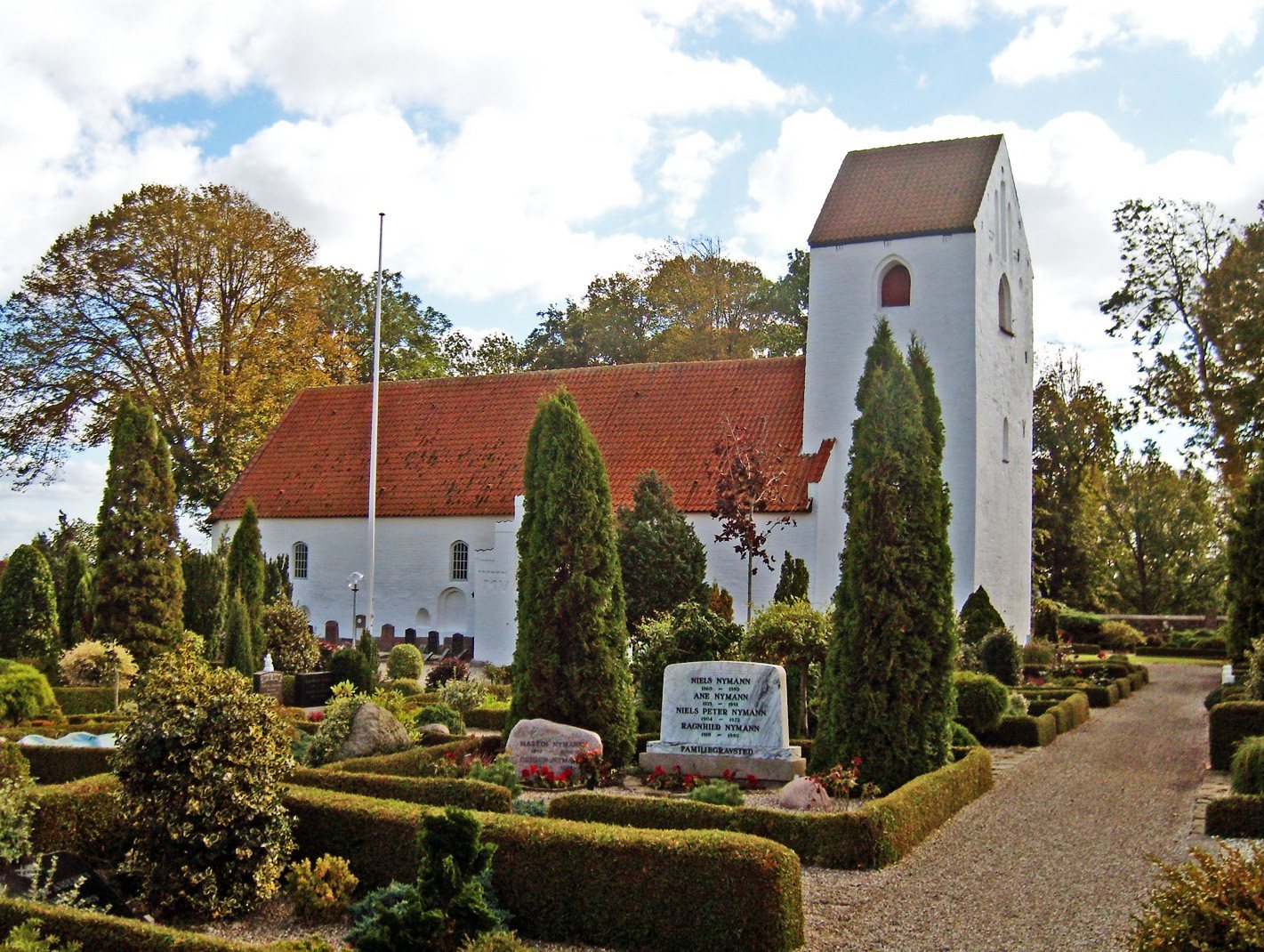
The Tesdorf family has owned the manor since 1957. Its main building was destroyed by fire in 1959 and rebuilt, and the manor underwent restoration in 2006. Sebber Church, the former priory church, continues to serve as a parish church in the Diocese of Aalborg, a territorial district administered by church authorities.
Remains
Priory complex and earlier burials
The priory was built of red brick in the Gothic style, a medieval architectural tradition. Its relatively isolated setting was intended to support the contemplative life of a community of about 12 Benedictine nuns. The original complex included a refectory, or monastic dining room, an assembly hall, a dormitory, and the priory church. More than 300 Viking-age graves were found in the area later occupied by the priory.
Sebber Church
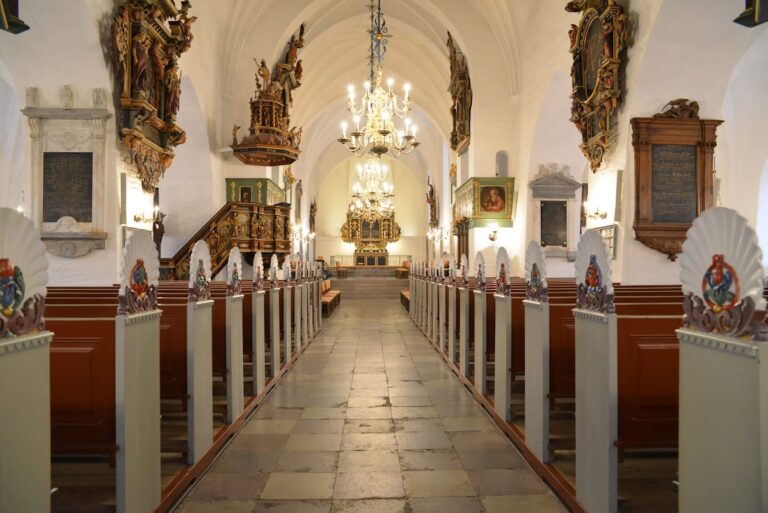
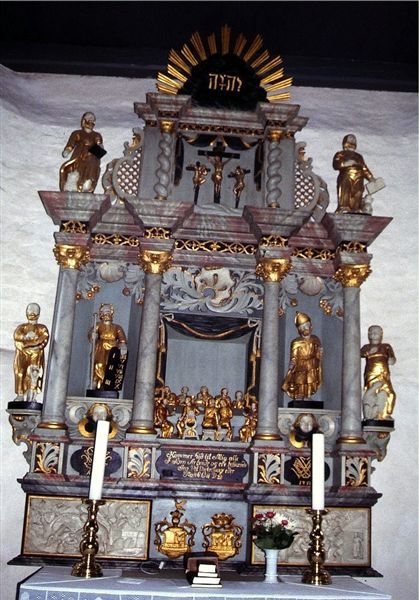
The former monastery church was the priory’s principal building and retains much of its medieval form. Its baptismal font and crucifix date from the period when it served as the priory church.
Church and manor setting
Sebber Church is directly connected to Sebber Abbey manor house, and a walking path links the church with the manor’s main building. The site is now occupied by the church, the manor house, and Sebber Kloster Golf Club.