Dolmen de Azután: A Prehistoric Collective Tomb in Spain
Site at a Glance
- Popularity
- Low
- Country
- Spain
- Primary era
- Stone Age
- Eras represented
- Stone Age
- Civilizations
- Unclassified
- Site type
- Burial
- Remains
- Tomb
On this page7 sections
History
The Dolmen de Azután is a prehistoric collective tomb in Azután, Toledo province, Spain. It was the first megalithic monument identified in the interior of the southern Meseta to yield radiocarbon dates. Those dates helped place prehistoric communities in the middle Tagus basin and connect them with the wider spread of megalithic monuments across inland Iberia.
Settlement and funerary use
The settlement beneath the site dates to the sixth millennium BC. The Neolithic, a period associated with farming and settled communities, followed in this region with the tomb’s use in the fifth millennium BC.
People used the tomb for burials and shared deposits of human bones during the middle and late Neolithic. Its funerary use continued into the Chalcolithic, or Copper Age, a late prehistoric period marked by copper use. This included a maritime Bell Beaker phase in the fourth millennium BC, an archaeological style named for its distinctive pottery.
Excavation and protection
Systematic excavations took place from the early 1980s through 2001. In 2008, Spain designated the monument an Asset of Cultural Interest, a formal heritage-protection status. The designation was formally recorded on 12 August that year.
Remains
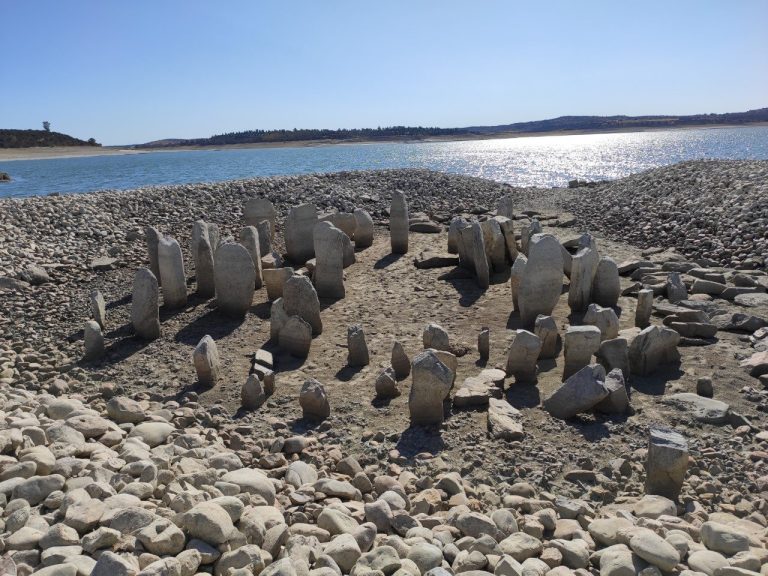
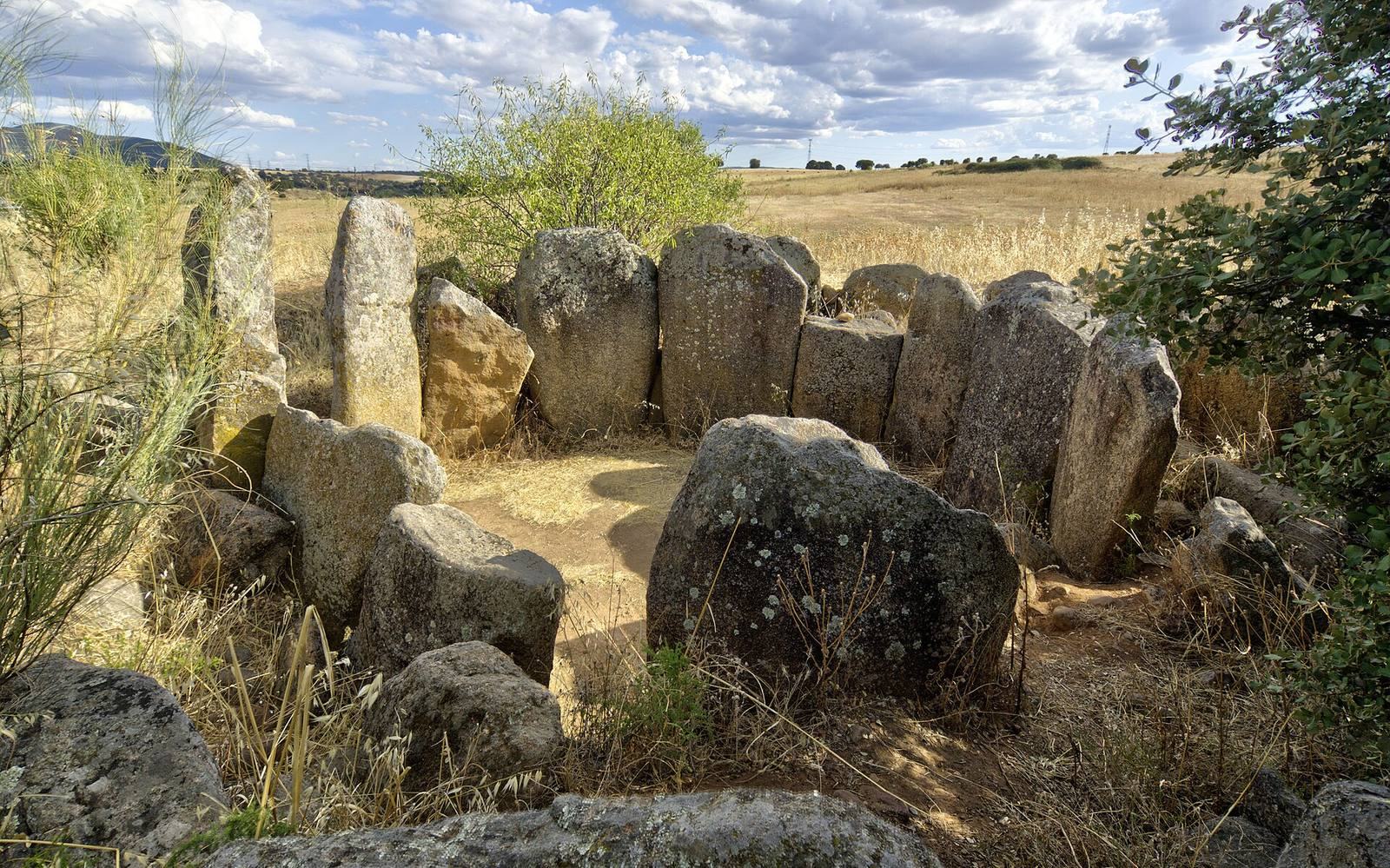
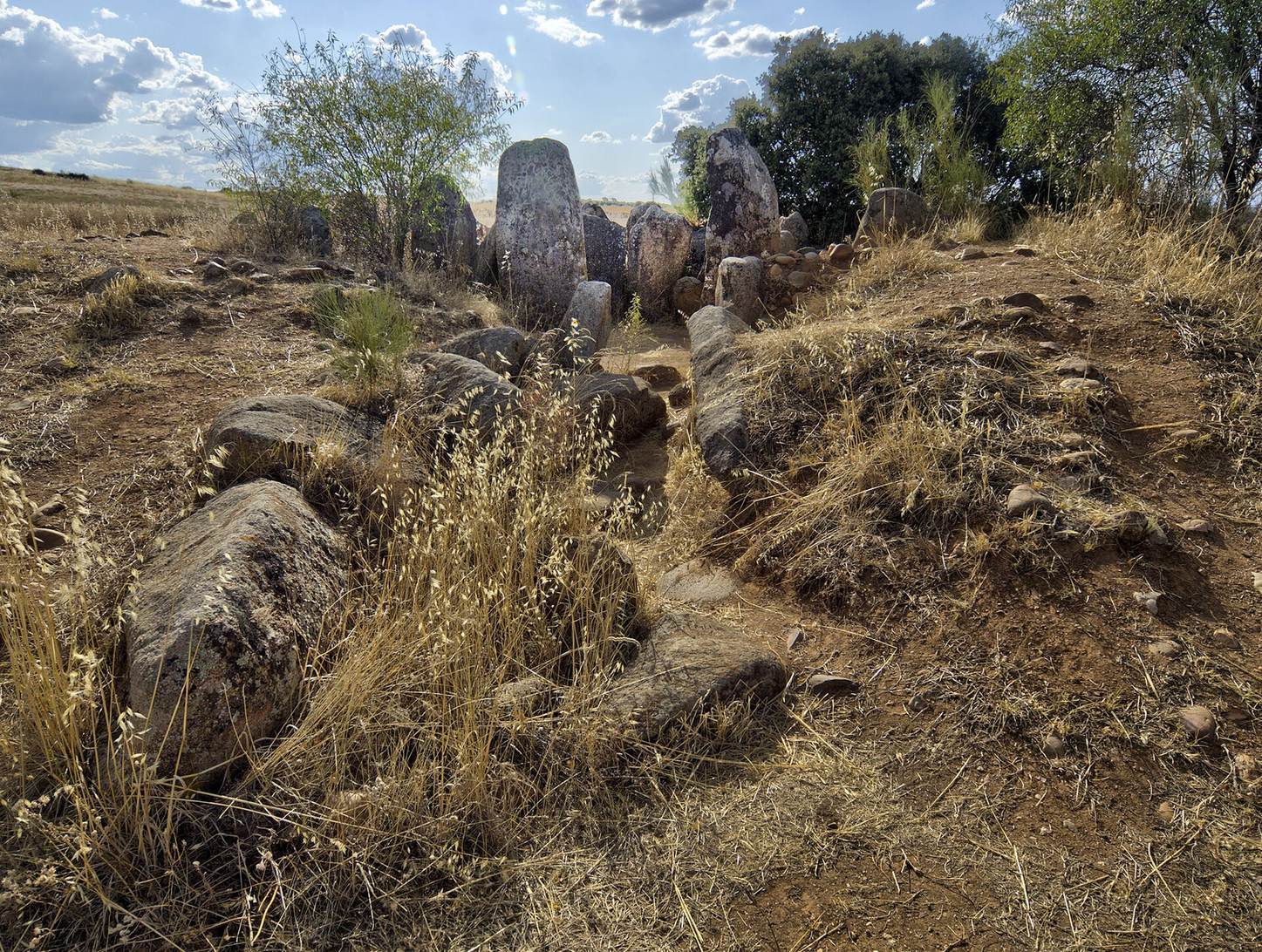
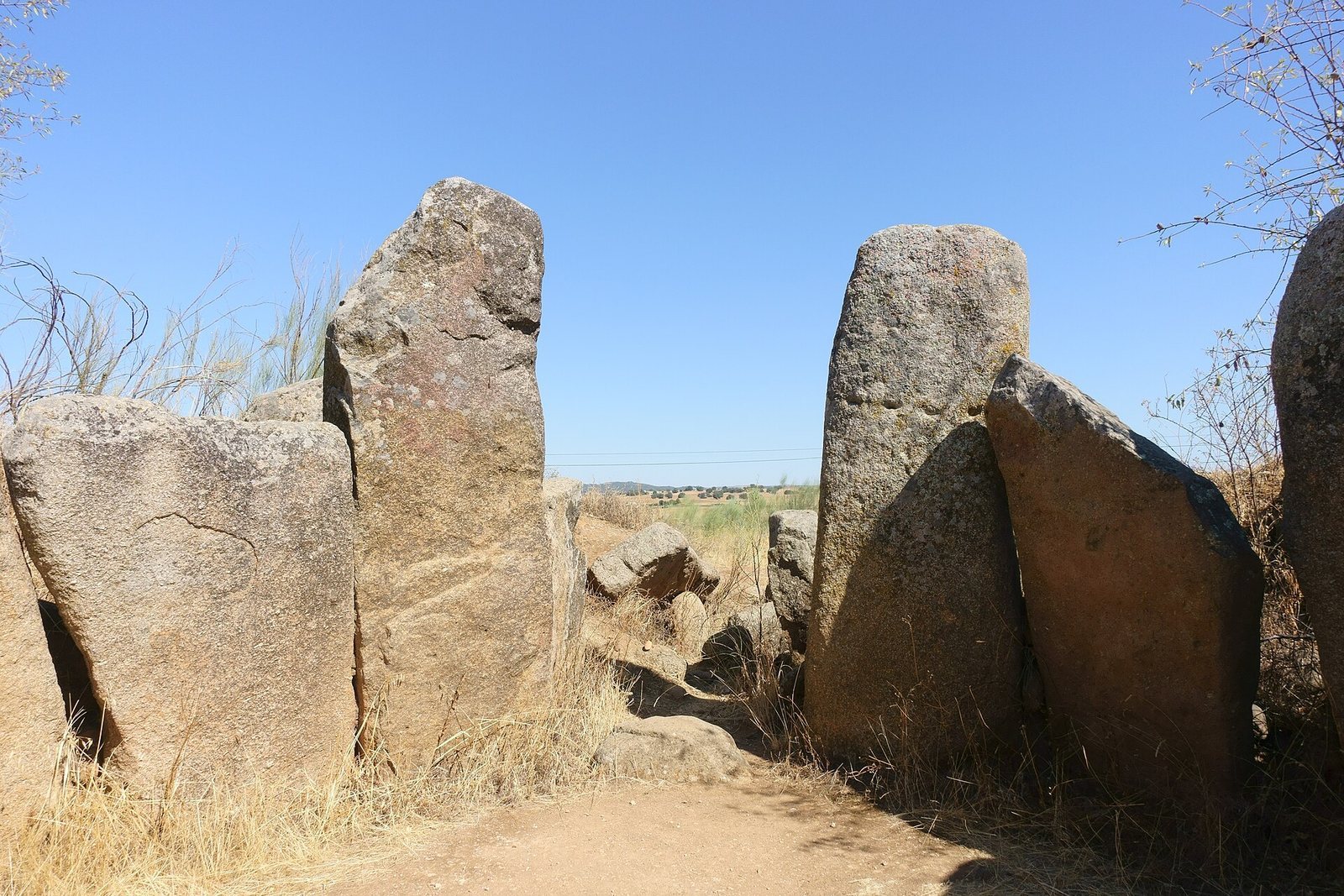
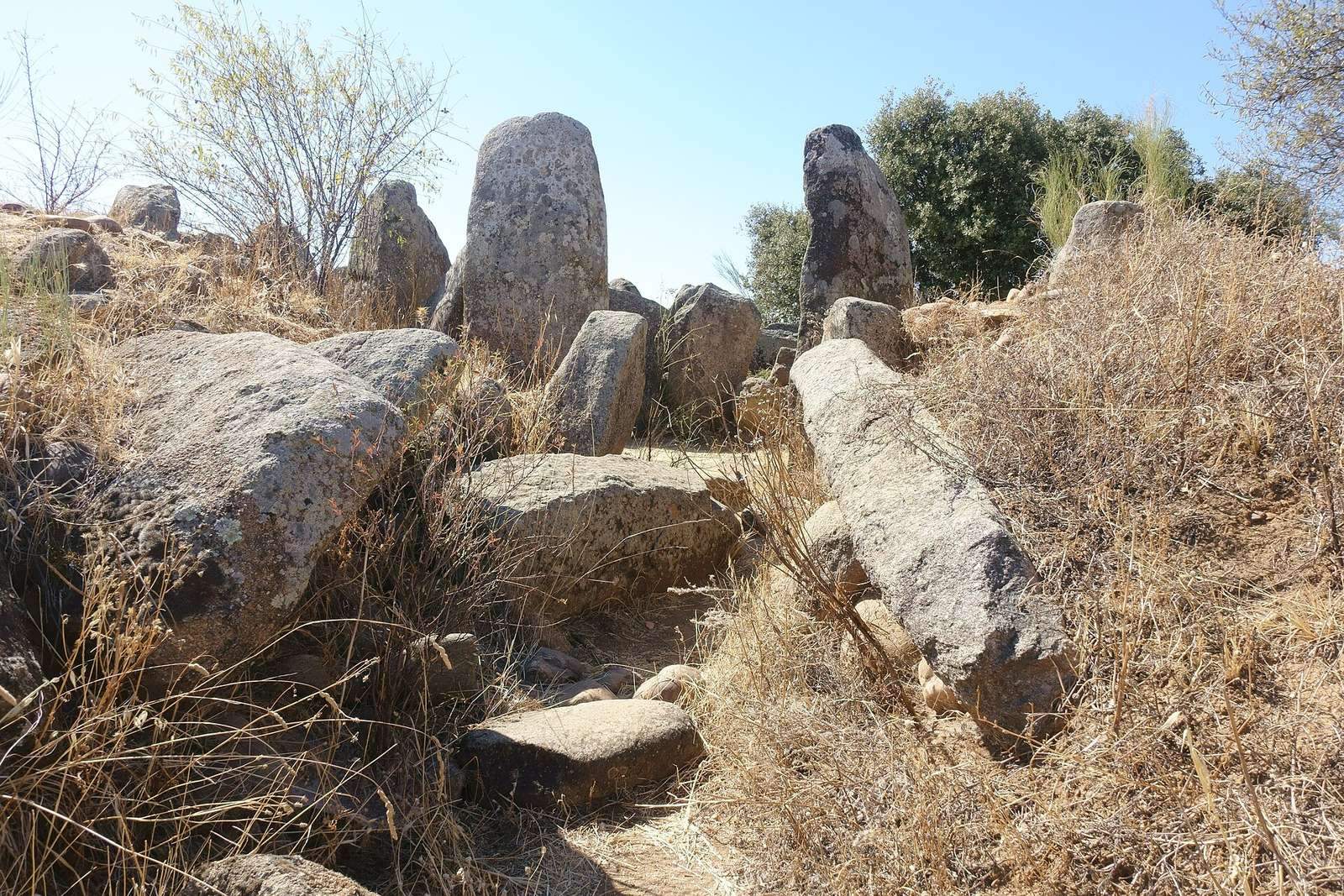
The circular dolmen lies beneath a peripheral mound. Its chamber and long passage are formed from large upright stones and covered by a roof of lintels. The funerary space is more than 12 metres in diameter, and the two tallest stones at the entrance rise above 2 metres.
Chamber and passage
A remnant of a side chamber is visible on the left. Its presence has been interpreted as evidence that a corresponding chamber may have stood on the right. Excavation was partial, leaving archaeological deposits and traces of habitation intact beneath the mound.
Engraved and sculpted stones
The chamber stones carry paintings and finely incised wavy and zigzag bands, alongside broader geometric and human-shaped engravings and low-relief carvings. Freestanding sculpted menhirs, or upright standing stones, also occupy the chamber.
Finds and landscape
Finds include numerous pottery fragments, bone tools, chipped and polished stone tools, and beads. The monument lies near the Tagus River and the Linares and Anguilucha streams, within an archaeological area associated with groundwater outcrops.