Necropolis of Prato Rosello: An Etruscan Burial Ground in Italy
Site at a Glance
- Popularity
- Low
- Country
- Italy
- Primary era
- Iron Age
- Eras represented
- Iron Age, Classical
- Civilizations
- Etruscan
- Site type
- Burial
- Remains
- Necropolis
On this page15 sections
History
Etruscan burial ground
The Necropolis of Prato Rosello is an Etruscan burial ground near Poggio alla Malva in Italy, with burials dating from the eighth to fourth centuries BCE. The Etruscans were an ancient people of central Italy whose civilization flourished before Roman rule.
The ridge may also have held an Etruscan settlement before its use for burials. Evidence at Tumulus B indicates an earlier burial phase, including an eighth-century BCE interment interpreted as the grave of a warrior.
Identification and excavation
The area was identified as a necropolis in 1965, after which regular excavations began. Tumuli A and B were first located under dense vegetation. A fire in 1968 cleared much of the growth and revealed further burials.
Investigations examined one tomb in 1999-2000 and another in 1999. In nearby burial areas, a grave assemblage came to light at Grumaggio in 1942, while three funerary markers were found at Grumolo in 1929. Finds from Prato Rosello are preserved at the Museo Archeologico di Artimino alongside material from Comeana and other parts of the Artimino settlement area.
Remains
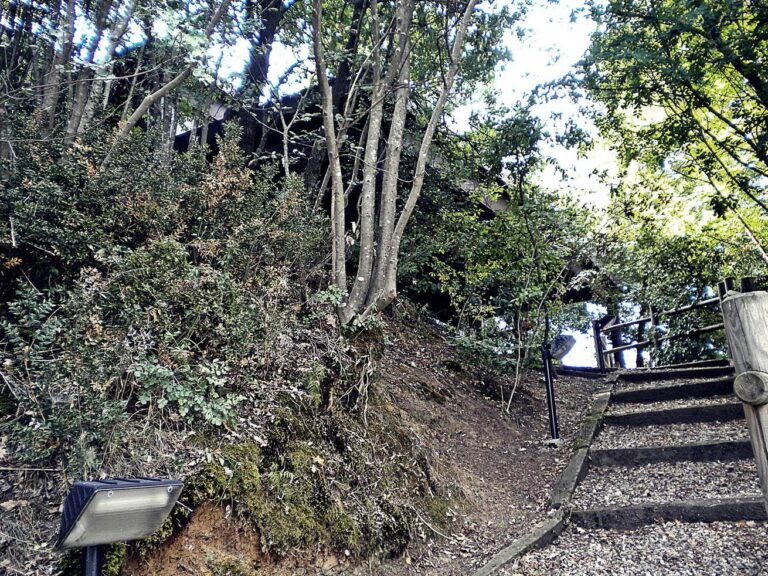
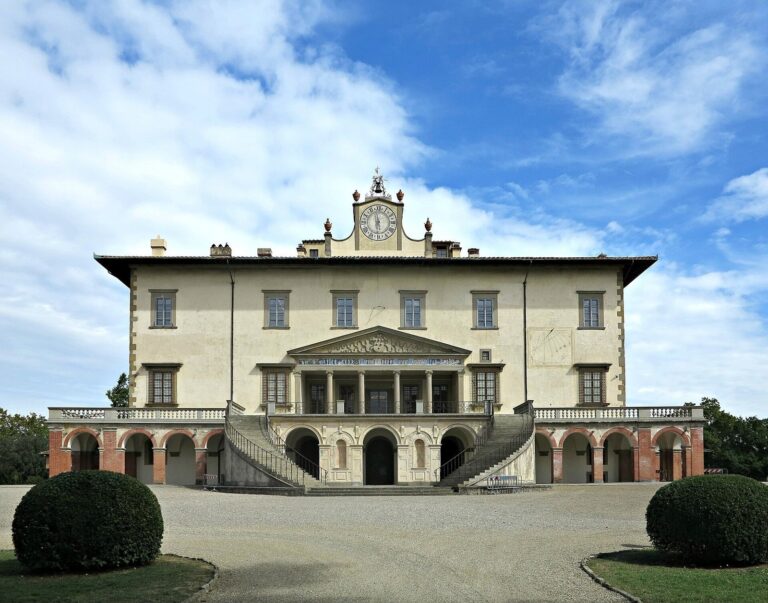
The necropolis lies in woodland on the slope below the Medici Villa of Artimino, a villa associated with the Florentine Medici family, on a ridge descending toward the Arno. It contains several burial mounds, including those identified as A, B, C, X, and Z. The described tombs include chambers built with fitted stone blocks or slabs, reached by entrance passages and stairways.
Burial mounds
Tumulus A
Explored in the second half of the 1960s, Tumulus A has a reconstructed mound. Inside are two large spaces and a central area containing two small cells. One space is built from small stones, while the other uses large slabs and is thought to be the burial chamber. A lidded amphora used for a cremation burial was recovered here; it dates to the late sixth century or, at the latest, the early fifth century BCE.
Tumulus B chamber
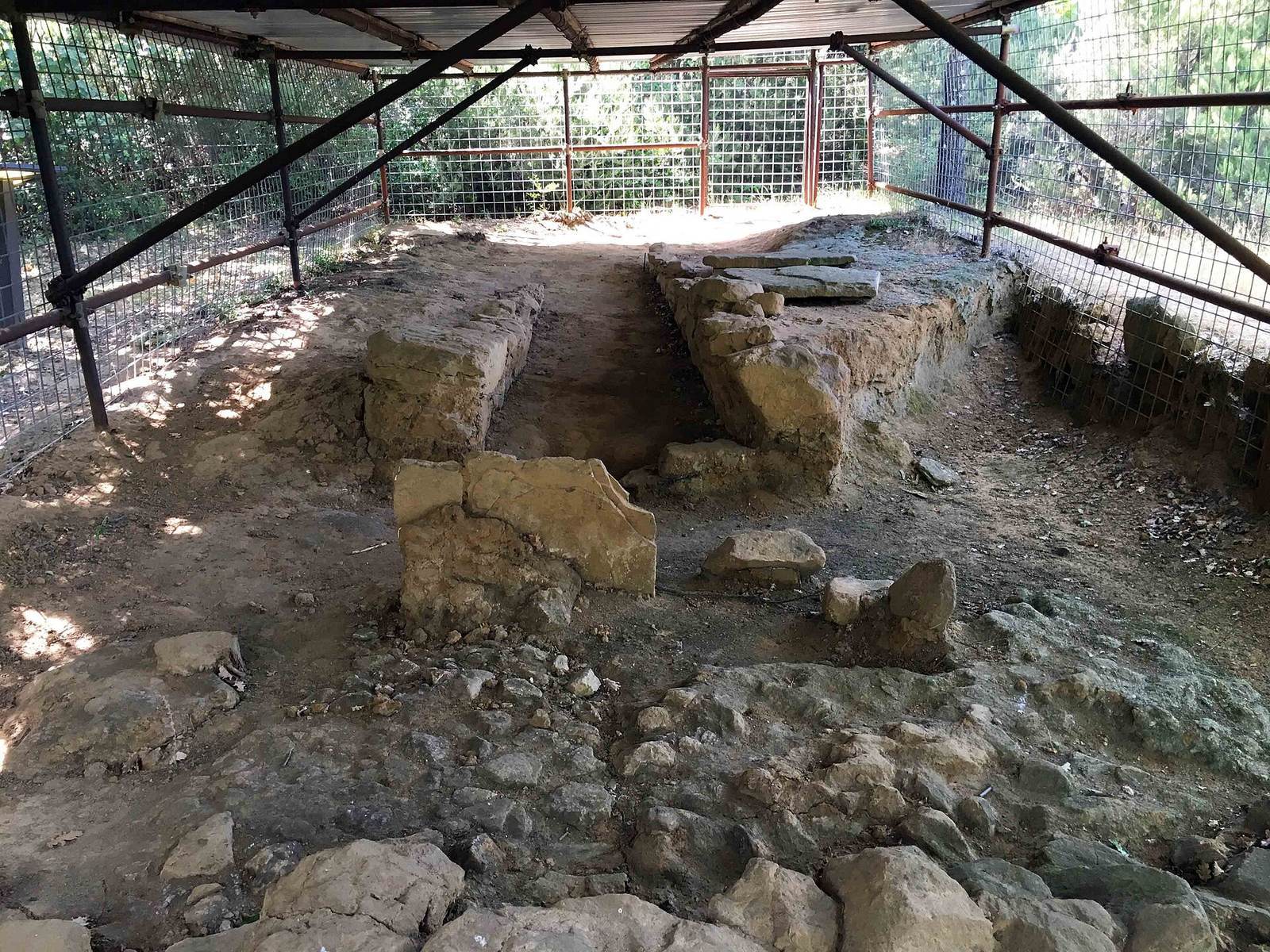
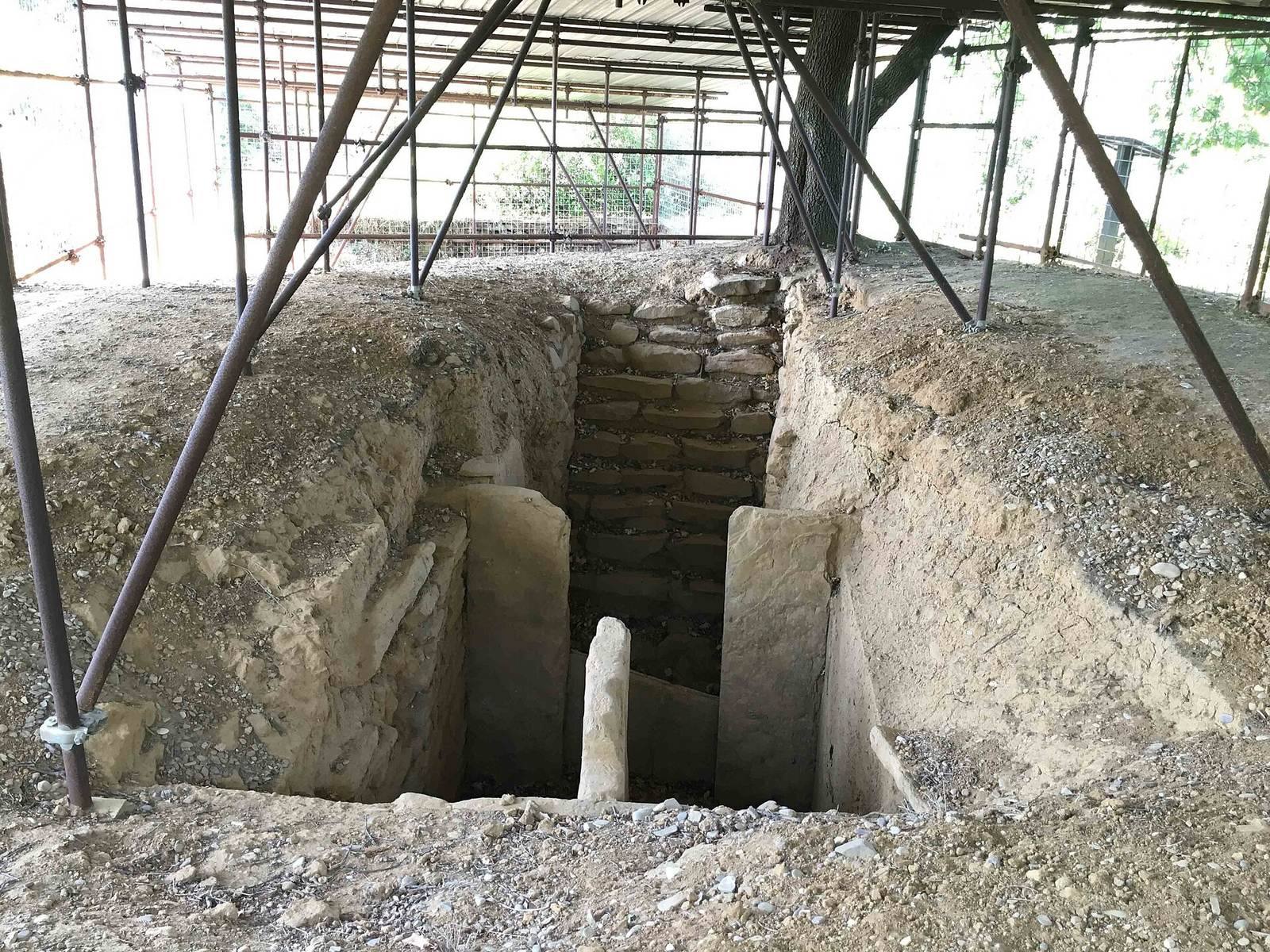
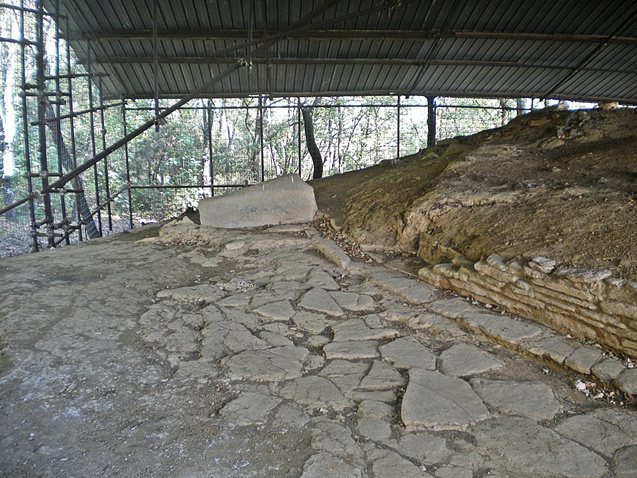
Tumulus B is the largest mound. A circular ring of sandstone slabs encloses it, and paving on its southwest side protects the surrounding ground. At the center, a rectangular chamber is reached by a long entrance passage and a stairway. Its walls consist of blocks laid in horizontal courses. A rectangular pillar in the middle supported the roof and divided the room into two spaces. Part of the roof survives, made from overlapping large slabs and dating to the mid-seventh century BCE.
Earlier tomb beside Tumulus B
Beside the chamber’s left wall is an earlier false-well tomb, a burial shaft shaped like a well, about three metres deep. It contains a stone chest formed from upright slabs, a single-piece stone floor, and a roof of three sloping slabs. Its grave goods include a biconical cinerary urn, a bronze vessel for cremated remains; vessels for a funerary banquet; an iron spearhead; a bronze breastplate; and an iron sword. These weapons and armor are the basis for interpreting the deceased as a warrior.
Tumulus C
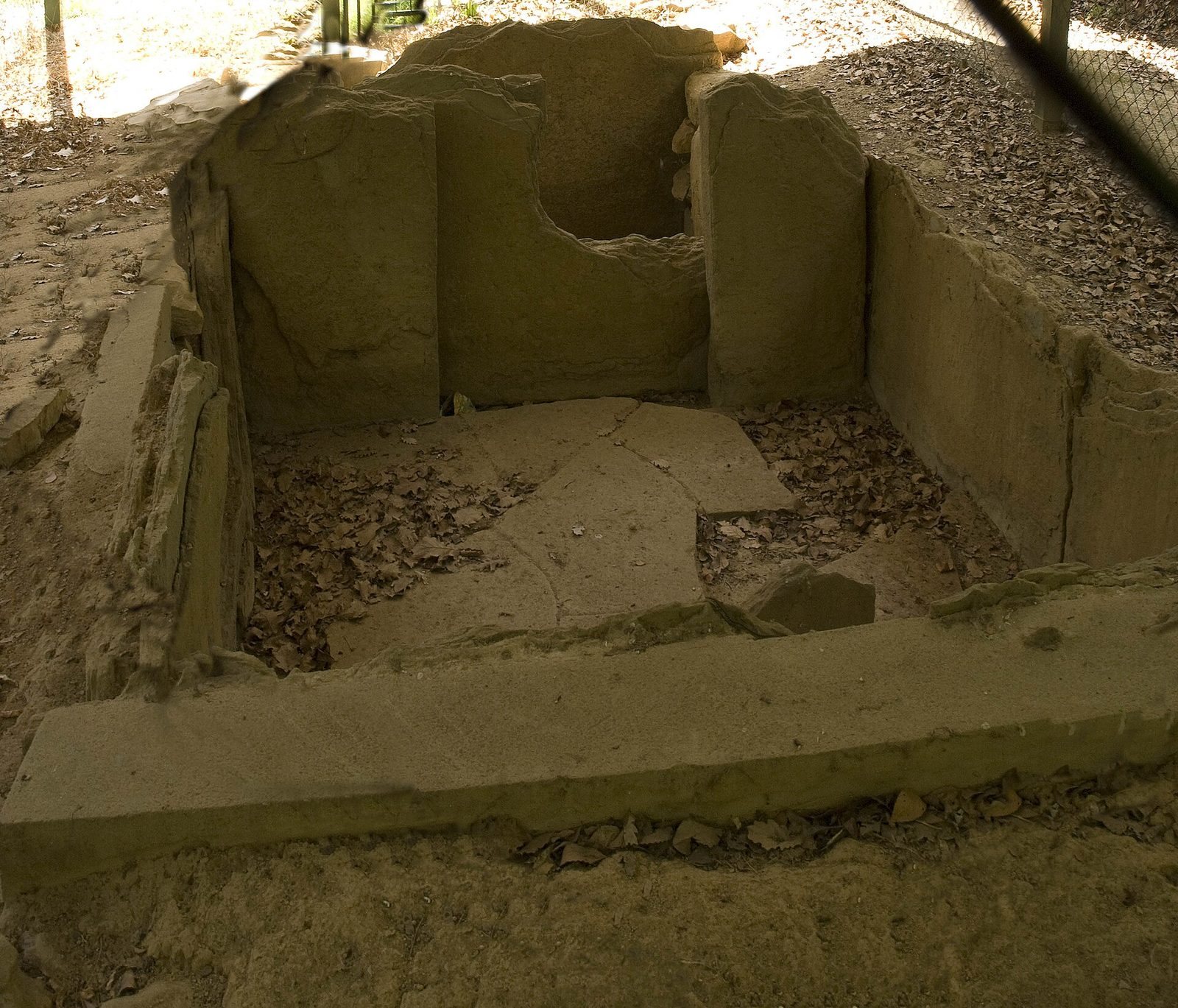
Tumulus C dates from the final two decades of the seventh century to the opening years of the sixth century BCE. Its rectangular chamber is partly cut into rock and reached by a steep stairway and a short entrance space. Large interlocking sandstone slabs form its walls. A central stone block set against one wall supported the roof and divided the room into two cells. An outer enclosing structure bounded the burial, while an altar terrace was used to lay out the deceased.
Finds from Tumulus C include a three-part incense burner made in bucchero, a dark Etruscan pottery often given a burnished surface. It bears an inscription in the northern Etruscan alphabet. Other finds include open-shaped bucchero vessels, pear-shaped perfume flasks, and ring-shaped vessels.
Other chamber tombs
Chamber tomb investigated in 1999-2000
This tomb has a long, narrow entrance passage built from regularly shaped blocks. Two small stone pieces formed thresholds at the former doorway between the passage and the chamber. The rectangular chamber has a broad, compact floor of rubble and a roof of overlapping slabs, some of which remain in place. Its grave goods include coarse, generally unglazed impasto pottery in the form of a cinerary urn decorated with sphinxes at the shoulder; perfume vessels in an Etruscan style influenced by Corinthian Greek pottery; cups coated with tin to resemble silver; and thin bronze sheets.
Small chamber tomb
The small tomb explored in 1999 has walls of large, carefully interlocked stone blocks. A tall central block supported the roof and divided the chamber. Floor slabs of different thicknesses and shapes also mark this division. The entrance may have been approached by a steep ramp or stairway and a small entrance space. Ancient looting and damage complicate interpretation of this part of the burial. Finds include part of a seventh-century BCE pottery cinerary urn and a well-preserved iron knife with a curved blade, studs, and a circular pommel.
Nearby burial areas
Grumaggio
The tumulus of Grumaggio lies below Prato Rosello near Poggio alla Malva, facing the Arno and former quarries for grey sandstone used in Tuscan building. Its grave assemblage includes a large Etruscan mixing vessel for wine and water from the fourth century BCE, decorated in the red-figure technique, where figures retain the clay’s natural color against a painted background. Bronze vessels were also part of the assemblage.
Grumolo
At the Grumolo estate, north-northeast of the villa, the burial area includes a mound with a chamber tomb. Three upright stone grave markers were found there.