Dudenrother Schanze: Remains of a Lowland Castle in Germany
Site at a Glance
- Popularity
- Very Low
- Country
- Germany
- Primary era
- Medieval
- Eras represented
- Medieval
- Civilizations
- Holy Roman Empire
- Site type
- Military
- Remains
- Castle
On this page6 sections
History
Possible medieval origins
Dudenrother Schanze is a lowland castle site at Dudenroth, Germany. Its described form has been interpreted as a medieval motte, an artificial mound used as a castle base, often for a tower. The date when the fortification was built is unknown.
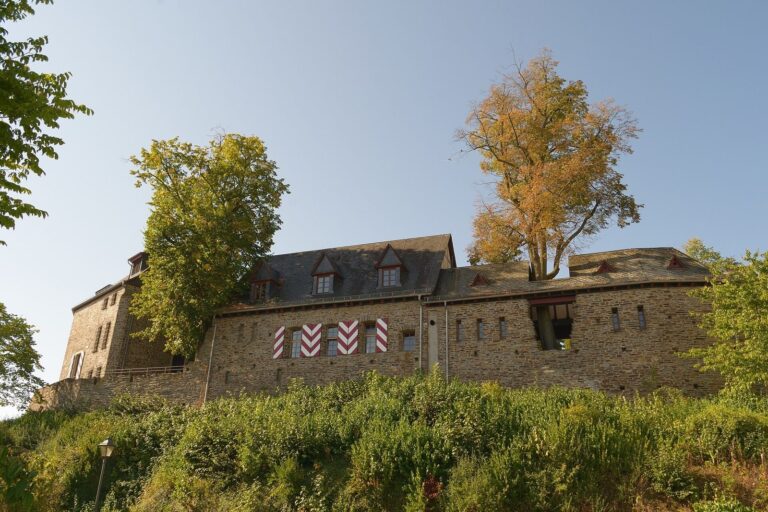
Dudenroth is now part of Braunshorn in Rhineland-Palatinate’s Rhein-Hunsrück district. The Freiherren von Braunshorn, a local baronial family, have been proposed as possible builders: Dudenroth lay within their lordship, and their ancestral seat, Braunshorn Castle, was about two kilometres away.
Railway construction
In the early twentieth century, the Hunsrück Railway was built east to west through the middle of the mound. A topographic map from 1903 shows the railway and a remnant of the rampart.
Remains
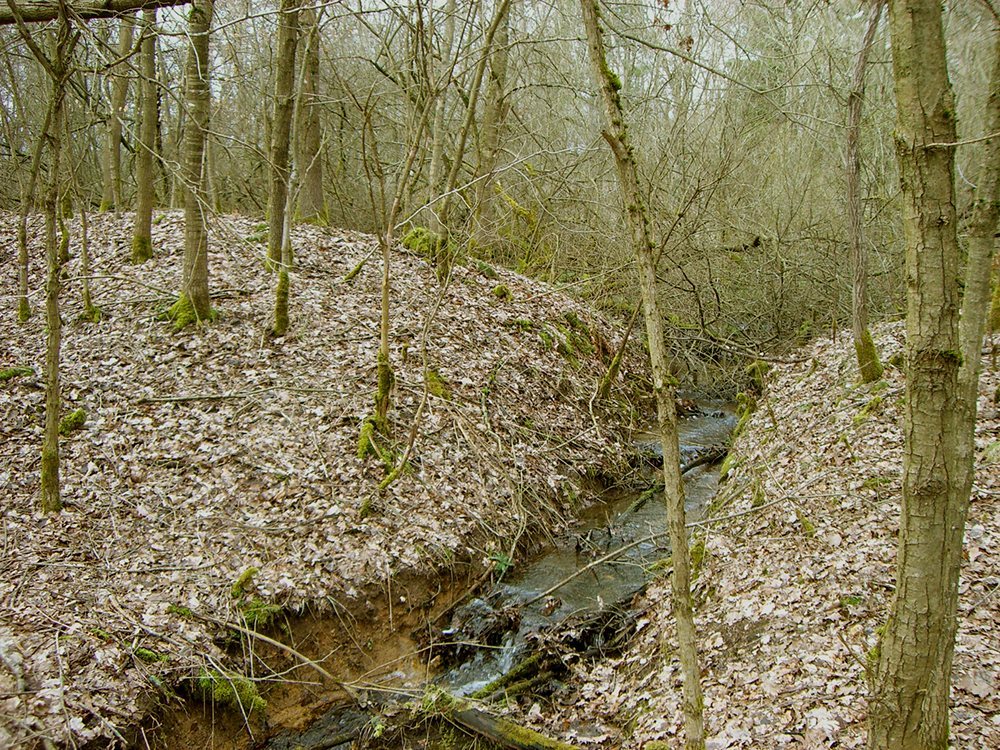
Earthworks
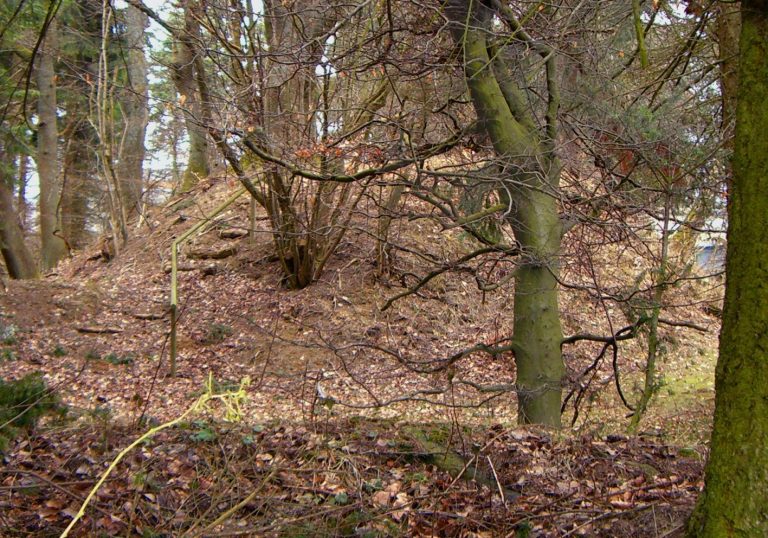
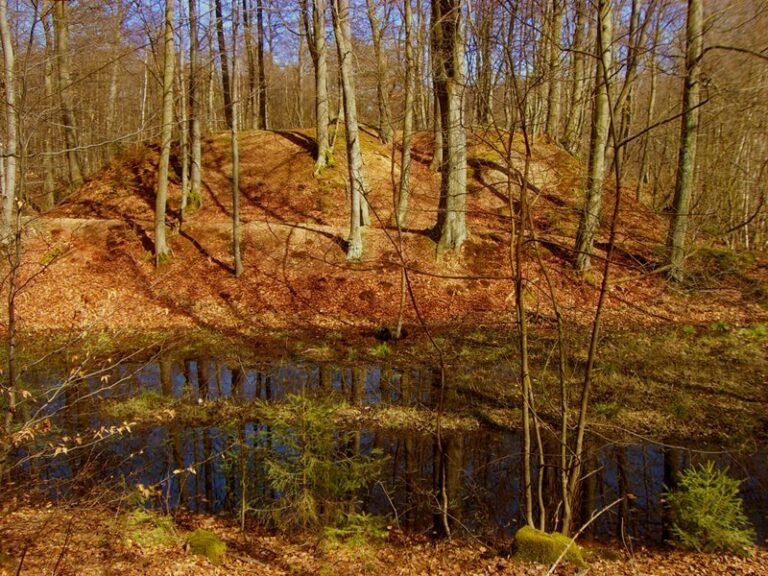
The castle’s earthworks formed a circular mound surrounded by ramparts and water-filled ditches. A description from 1787 gives the fortification a diameter of about 200 feet and mentions two ditches and a high rampart. In 1852, the antiquarian and architectural historian Karl August von Cohausen described the mound as split in two by a water-filled trench. Rings of ramparts and water-filled ditches encircled it. The main mound stood 20 feet high, while the outer embankment measured about 190 paces across. The ramparts were too narrow for a walkway except on the attack side. Today, only small remnants of ramparts and ditches can be made out.
Buildings and finds
Finds point to timber-framed buildings with slate roofs. Cohausen described excavation pits in the mound and noted hard-fired, brick-red fragments, apparently baked daub, along with pieces of slate. The pottery-like fragments had rough, sandy surfaces with diagonal incised lines. Residents may also have found material described as blackened fruit, possibly charcoal.