Megalithic Tombs near Eyendorf: Neolithic Burial Monuments in Germany
Site at a Glance
- Popularity
- Very Low
- Country
- Germany
- Primary era
- Stone Age
- Eras represented
- Stone Age
- Civilizations
- Unclassified
- Site type
- Burial
- Remains
- Necropolis
On this page7 sections
History
The Megalithic Tombs near Eyendorf are a group of Neolithic burial monuments south of Eyendorf in Germany, built between 3500 and 2800 BC by people of the Funnel Beaker culture, an archaeological culture of northern and central Europe named for the shape of some of its pottery. The group includes Grave I and two additional, heavily damaged tombs. Monuments of this kind are interpreted as expressions of Neolithic culture and beliefs, while their construction and use offer insight into social development.
Later Neolithic burials
Grave I was later reused for burials associated with the Globular Amphora culture, named for its pottery, and the Single Grave culture, associated with individual burials. The first burial appears to have been cleared during this reuse, and little evidence of the burial episodes survived.
Investigation and restoration
The tombs came to the attention of the Hamburg Museum of Ethnology in 1931 and were documented that year. Investigations followed in 1937. The Helms Museum excavated Grave I in 1965 under archaeologist Willi Wegewitz; further study and reconstruction followed, with engineers from Germany’s armed forces assisting with the restoration. Grave II may have supplied sand for road construction, although photographic comparisons suggest that it suffered no further damage after 1949. Maintenance work in December 2015 included cleaning Graves II and III and lightly exposing Grave II.
Remains
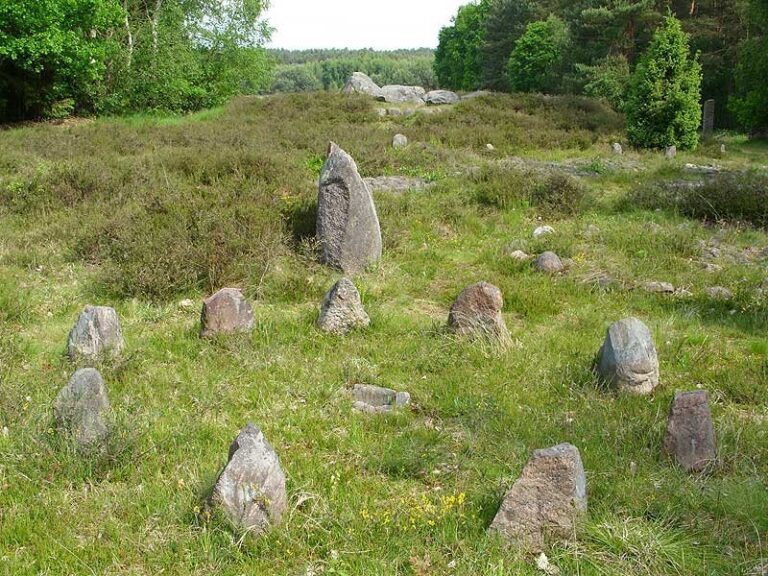
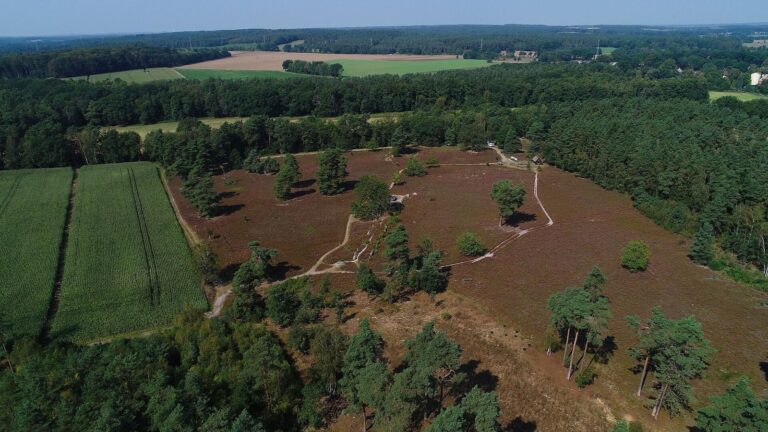
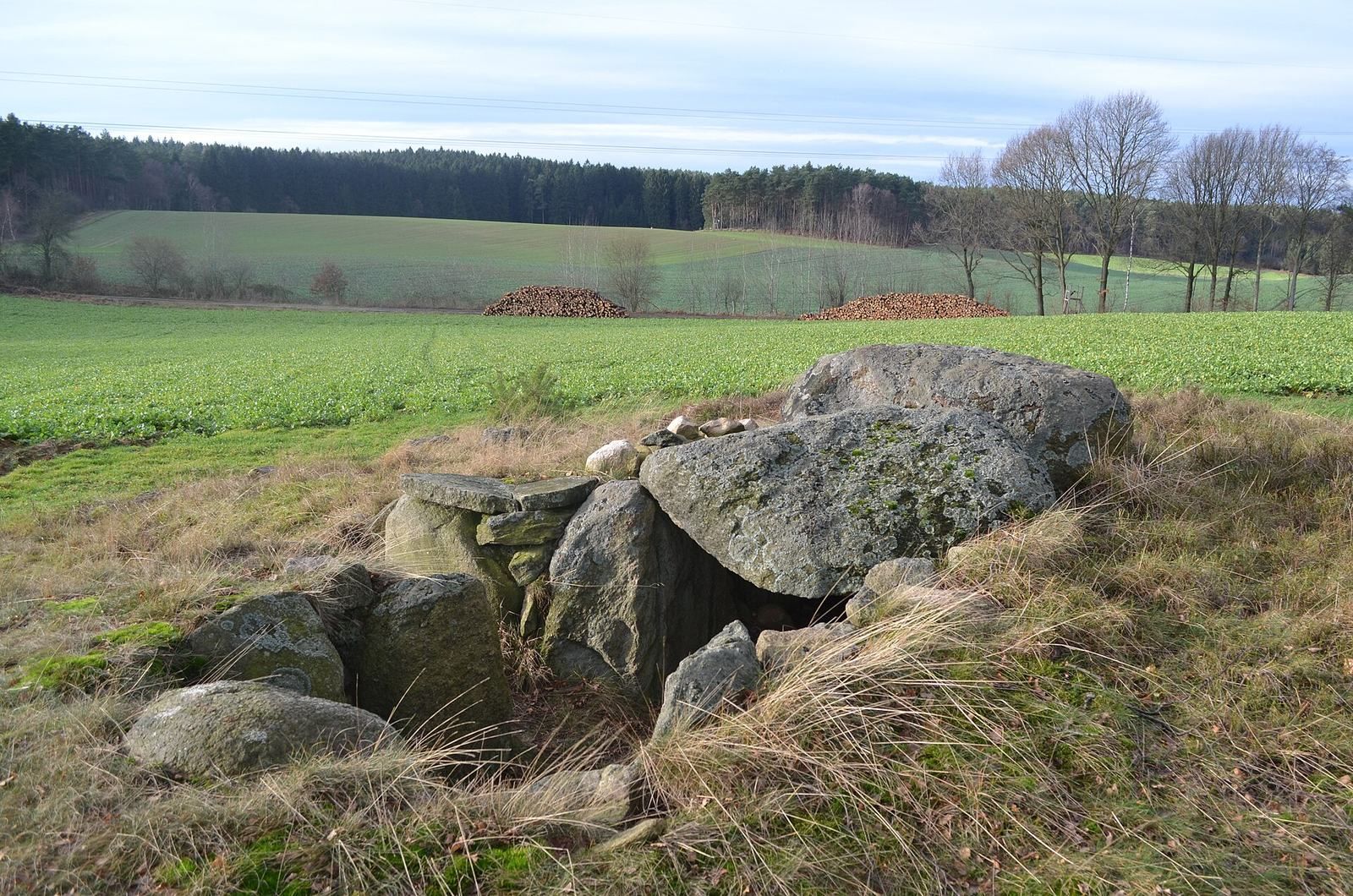
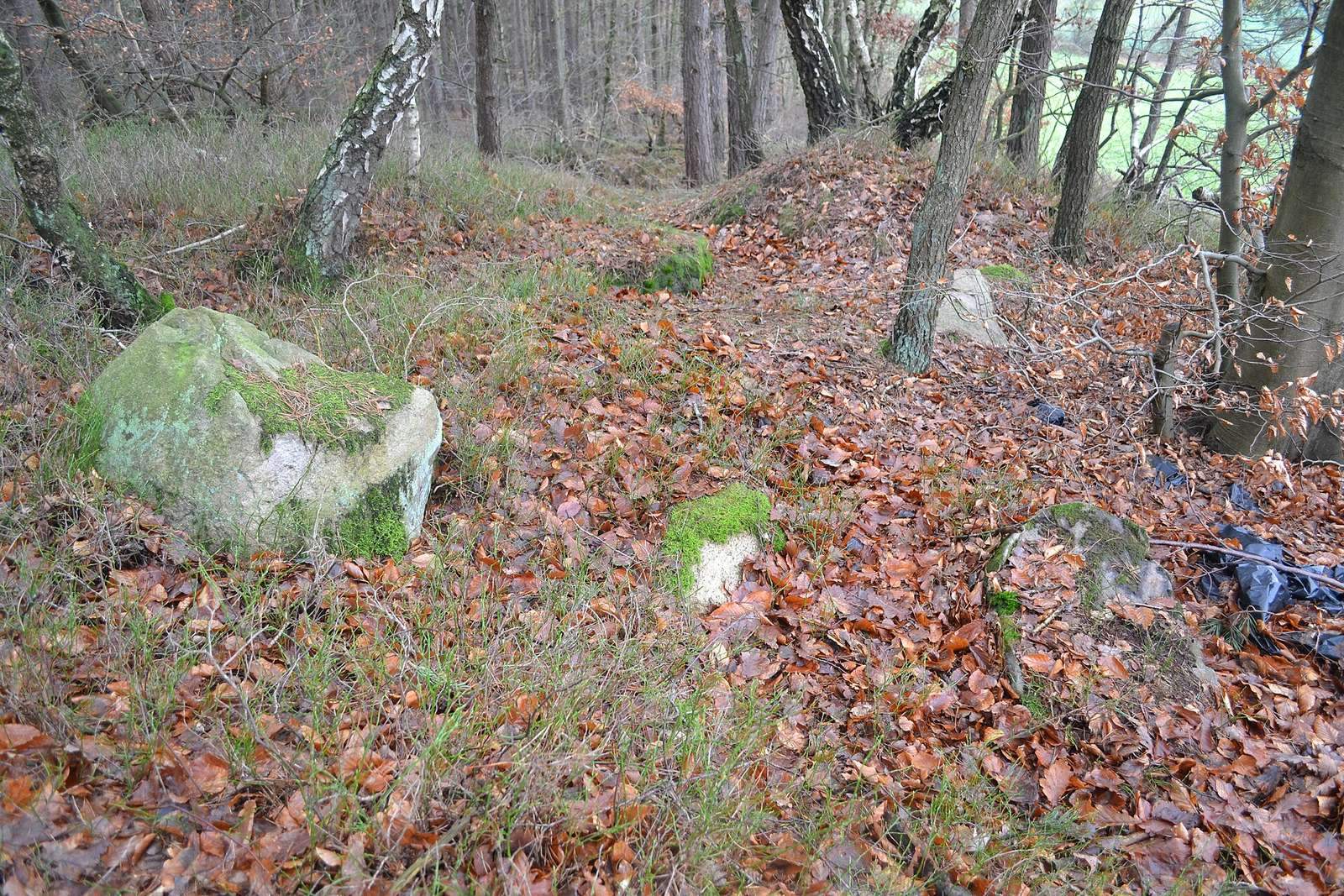
The tombs lie on Märtenberg, south of Eyendorf, among birch trees at the edge of a wood. Their present condition ranges from a reconstructed chamber at Grave I to scattered stones and traces of mounds at the other graves.
Grave I
Before excavation, Grave I appeared as a heap of large boulders amid the remains of a mound. Few upright supports remained in place, and the chamber’s eastern end was badly disturbed. In the restored structure, flat stones fill gaps between the supports, and two of the four original capstones cover the otherwise open chamber. Two supports frame an entrance midway along its south side. The floor retains two layers of cobble paving. The paving’s dimensions and traces of displaced supports suggest a passage grave, a chamber with a separate side passage. The mound has been rebuilt around the chamber to the tops of its supports. Finds from inside the chamber and near its entrance include two small flint axes, a flint chisel, and pottery fragments with deep incised decoration. The pottery dates to the tomb’s construction.
Grave II
Grave II lies about 180 metres from Grave I, at the edge of the wood. Its poor condition has prevented investigation. The stones are scattered irregularly, so the tomb’s plan cannot be established, though their size suggests that a chamber may have stood here. Three stones have marks from attempts to break them up for building material. A mound visible in 1951 has almost entirely disappeared. Unornamented pottery fragments were collected at the site in 1937.
Grave III
Grave III is the most severely damaged tomb in the group. In 1937, the visible remains consisted of a mound with a hole, leaving the presence of a stone chamber uncertain. Today, two old looting pits, a slight mound, and three large stones can be identified. The stones are spread across a wider area and do not form an interpretable arrangement.