Hammah 1 Megalithic Tomb: A Neolithic Burial Monument in Germany
Site at a Glance
- Popularity
- Very Low
- Country
- Germany
- Primary era
- Stone Age
- Eras represented
- Stone Age
- Civilizations
- Unclassified
- Site type
- Burial
- Remains
- Tomb
On this page8 sections
History
Neolithic construction and later use
The Hammah 1 Megalithic Tomb is a Neolithic burial monument in Germany, built between 3500 and 2800 BCE by communities of the Funnel Beaker culture, a northern and central European culture named for its funnel-shaped pottery. It is one of four megalithic tombs in the Hammah group. The group belonged to a larger burial ground northeast of Hammah, with 15 burial sites, nine of them non-megalithic.
The chamber was later reused for a Bronze Age burial, and its original Neolithic grave goods were probably removed at that time. The site also received a cremation burial in the La Tène period, an Iron Age cultural period especially associated with central Europe.
Rediscovery and preservation
The tombs came to light unexpectedly during peatland drainage and cultivation in the First World War. They had been built on a level, sandy rise before peat formed there. Karl Hermann Jacob-Friesen investigated Hammah 1 in 1921. Local teacher Wilhelmi of Groß Sterneberg first recognized it as a megalithic tomb and campaigned to protect it when its capstones were at risk of removal for a war memorial. The district leased the tomb and surrounding land in 1924. The tomb was restored in 1968, and the district acquired the site and land the following year.
Remains
Chamber and setting
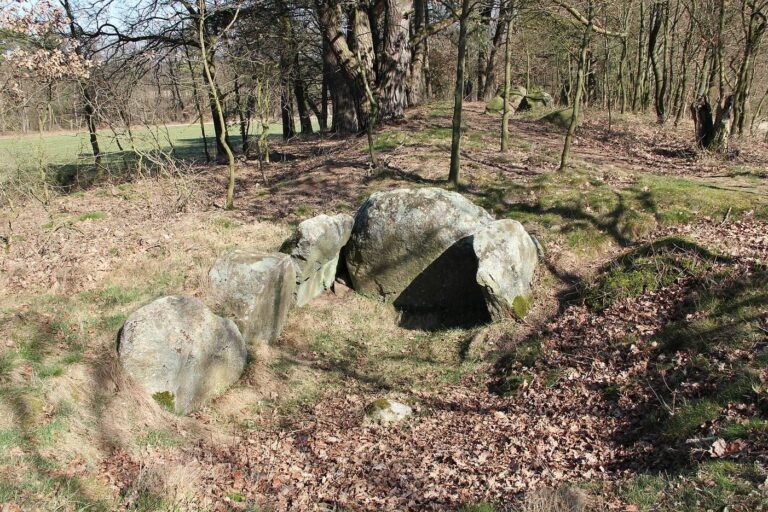
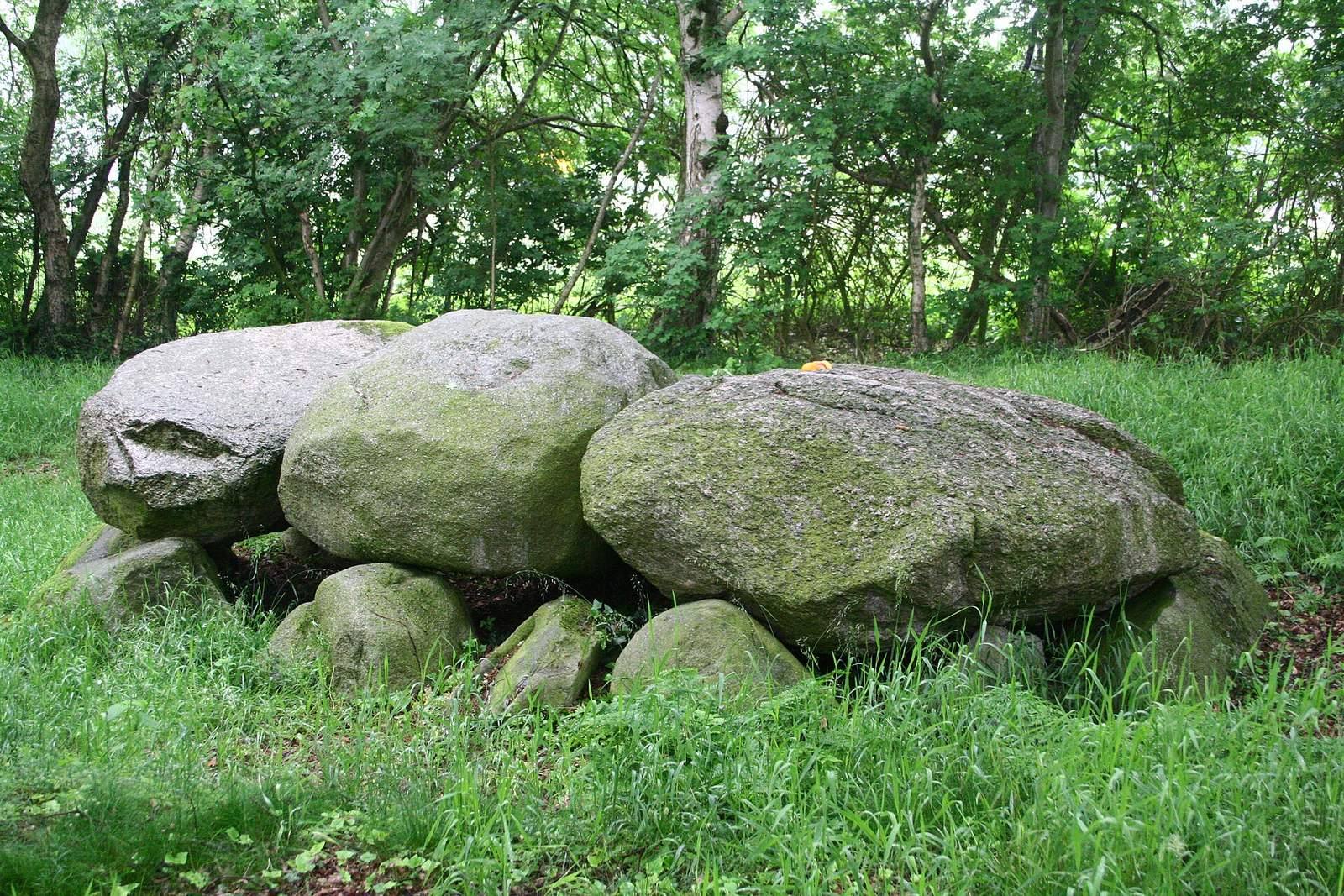
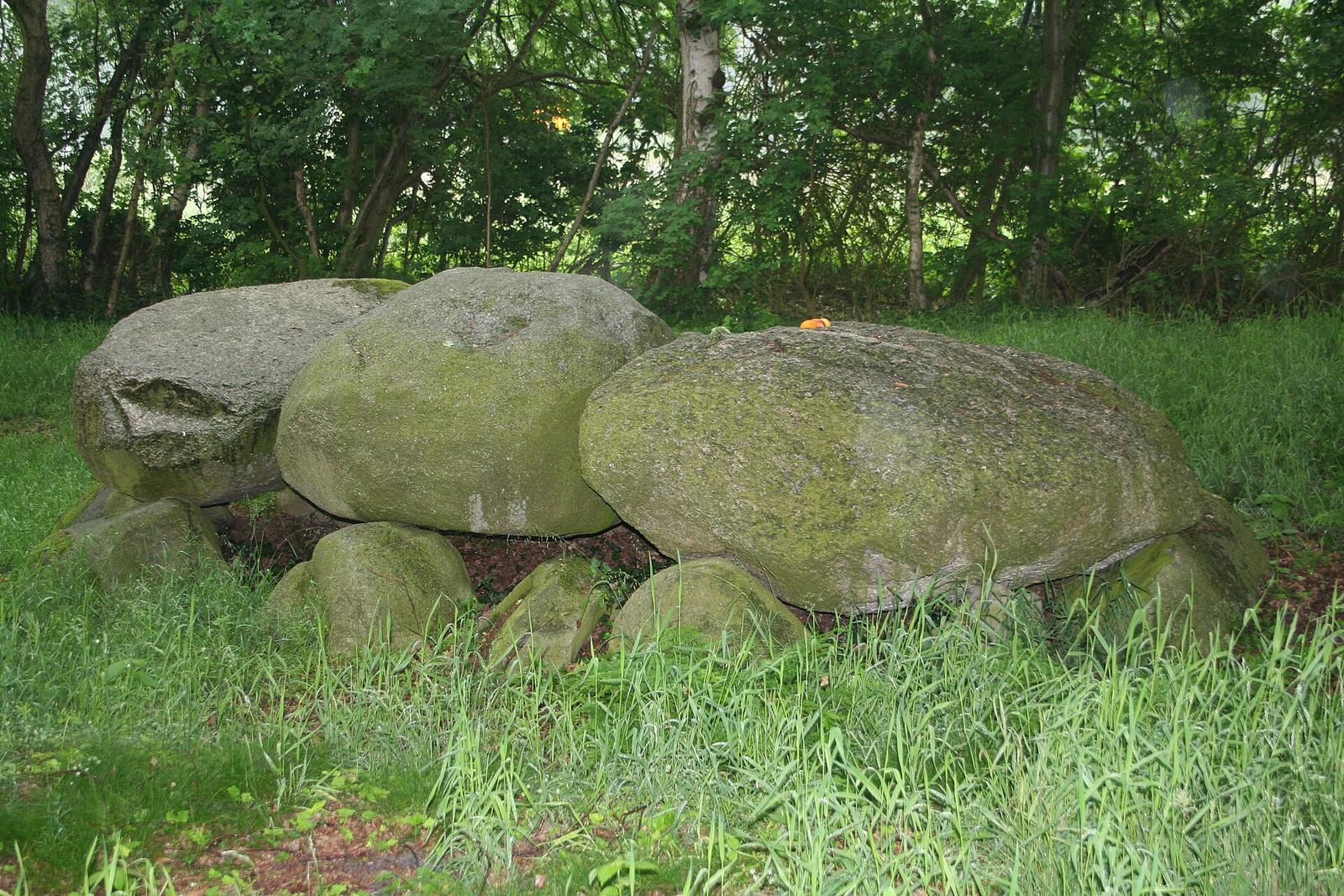
The tomb stands near Groß Sterneberg, immediately east of Bahnhofstraße, the road between Groß Sterneberg and Hammah. It lies about 1.1 km west-northwest of tombs 2 and 3, which are 20 m apart; tomb 4 is roughly midway between that pair and Hammah 1. The sunken chamber occupies a rectangular pit in fine-grained sand. Ten intact wall stones, stone infill fitted without mortar, and three large capstones survive. An outer packing of split granite and rounded stones supports the walls. It is about 2 m wide and extends 2.25 m down from the top of the middle capstone. Larger cobbles pave the floor. The construction has been interpreted as a particularly early form and as a variant of a passage grave, a megalithic tomb whose chamber is reached through a passage.
Burial deposits and finds
Material from the chamber
Seven pottery sherds from a large vessel came from the chamber. Three have parallel grooves and a raised band, a decorative style associated with the Bronze Age. Cremated bone fragments, apparently from a young person, were also found, along with a broken bronze arm ring. The ring has wire about 0.5 cm thick and an inner diameter of 5 cm; its straight-cut ends overlap. Its surface has a brown coating formed in the bog, and its decoration shows groups of vertical lines with diagonal strokes between them. The design belongs to Stage III of the Bronze Age chronology devised by Swedish archaeologist Oscar Montelius.
Urn burial outside the chamber
An urn containing cremated remains lay outside the chamber, leaning against a sloping support stone and covered by sand from the mound.