Palais für aktuelle Kunst: A Contemporary Art Museum in Glückstadt


Site at a Glance
- Rating
- 4.4
- Popularity
- Very Low
- Country
- Germany
- Primary era
- Early Modern
- External website
- Open
- Eras represented
- Early Modern
- Civilizations
- Danish
- Site type
- Civic
- Remains
- Palace
On this page7 sections
History
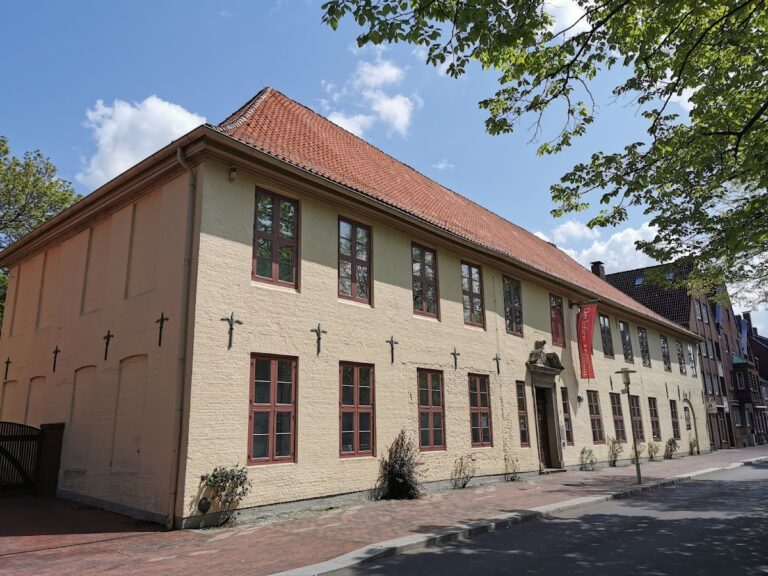
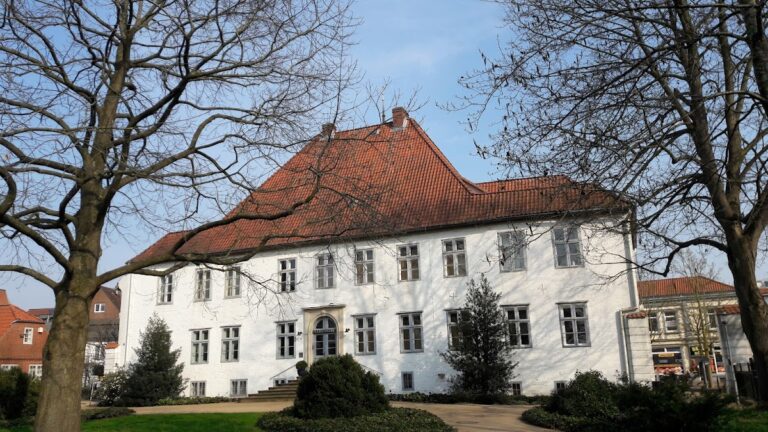
Palais für aktuelle Kunst, also known as the PaK, is a contemporary art museum in Glückstadt, Germany. Built in 1630–1631 in the Dutch late Renaissance style, the building received a Baroque treatment around 1697 and later served governmental, residential, and cultural purposes.
Construction and Government Use
The building was erected close to Glückstadt Castle, which once stood nearby. Its masonry contains relieving arches, built above openings to redirect weight, although these structural features are concealed from view. As the neighboring castle became increasingly dilapidated, the building housed the Government Chancellery from 1700 to 1752. The Wasmer Palais then assumed that role.
Private Ownership and Official Residences
In 1796, the widow of provisions commissary Lorenz Jessen was listed as the owner. During the following decades, the building served as a residence for senior government and judicial officials. After Glückstadt ceased to belong to Denmark in 1867, wealthy merchants and entrepreneurs occupied the building, which subsequently passed into private ownership.
Restoration and Museum Use
A restoration carried out in 1985 received financial support through an urban development funding program, after which the building was used as an exhibition venue. Since 2000, it has been operated by the association Palais für aktuelle Kunst. The museum presents temporary exhibitions in painting, photography, drawing, and different forms of media art. Its program has included solo, group, two-person, and thematic exhibitions, along with presentations by students and school pupils.
Earlier exhibitions focused chiefly on artists from northern Germany, including Caroline Grone, Helmut Heißenbüttel, and René J. Goffin. The museum has also shown work by nationally and internationally known artists such as Martin Parr, Bernhard Prinz, and Tue Greenfort, as well as projects by art-school classes from across Germany, including those of Timm Rautert, Peter Piller, Dirk Reinartz, and Franz Erhard Walther. Guided tours, artist discussions, and occasional film evenings form part of the institution’s wider program.
An intentionally ambiguous inscription has given the building the Latin designation Palais Quasi non Possidentes, meaning “as if we were not the owners.” The wording refers to 1 Corinthians 7:30 in the Vulgate, the Latin version of the Bible traditionally associated with Jerome.
Remains
Exterior
The two-story building faces Glückstadt harbor, with its eaves oriented toward the waterfront. Its eight-bay facade is organized by colossal pilasters, which extend through more than one story and provide the principal vertical divisions of the exterior. A large, regular hipped roof covers the building with red clay tiles. Above the portal, a sandstone crowning element was renewed during the 1985 restoration. The original is held by the Detlefsen Museum in Glückstadt. Its oval field is bordered by acanthus leaves and flowers, bears the initial “W,” and is framed by two laurel branches.
Interior Rooms
The interior retains features from the seventeenth and eighteenth centuries. Its floor plan follows a Baroque arrangement, and several doorways form an enfilade, a sequence of rooms aligned along a common axis. Some doorways preserve period lintels, while others have Rococo transoms, glazed openings placed above doors. Several salons retain remnants of wall paintings, ceiling stuccowork, and old stoves, preserving elements from the building’s earlier domestic and official interiors.
Nearby sites