Jasov Abbey: A Premonstratensian Monastery in Slovakia
Site at a Glance
- Popularity
- Medium
- Country
- Slovakia
- Primary era
- Early Modern
- Eras represented
- Medieval, Early Modern
- Civilizations
- Habsburg, Hungarian
- Site type
- Religious
- Remains
- Monastery
On this page21 sections
History
Jasov Abbey is a Premonstratensian monastery in Jasov, Slovakia. Members of this Roman Catholic order combine communal religious life with clerical ministry, including pastoral work and education. The abbey’s present complex, the fourth built on the site, was begun in 1745 in the late Baroque period, with Rococo art and decoration. Its history reflects changing religious and political circumstances, as well as the economic life of a settlement associated with mining.
Medieval settlement and monastery
Premonstratensian canons settled at Jasov toward the end of the twelfth century. The settlement lay on an old route connecting the region with Spiš, and its growth was linked to mining. The monks are thought to have established their first monastery in wood. Around 1228 they began a stone complex, which was plundered during the Mongol invasion.
The earliest known written reference to the Jasov provostry dates to 1234. It names Saint John the Baptist as the monastery’s patron and places the community under the Monastery of Saint Stephen at Great Varadin. A provost, the head of a provostry, led the community. In 1255, King Béla IV issued a charter treated as the provostry’s founding document. It defined the monastery’s estates and administrative boundaries and granted the community authority to issue legally valid documents.
Béla IV also gave the village privileges resembling those of a royal town. Residents could choose their parish priest and village headman, hold markets and mine, while owing dues to the monastery. The first named head of the community, Albrecht, also known as Albert, served from 1235 until his death in 1257 and left its property in poor condition. Its finances improved temporarily late in the thirteenth century, when King Andrew III granted the canons mining rights on their estates. Mining and metalworking expanded in the surrounding area: from the second half of the fourteenth century, ironworks processed iron, copper and lead from nearby mines.
Disputes within the community continued. They were particularly apparent in 1350, when King Louis I appointed Nicholas II as provost. In 1487, Jasov joined the Union of Upper Hungarian Mining Towns.
Fortification and conflict
On 26 January 1436, King Sigismund of Luxembourg ordered the monastery to be fortified. Under Provost Stanislav, the monks rebuilt it as a stronghold, later referred to as Castrum Jászó, castellum or Jászóvár. During the succession struggle over Ladislaus the Posthumous, Jasov became a refuge from the forces of John Jiskra of Brandýs, a commander who supported the young king’s interests on behalf of Queen Elizabeth of Luxembourg. Jiskra’s forces nevertheless captured and held the monastery until 1447, compelling the Premonstratensians to leave. The stronghold changed hands several times in the following years, and the canons returned in 1464.
Displacement and changing control
After the Battle of Mohács on 29 August 1526, the monks left Jasov. The monastery gradually lost its privileges and came under the administration of church officials outside the Premonstratensian order. Some parts also passed into lay ownership. After the events of 1526, the community lost its authority to issue legally valid documents.
In 1685, forces led by Imre Thököly captured and burned the monastery. After they withdrew, Juraj Fenesi, the last administrator drawn from the secular clergy, arranged repairs. Under reforms introduced by Emperor Leopold I, Jasov, together with the monasteries at Great Varadin and Leles, was transferred to the monastery at Pernek. Pernek sold Jasov in 1700 to the Premonstratensian abbey of Louka in Moravia, which thereafter appointed provosts and sent administrators and monks to the site.
Rebuilding and independence
Louka sent the abbot Andrej Sauberer to Jasov as administrator on 6 May 1745; he also became provost that year. Seeking to renew the monastery’s spiritual and economic life, he began a new monastery and church. The medieval fortified complex was demolished to its foundations. A record found on the back of the church’s high altar gives 1745 as the year the foundation stone of the new complex was laid. The church was consecrated on 1 October 1766.
With privileges from Maria Theresa and the prior agreement of the Hungarian estates, the Jasov community became an independent monastery on 19 November 1770. Sauberer was a confidant of the queen and a prelate in the lower chamber of the Hungarian Diet, the kingdom’s representative assembly. Maria Theresa appointed him a court councillor in 1774.
Suppression, return and economic life
A decree issued by Joseph II on 26 March 1787 suppressed the Premonstratensians. The monastery’s archive and liturgical objects were moved to Buda, and other movable property was auctioned. Residents of Jasov occupied the vacant complex. In 1792, a fire destroyed the west wing and several houses in the village.
Francis II permitted the Premonstratensians to resume their activity in Hungary on 12 March 1802, on condition that they also operated church-run secondary schools. The monks returned to a damaged monastery and restored it. The Jasov community later established affiliated houses at Debraď, Rudník and Vyšný Medzev, and ran schools in Košice, Levoča, Rožňava and Great Varadin.
By the end of the nineteenth century, the order operated a pipe factory, tile works, brickworks, printing works and steam sawmill at Jasov. It also leased mines, a marble quarry, ironworks, mills and facilities for processing ore and working metal. Its agricultural holdings covered more than 20,000 hectares, and it had its own power station by the beginning of the twentieth century.
Twentieth century and restoration
In 1950, state suppression of religious orders forced the monks to leave during Action K, the coordinated closure of monasteries in Czechoslovakia. Religious brothers were interned at Jasov. The former monastery was subsequently used as a psychiatric hospital for the most severe cases, and its condition deteriorated for about four decades. The complex was declared a Slovak National Cultural Monument in 1970.
The monastery was returned to the Premonstratensians in 1990 and resumed its religious purpose. Restoration has continued since then. It belongs to the Roman Catholic Premonstratensian order and lies within the Diocese of Rožňava, a church district overseen by a bishop.
Remains
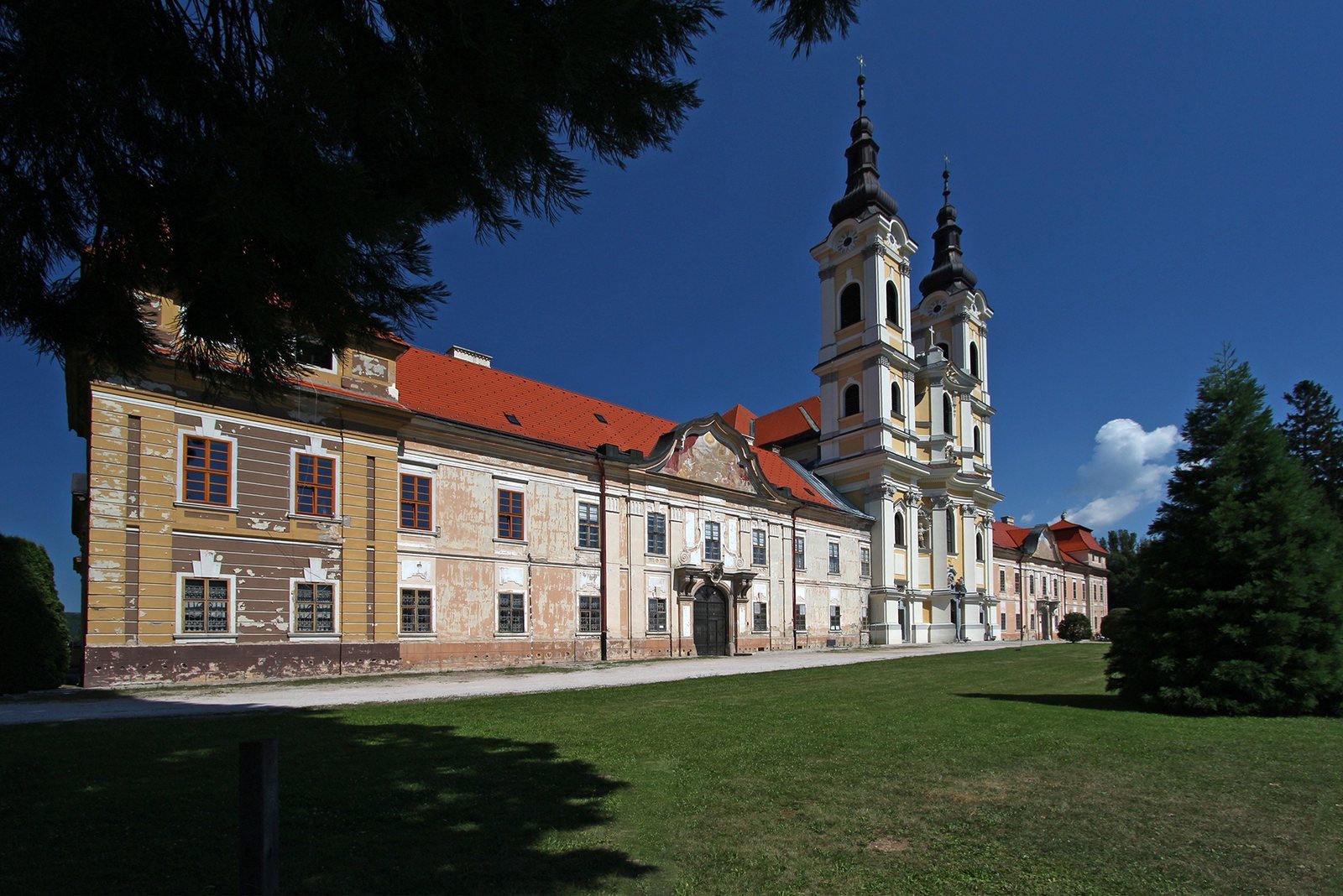
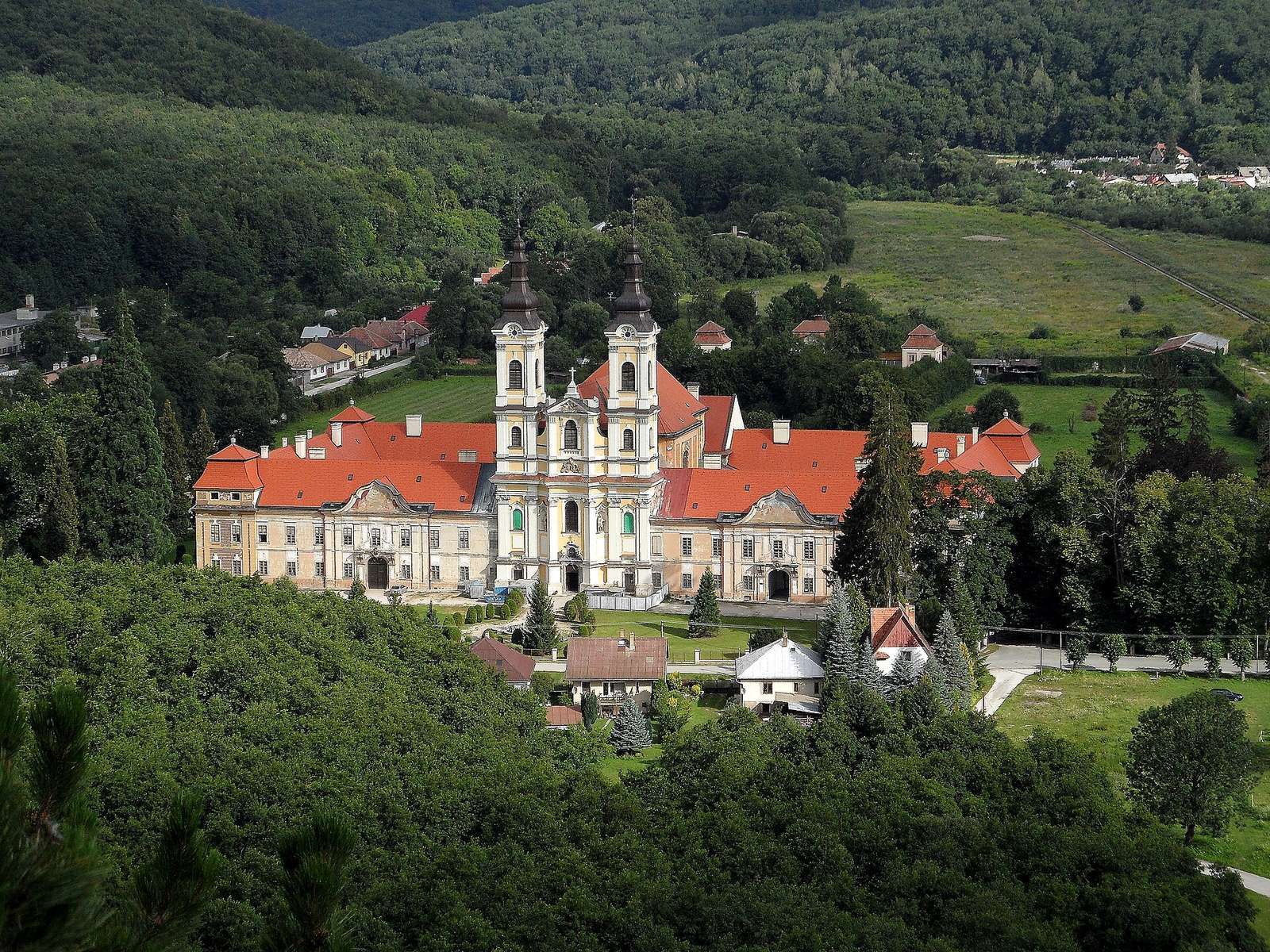
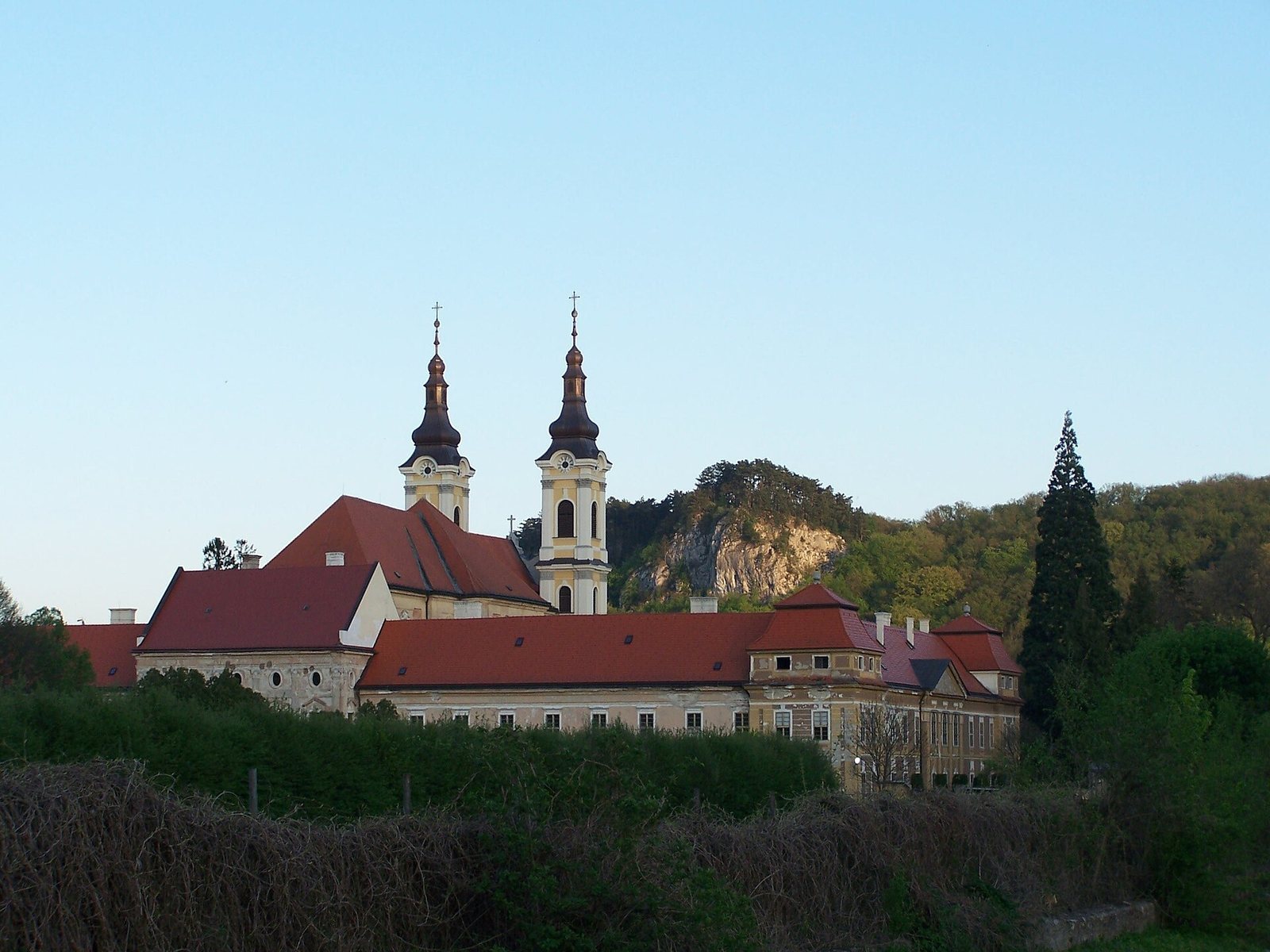
The complex stands at the western edge of Jasov and combines the monastery, the Church of Saint John the Baptist, a library and a Baroque garden. Its architecture and decoration are notable examples of late Baroque and Rococo art in Slovakia. The principal layout is formed by two symmetrical monastery wings flanking the church.
Monastery wings and church exterior
Monastery wings
The two-storey wings stand on square plans and each contains three parallel ranges around its own enclosed courtyard. The left wing housed the prelate’s administrative and representative quarters, while the right accommodated the religious community. Their broad façades face southeast. Corner towers carry mansard roofs, whose lower slopes are steeper than the upper ones. Projecting sections emphasize the entrances, which are topped by triangular pediments.
Church façade
The church has a rectangular plan and a single nave, the main worship space. Its façade rises through four storeys, marked by horizontal cornices. The outer sections extend an additional storey to form two slender towers with helmet-shaped roofs. Shallow wall-attached supports, or pilasters, in the Corinthian style divide the lower two storeys. At the centre, a projecting section curves outward and inward around the main entrance. Above the portal, a triangular field within the pediment bears the symbol of the Holy Trinity. Oval niches to either side hold statues of the sainted Hungarian kings Ladislaus and Stephen.
Church interior
Altars and paintings
Seven altars are arranged symmetrically within the church, and Johann Lucas Kracker painted all their altarpieces. The first altar on the left is dedicated to Saint Barbara, traditionally associated with miners, and depicts her beheading. Opposite it, the altar of Saint Andrew, also known as the altar of Saint John of Nepomuk, portrays an imagined meeting between the two saints. The scene also conveys the relationship between Sauberer as patron and Kracker as artist.
Beneath the main vaulted ceiling, the altars of Saint Norbert on the left and Saint Augustine on the right have monumental, multi-figure compositions showing Christian faith triumphing over paganism. Farther forward in the nave, the two side altars are dedicated to Mary and Saint Anne. The Immaculate Conception altar shows Mary standing on a globe, while the Saint Anne altar depicts Anne teaching Mary. The high altar in the sanctuary is dedicated to Saint John the Baptist; its painting shows the Baptism of Christ in the Jordan. Two preparatory studies for that painting survive in Slovak collections, one in the Slovak National Gallery and a replica in the East Slovak Gallery in Košice.
Sculpture
Johann Anton Krauss made statues of the Premonstratensian saints Evermod and Ludolf for the Saint Norbert altar, and of Frederick and Gilbert for the Saint Augustine altar. Four smaller figures, Margaret of Antioch, Mary Magdalene, Rosalia and Catherine of Alexandria, sit on the curved scroll-shaped supports beside the tabernacle, the receptacle for the consecrated Eucharist. These works are among Krauss’s major sculptures.
Ceiling paintings
Kracker worked at Jasov in 1752, 1762–1765 and 1776. Alongside the altarpieces, his work in the complex included paintings in the church, the prelature’s winter dining room, the ceremonial staircase, the triangular pediments and the library ceiling. Johann Ignaz Hennevogel’s stucco decoration brings the painted and sculpted work into a coordinated scheme.
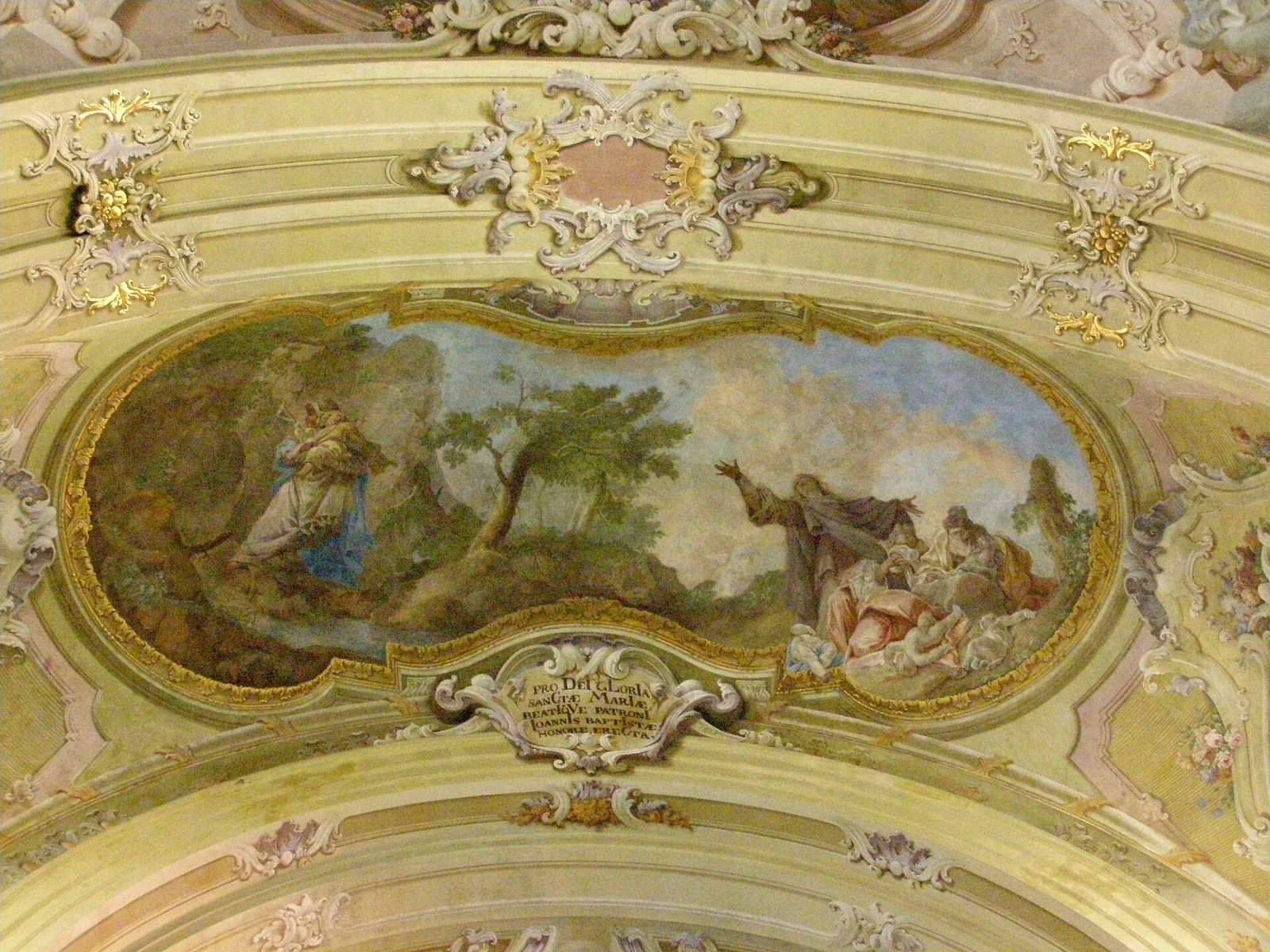
The church ceiling paintings occupy five sections, framed by painted architecture that creates an illusion of depth and by ornamental borders including flower vases. Their subjects follow the church’s dedication and include episodes from the life of John the Baptist. Above the sanctuary, Elizabeth holds the infant John while Zachariah carries a tablet with the words His name is John. An inscription on the band between the first and second sections contains a chronogram, a text whose selected letters represent numerals and encode a date; here it gives 1763.
The second section above the nave combines the Massacre of the Innocents at Bethlehem with a legendary episode in which a rock opens to shelter Elizabeth and her child as they flee. A preparatory drawing for the latter scene survives. The largest painting, in the third section, shows John preaching in the wilderness and pointing toward the haloed Christ. Some figures listen, while others appear unconcerned; another group gathers around the prophet Isaiah. Kracker included a self-portrait among three figures seated on a large rock opposite John. Single-colour images of the four Evangelists, each with customary attributes, fill the corners. The composition adapts a painting by Paul Troger at the former Premonstratensian monastery in Hradisko.
The fourth section depicts the beheading of John the Baptist, with Salome and John at the centre as the executioner places John’s severed head on a silver platter. Two soldiers carrying spears complete the scene. Above the organ gallery, the fifth section presents the Heavenly Concert, where Saint Cecilia plays the organ as a choir of angels accompanies her on other instruments.
Painted bands
Paintings also cover the crosswise bands between sections of the ceiling. The band between the sanctuary and the first nave section shows the allegorical figure of the Church on its western side, holding a chalice, tiara and cross. Moses appears on the opposite side with the Ten Commandments. Another band, between the third and fourth nave sections, depicts the prophets Malachi and Isaiah.
Library
The library lies on the northward continuation of the church’s axis and contains nearly 80,000 volumes on theology, philosophy, natural sciences, geography, history and literature, written mainly in Latin, Hungarian and German. The collection was once larger; parts of its original holdings are now in the Slovak National Gallery in Bratislava, Matica slovenská in Martin and the Slovak Technical Museum in Košice. Kracker’s library ceiling, painted in the 1770s, celebrates learning, science and the arts, and includes scenes of the monastery’s construction. Painted bands divide the long vault into three sections, each with a circular allegorical painting. One represents the four faculties of theology, law, philosophy and medicine, with Pallas Athena seated below. Another glorifies Sauberer. In the central band, figures bearing symbols of Generosity, the Arts and the Triumph of Wisdom carry a commemorative plaque with Sauberer’s portrait and an inscription naming him the first abbot of Jasov. The decoration continues across the walls, where the front wall shows Life and Death, also expressed as time and eternity. The compositions and figures draw on allegorical paintings by Daniel Gran.
Other decorated rooms
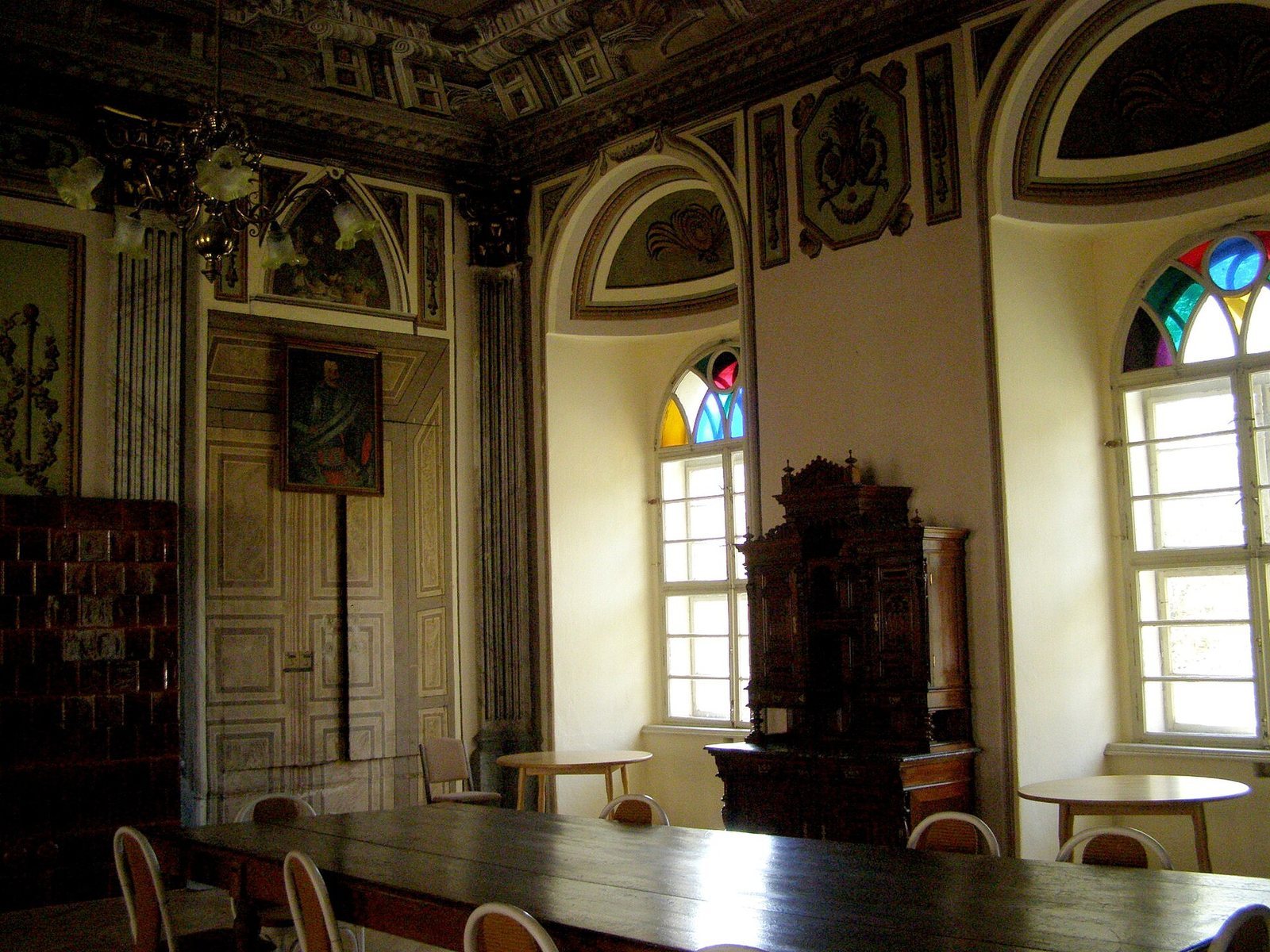
Refectory
A heavily repainted scene of Herod’s feast decorates the refectory. The figures’ types remain an indication of Kracker’s authorship.
Provost’s chapel
The ceiling painting of Saint Norbert in the provost’s private chapel was made by Erasmus Schrött, the first restorer of the complex’s paintings, probably following a design by Kracker.
Baroque garden
The garden is an integral part of the complex and is the only Slovak garden of its style to survive in its original form. Its surviving features include original landscaping elements, shaped trees and a symmetrical network of paths. Its design continues the architectural composition of the monastery.