Crocifisso del Tufo Necropolis: An Etruscan Cemetery in Orvieto, Italy
Site at a Glance
- Popularity
- Medium
- Country
- Italy
- Primary era
- Iron Age
- Eras represented
- Iron Age, Classical
- Civilizations
- Etruscan
- Site type
- Burial
- Remains
- Necropolis
On this page10 sections
History
Etruscan use
The Crocifisso del Tufo Necropolis is an Etruscan cemetery at the foot of Orvieto’s cliff in Italy. The Etruscans were an ancient people of central Italy whose culture flourished before Roman dominance. The cemetery was used from the eighth to the third centuries BC, and inscriptions indicate activity there by at least the sixth century BC. It reached its greatest extent between the middle of the sixth and the middle of the fifth century BC.
Discovery and excavation
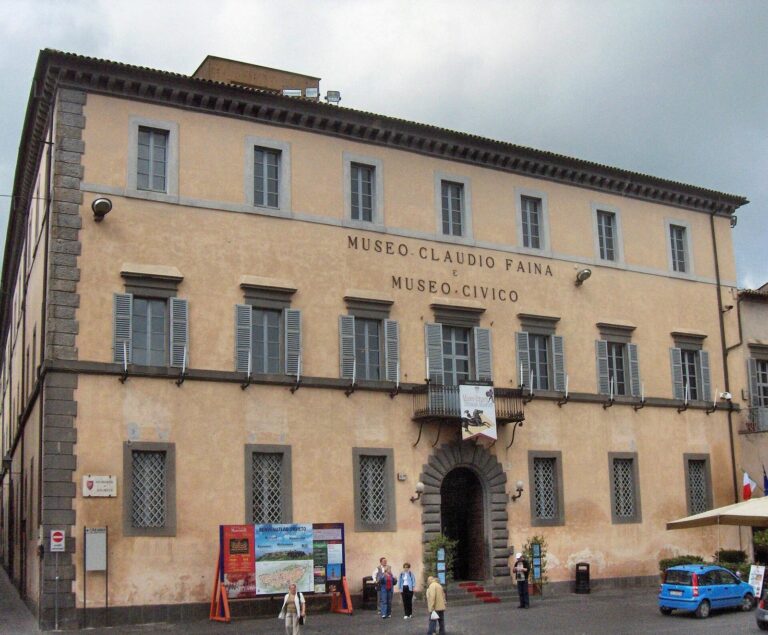
After more than 2,000 years unknown and undisturbed, the necropolis was discovered by Riccardo Mancini, an Orvieto native who had worked at Etruscan sites since the 1870s. He found it on land he had inherited. Excavations began in the nineteenth century and were conducted in a disorderly manner, dispersing many finds among museums in Europe and America. Some objects were purchased and are now displayed at the Faina Museum in Orvieto. Scientific investigations resumed in 1961. Finds from this later work are displayed at the National Archaeological Museum of Orvieto and, in smaller numbers, at the National Archaeological Museum of Umbria in Perugia.
Remains
Burial plan
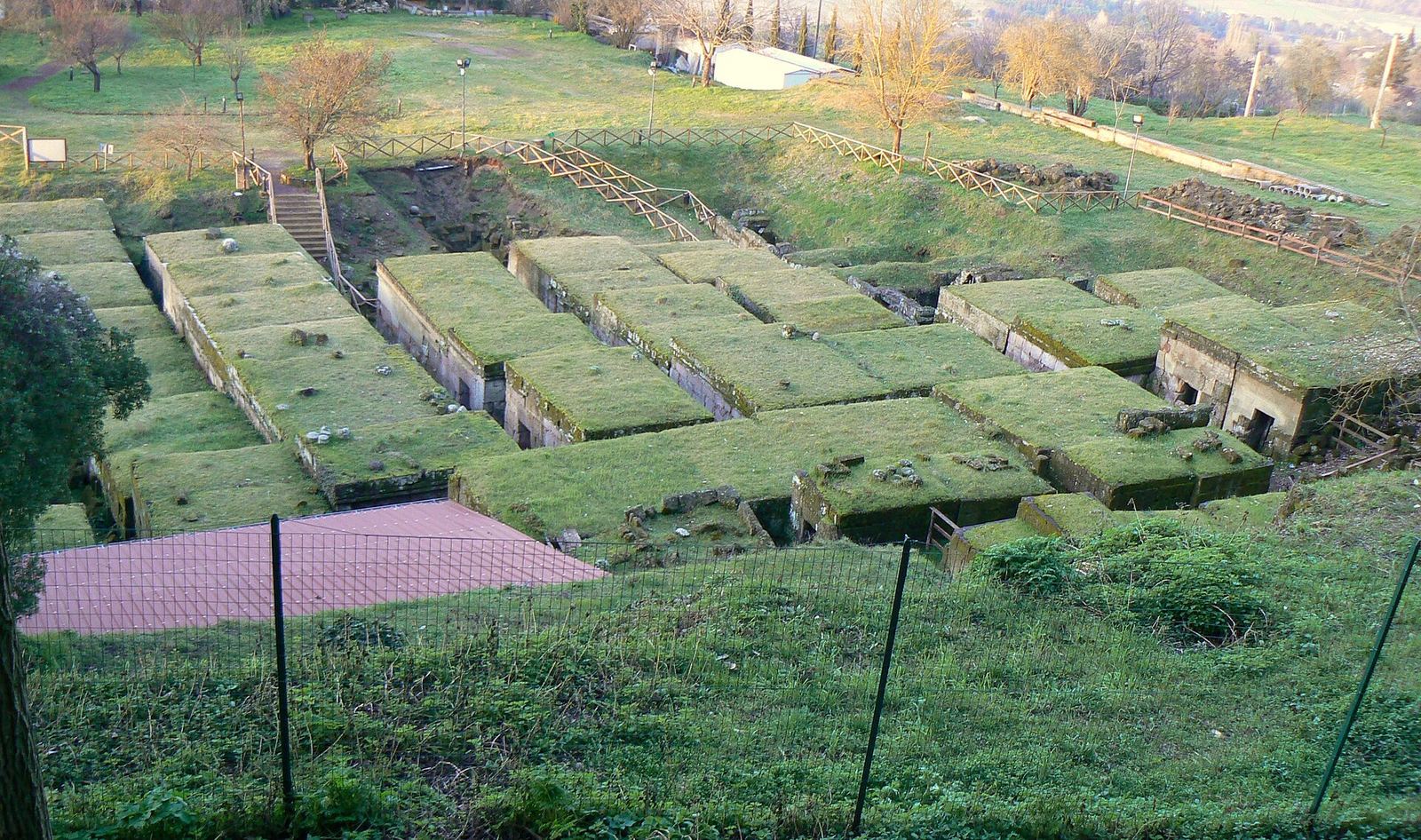
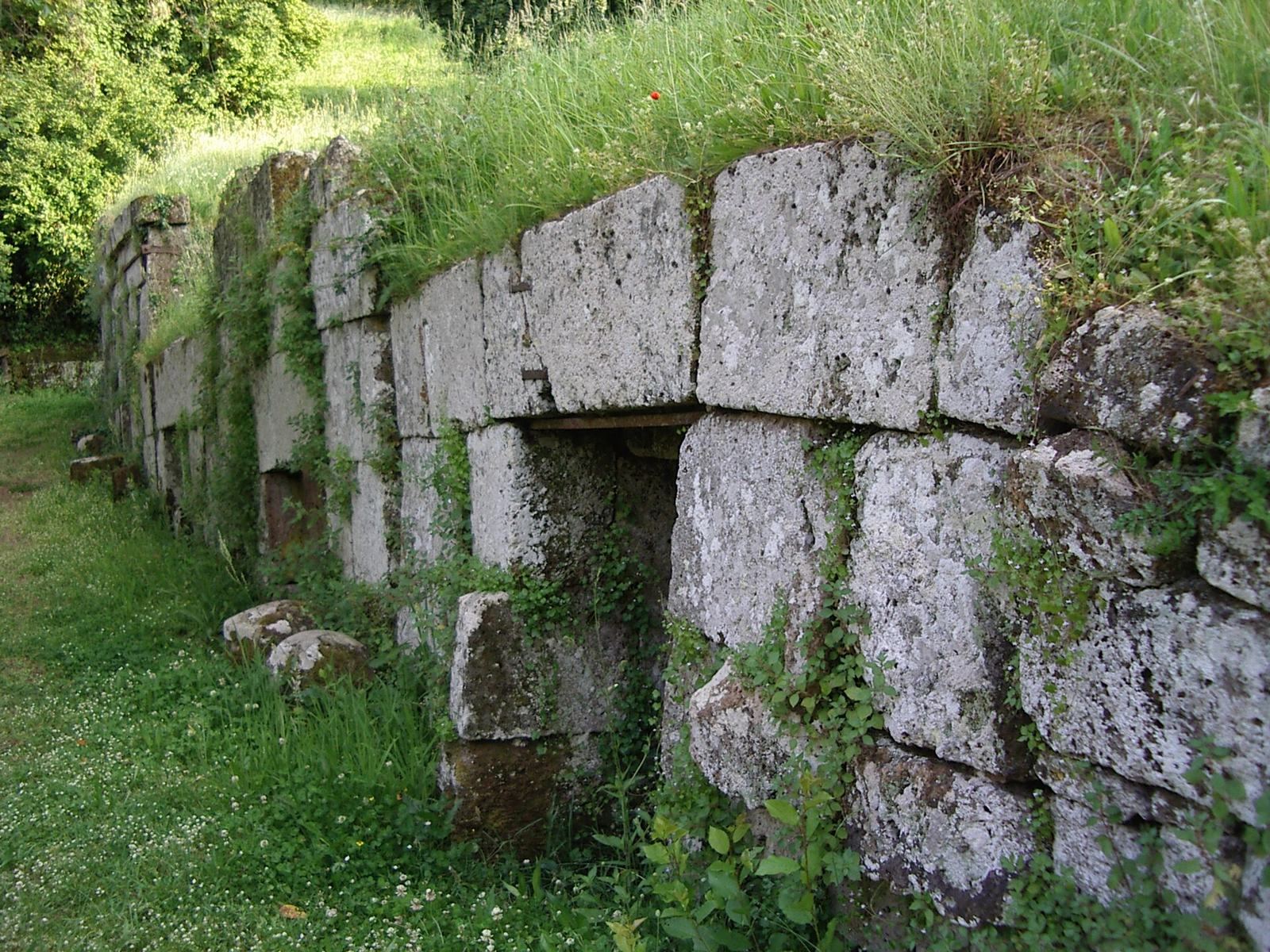
The necropolis covers about 31,000 square metres and contains more than 200 tombs. Most follow intersecting streets laid out at right angles, forming a regular grid associated with the cemetery’s greatest development in the sixth and fifth centuries BC. This ordered plan has been interpreted as reflecting an egalitarian social organization.
Tomb form and construction
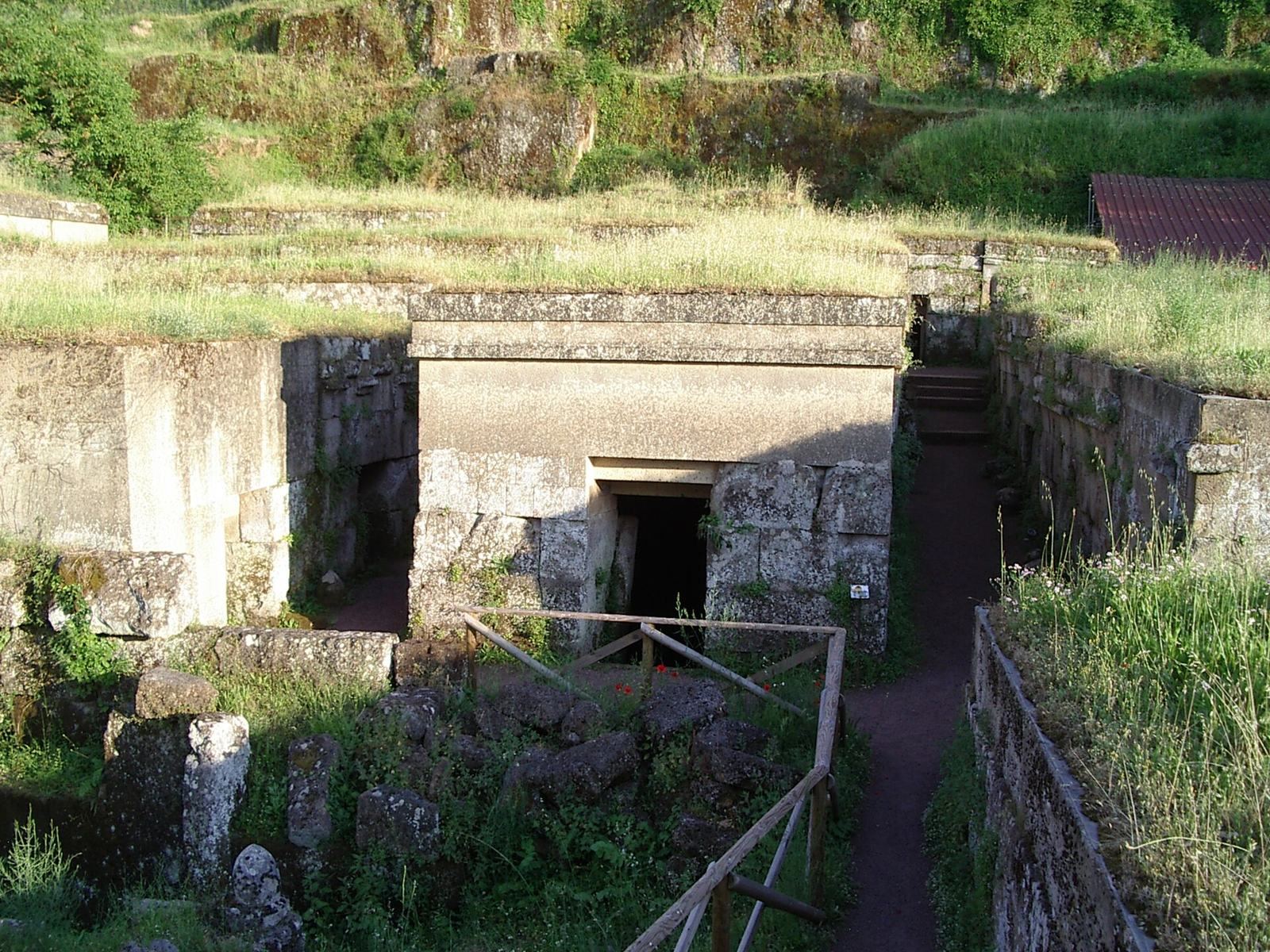
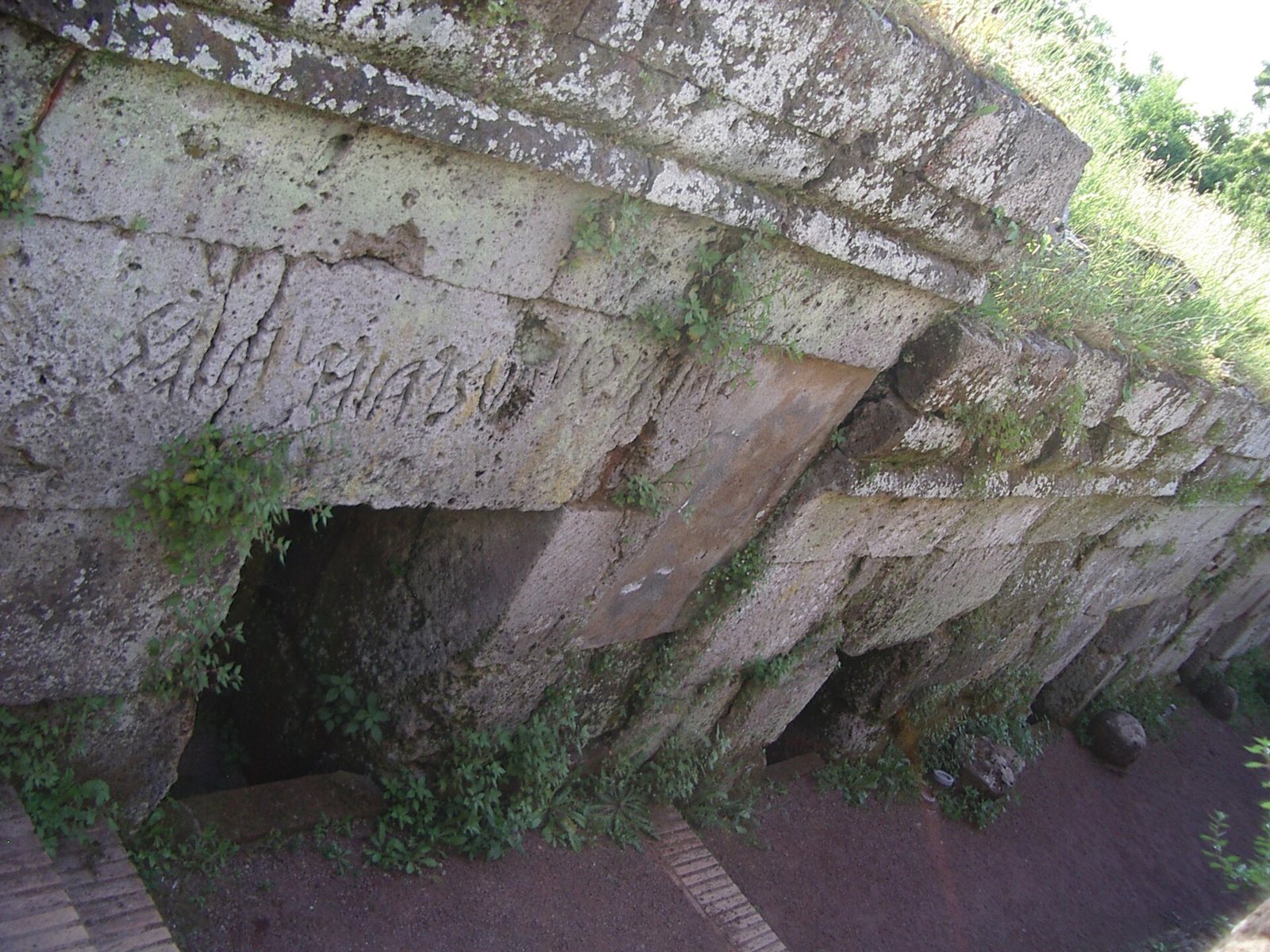
Built from local tuff, a rock formed from compacted volcanic ash and other material, the tombs are chiefly rectangular chambers measuring about 3 by 2 metres, with cube-like outer forms. They differ from the large burial mounds common at Cerveteri and Tarquinia. Most were intended for individual family groups. Usually, three steps led down into a chamber, where benches ran along the back wall and one side wall. Cremated remains or bodies were placed on the benches, while grave goods could be set on them or on the floor. Iron nails indicate that some items were hung on the walls; floors were made of tuff powder or packed earth.
Roofs and entrances
The roofs were generally double-pitched, made from blocks that projected inward toward the centre. These formed a false vault, made from blocks overlapping inward rather than an arch. Its stability depended on earth piled above the blocks. A second course of blocks retained the earth and formed the tomb’s outer wall. A tuff slab closed each entrance, which was then sealed with additional tuff blocks.
Inscriptions and markers
Lintels commonly carried the deceased’s name and family name, with family names inscribed in Etruscan. Stone markers, usually placed above the tomb roofs, indicated burials. Their shapes signaled the sex of the deceased, although the precise relationship between particular shapes and gender is uncertain.
Burial goods
Objects placed in the tombs reflected the deceased’s social role and economic means. Finds include bronze and terracotta vessels, as well as bucchero, a usually dark Etruscan pottery. Male burials often contained spears and iron implements for cooking meat, including fire dogs, spits, grills, tongs and ember rakes. Female burials often included ornaments, sometimes made of precious metals. Numerous Greek Attic vases bear black-figure or red-figure decoration, techniques that show figures in black or in the clay’s natural colour against a contrasting background. The luxurious objects indicate the wealth attained by a substantial part of the population.
The rock chapel
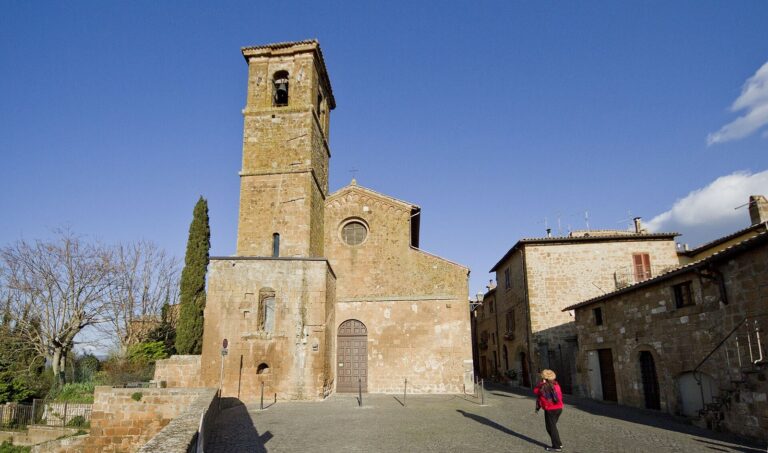
The necropolis takes its name from a crucifix engraved in tuff inside a rock chapel cut into the rock on which Orvieto stands. The small church associated with the chapel also gave its name to the cemetery.