Church of Our Lady of Sorrows, Košice: A Baroque Calvary Church
Site at a Glance
- Popularity
- Low
- Country
- Slovakia
- Primary era
- Early Modern
- Eras represented
- Early Modern, Modern
- Civilizations
- Austria-Hungary, Austrian Empire, Habsburg, Hungarian
- Site type
- Religious
- Remains
- Church
On this page8 sections
History
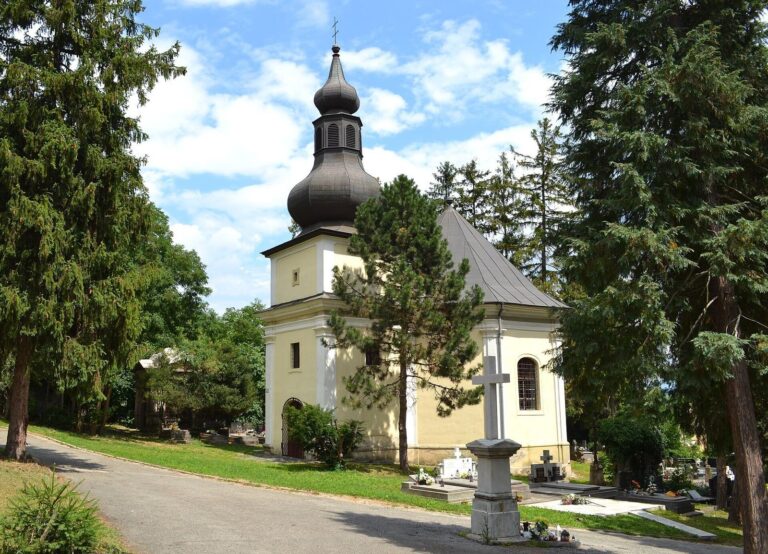
The Church of Our Lady of Sorrows in Košice, Slovakia, is a Baroque Roman Catholic church built for the Jesuits between 1742 and 1758. It is Slovakia’s largest Calvary church. The hill took the name Calvary, associated with the place of Jesus’ crucifixion, when plans for the church were approved in 1736. The Jesuits also oversaw Košice’s gymnasium and a university with two faculties.
Jesuit foundation and construction
Builder and architect Nicodemus Litzka designed the church. Work began in 1742 and continued for 16 years; the church was completed and consecrated in 1758.
Military use and renewed worship
The Jesuits used the church for about 15 years. Following the dissolution of their order in 1773, the army took possession and converted the building to an ammunition depot. The Catholic Church regained it after the Napoleonic Wars, and extensive renovation followed. In 1820, after the work, the bishop of Košice and parish authorities arranged for the church to be consecrated again. The bishop also received Pope Leo XII’s permission to sell indulgences at Calvary. In Catholic practice, an indulgence remits temporal punishment associated with sins whose guilt has been forgiven.
Burials and later care
The hill was planted with trees in 1830. After the Rosalia Cemetery could no longer accept new burials, the Calvary grounds served as a burial place from 1849 to 1889. Further renovation in 1870 established the church’s later appearance. Calvary was carefully maintained until the 1950s. The cemetery closed in the 1960s, and houses were built on parts of its grounds; plans to demolish the chapel-tombs were not carried out. Don Timko, a retired Salesian priest, voluntarily cleaned and maintained the area for 20 years. Salesians are members of a Catholic congregation associated especially with education and youth ministry.
The church belongs to the Eastern ecclesiastical province, the Archdiocese of Košice, and the Parish of Our Lady of Seven Sorrows. It became a National Cultural Monument of Slovakia on October 16, 1963. Annual pilgrimage feasts take place on May 3 and September 15.
Remains
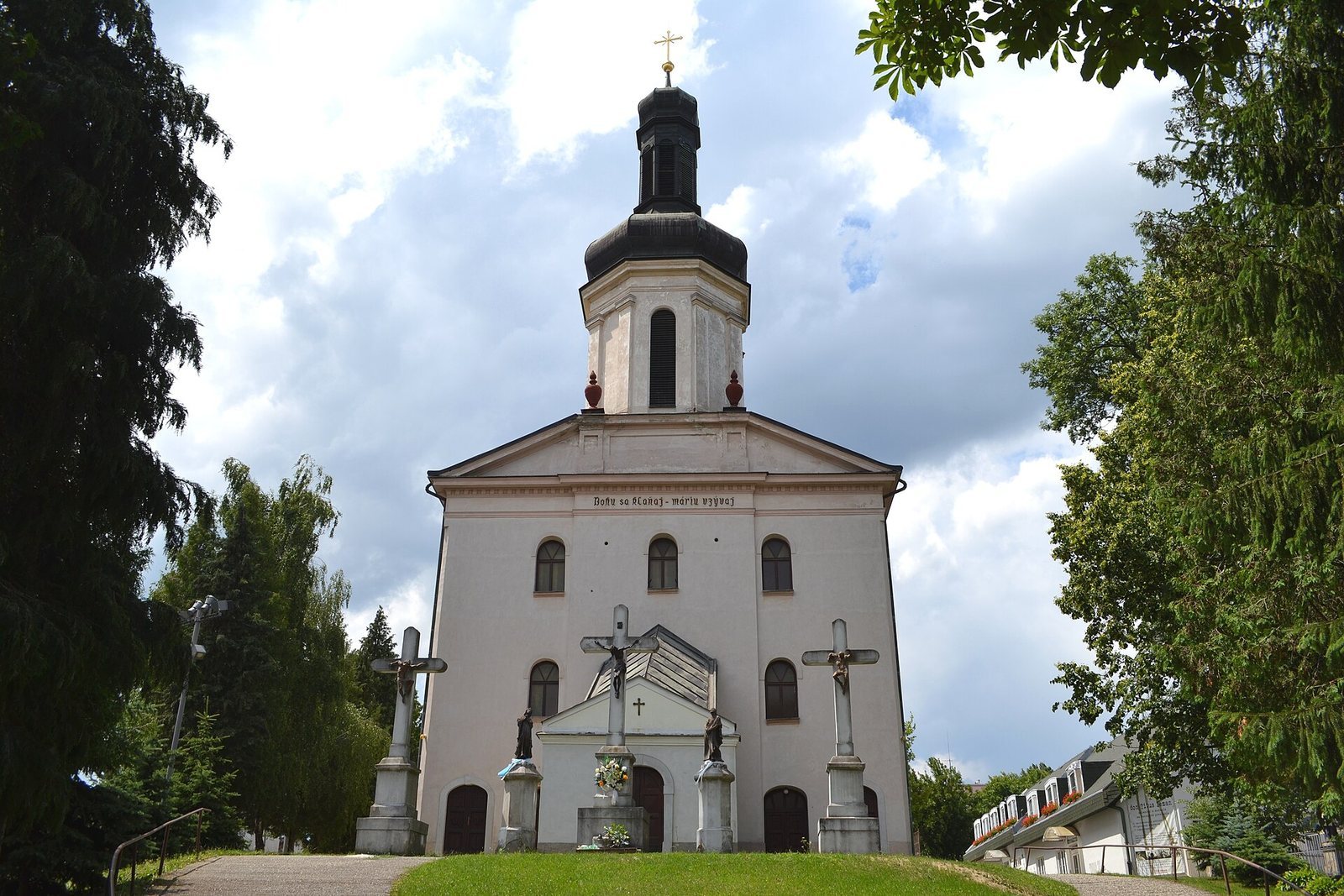
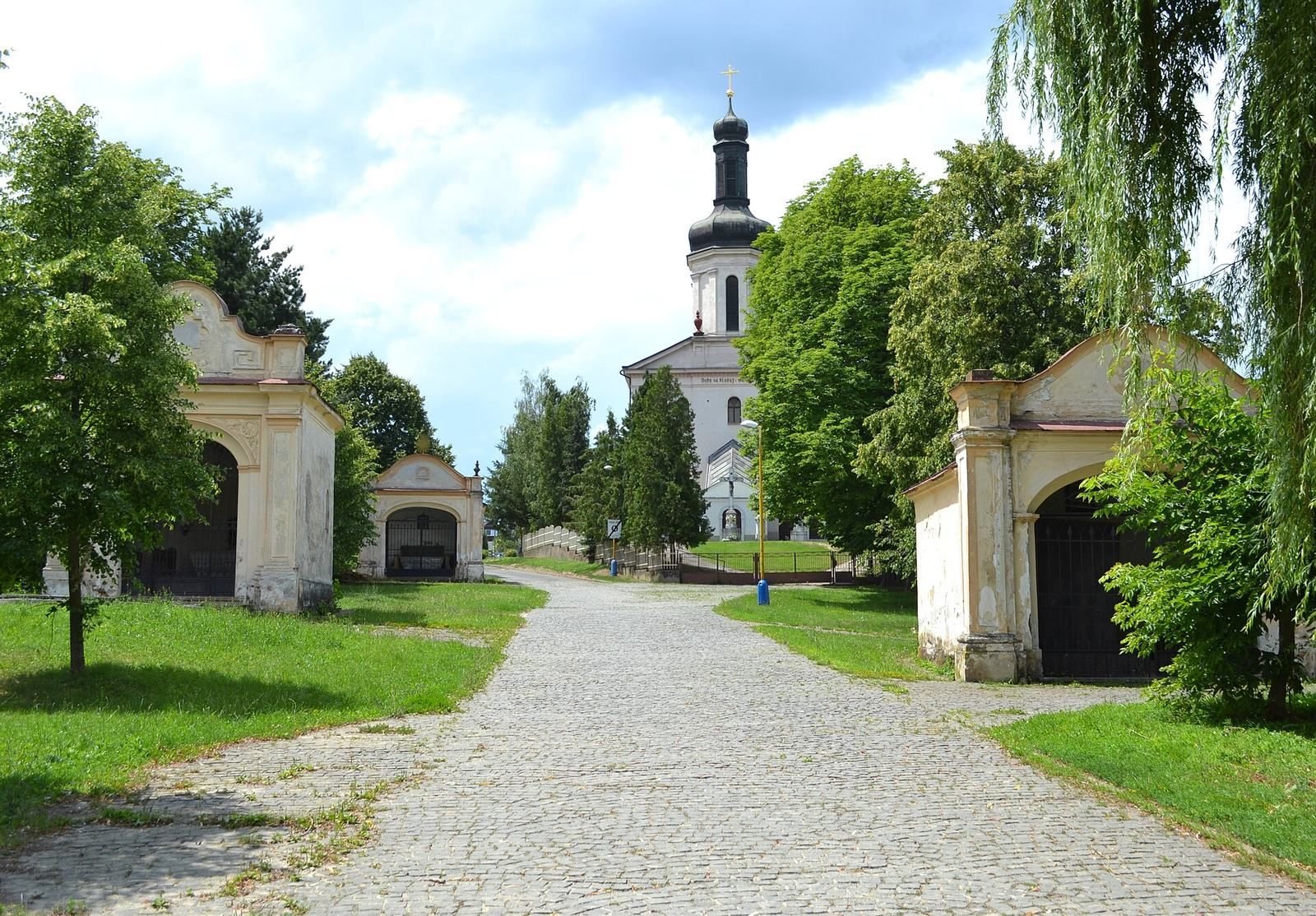
On Calvary Hill, about three kilometres northwest of Košice’s old city centre, the stone Baroque church has three long interior sections, two levels, and one tower. A route between the amphitheatre and the church contains a series of chapel-tombs.
Church building and altars
The church has three altars. On the lower level, an original Baroque sculpture shows the Virgin Mary holding the dead Jesus. Another surviving Baroque sculpture depicts Christ seated with a crown of thorns. The modern altar on the upper level bears a painting by Alexander Kováč of the Three Martyrs of Košice: Catholic clergy Marko Krizin, Stephan Pongrácz, and Melchior Grodziecki, who are venerated as martyrs. Since their likenesses are unknown, the painting reflects Kováč’s interpretation.
Chapel and outdoor sculptures
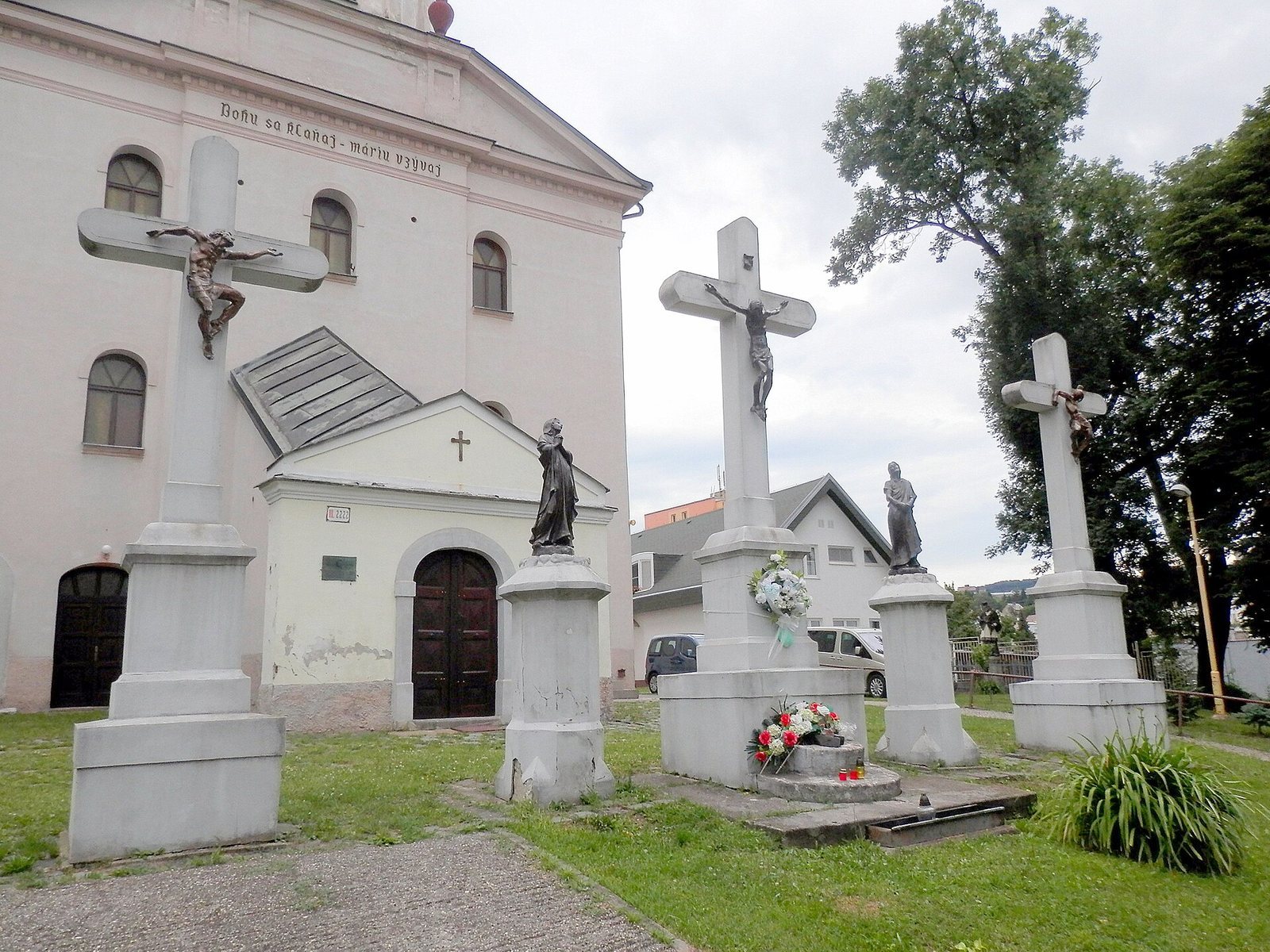
An open chapel stands behind the sanctuary, with a Pietà, a sculpture of Mary with the dead Christ. Nearby sculptural groups depict Christ with a woman at a well and Christ with Mary Magdalene. In front of the church, a Golgotha group shows the crucified Christ between two criminals. Sculptures of the Virgin Mary and St John were originally placed between the crosses.
Chapel-tombs and devotional stations
Sixteen chapel-tombs line the route from the amphitheatre to the church. Their fronts serve as Stations of the Cross, a devotional sequence recalling Jesus’ suffering, while their rear sections contain family burial vaults. Fourteen chapels represent the Stations, and two are dedicated to the Virgin Mary. Though similar in overall appearance, the chapels have architectural differences; several entrances to the rear burial vaults were later vandalized.