Church of St John the Baptist in Hrhov: A Historic Roman Catholic Church


Site at a Glance
- Rating
- 4.4
- Popularity
- Very Low
- Country
- Slovakia
- Primary era
- Modern
- Eras represented
- Medieval, Early Modern, Modern
- Civilizations
- Habsburg, Hungarian
- Site type
- Religious
- Remains
- Fortified Church
On this page8 sections
History
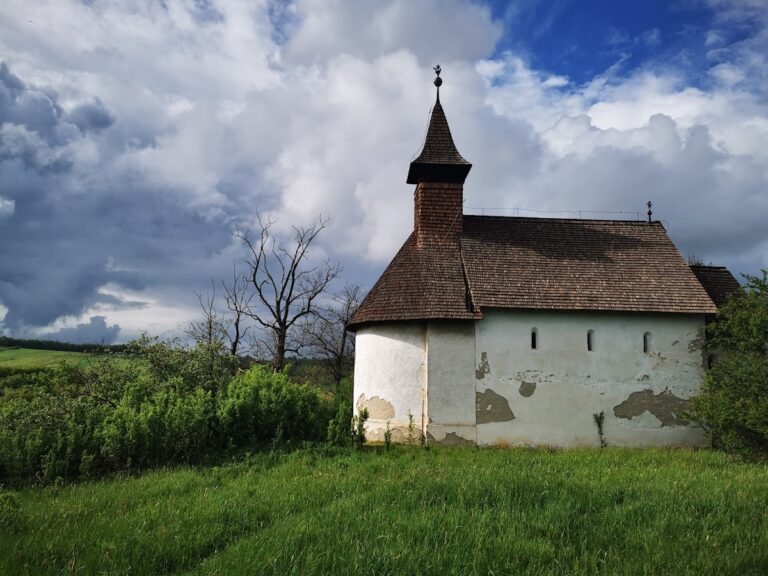
The Church of St John the Baptist, known locally as Keresztelő Szent János-templom, is a Roman Catholic church in Hrhov, Slovakia, dedicated to John the Baptist, the Christian prophet and saint traditionally regarded as the baptizer of Jesus. Its foundations date from the second half of the thirteenth century, and the building preserves a long sequence of medieval, early modern, and nineteenth-century alterations.
Medieval origins and Gothic rebuilding
The church’s original sanctuary was Romanesque, placing its oldest surviving part within the medieval period. Around 1500, the building was reconstructed in the Gothic style, a medieval architectural tradition associated with pointed arches, strong vertical emphasis, and ecclesiastical stone construction. The western nave portal still preserves the character of this Gothic phase.
Reformation and fortified use
Around 1550, the population of Tornagörgő, the historical Hungarian name for Hrhov, adopted the Reformation, the sixteenth-century religious movement that produced Protestant churches including the Reformed tradition. The church consequently became the property of the Reformed community. In 1687, the village’s landowner returned it to the Catholics.
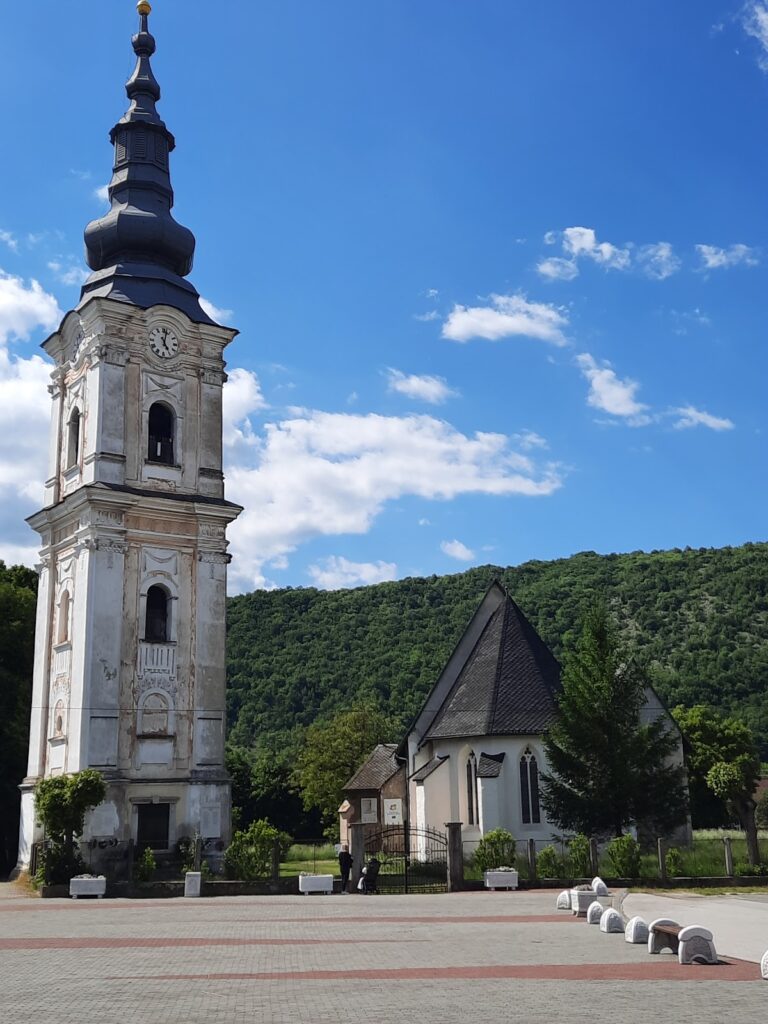
During the seventeenth century, a defensive wall of spring limestone was built around the church. A low square-plan tower formed part of this enclosure. The fortified church complex served an important defensive purpose during the Ottoman wars and the estate uprisings, when fortified religious and communal buildings could provide protection.
Classicist transformation and twentieth-century additions
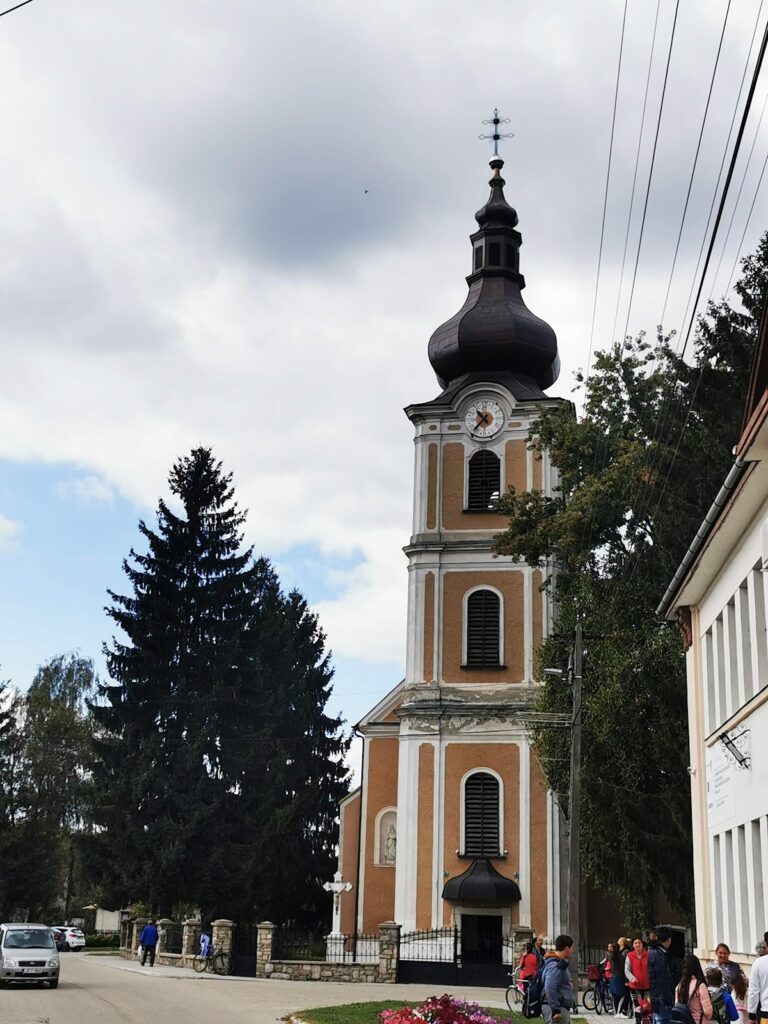
The church was rebuilt and enlarged in Classicist style in 1814 and 1815. Classicism drew on the forms and proportions of ancient Greek and Roman architecture. A new tower was added in 1848, and the central painting on the main altar, depicting the Baptism of Christ, was also painted in that year by Gyula Ardian.
The church received an organ in 1901, made by Sándor Országh, an organ builder from Rákospalota. Its enclosure and stairway were constructed in 1934. The building is listed as a Slovak cultural monument, reflecting its architectural and historical value.
Remains
The church stands on a hill of spring limestone in the center of Hrhov and is enclosed by a defensive wall. Spring limestone, also called travertine, is a porous stone deposited by mineral-rich springs. The church’s layout reflects repeated rebuilding. Its nave follows the main axis and was lengthened in successive phases, while the building’s western and eastern portions differ in width.
Church building
The nave has a wider western section and a narrower eastern section. It is covered by a Prussian vault, a shallow vaulted ceiling formed between iron or masonry supports, bearing wall paintings made in 1950. On the north side stands the sacristy. In front of the western facade rises a tower in the Classicist style of Gemer, a historical region of southern central Slovakia and northern Hungary. The stone facing of the western portal retains the church’s original Gothic character.
The sanctuary adjoins the narrower eastern part of the nave and has a barrel vault. It is the oldest part of the church and was originally Romanesque. The main altar contains four angel sculptures and a central painting of the Baptism of Christ, completed by Gyula Ardian in 1848. The tabernacle and chalice date from around 1800.
Defensive enclosure and memorial stone
The enclosing wall is built of spring limestone and incorporates a low tower with a square plan. Its defensive role belongs to the seventeenth-century history of the church, when the enclosure and tower were used during the Ottoman wars and estate uprisings.
Set into the church wall is a Gothic tombstone dated 1381 for György Bebek, a member of the medieval Hungarian Bebek noble family. Made from red marble quarried at Szádvárborsa, the stone bears the Bebek coat of arms in relief and a circular inscription. It was brought to Hrhov from the Pauline monastery at Gombaszög. The Pauline Order was a Catholic monastic order founded in Hungary and associated with monasteries in Central Europe.
Interior furnishings and bells
The nave contains lithographs of the Stations of the Cross made around 1930, eight pilgrimage banners, and a mission cross. A second mission cross stands in the vestibule. The sacristy contains a memorial plaque for the teacher József Krug, who served from 1911 to 1937.
The tower holds two bells. The larger is dedicated to Saint Anthony of Padua and was cast by Antal Novotny of Timișoara. The smaller bell was cast in 1928 by Richard Herold in Chomutov.