Plague Chapel of St. Rosalie: A Baroque Cemetery Chapel in Košice
Site at a Glance
- Popularity
- Very Low
- Country
- Slovakia
- Primary era
- Early Modern
- Eras represented
- Early Modern, Modern
- Civilizations
- Austria-Hungary, Habsburg, Hungarian
- Site type
- Religious
- Remains
- Chapel
On this page10 sections
History
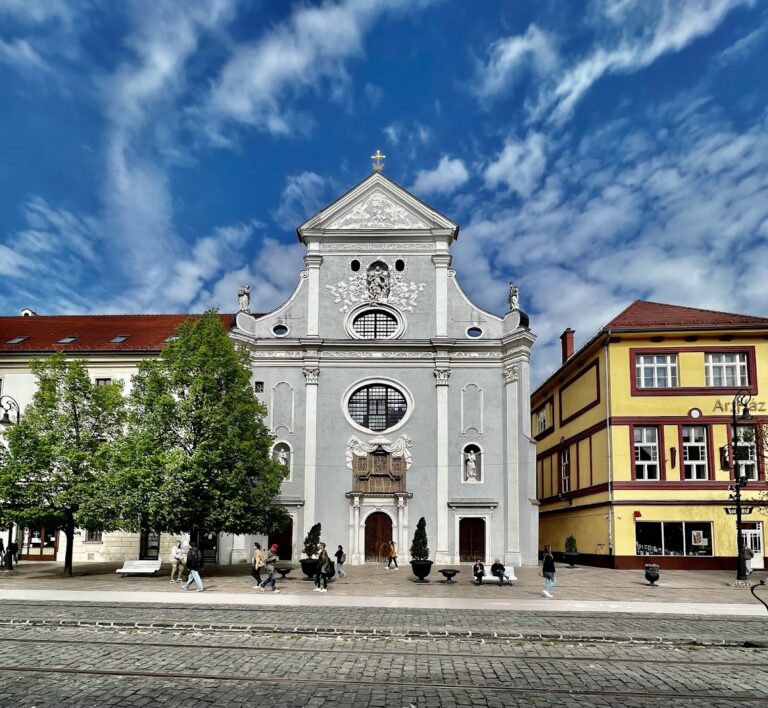
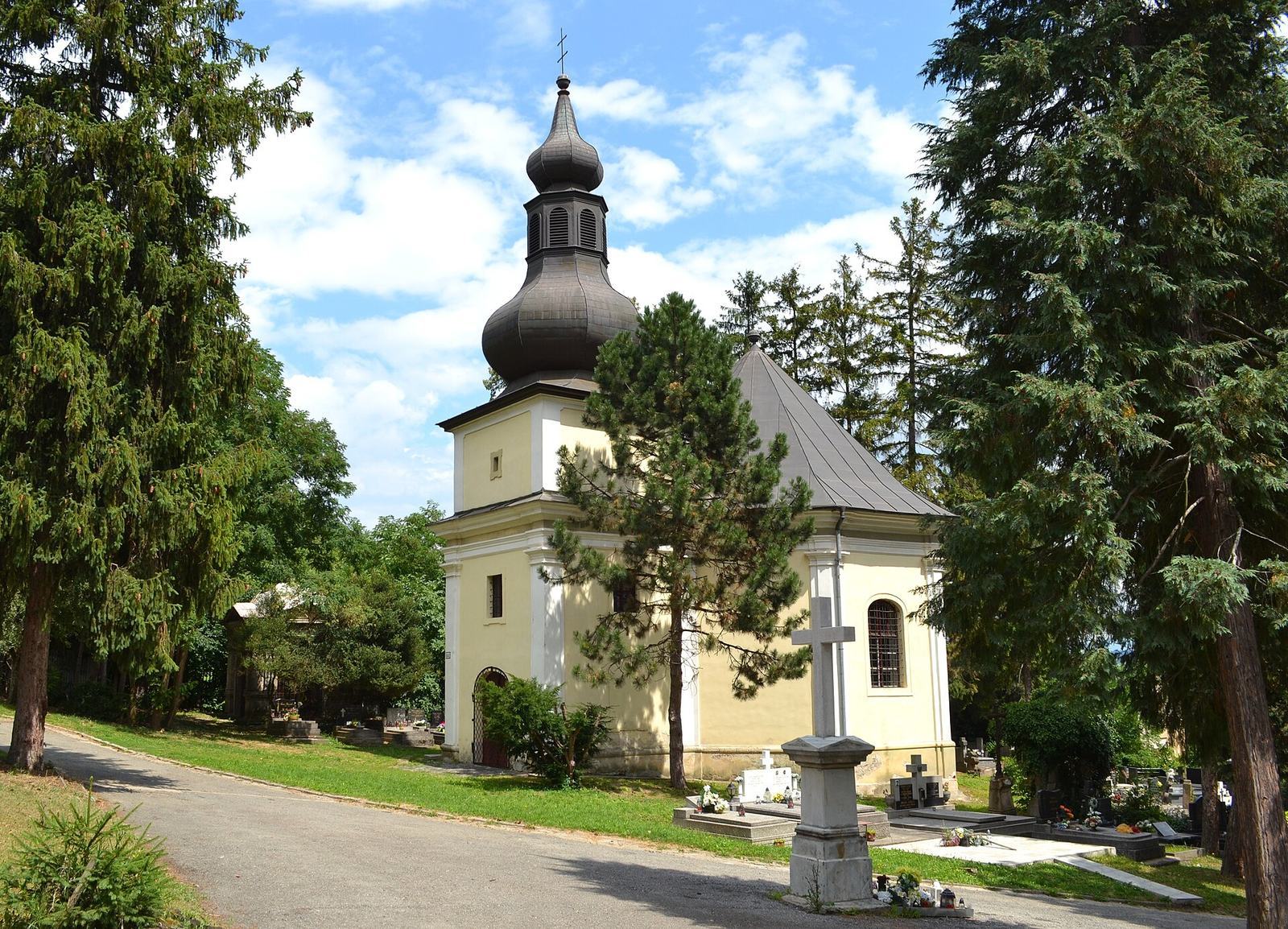
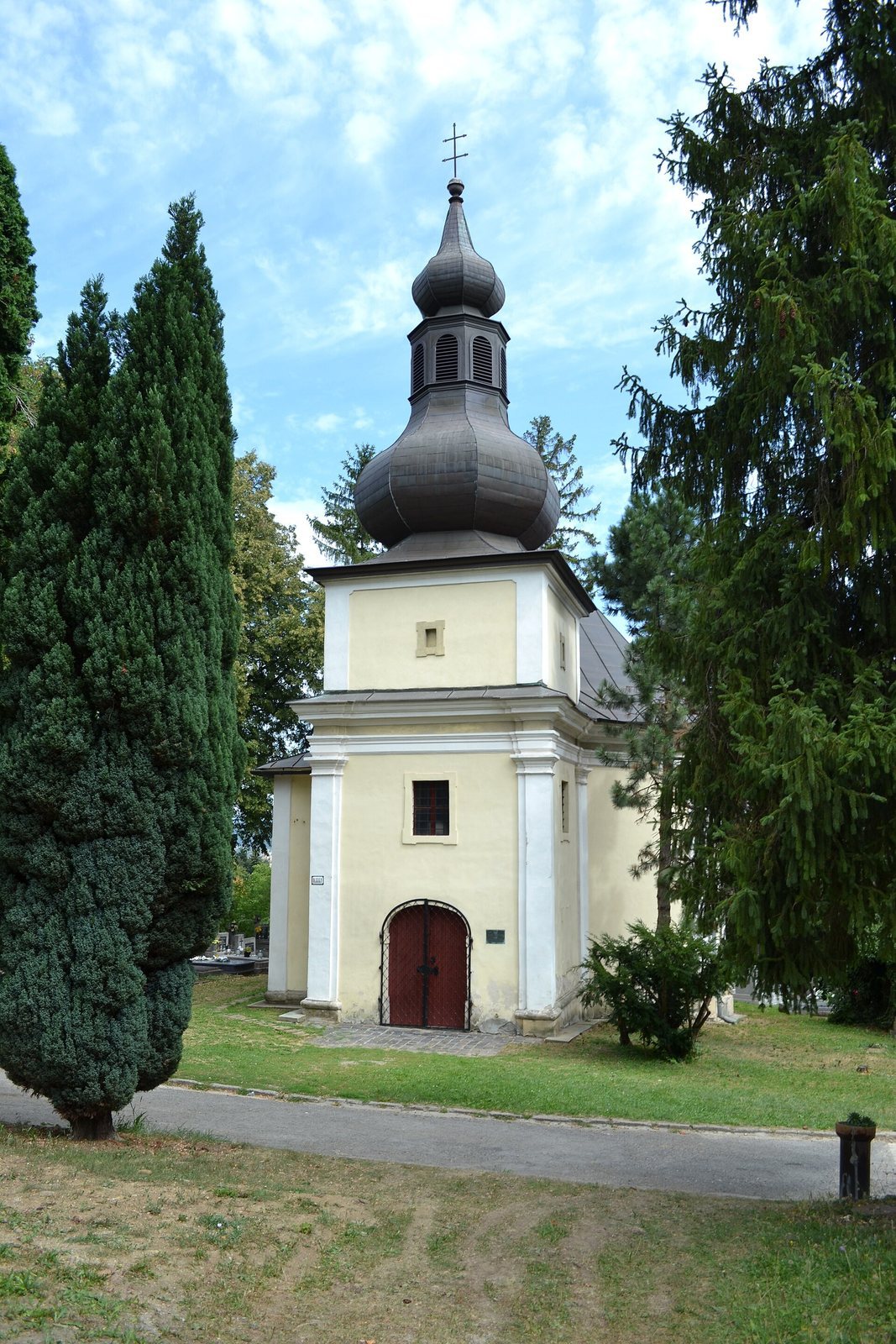
The Plague Chapel of St. Rosalie in Košice, Slovakia, is a Roman Catholic place of worship in a cemetery. Construction began in 1714 and was completed in 1715 in the Baroque style, a European artistic tradition spanning the late sixteenth through eighteenth centuries. Dedicated to St. Rosalia of Palermo, a hermit-saint invoked for protection against plague, the chapel commemorates the epidemic that struck Košice between 1707 and 1711 and killed about half the city’s population.
Foundation and early use
Košice’s city council resolved to build the chapel in 1710, with the Jesuits sponsoring the work. Tamás Tornyossy supervised construction, and the design is associated with T. Tornyossy and J. Goresch. Sculptor Ján Ernest Widman took part in the project; Widman and Hans Gönnerth are also credited with the interior decoration. In 1715, the chapel was consecrated by István Kohány, a cleric serving under a bishop.
A hermitage dedicated to St. Ladislaus, a medieval king of Hungary venerated as a saint, was built in 1730 for monks who cared for the chapel and its surroundings. Hermits initially maintained the site. Wealthier Košice families later assumed responsibility for it and used the adjoining cemetery for burials. In 1762, Pope Clement XIII, who led the Roman Catholic Church from 1758 to 1769, authorized the chapel as a place where indulgences could be granted. In Catholic teaching, an indulgence remits temporal punishment for sins already forgiven. Bishop Károly Esterházy of Eger set the observance for St. Rosalia’s feast day, 4 September, or the following Sunday. The earliest mention of burials around the chapel dates to 1764. The following year, the roof was repaired, the walls repainted, and Esterházy blessed two bells.
Military reuse and restoration
The chapel closed in 1807 when the military took it over, using it first to store gunpowder, then as a field hospital and a granary. It later returned to municipal control and was reconsecrated in 1819, followed by renovation in 1820. Košice Bishop István Cseh also arranged repairs in the early nineteenth century.
A major restoration and reconstruction under Ján Balogh followed in 1898. The tower was rebuilt and reroofed, a staircase was added, and the interior was renewed. The work also established a chapel named for the Holy Sepulchre, Jesus’s tomb; it is now dedicated to Our Lady of Lourdes, a title of the Virgin Mary associated with the apparition tradition at Lourdes, France. Further repairs took place in later years. In 1916, one of the chapel’s bells was melted down for wartime use.
Continuing use
The chapel remains chiefly a setting for funeral rites and a memorial Mass for the dead on All Saints’ Day. A relic of St. Rosalia, a physical object associated with the saint, was placed there on 6 September 2020 in connection with the COVID-19 pandemic. The chapel was registered as a Slovak National Cultural Monument in 1963, a protected designation under the country’s heritage system.
Remains
Site layout and exterior
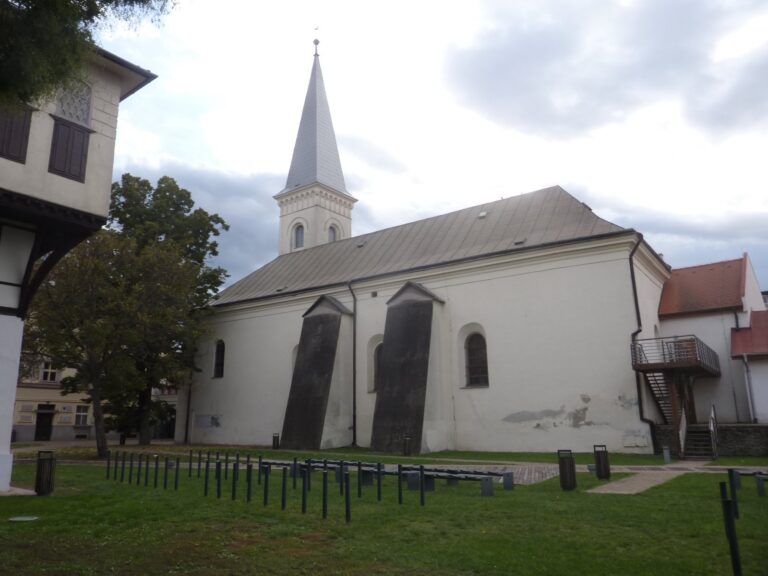
At the foot of Red Bank, the chapel stands within Rozália cemetery, which covers about three hectares and contains roughly 2,000 tombstones, many of them historic. The chapel has a regular octagonal plan and a single main worship space. Its low, two-storey tower occupies the western side: the entrance and a small vestibule are at ground level, with a raised gallery for the choir above. An onion-shaped roof is topped by a small octagonal structure. The tower’s bells bore the names Rozalia and Medard. Shallow, column-like projections and a projecting horizontal molding decorate the exterior walls, while two windows admit light to the interior.
Interior and furnishings
Main altar
The eighteenth-century main altar is arranged with a passage around the sanctuary. It includes an image of the Virgin Mary nursing the infant Jesus, while its passage doors show St. Andrew Zorard, a medieval hermit, and St. Benedict, a monk associated with the foundation of Benedictine monasticism. A glazed niche holds a reclining Baroque statue of St. Rosalia. Statues of St. Roch, invoked against plague, and St. Sebastian, an early Christian martyr, stand beside the altar. Smaller images of St. Catherine and St. Barbara appear below, with St. John Nepomuk, a Bohemian priest and martyr, and St. Bonaventure, a medieval Franciscan theologian, above.
Paintings and side altars
Traces of the original early-eighteenth-century wall paintings survive, alongside interior decoration dated to the turn of the eighteenth and nineteenth centuries. The ceiling or dome shows God protecting the Earth, seated on a globe, and an image of King David, the biblical king of Israel, appears above the altar. Two side altars contain statues of the Virgin Mary and St. Teresa.
Screen and preserved furnishings
On the beam of the partition between the main worship space and sanctuary are statues of St. Rosalia and carvings of childlike figures holding an hourglass and a skull. Preserved furnishings include sculptures, church vestments, and Baroque candlesticks. A figure seated inside a hollow tree represents the hermit of Zobor.