San Bonaventura al Palatino: A Baroque Franciscan Church and Friary in Rome
Site at a Glance
- Popularity
- High
- Country
- Italy
- Primary era
- Early Modern
- Eras represented
- Early Modern, Modern
- Civilizations
- Papal States
- Site type
- Religious
- Remains
- Church
On this page11 sections
History
Ancient remains and the friary’s foundation
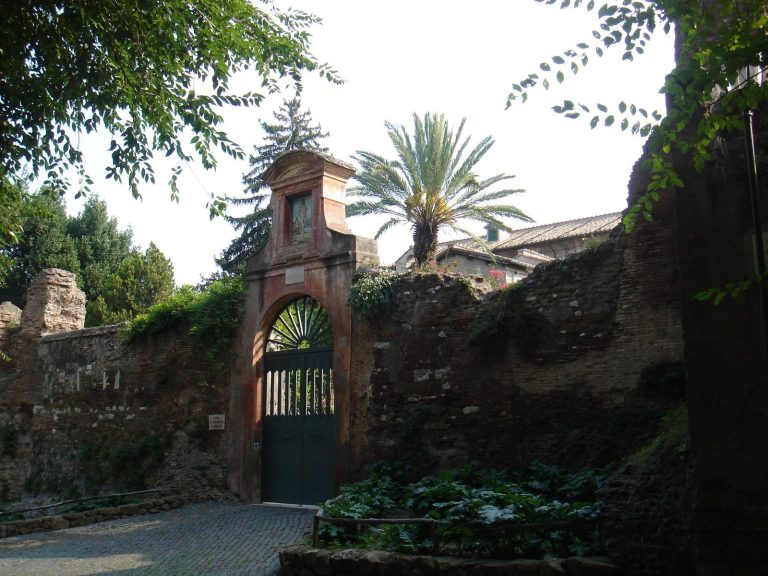
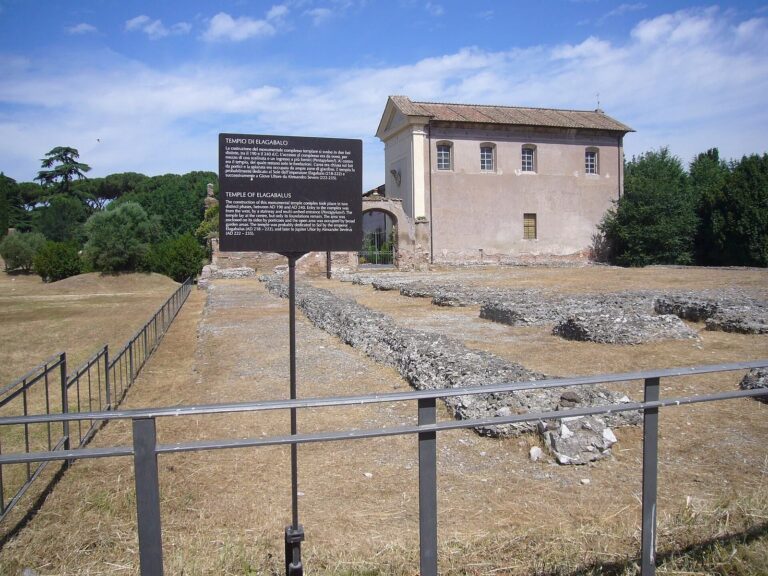
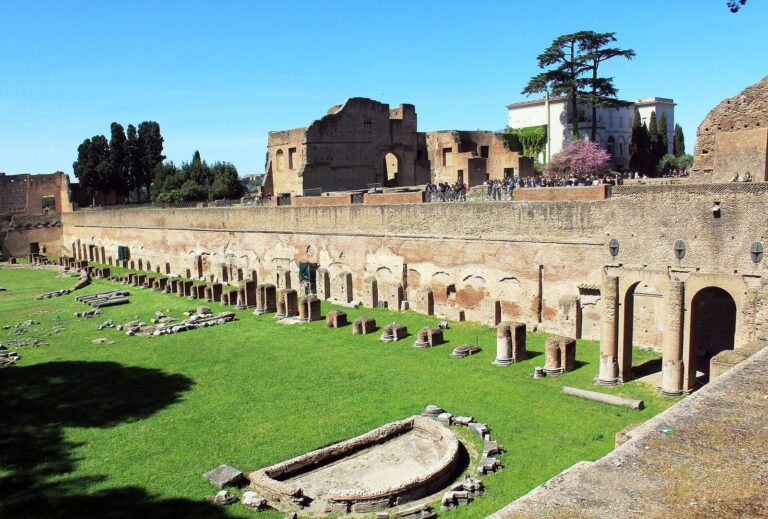
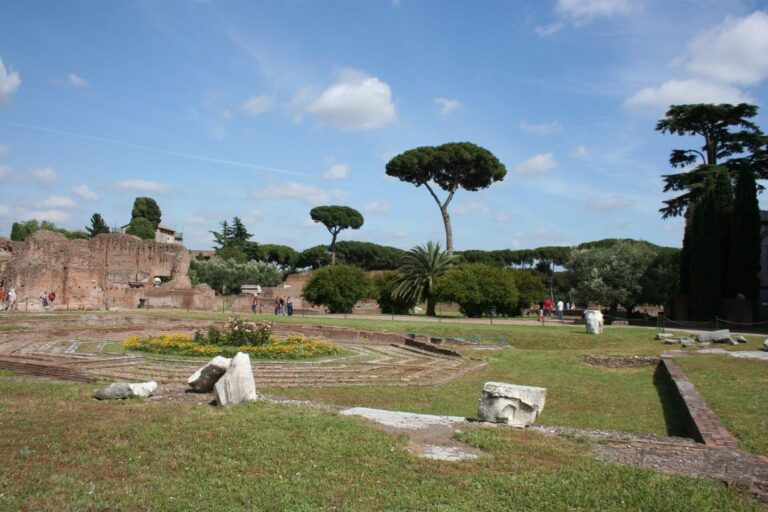
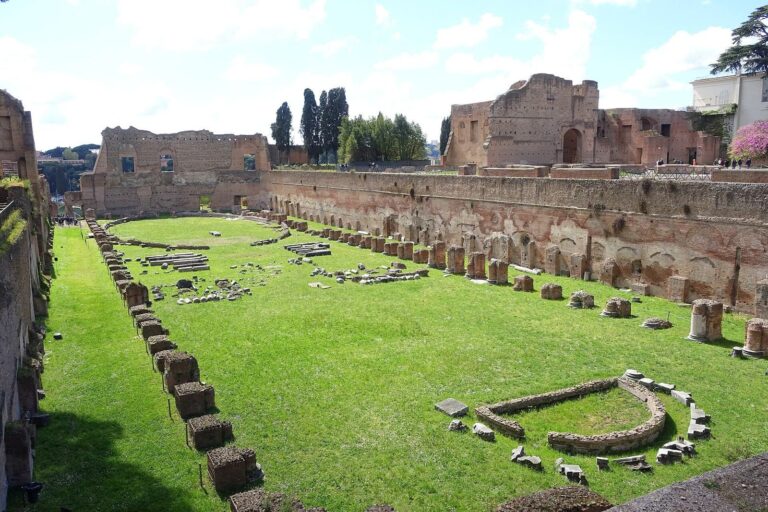
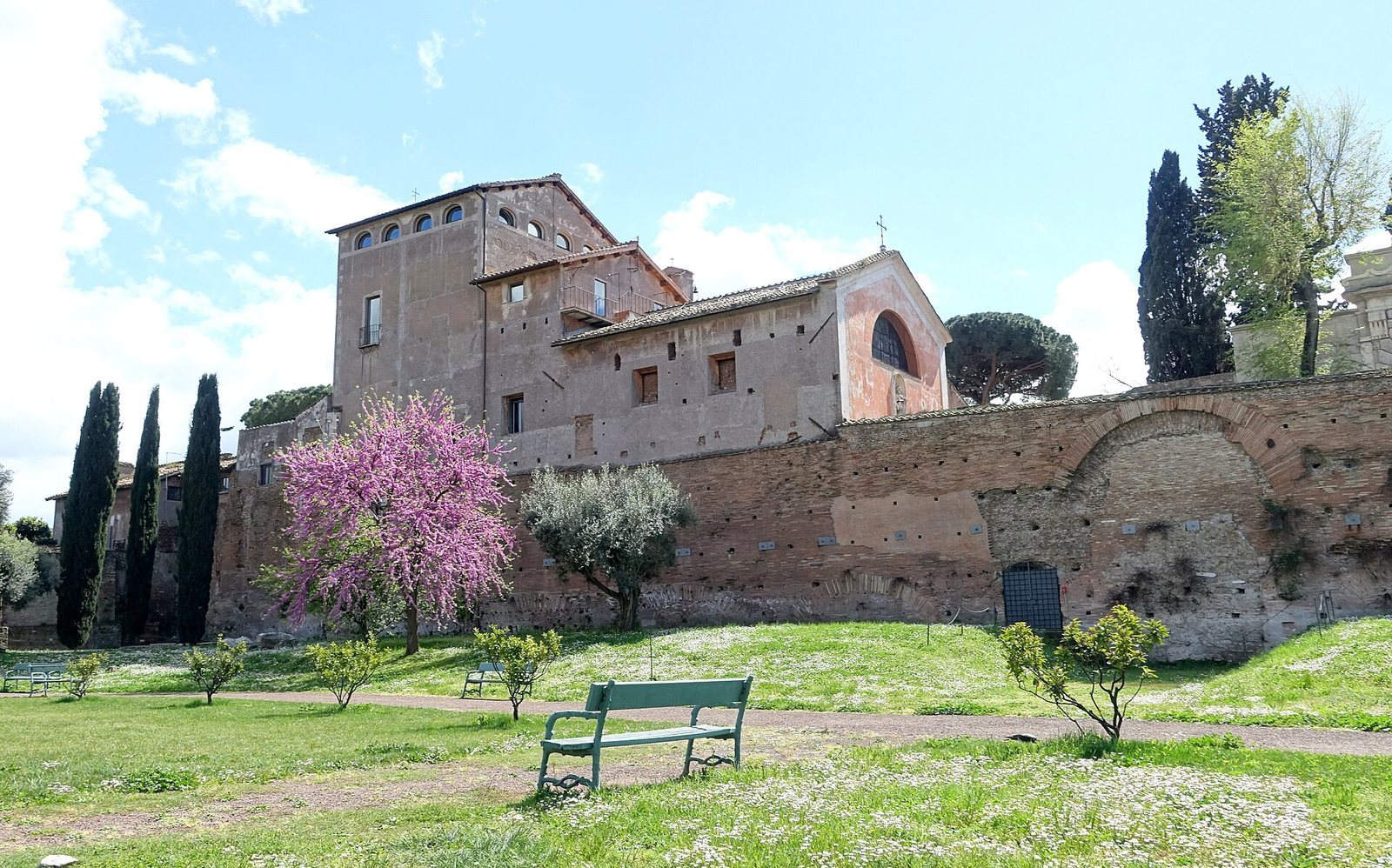
San Bonaventura al Palatino is a small Baroque church and Franciscan friary in Rome, Italy. Pirro Ligorio examined and recorded the Palatine ruins in 1552. At that time, substantial remains of an earlier structure beneath the site survived, but extensive clearance followed as the friary was built.
The friary was founded in 1625 on land belonging to the Barberini family that had previously been used for vineyards. Church construction began in 1675, funded by Cardinal Francesco Barberini at the request of Blessed Bonaventura Gran, a Spanish Franciscan friar. The work was completed in 1689, five years after Gran’s death, and the church was dedicated on 20 November that year. It is also known as alla polveria, a reference to a nearby gunpowder installation.
Nineteenth-century changes and later use
Excavations on the Palatine in the mid-nineteenth century led to part of the convent being demolished. Later in the century, restoration reshaped the convent and gave the church its present appearance. Carlo and Alessandro Torlonia financed the work.
After Italian unification, the government confiscated the friary in 1873. The friars were allowed to rent the church and a few rooms, while the rest of the complex housed immigrant workers employed on city projects. The friary survived an early-twentieth-century campaign by nationalist archaeologists to demolish it for excavation. The church remains in the care of the Third Order of Saint Francis, a distinct branch of the Franciscan tradition; the adjacent convent is associated with friars of the Order of Friars Minor.
Remains
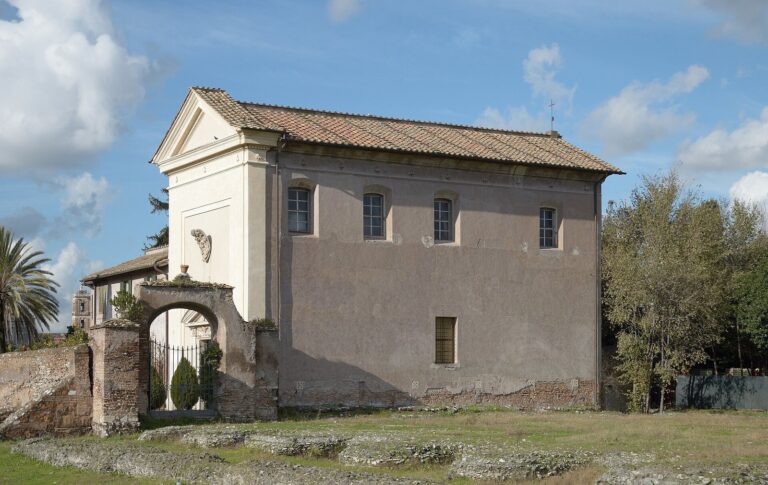
The church is a small Baroque building with a single nave, set among the remains of the former imperial palaces on the Palatine. Beneath the complex lies an ancient structure associated with the Aqua Claudia, a Roman aqueduct, though its date and original function are uncertain. The convent refectory, or communal dining room, is thought to occupy an ancient cistern. Aqueduct remains are also present in the valley crossed by Via di San Gregorio.
Church architecture
Facade and entrance
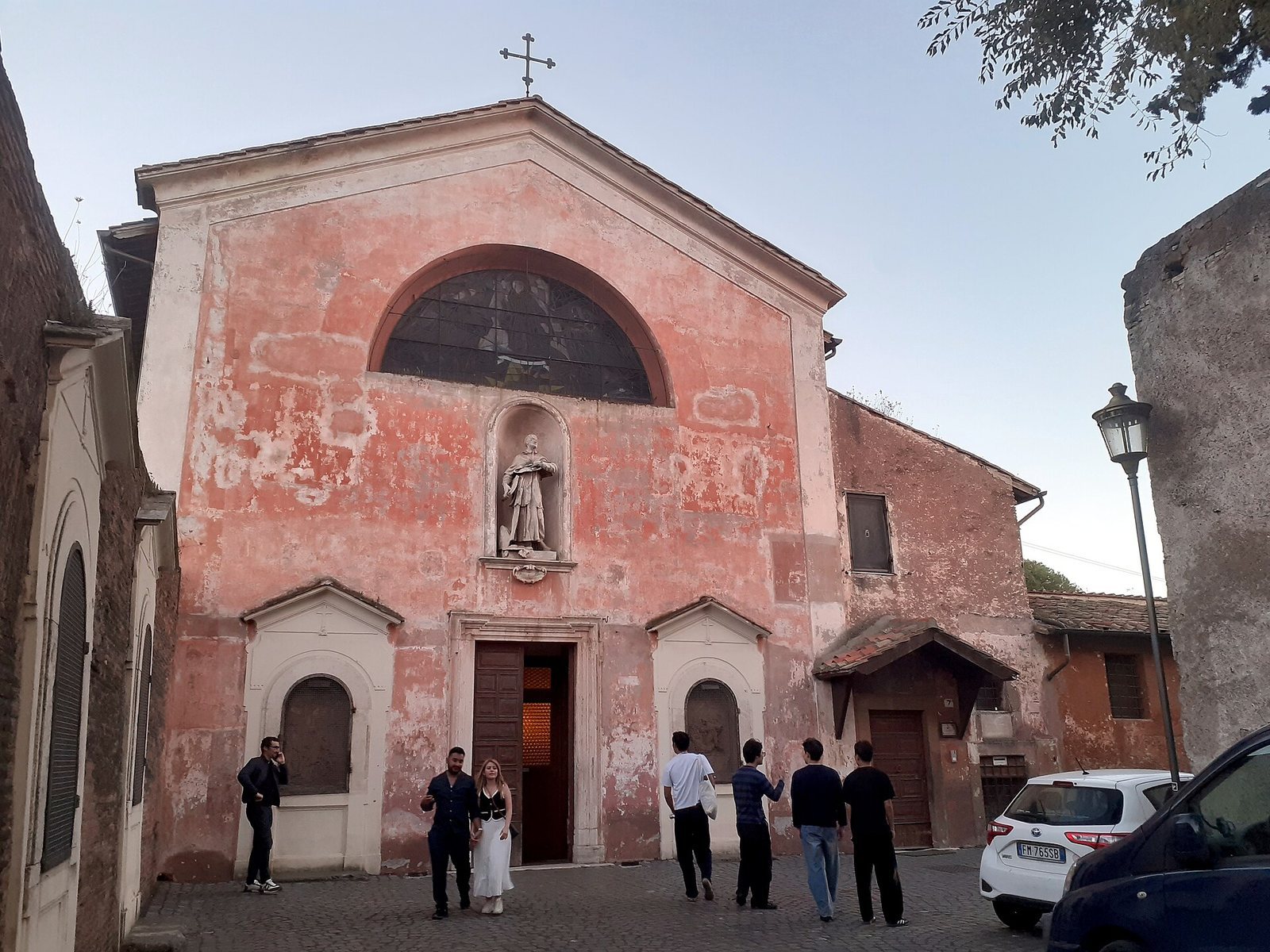
The restrained façade has a single portal, three niches and a semicircular window. The two lower niches beside the entrance contain the final two Stations of the Cross, devotional scenes from Jesus’s Passion, on the route leading to the church and convent. A Baroque statue of Saint Bonaventure stands in the niche above the portal. The upper façade and semicircular window date from the 1839 vaulting; the window contains modern stained glass. Above the entrance, a large stained-glass panel shows Saint Leonard of Porto Maurizio venerated by angels, with the Colosseum in the scene.
Nave and ceiling
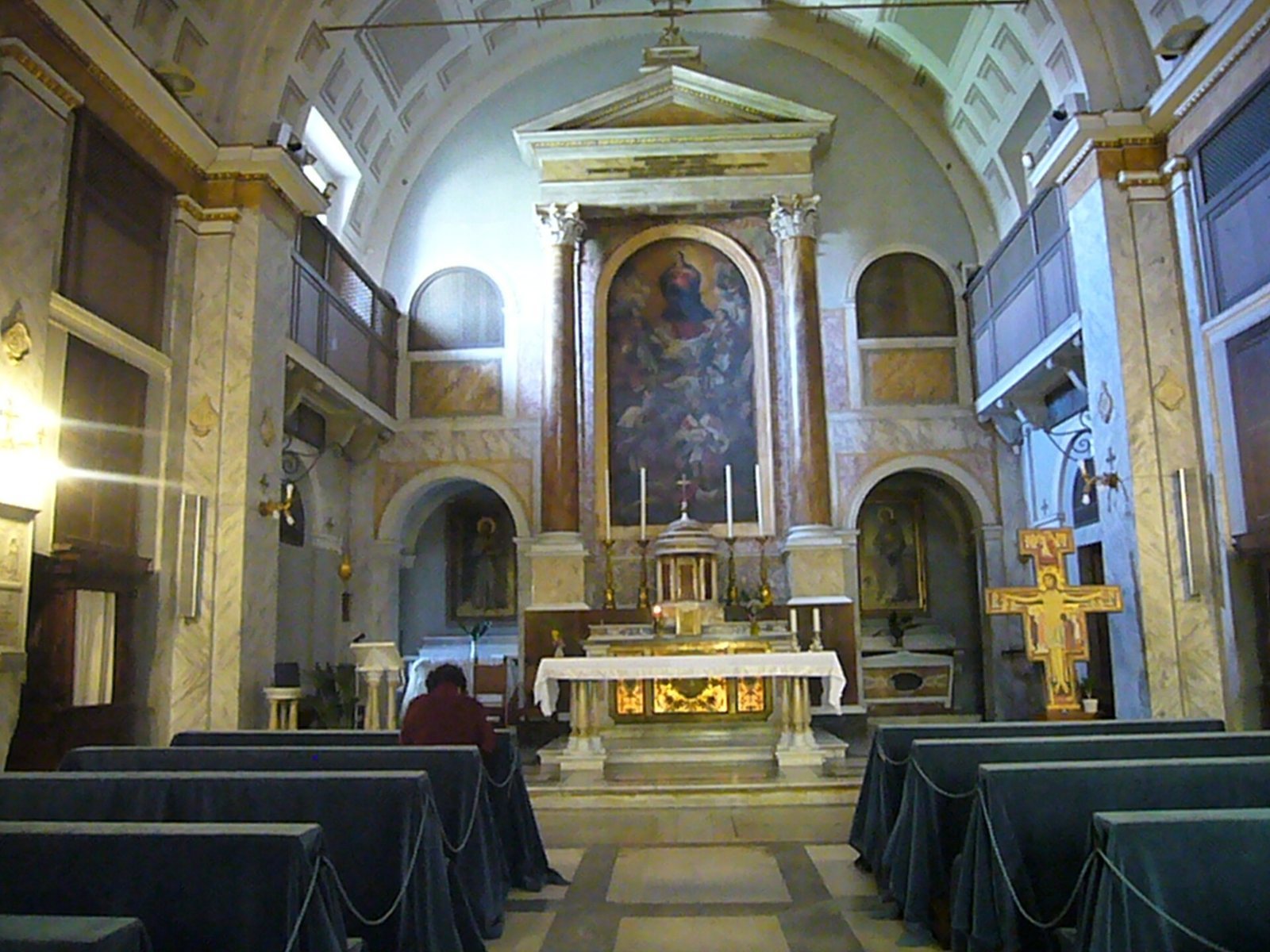
Along each side wall, two altars sit in shallow arched recesses framed by Doric columns, a classical style of column. Entrances to small side chapels flank the high altar, with oratories, or small prayer rooms, above them. The curved barrel vault was built in 1839 to replace the earlier flat ceiling. Its pattern of small squares around larger rectangles is painted in white and dark grey rather than formed by the structure itself. Tuscan-style pilasters, flat wall supports in a classical style, divide the walls and frame the arch leading to the choir. An incomplete entablature, a horizontal architectural band above supports, runs along each side of the nave.
Altars, religious works and memorials
High altar and Saint Leonard
Above the high altar is Filippo Micheli da Camerino’s painting of the Immaculata, the Virgin Mary understood as conceived without original sin, with other saints. It is set in an aedicule, a small shrine-like frame, whose columns use the Composite order, combining Ionic and Corinthian features. The altar contains relics of Saint Leonard of Porto Maurizio. To the left of the sanctuary is a crucifix that Leonard used on his missions, and his former cell has been converted into a museum.
Side altars
The left side altar holds relics of Saint Flavianus, a martyr, and an altarpiece showing Saint Francis of Assisi. The altar on the right contains relics of Saint Colomba and an image of Saint Anthony of Padua. On the right wall, Giovanni Battista Benaschi’s seventeenth-century Crucifixion hangs above the front altar; above the rear altar is Giacinto Calandrucci’s painting of Saints Paschalis, Diego and Salvatore d’Orta. Relics of Blessed John Baptist of Burgundy are on the central wall. On the left wall, Benaschi’s Archangel Michael is above the front altar, while the rear altar holds relics of Blessed Bonaventura and an Annunciation by the same painter.
Burials
The painter Francesco Mancini (1679–1758) is buried in the church, with a portrait above his grave. Cardinal Silvio Valenti Gonzaga, who died in 1756, is also buried there.