Hertug Hans Hospitalskirke: A Hospital Church in Haderslev, Denmark
Site at a Glance
- Popularity
- Very Low
- Country
- Denmark
- Primary era
- Early Modern
- Eras represented
- Early Modern, Modern
- Civilizations
- Danish
- Site type
- Civic
- Remains
- Hospital
On this page13 sections
History
Hertug Hans Hospitalskirke, the Duke Hans Hospital Church, is part of a charitable hospital complex in Haderslev, Denmark, founded in 1569 by Duke Hans the Elder. Established after the Reformation, the sixteenth-century movement that divided Western Christianity, the institution combined practical care for the poor with spiritual support through Lutheran preaching.
Hans and the hospital’s foundation
In 1544, Hans received Haderslev and Tønder counties as his own duchy and made Haderslev his residence. He was the younger brother of Danish king Christian III and the son of Danish king Frederick I. Like his brother, Hans supported evangelical Lutheran teaching, a Protestant tradition associated with Martin Luther.
Hans founded the hospital in 1569 to aid Haderslev’s poor and needy. Its resources brought together the property of several medieval charitable foundations and lands belonging to the dissolved clergy of St Mary’s Church, Haderslev’s cathedral. These assets included farmland and farms in the surrounding area. The institution was governed by the mayor, a district bailiff, a local administrative officer, and a provost, a senior church official. The hospital building was erected soon after the foundation.
Church and institutional use
The hospital building later underwent substantial remodelling, and an additional building was added. For several centuries, the church served as a subsidiary of Haderslev Cathedral, with services held every Sunday.
Twentieth-century changes and present use
A restoration marking the institution’s 400th anniversary in 1969 added a copper-clad roof turret to carry a bell. The buildings accommodated 20 female residents receiving support; the last moved out in 1989. Restoration work carried out from 1988 to 1990 adapted the main building for congregation rooms, and further extensive work on the hospital and church was undertaken by 2006.
The church now serves both as an annex to Haderslev Cathedral and as a parish church for the city’s southern district. The congregation of Haderslev Vor Frue Cathedral parish has the right to use it in return for maintaining the building.
Remains
Plan and setting
The complex has a T-shaped plan. Its hospital wing faces Sønderbro, the church occupies the eastern wing, and the main and auxiliary buildings complete the arrangement. The site lies just south of Haderslev’s old town, outside Mill Gate. A railway laid through the area in 1898 left the buildings in a sunken position. Haderslev-Süderbrücke station served the Toftlund route until 1939. A major road built across Mill Stream in the 1950s visually separated the hospital from the old town.
The church
Plan and exterior
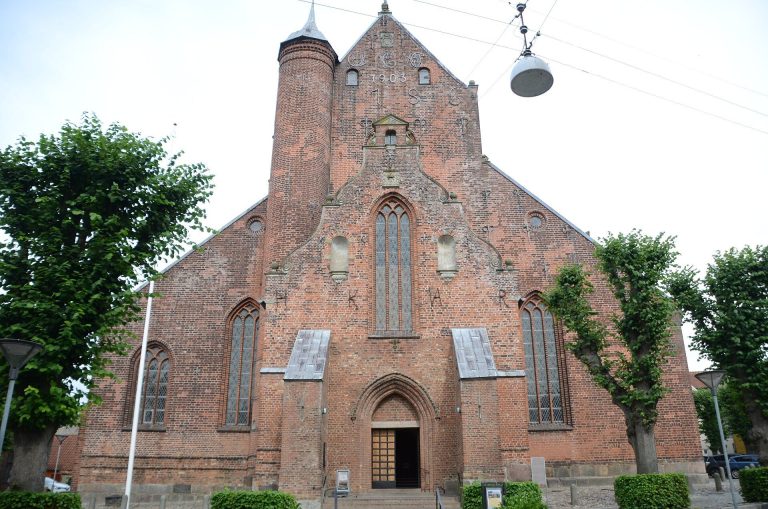
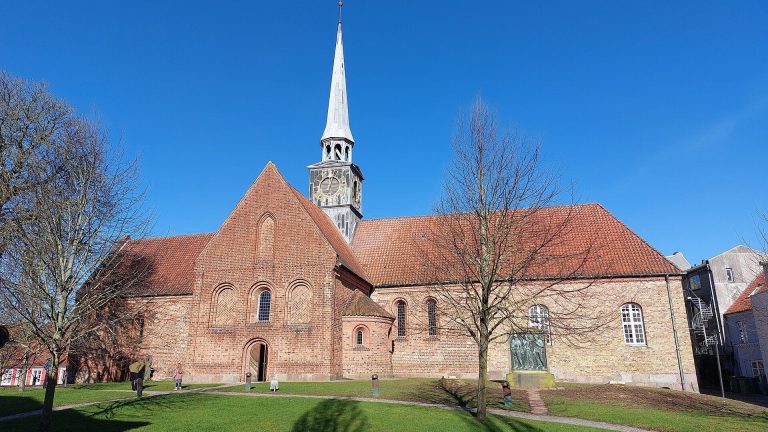
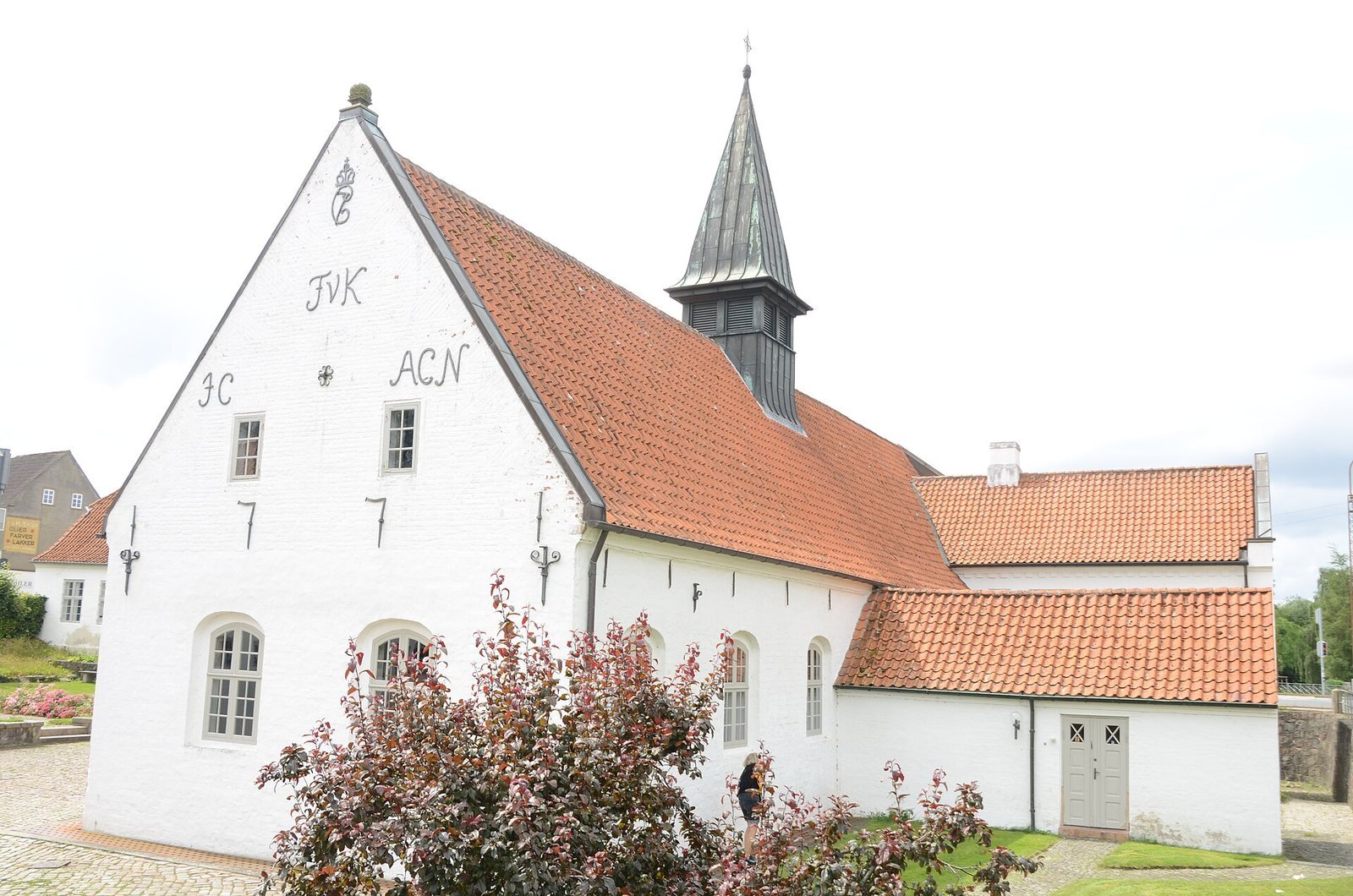
The church is an elongated building form known as a longhouse, with two small additions. A porch projects from the south side, while the northern addition contains the baptism room. The church interior is about 20 metres long, with windows on both its north and south sides. Two windows are set at the eastern end, one now blocked. An entrance portal opens to the porch and church. The roof turret is clad in copper and carries a bell.
Windows and altar
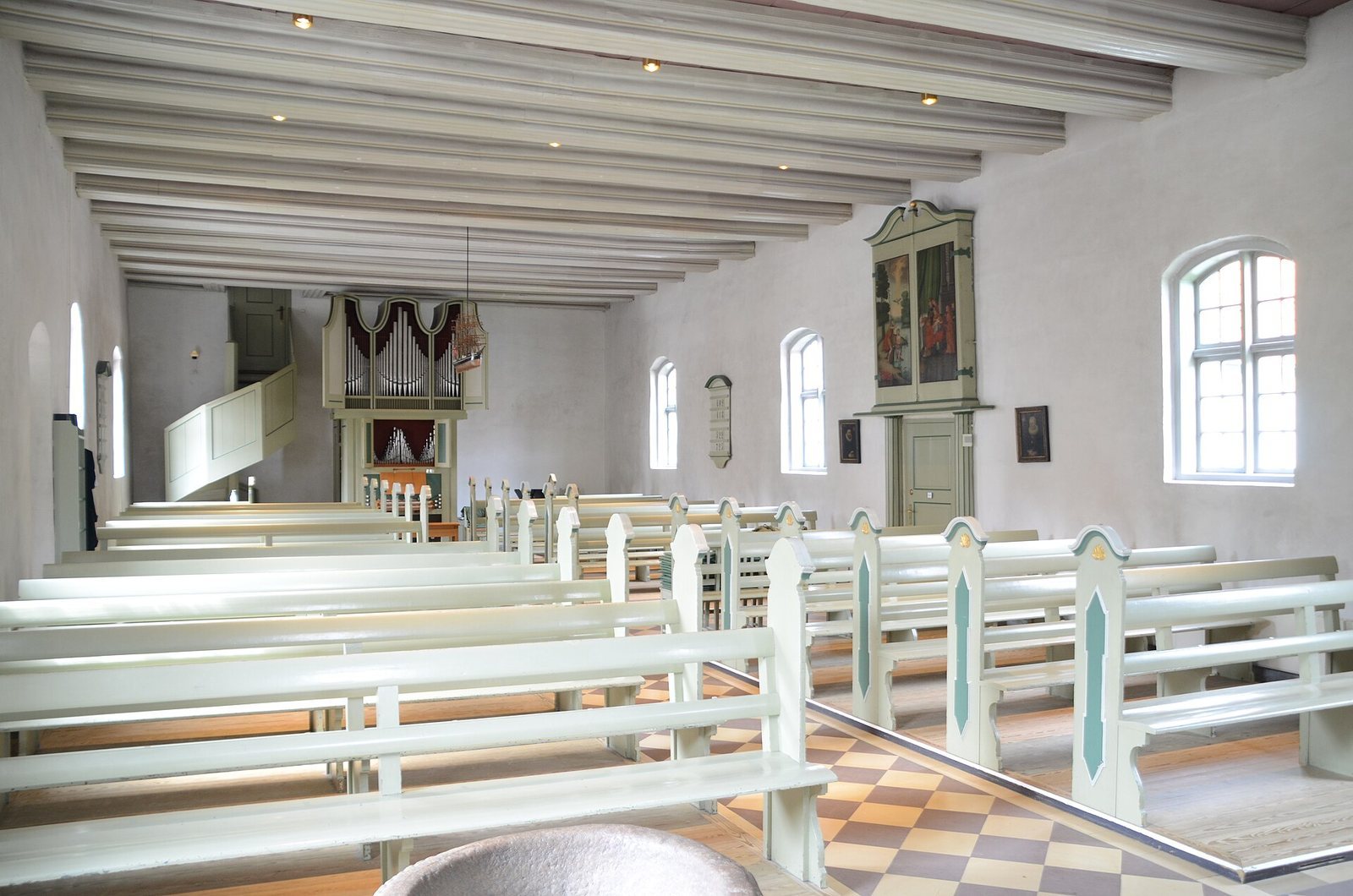
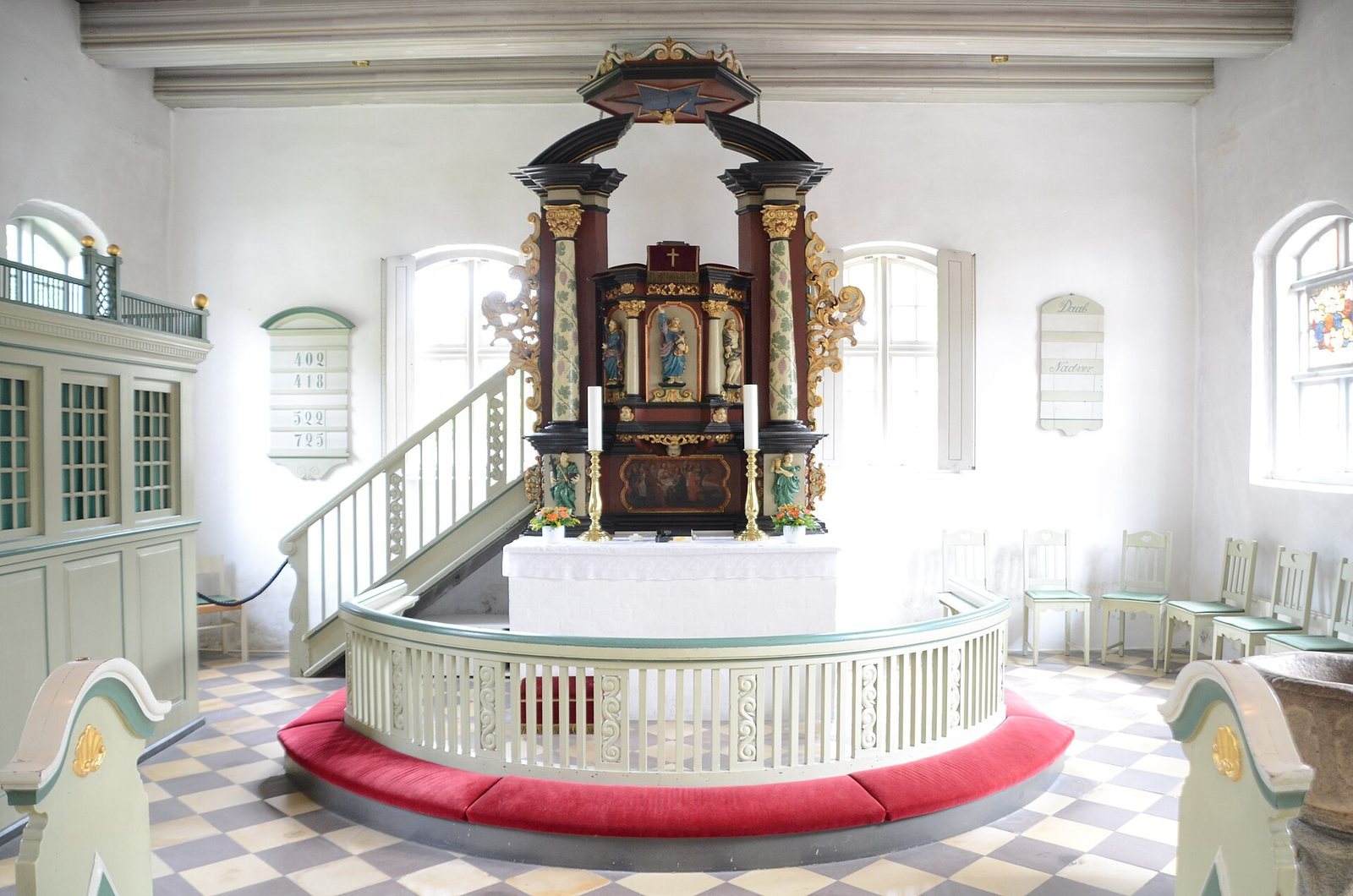
The church contains Haderslev’s oldest stained glass, bearing Hans’s coat of arms and the date 1569. His arms also appear in a south-facing window. Inside, a marker indicates the high-water level reached in the Baltic Sea’s greatest floods. The pulpit stands above the altar, with a painting of the Last Supper, Jesus’s final meal with his disciples, immediately above the altar table.
Other furnishings
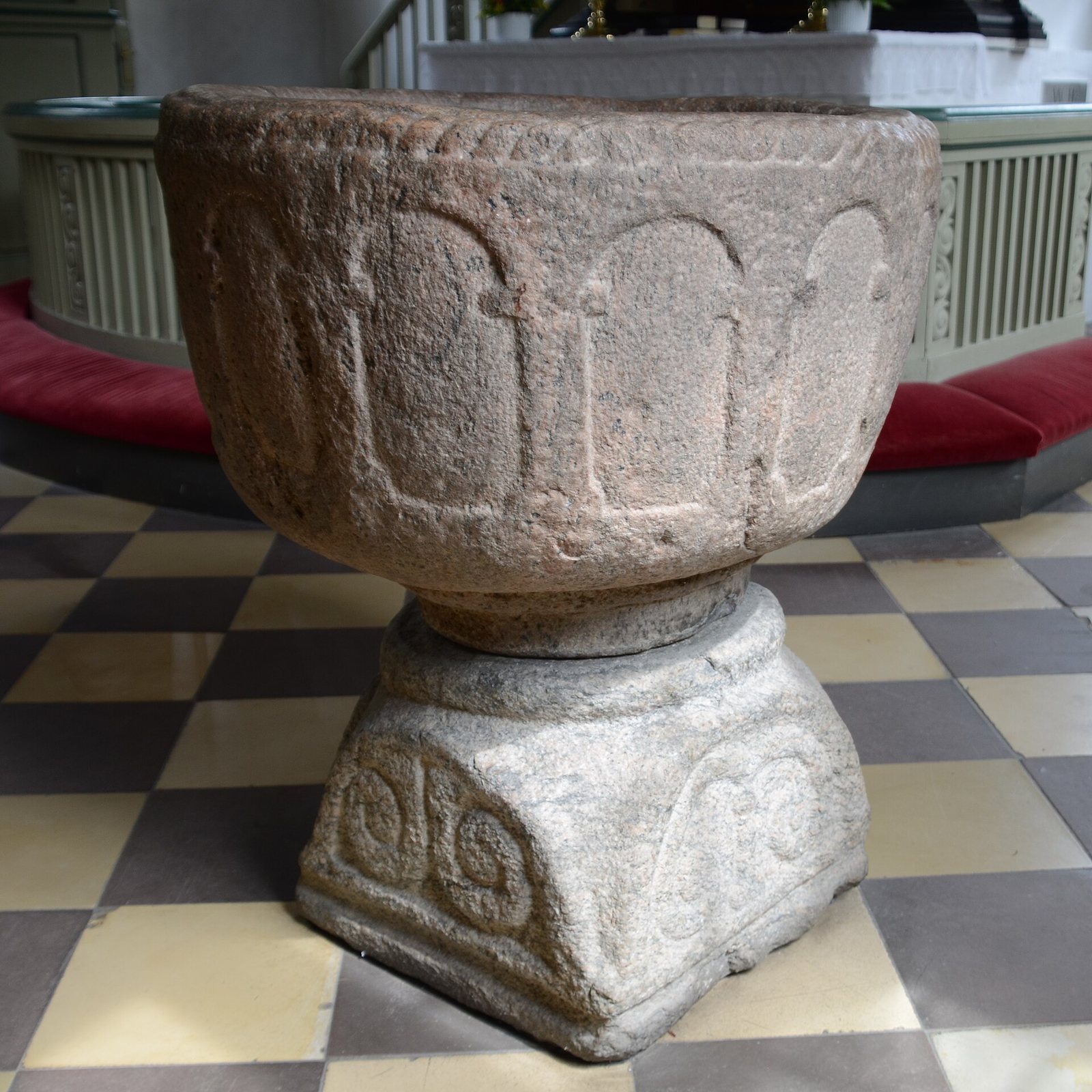
A model of the training ship København is displayed in the church, along with an organ at the rear and a triumphal cross, a large cross traditionally associated with the chancel. A cabinet above the baptism room once held 12 alabaster figures. The figures are now on the altar in Haderslev Cathedral.
Hospital buildings
Main building facade
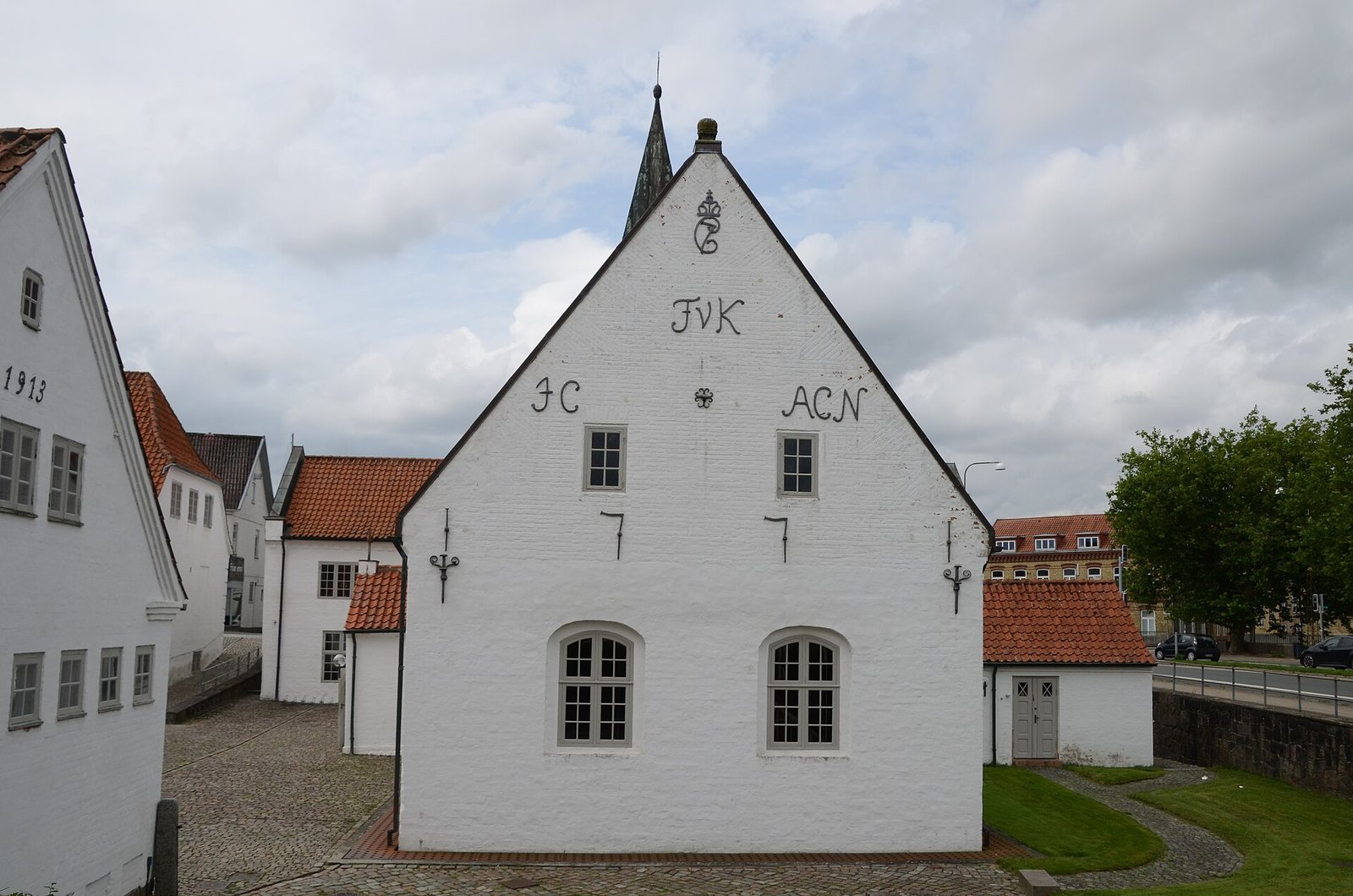
The main building’s west facade features a decorated panel dated 1726. It bears the crowned monogram of Frederick IV, king of Denmark-Norway from 1699 to 1730, with the letters arranged as reflections. Below it, Hans’s large coat of arms sits beneath a triangular gable containing an angel’s head. An inscription under the arms dedicates the hospital to God’s honor and the welfare of the poor.
Auxiliary buildings
The auxiliary buildings serve the congregation, while the administrative building on the south side remains inhabited.