Trou aux Anglais Gallery Grave: A Neolithic Burial Monument
Site at a Glance
- Popularity
- Very Low
- Country
- France
- Primary era
- Stone Age
- Eras represented
- Stone Age, Modern
- Civilizations
- French
- Site type
- Burial
- Remains
- Tomb
On this page12 sections
History
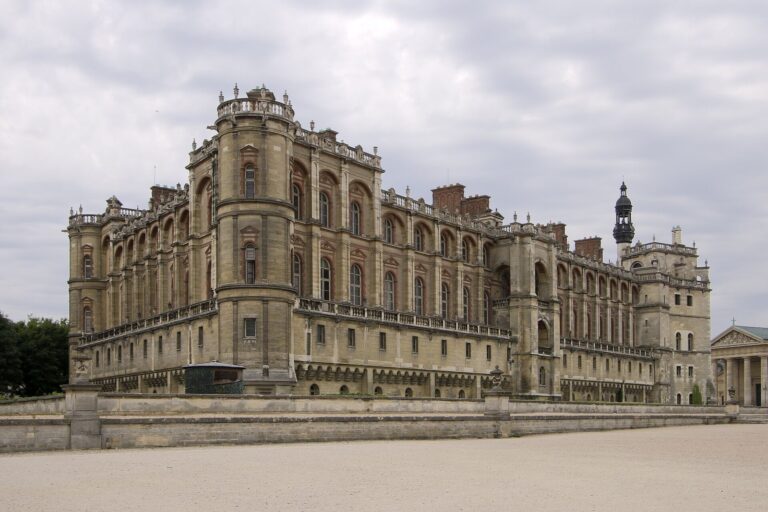
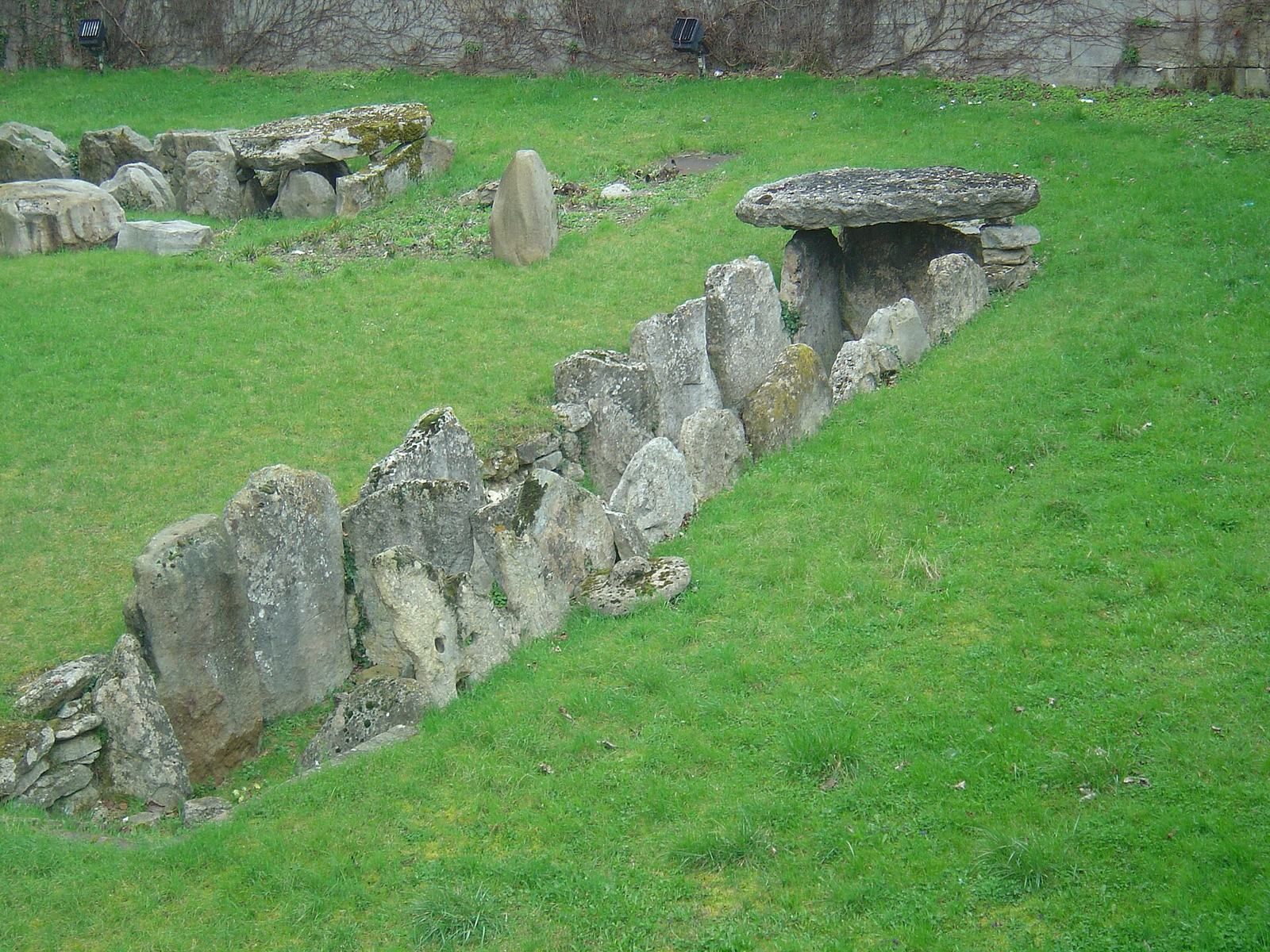
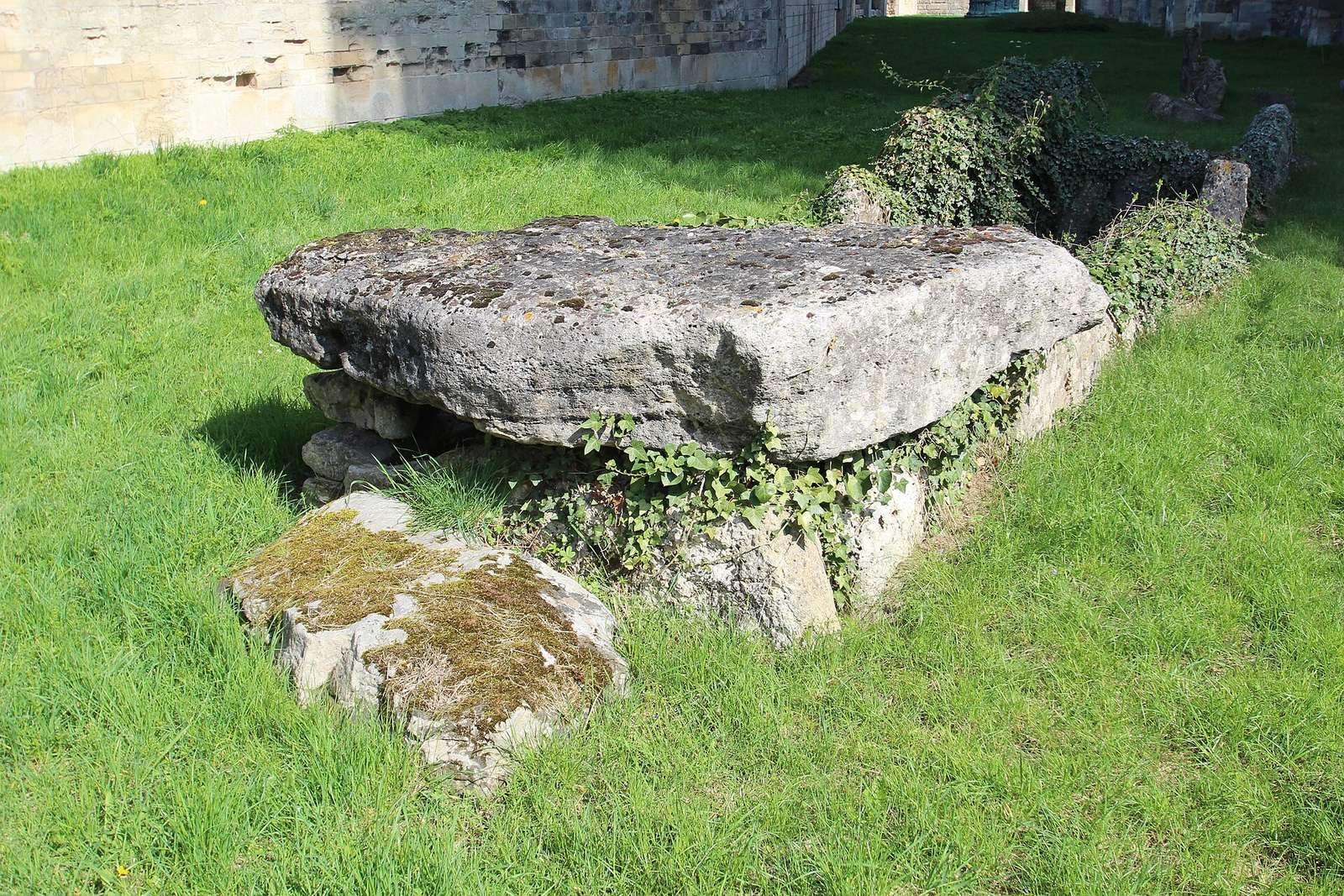
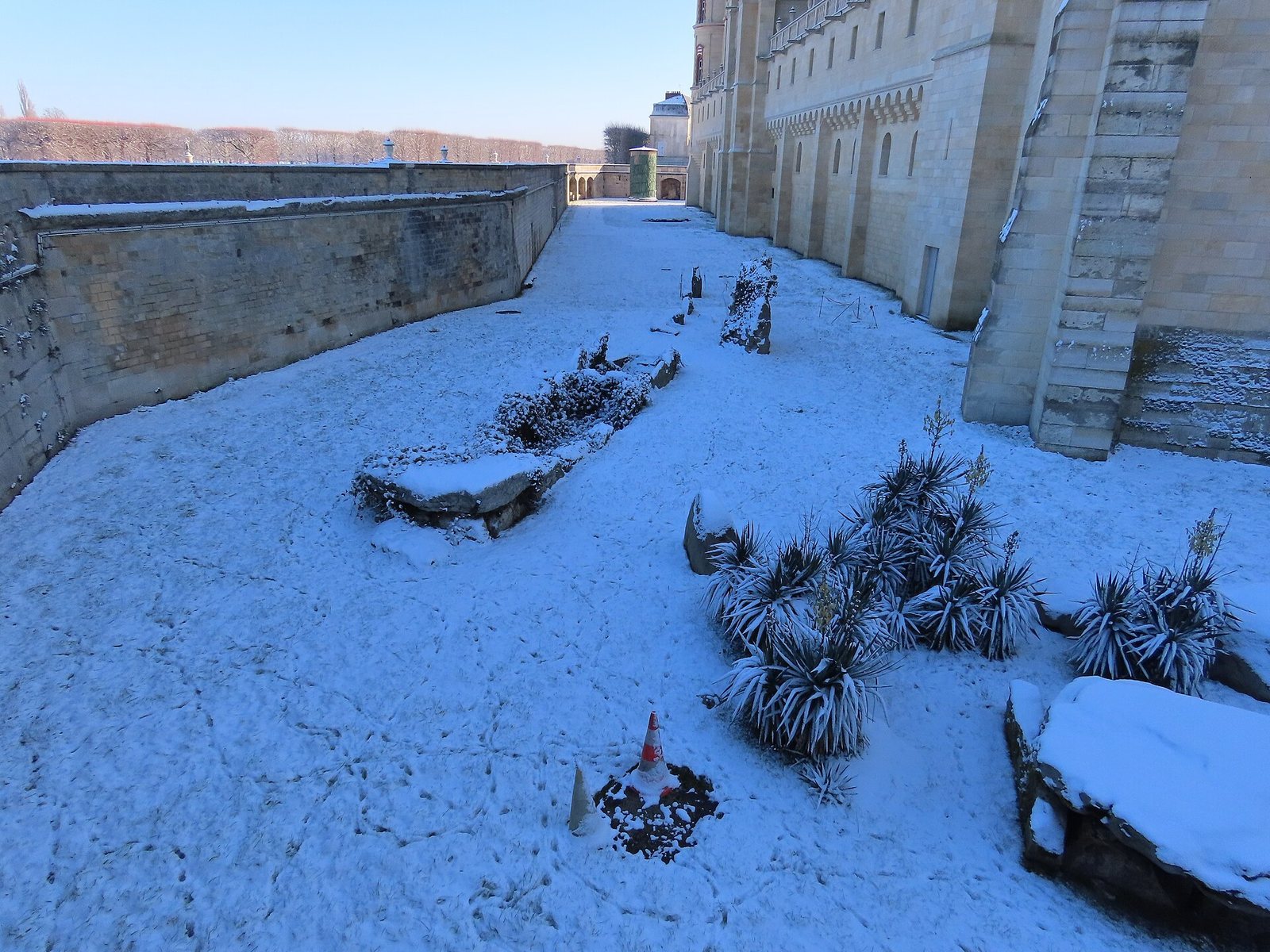
The Trou aux Anglais gallery grave is a Neolithic burial monument, originally built at Aubergenville in France and now reconstructed in the moat of the Château de Saint-Germain-en-Laye. The Neolithic was the later Stone Age, a period when many communities farmed and lived in settled groups. The tomb belongs to the megalithic tradition, which used large stones. A gallery grave is a burial monument with an elongated, passage-like chamber.
In the winter of 1880–1881, a gamekeeper at the Château de la Garenne began excavating after seeing three aligned stones protruding from the ground in a clearing. He sent an account of the excavation to the journal L’Anthropologie. The carved stones drew the attention of French scholars of prehistory, including Perrier du Carne, Émile Cartailhac, Alexandre de Mortillet and Salomon Reinach.
To protect the threatened monument, its owner, M. Bertin, offered it to France’s National Museum of Antiquities, the national archaeology museum, in 1892. It was dismantled and reassembled in the moat at Saint-Germain-en-Laye in 1901. Excavation revealed burials and grave goods. The objects were later dispersed among collections and lost during the Second World War.
Remains
The tomb was originally built on an alluvial plain, 23 m above sea level and 12 km south of the Seine. It ran east to west, with its entrance facing east. The reconstructed gallery measures 10.3 m long and is described as 1.8 m wide overall, comprising an 8 m chamber and a 2.30 m antechamber. Local people recalled roof stones at ground level, and several large slabs found in nearby scrub may have belonged to the tomb. In the reconstruction, some side stones were placed differently from their original positions, and one serves as a roof stone.
Burial chamber
The chamber narrows to 1.60 m at its entrance and western end, widening to 1.80 m near the middle. Seven upright stones line its north side and six its south side, while a single end slab closes the western end. Limestone slabs paved the floor. Estimates of the chamber’s height differ: Perrier du Carne gave 1.65 m, while Mortillet estimated 2 m.
Entrance and antechamber
Chamber entrance
Two limestone slabs set crosswise meet at the top to form an almost triangular entrance, up to 1.40 m high and 0.60 m wide at its base. The right-hand slab is carved on both its chamber-facing and antechamber-facing sides. A movable stone found during excavation had served to close the entrance.
Antechamber
The antechamber is 1.30 m wide and has two upright stones on each side, averaging 1.65 m in height. On the south, one is engraved sandstone and the other is millstone; both northern stones are limestone. A threshold slab about 0.80 m wide and 0.30 m thick stood roughly 1 m before the entrance. The floor was unpaved. The sharply angled gap between the two slabs dividing the chamber from the antechamber was considered unusual in France but common in Swedish tombs.
Carved stones
Right-hand entrance slab
On the antechamber-facing side, the upper part of the entrance slab carries a female figure interpreted as a Mother Goddess, a label for the figure rather than the name of a known deity. She has a round face with eyes, nose and eyebrows, and a necklace of three rows of oval beads above her breasts. The beads are described as 0.35 cm and 0.40 cm in diameter. On the chamber-facing side are two axes and a vessel. One axe, about 24 cm long and 7 cm wide, appears to have a haft.
Engraved sandstone stone
The engraved sandstone upright in the antechamber bears two designs, one above the other. The upper design, 0.60 by 0.66 m, has been likened to a window: three compartments sit along the bottom, with a fourth centered above. The lower design may depict a person holding plough handles with the ploughshare in the ground. Léon Coutil instead identified it as a large axe; Perrier du Carne interpreted the diagonal marks behind the apparent figure as an axe.
Burials and grave goods
Burial deposits
Two burial layers lay within the chamber, separated by limestone slabs, with another covering over the upper layer. Together, the deposits were about 0.65 m thick and lay beneath roughly 0.70 m of soil that had accumulated inside the tomb. H. Leroy estimated about 15 individuals in each layer and five more in the antechamber. Perrier du Carne and Paul de Mortillet considered his total too low, attributing it to his inexperience.
Objects placed with the dead
Most grave goods came from the lower burial layer, near the western end slab. Flint objects included two polished axes, scrapers, blades, flakes, crosswise arrowheads and an arrowhead with a projecting tang and barbs. Other finds included a sandstone polisher, an axe sleeve made from red deer antler and a bone awl. Ornaments comprised a small diorite axe amulet and perforated fossil shells. Numerous sherds came from coarse, flowerpot-shaped pottery associated with the Seine-Oise-Marne culture, a prehistoric culture named for the river regions where it was identified.