St. Agatha: A Catholic Parish Church in Uffing am Staffelsee
Site at a Glance
- Popularity
- Very Low
- Country
- Germany
- Primary era
- Early Modern
- Eras represented
- Medieval, Early Modern
- Civilizations
- Duchy of Bavaria, Electorate of Bavaria, Holy Roman Empire
- Site type
- Religious
- Remains
- Church
On this page12 sections
History
St. Agatha is a Catholic parish church in Uffing am Staffelsee, Germany, dedicated to Saint Agatha, who was martyred in Catania around 250. The church’s history includes a medieval rebuilding, the growth of a pilgrimage, and an extensive late 18th-century remodelling.
Medieval church and rebuilding
A church at Uffing was mentioned around 1200 among the parish churches of the Deanery of Pähl, a district grouping parishes. Heinrich der Meixner is the first parish priest of Uffing known by name, in 1313. The nobles of Tafertshofen arranged for the church to be rebuilt in 1480. Ulrich Geislinger, an auxiliary bishop who assisted the bishop of Augsburg, consecrated it in 1483.
Pilgrimage and expansion
A pilgrimage grew around a miraculous image of Saint Agatha, a devotional image believed to be associated with divine help, during the second half of the 16th century. People attributed answered prayers to the saint in 1569 and 1581. In 1686, more than 200 reports of alleged miracles were submitted to the Diocese of Augsburg for examination.
In 1650, master builder Rudolph Zwink directed a seven-metre extension of the nave westward to accommodate the growing number of pilgrims. The work added a new vault and sacristy. Caspar Feichtmayr built the bell tower’s octagonal upper section in 1676. In 1706, Augsburg engraver Jeremias Kilian was commissioned to make prayer slips bearing a copper engraving of the devotional image.
Rococo remodelling
Between 1770 and 1787, the church was remodelled in the late Rococo style, an ornate European style of the 18th century. A fresco above the gallery, which had been painted over during the 19th century, was renewed in 1923 by church painter Josef Wittmann.
Remains
Tower and church interior
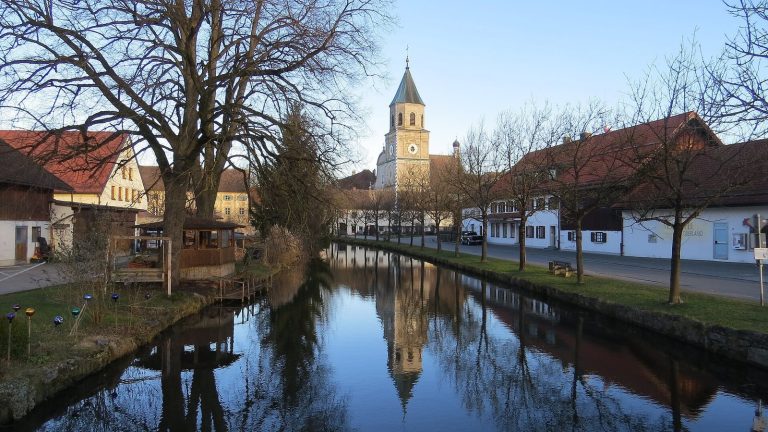
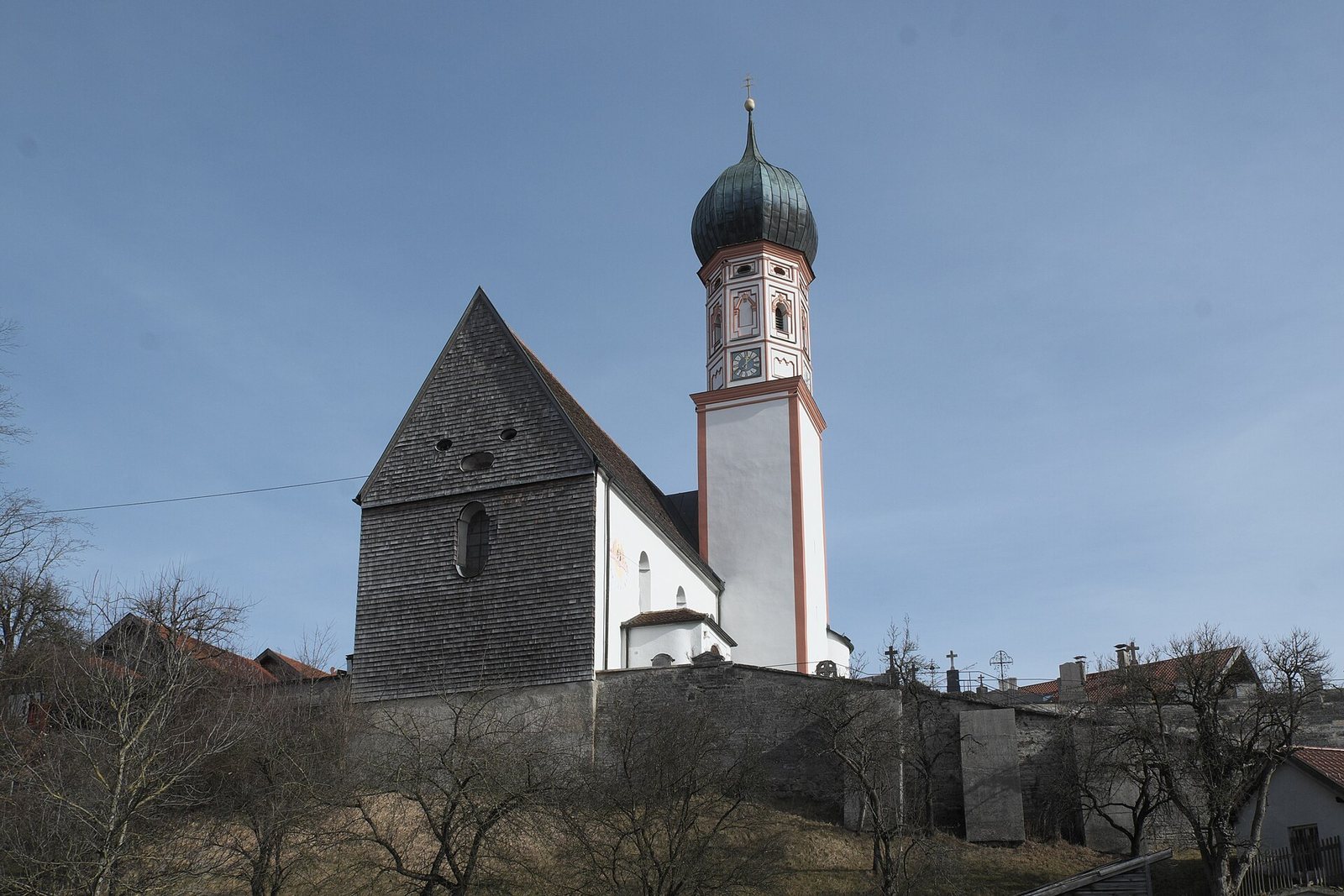
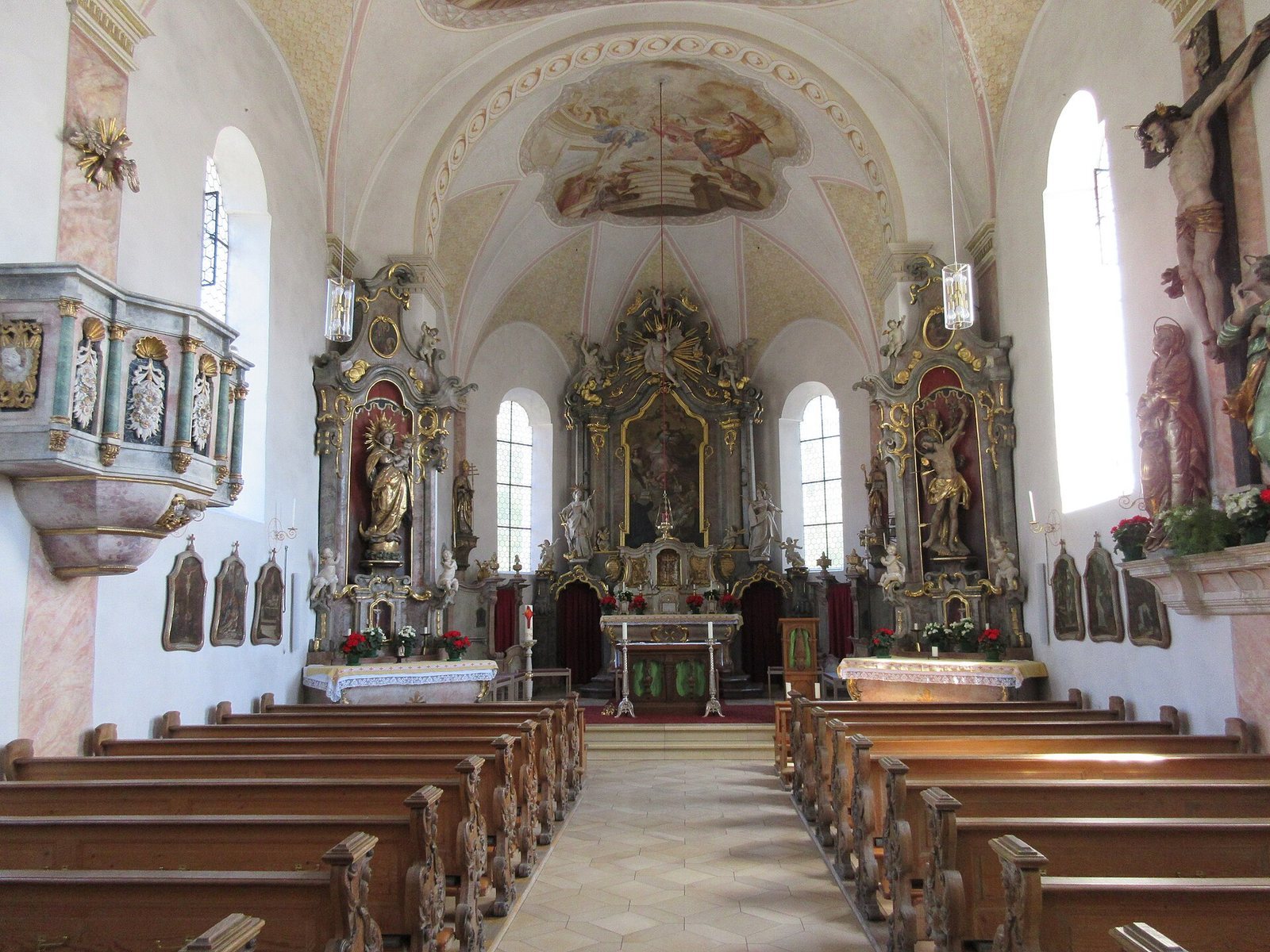
The tower combines a Gothic lower storey with an octagonal upper section crowned by an onion dome. The upper walls are articulated with blind panels, decorative recessed panels without openings, alongside round-arched and crosswise oval openings. Inside, the church has a broad nave and a choir that is not recessed from it and ends in three sides. Both spaces have barrel-shaped vaulted ceilings with lunettes, curved surfaces where smaller vaults meet a larger one, resting on shallow pilasters, flattened supports attached to the walls.
Frescoes and altars
Ceiling frescoes
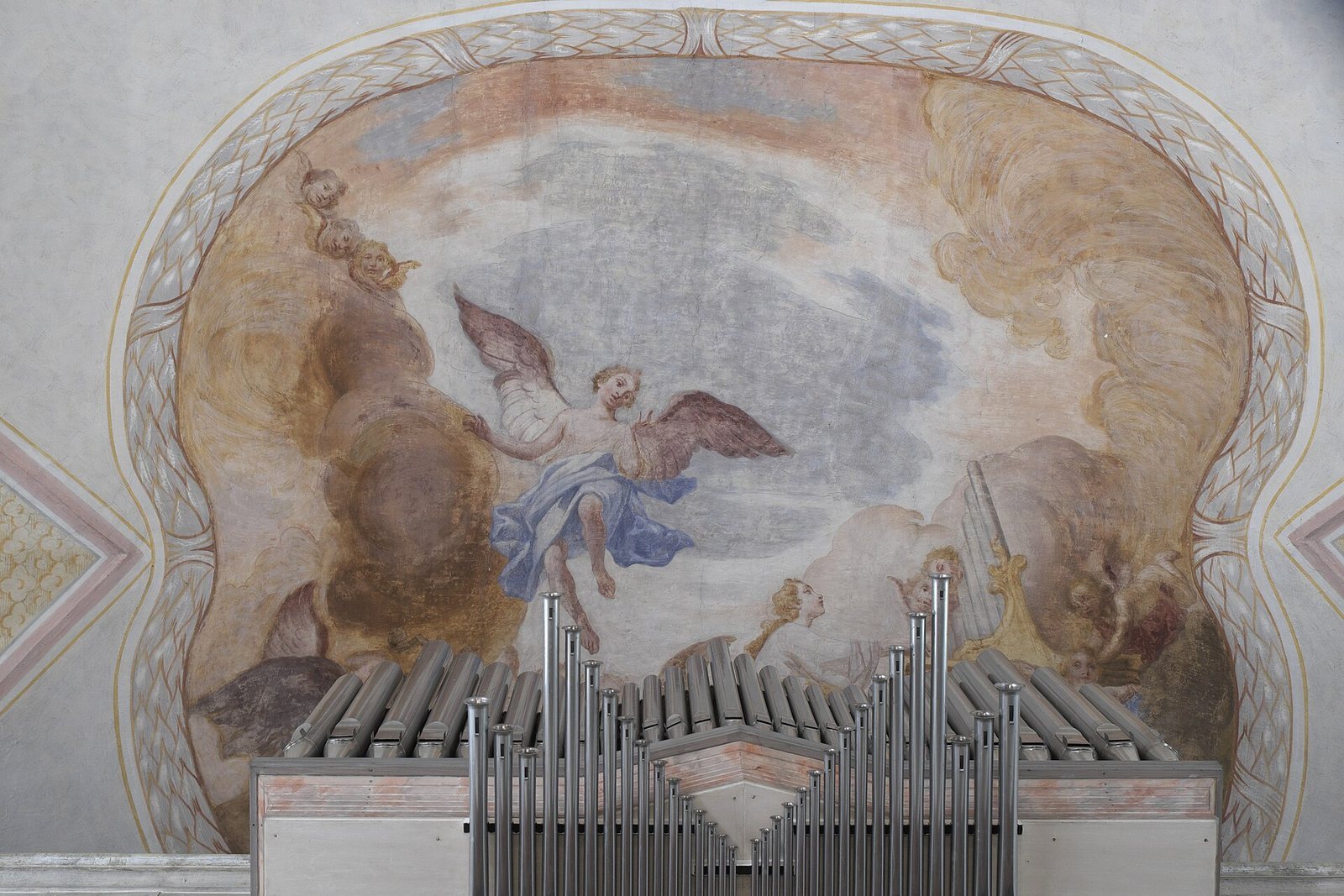
Sebastian Troger painted the ceiling frescoes in 1786. In the choir, Saint Agatha is shown laid out beneath the Eye of God; Troger signed the painting and included the date. The nave fresco presents childlike angel figures with symbols of the theological virtues: a chalice for faith, a flaming heart for love, and an anchor for hope. Smaller scenes alongside it depict episodes from Agatha’s martyrdom. Above the gallery, another fresco shows angels with Saint Cecilia at an organ. Cecilia is traditionally associated with music.
Altars
Paul Zwink created the high altar and side altars in the Rococo style during the 1770s. The high-altarpiece, painted by Troger and dated 1784, shows Saint Agatha with petitioners. Franz Xaver Schmädl carved the large figures of Saints Apollonia and Catherine, as well as other figures for the altar.
Sculpture and furnishings
Carved figures
Carved figures of Saints Gregory and Wolfgang in the choir date to around 1510. A figure of Saint Ulrich, shown with a bishop’s staff, a book, and a fish, dates to around 1470. Heinrich Hagen made a figure of the Archangel Michael conquering Lucifer around 1700. A figure of Saint John Nepomuk, made by Schmädl around 1750, and a mission cross by the same sculptor, dated 1740–50, are also part of the church’s sculptural furnishings.
Pulpit and gallery support
The surviving pulpit basket belongs to a Baroque pulpit made in 1702 by Balthasar and Ambros Zwink. An offering box dating to 1693 supports a Rococo-style pillar added by Paul Zwink in 1763 to carry the gallery above.