Gaarzer Hof 1 Megalithic Tomb in Germany
Site at a Glance
- Popularity
- Low
- Country
- Germany
- Primary era
- Stone Age
- Eras represented
- Stone Age
- Civilizations
- Unclassified
- Site type
- Burial
- Remains
- Tomb
On this page6 sections
History
Construction and later use
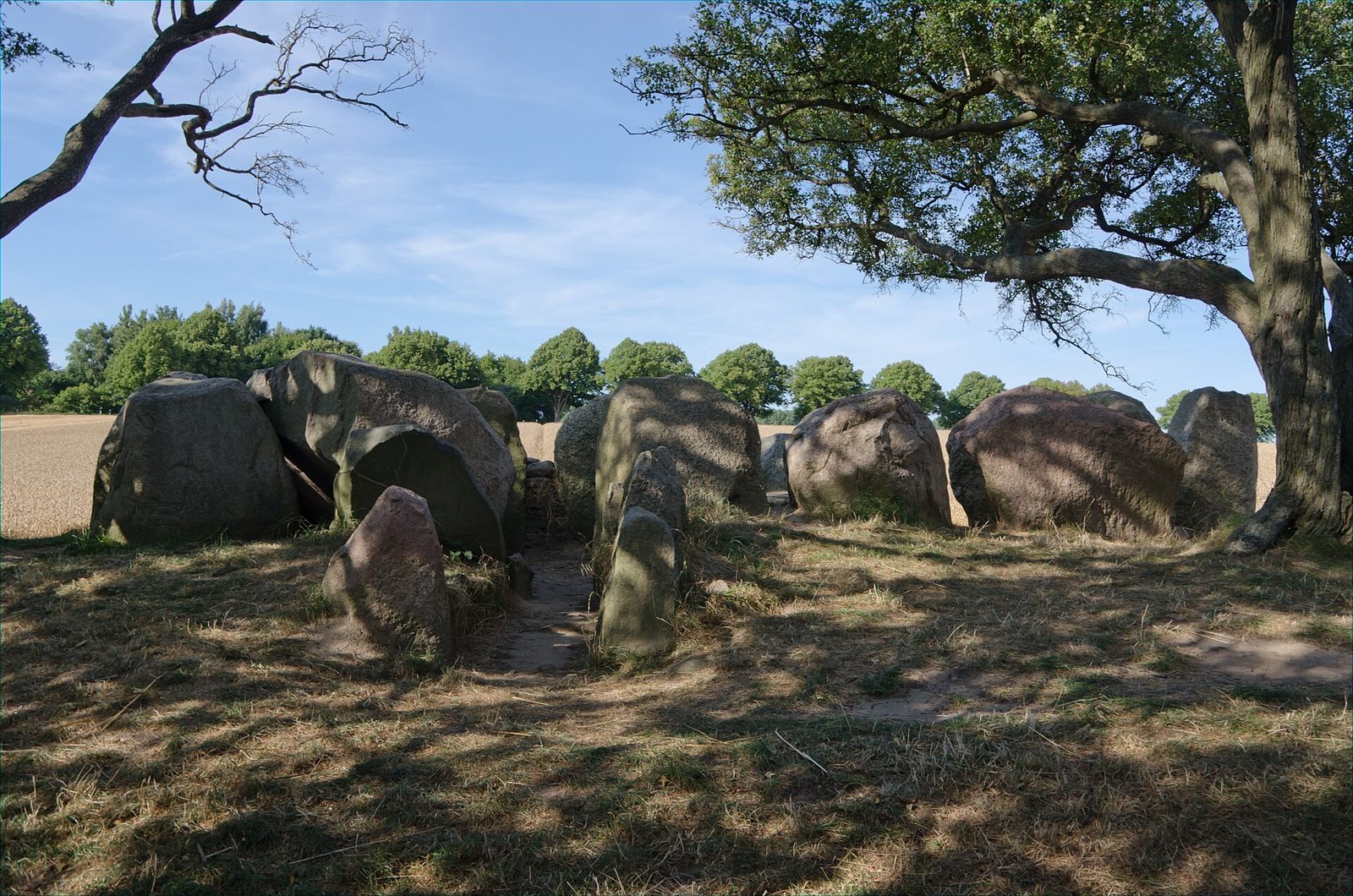
The Gaarzer Hof 1 Megalithic Tomb is a Neolithic passage grave in Germany, built between 3500 and 2800 BCE by people of the Funnel Beaker culture, a Neolithic culture of northern and central Europe named for the shape of some of its pottery.
The tomb was later reused by people of the Single Grave culture, a later Neolithic culture of northern Europe.
Investigation and restoration
In 1967, German prehistorian and archaeologist Adolf Hollnagel investigated and restored the passage grave.
Remains
Layout and construction
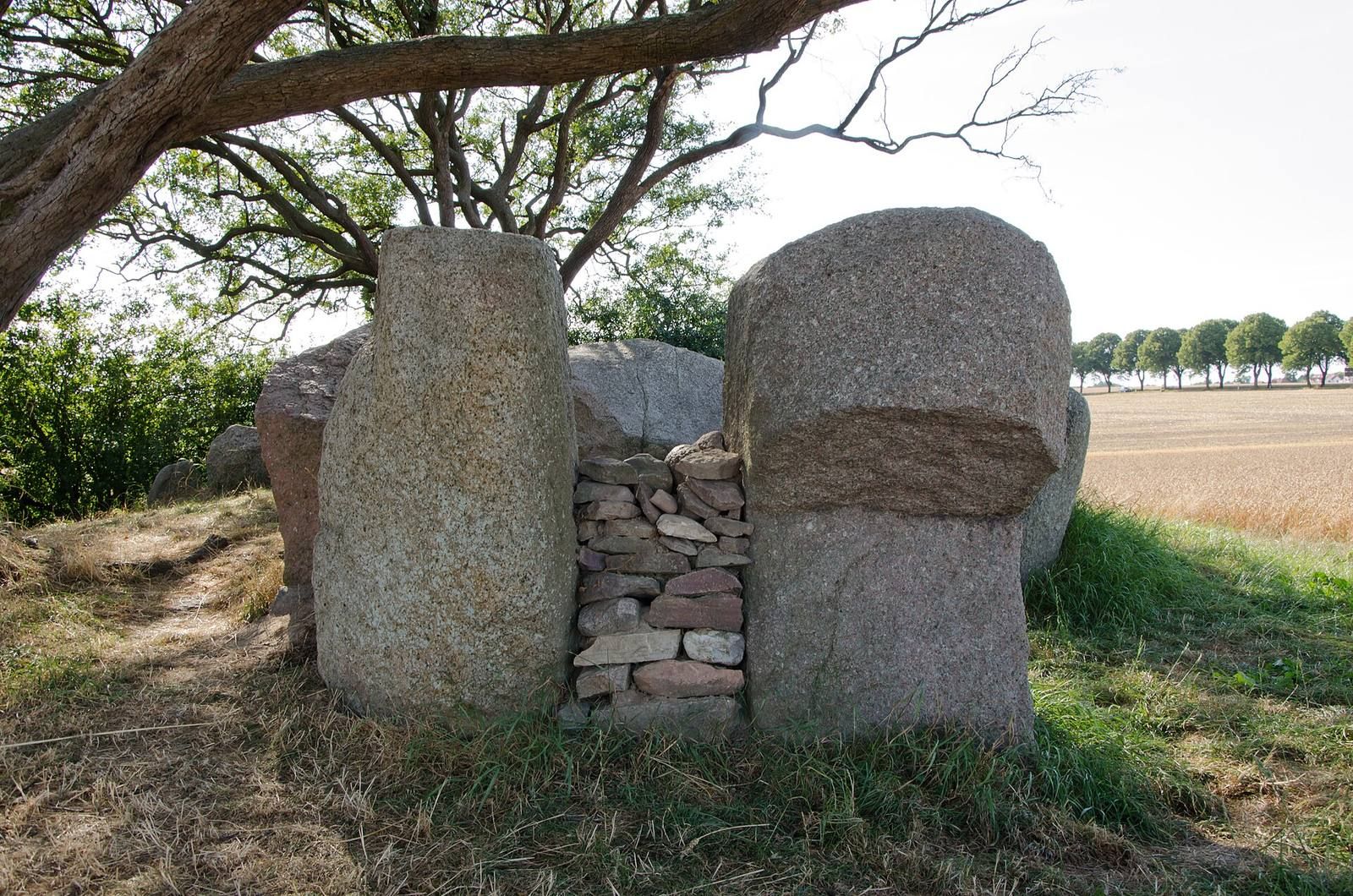
The tomb lies in a field south of the road between Kröpelin and Rerik, about 100 metres from another megalithic tomb at Gaarzer Hof. Its east-west chamber was originally set within an earthen mound covered by a thin layer of rounded stones. The chamber measures 6.7 metres long, 1.9 metres wide, and 1.5 metres high, and has a clay floor. A partly surviving passage extends three metres from the chamber’s south side. It is 0.8 metres wide, begins off-centre, and has threshold stones at its entrance and midpoint. Two of the five original capstones remain.
Finds
Finds from the tomb include charcoal and 332 pottery sherds, 16 transverse arrowheads with crosswise cutting edges, nine blades, and five hammerstones. The pottery includes four double-cone-shaped vessels, four beakers, two bowls, two round-bodied amphorae, and a vessel with a pronounced shoulder. Other finds include three amber beads, one shaped like a double axe, two flat axes, and a scraper.