Öjaby Church: A Fifteenth-Century Parish Church in Sweden
Site at a Glance
- Popularity
- Very Low
- Country
- Sweden
- Primary era
- Medieval
- Eras represented
- Medieval, Early Modern, Modern
- Civilizations
- Swedish
- Site type
- Religious
- Remains
- Church
On this page7 sections
History
Öjaby Church is a fifteenth-century parish church in Öjaby, Sweden. It serves the parish within the Diocese of Växjö, a regional church jurisdiction, and belongs to the Church of Sweden, a Lutheran Christian church. The stone church was built and consecrated during the fifteenth century.
Early church and survival
A wooden church probably occupied the site before the stone building replaced it. Öjaby Church survived the extensive nineteenth-century church-building period, unlike the church in neighboring Öja parish, which was demolished.
Fire and restoration
A fire severely damaged the church in the early twentieth century. It may have started after the parish cantor put a bucket of embers from a tiled stove outside to warm chickens. Strong winds carried sparks to the roof, and the flames spread into the interior beyond control. Most fixed furnishings were destroyed, although eighteenth-century communion vessels, chandeliers and candlesticks, nineteenth-century textiles, and several carved sculptures were saved.
Architect Axel Lindgren proposed a restoration intended to recover the interior as far as possible. The church was reconsecrated in 1908, and sculptures rescued from the fire were incorporated into its new furnishings. In 1942, a restoration led by architect Paul Boberg removed the stencil-painted wall decoration. During work led by architect Tore Klarén in 1974–1975, the altar, altar rail and pews were replaced, and the interior received a new color scheme.
Changes to the organs
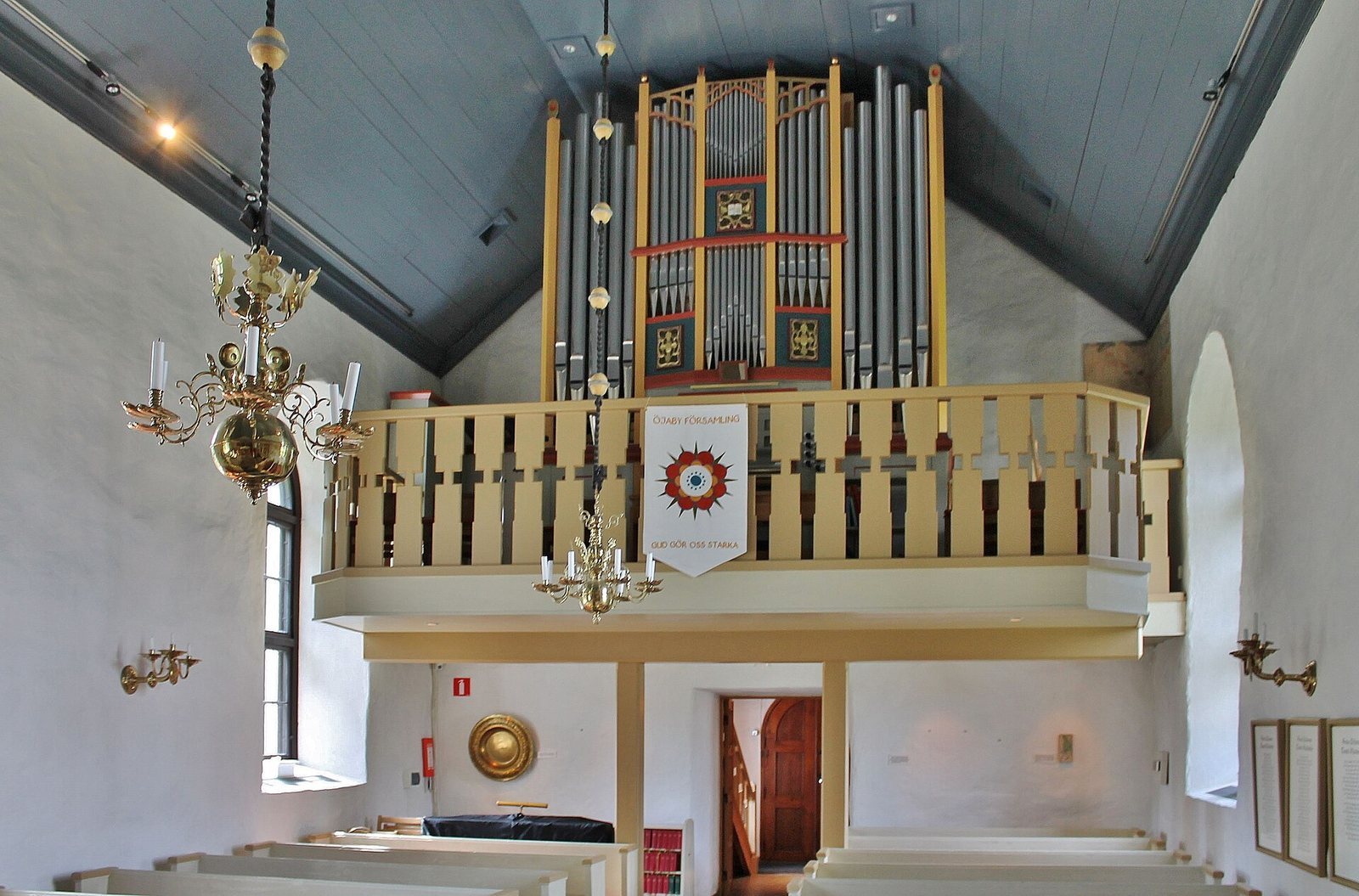
Anders Victor Lundahl of Malmö built an organ that was examined by a music director from Växjö on 23 June 1883 and inaugurated the following day. Eskil Lundén of Gothenburg supplied a seven-stop organ in 1910, with each stop controlling a set of pipes or a particular sound. Hammarbergs Orgelbyggeri AB built another organ in 1955. Nils-Olof Berg of Nye modified it in 1976 and added a new façade. Bergenblad & Jonsson Orgelbyggeri built an organ in 2009.
Remains
Building and churchyard
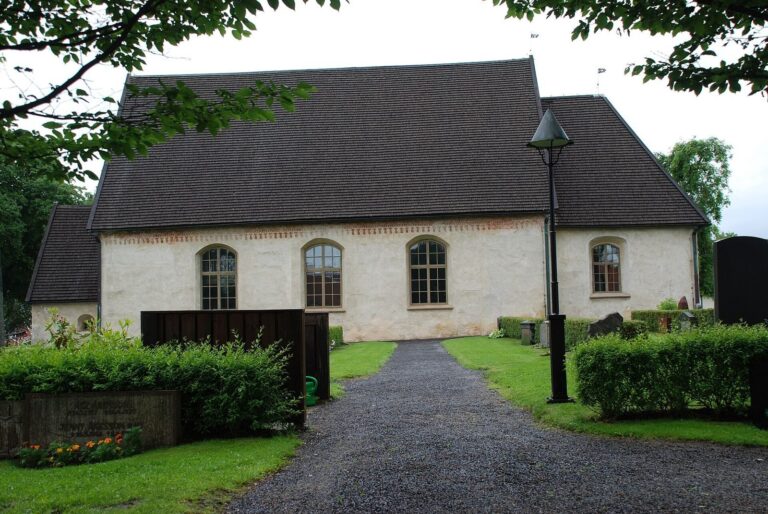
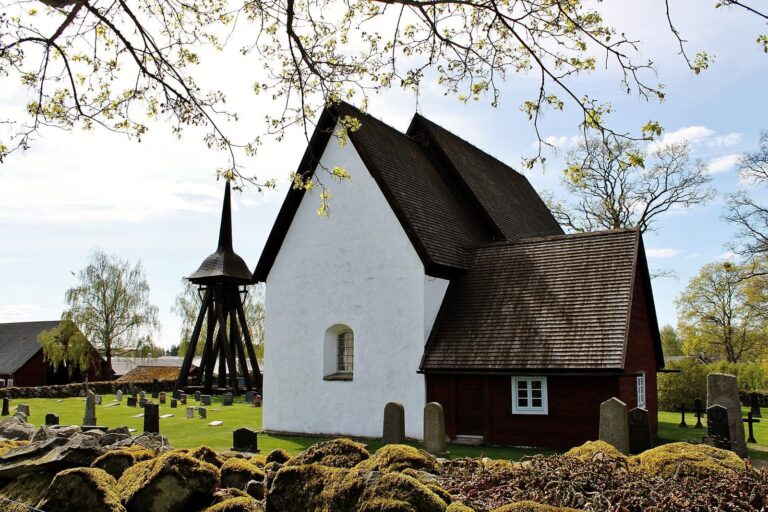
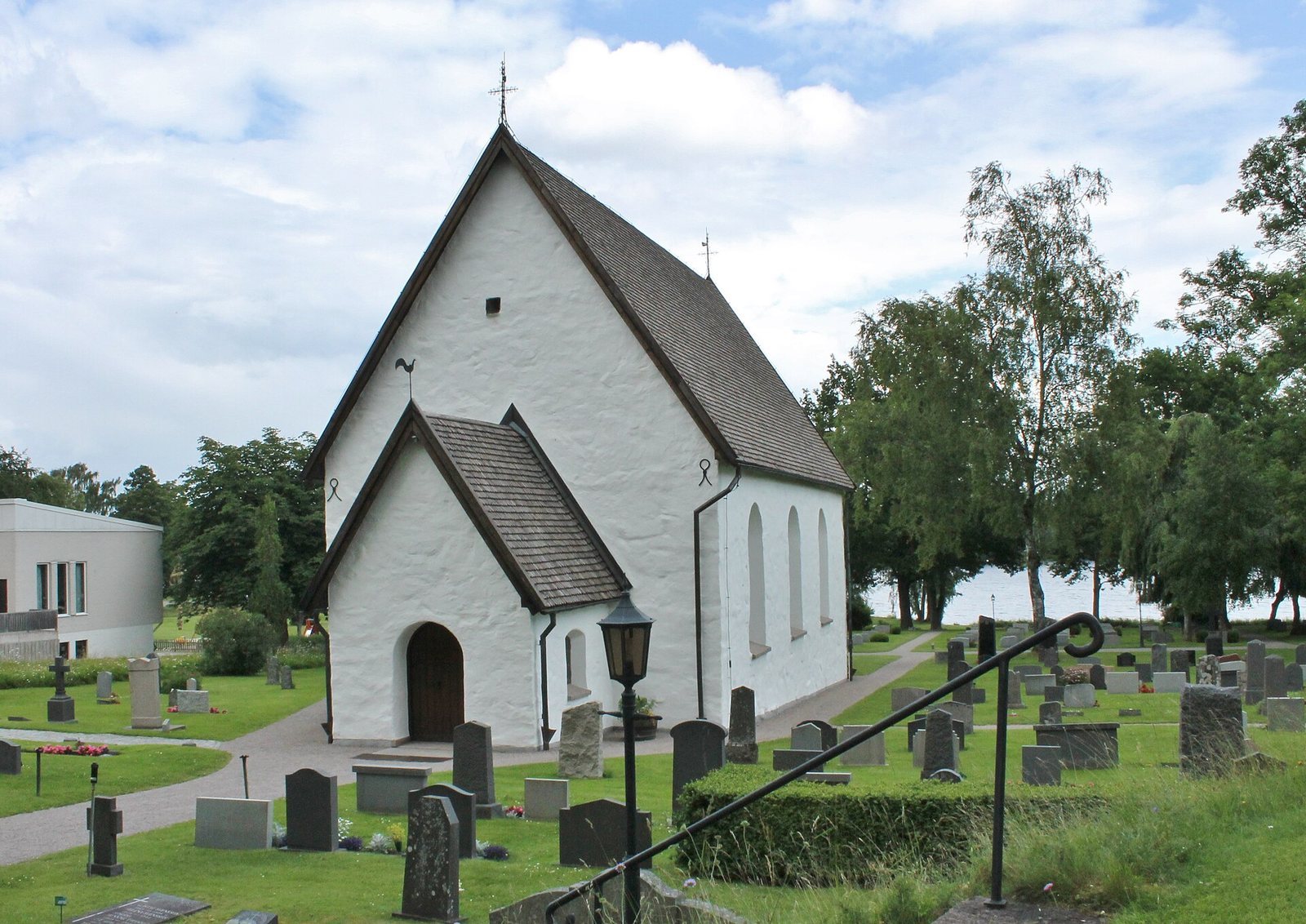
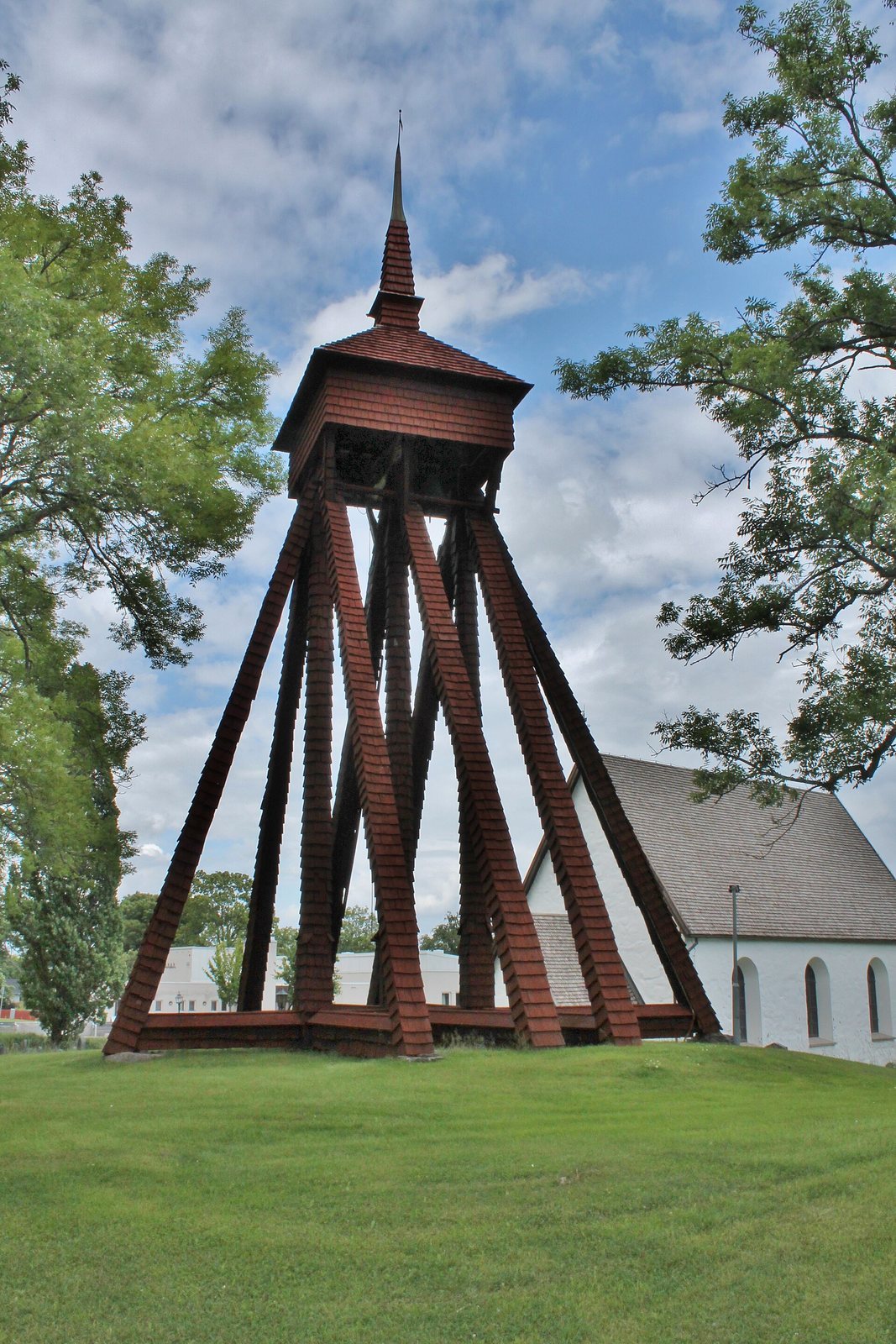
The church stands on the shore of Helgasjön. Its plastered, whitewashed walls enclose a rectangular nave, with the chancel at the east end and a sacristy adjoining it on the north. Five large round-arched windows light the interior, which has a broken-profile ceiling. A steep roof covered with shingles tops the building. A stone entrance porch at the west end dates to 1778–1779. On a hill at the northeastern corner of the churchyard stands the bell tower, built in 1681 and remodeled in 1842.
Interior furnishings and objects
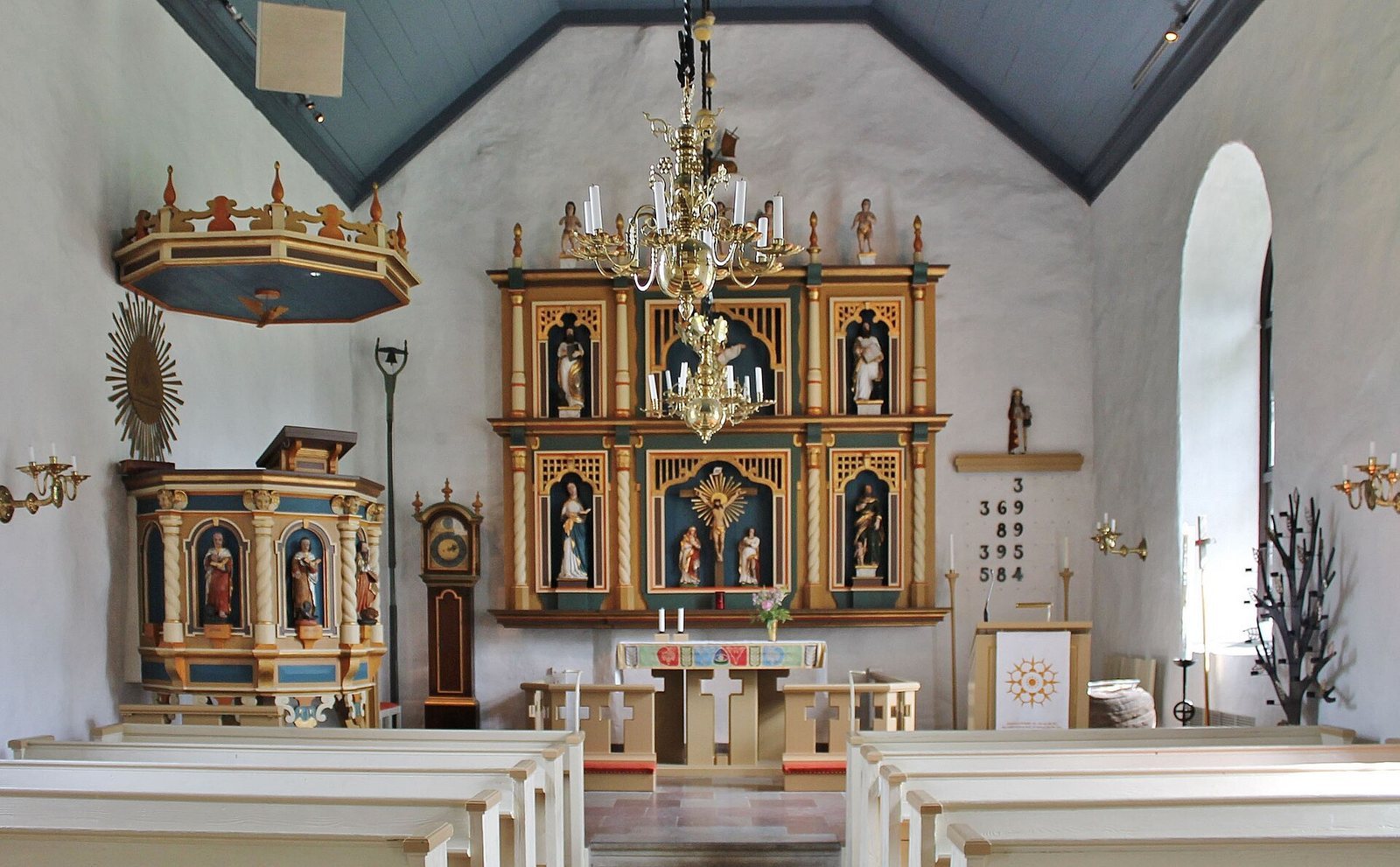
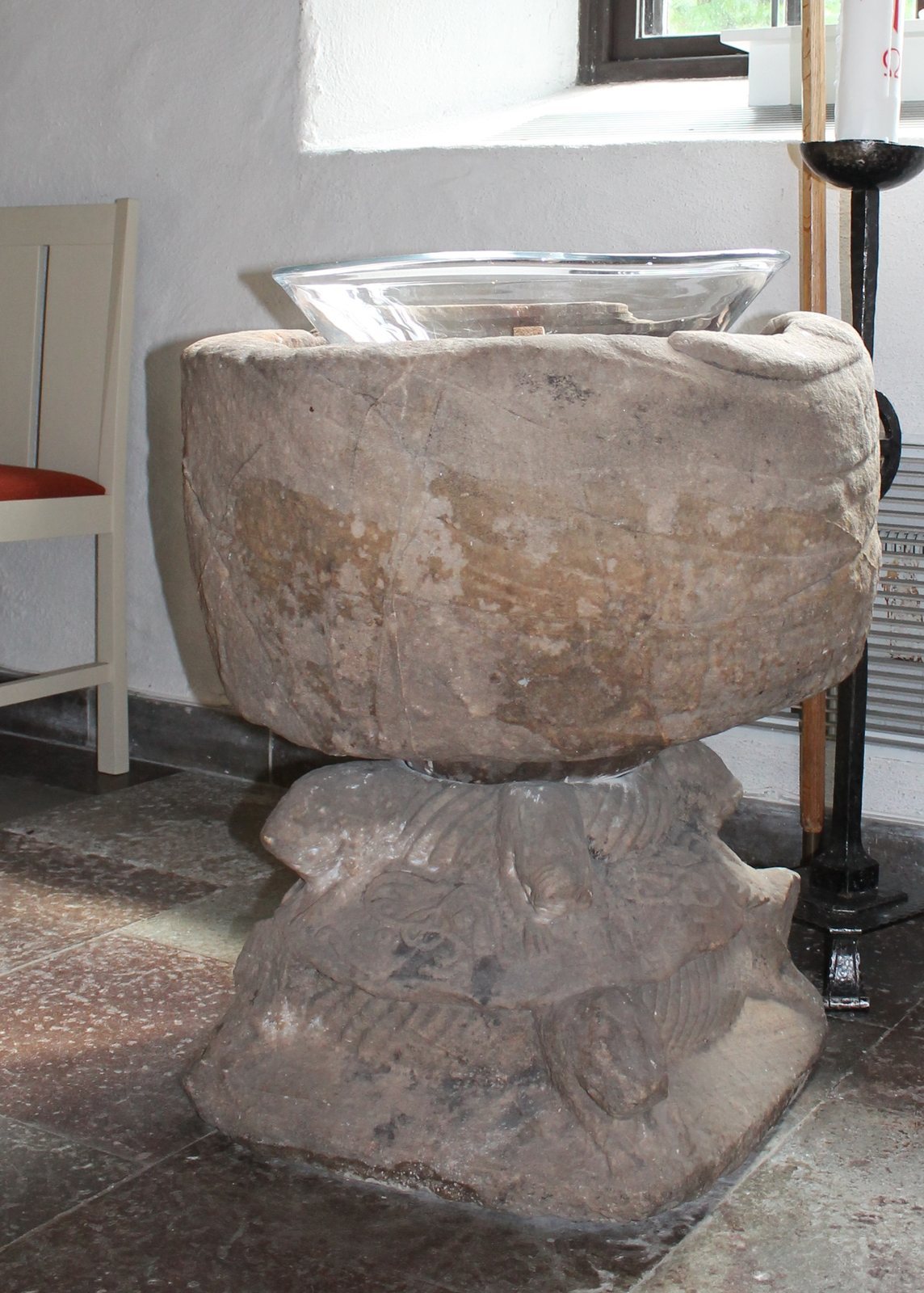
The altar and altar rail date from 1975, as do the open pews and organ gallery. A fragment of the stencil-painted roses that once decorated the walls survives beneath the gallery. The sandstone baptismal font, from the thirteenth century, is the church’s oldest inventory item. A small church bell known as a prim bell, traditionally used to signal a morning service, dates to the early sixteenth century.
The altarpiece was made in 1908 and is divided into six fields containing sculptures carved in 1694 by Gustaf Khilman and Anders Ekberg. Its images of Christ, Mary and John are probably older. Carved childlike figures and flames decorate the crown, while a small shelf above it bears a Lamb with a victory banner, a Christian symbol associated with Christ. The pulpit and its sounding board were also made in 1908 and incorporate images of holy figures carved in 1664.