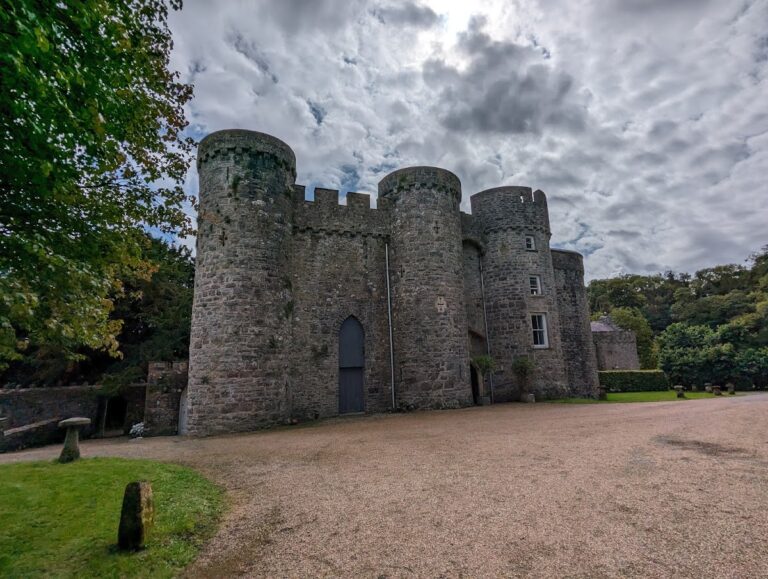
Wiston Castle: A Medieval Motte-and-Bailey Castle in Wales

Site at a Glance
- Rating
- 4.4
- Popularity
- Low
- Country
- United Kingdom
- Primary era
- Medieval
- Eras represented
- Iron Age, Medieval
- Civilizations
- English
- Site type
- Military
- Remains
- Castle
On this page11 sections
History
Wiston Castle is a medieval motte-and-bailey castle in the United Kingdom, founded by Flemish settlers in the early twelfth century before 1112. Built by Wizo Flandrensis in Dungleddy, in southwestern Dyfed, it controlled his lands within a Marcher Lordship, a frontier lordship whose rulers held broad military, judicial, and administrative powers along the Anglo-Welsh border.
Flemish foundation
Wizo received the land from Henry I of England after the king confiscated it from Arnulf de Montgomery, who had rebelled against him. The territory lay within the wider region of Deheubarth, a medieval Welsh kingdom in southwestern Wales that included Dyfed. After the Norman seizure of western Deheubarth, Dungleddy was incorporated into a Marcher Lordship.
Flemish immigration to the area increased after catastrophic flooding in Flanders around 1108. Henry I encouraged the settlement as part of his effort to consolidate English authority in southwestern Wales. Wizo built the castle to control his new lands, and a settlement developed around it. The settlement was called Wiston, a name meaning approximately “Wizo’s enclosure” or “Wizo’s town” in Old Flemish or Saxon, and the castle took its name from the settlement.
Wizo granted portions of his territory to other Flemish settlers. His son Walter fitz-Wizo controlled Wiston by 1147, when Welsh forces captured the castle under Hywel ab Owain. The attack was made in alliance with the sons of Gruffydd ap Rhys of Deheubarth and the Norman baron William FitzGerald. Flemish forces soon recovered the stronghold.
Welsh captures and rebuilding
In 1193, Hywel the Saxon, son of Rhys ap Gruffydd of Deheubarth, captured Wiston Castle. He took Philip, a descendant of Wizo and the castle’s lord, captive with Philip’s wife and sons. Shortly before this capture, Philip had granted lands in Dungleddy to the Knights Hospitaller, a religious and military order that held land and maintained charitable and military establishments. Flemish forces recovered Wiston two years later, in 1195.
Llywelyn the Great captured and sacked Wiston Castle in 1220, setting it on fire. Llywelyn was the principal ruler of Gwynedd in the early thirteenth century and a major Welsh opponent of English and Marcher authority. After English control was restored, Henry III ordered William Marshal the younger, Earl of Pembroke, to rebuild the castle.
The rebuilding was never completed. Construction may have ended when the Marshal family became extinct in 1245, or continuing military activity by Llywelyn may have disrupted the work. The castle was subsequently abandoned while parts of the reconstruction remained unfinished. It later came into the possession of Sir John Wogan by unclear means. At the end of the thirteenth century, Wogan moved his principal residence to nearby Picton Castle, after which Wiston Castle ceased to be occupied.
Seventeenth-century military use and protection
During the English Civil War, Royalist forces established a small outpost at Wiston in 1643, possibly on the abandoned motte. They left the following year without an engagement when Parliamentary troops led by Major-General Rowland Laugharne advanced into the area. The Royalists were later defeated at the Battle of Colby Moor, south of Wiston.
Wiston Castle is maintained by Cadw, the Welsh Government’s historic-environment service. It is protected as both a Grade I listed building and a Scheduled Monument. The listed-building designation is dated 16 June 2004.
Remains
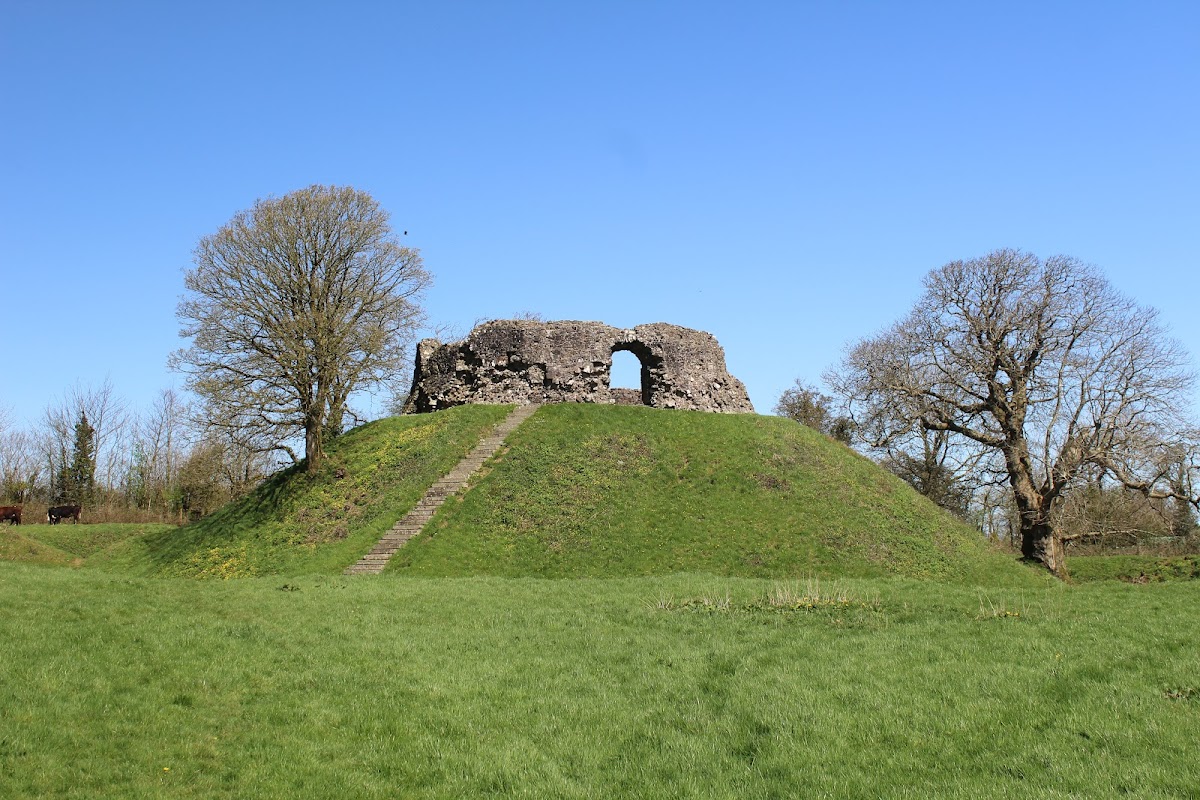
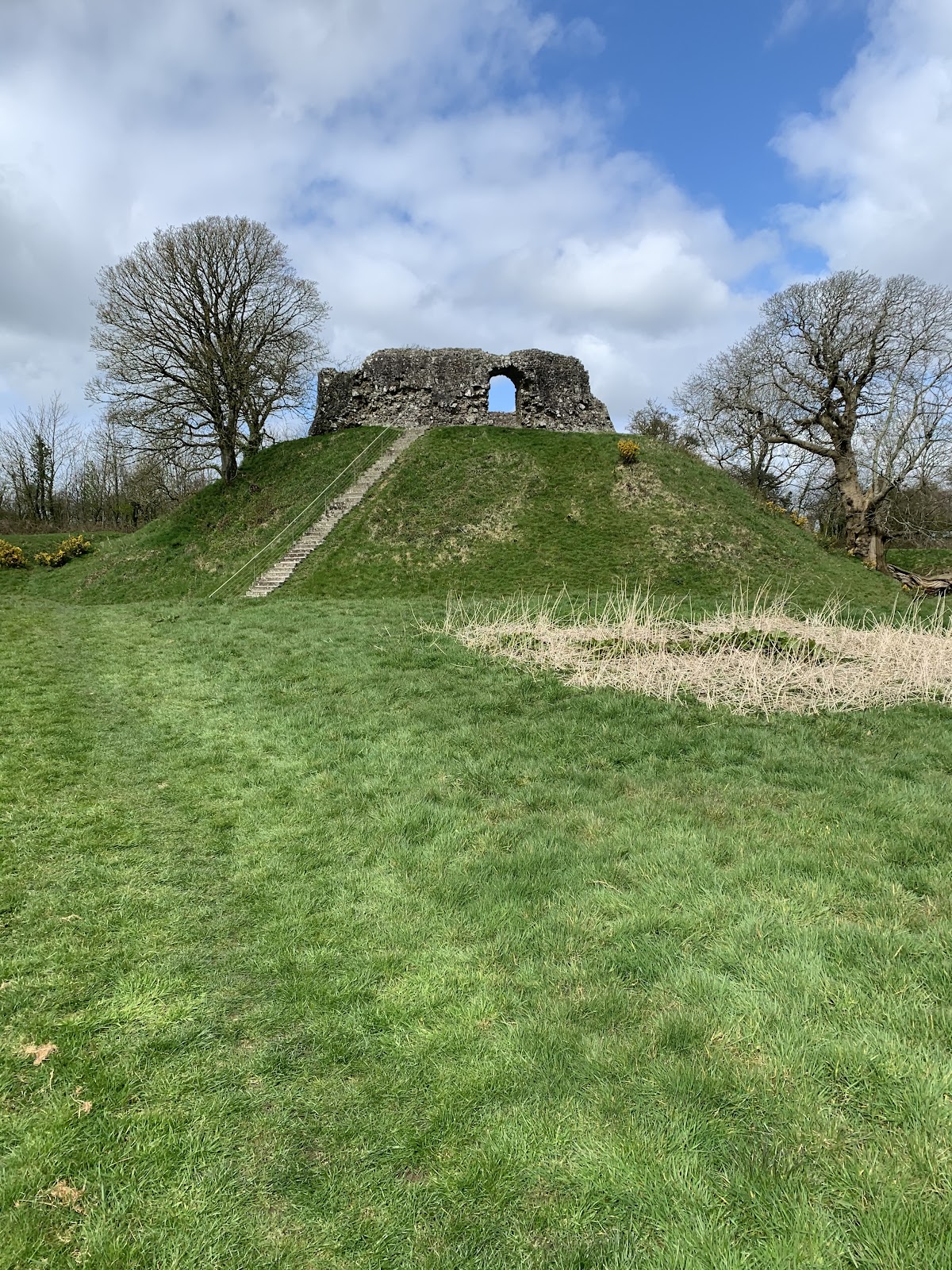
Wiston Castle occupies the summit of a hill north of Wiston, opposite St Mary Magdalene Church. Its surviving form combines a raised motte, a stone shell keep, and a large oval bailey enclosed by a substantial bank. A motte-and-bailey castle joined a fortified mound with an adjoining enclosed area for buildings and activities. Earlier defensive earthworks on the site include an oval ditch and bank attributed to the Iron Age.
Motte and shell keep
The motte
The early-twelfth-century Flemish castle included a motte approximately 10 metres high and about 50 metres in diameter. A wooden tower stood on its summit inside a timber palisade. The mound now rises approximately 9 metres above the base of the surrounding ditch, preserving the principal earthwork of the original fortification.
The shell keep
The summit is enclosed by a shell keep, a substantial wall surrounding the top of a motte and protecting buildings within it. The keep became the principal fortification of the castle. Its outer face is polygonal, formed from eighteen short sections, while the interior is circular. Several sections on the north side have subsided into the ditch.
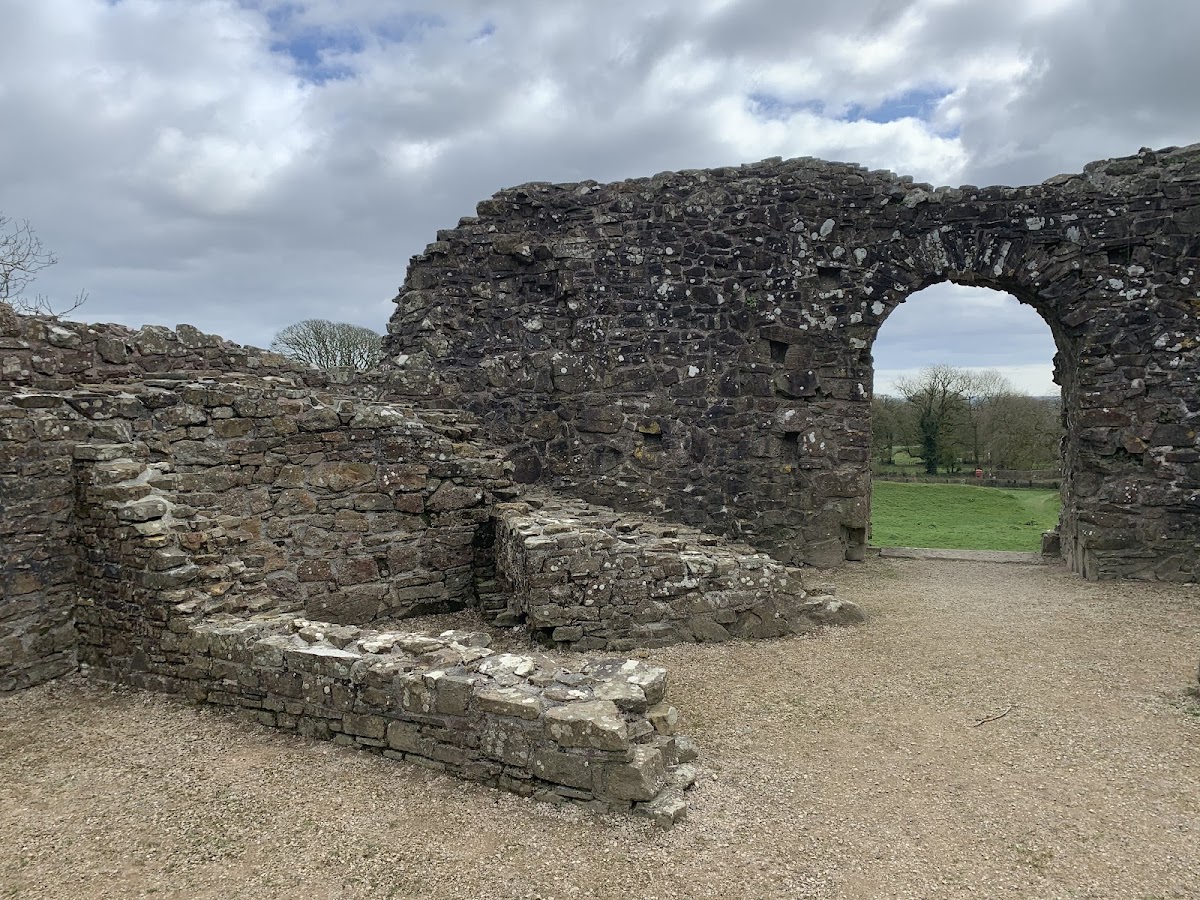
An arched entrance pierces the south side of the shell keep. Draw-bar holes on both sides of the opening secured the main gate. The stone rebuilding after 1220 converted the keep into a large structure with walls approximately 1.6 metres thick. It enclosed a circular interior about 12 metres in diameter, where timber buildings continued to stand.
A room was later added on the upper floor above the entrance, and parts of the walls were thickened. The unfinished masonry preserves earlier features without later embellishment, while the shell keep displays the Norman masonry characteristic of its period. The surviving structure is now ruinous.
Bailey and defensive earthworks
The oval bailey
A large oval bailey extends from the motte and is protected by a well-preserved bank. This enclosed area formed the settlement and working space associated with the castle. The lord’s principal residence would have stood within the bailey, alongside the buildings and activities that supported the stronghold.
Earlier earthworks
The castle stands within earlier defensive earthworks attributed to the Iron Age. An oval ditch and bank form part of this earlier defensive arrangement, providing a physical layer beneath the medieval motte-and-bailey complex.