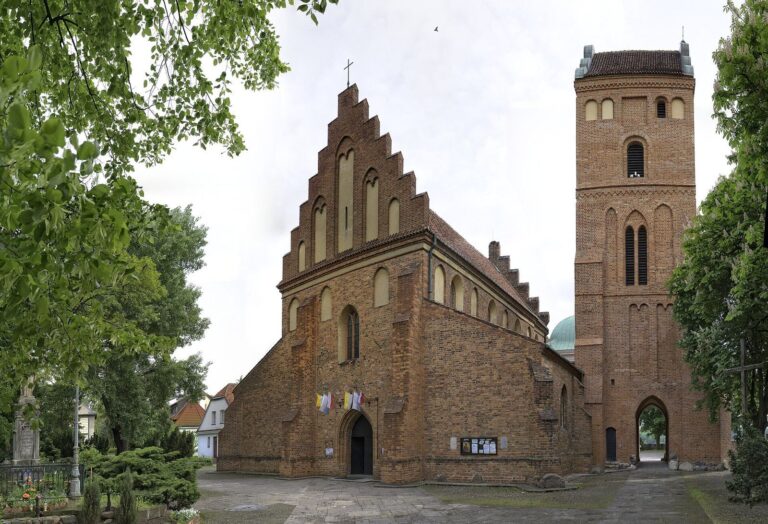
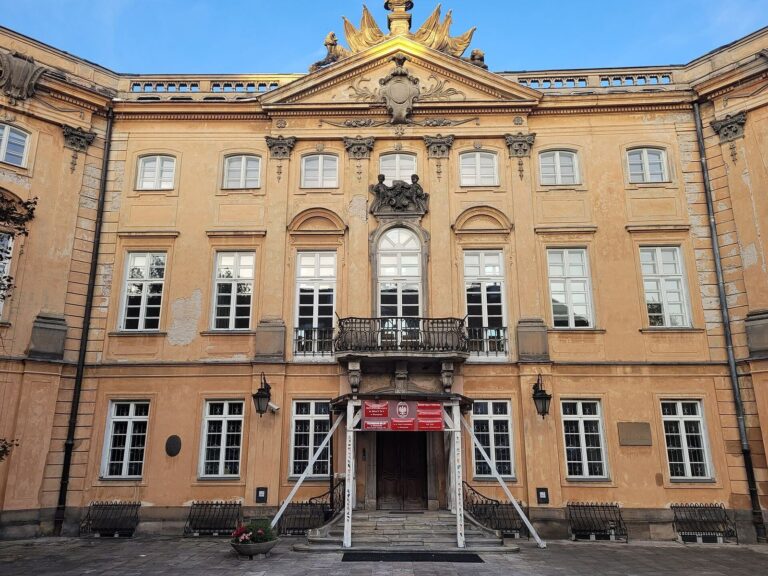
Dominican Monastery on Freta Street in Warsaw
Site at a Glance
- Popularity
- Very Low
- Country
- Poland
- Primary era
- Early Modern
- Eras represented
- Early Modern
- Civilizations
- Polish–Lithuanian Commonwealth
- Site type
- Religious
- Remains
- Monastery
On this page10 sections
History
The Dominican Monastery on Freta Street is a Catholic religious complex in Warsaw, Poland, comprising St Hyacinth’s Church and its adjoining monastery. Dominican friars, members of an order associated with preaching and scholarly study, arrived in Warsaw in 1598. Bishop Wawrzyniec Goślicki authorized a monastery in 1603, and the friar Abraham Bzowski established its community with eleven members. The adjoining monastery was built between 1639 and 1650, after which the church received a bell tower.
Foundation and Swedish occupation
During the Second Northern War, a mid-seventeenth-century conflict involving Sweden and Poland, Swedish forces occupied the church and monastery after entering Warsaw. The city’s capitulation declaration was signed in the monastery’s refectory, its communal dining hall, built in 1647. The complex was damaged during the occupation. After reconstruction, the buildings were reconsecrated in 1661.
Teaching and prosperity
Teaching began at the monastery in the first half of the seventeenth century. Jacek Baryczka established a monastic study house, a center for religious and academic education, which the Płock cathedral chapter recognized in 1647. Its formal course of study educated nearly 800 people, including doctors and teachers. The Baryczka family’s large book collection was later transferred to the monastery library. The church and monastery prospered during the eighteenth century.
School, confiscation, and new uses
In 1806, French troops established a hospital and military depot in the complex during the Coalition Wars. From 1811, after the establishment of the Duchy of Warsaw, a Polish state formed under Napoleonic influence, the monastery housed one of Warsaw’s eighteen municipal secondary schools. It continued in educational use for about a century. French troops devastated the complex, and repairs and remodeling followed between 1824 and 1830.
In 1864, during repression after the January Uprising, an insurrection against Russian rule in 1863–64, tsarist authorities dissolved the Warsaw Dominican community and confiscated the monastery. The friars were sent to Gidle. The buildings later housed an orphanage and boys’ boarding school, which remained in operation until 1944. St Hyacinth’s Church became a branch church of the parish of the Church of the Immaculate Conception.
Warsaw Uprising and destruction
During the 1944 Warsaw Uprising, an armed revolt against German occupation led by the Polish resistance, the church and monastery housed a hospital linked to Central Surgical Insurgent Hospital No. 1, based at the Ministry of Justice on Długa Street 7. The monastery also served as headquarters for Colonel Karol Ziemski, known as “Wachnowski.” As commander of the Home Army’s Northern Group, he directed the defense of the Old Town from there. The Home Army was the principal Polish underground military organization during the Second World War.
After forces led by German SS commanders Heinz Reinefarth and Oskar Dirlewanger entered the district, Reinefarth decided that staff and patients in all six Old Town field hospitals should be killed. The SS, a Nazi paramilitary and police organization, began the massacre on 2 September 1944. Thirty-eight hospital staff members, including doctors, nurses, and nuns, were shot in the monastery garden. Sappers then blew up the cellar and the remains of the already badly damaged church. About 1,000 people were killed in the preceding bombing and artillery attacks and in the church’s demolition.
Return and rebuilding
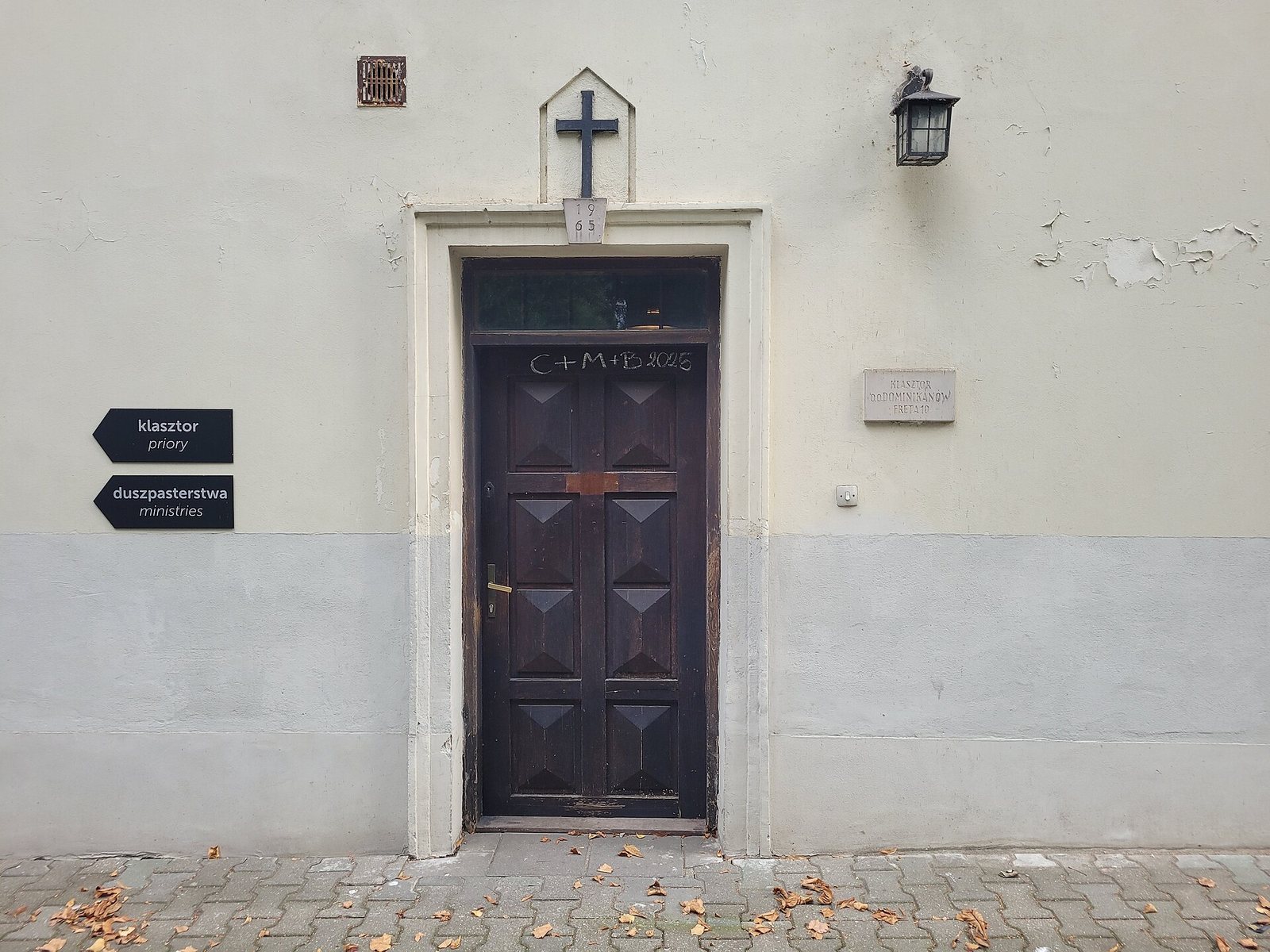
In 1947, the communist authorities returned the monastery buildings to the Dominican Order. The monastery was rebuilt between 1947 and 1965 to a design by Bruno Zborowski, while the church was reconstructed more quickly under Halina Kosmólska’s direction. The complex has been listed in the Masovian Voivodeship’s Warsaw monument-protection register since 1965. The monastery now operates a student chaplaincy in cooperation with students from Warsaw universities.
Remains
Layout and buildings
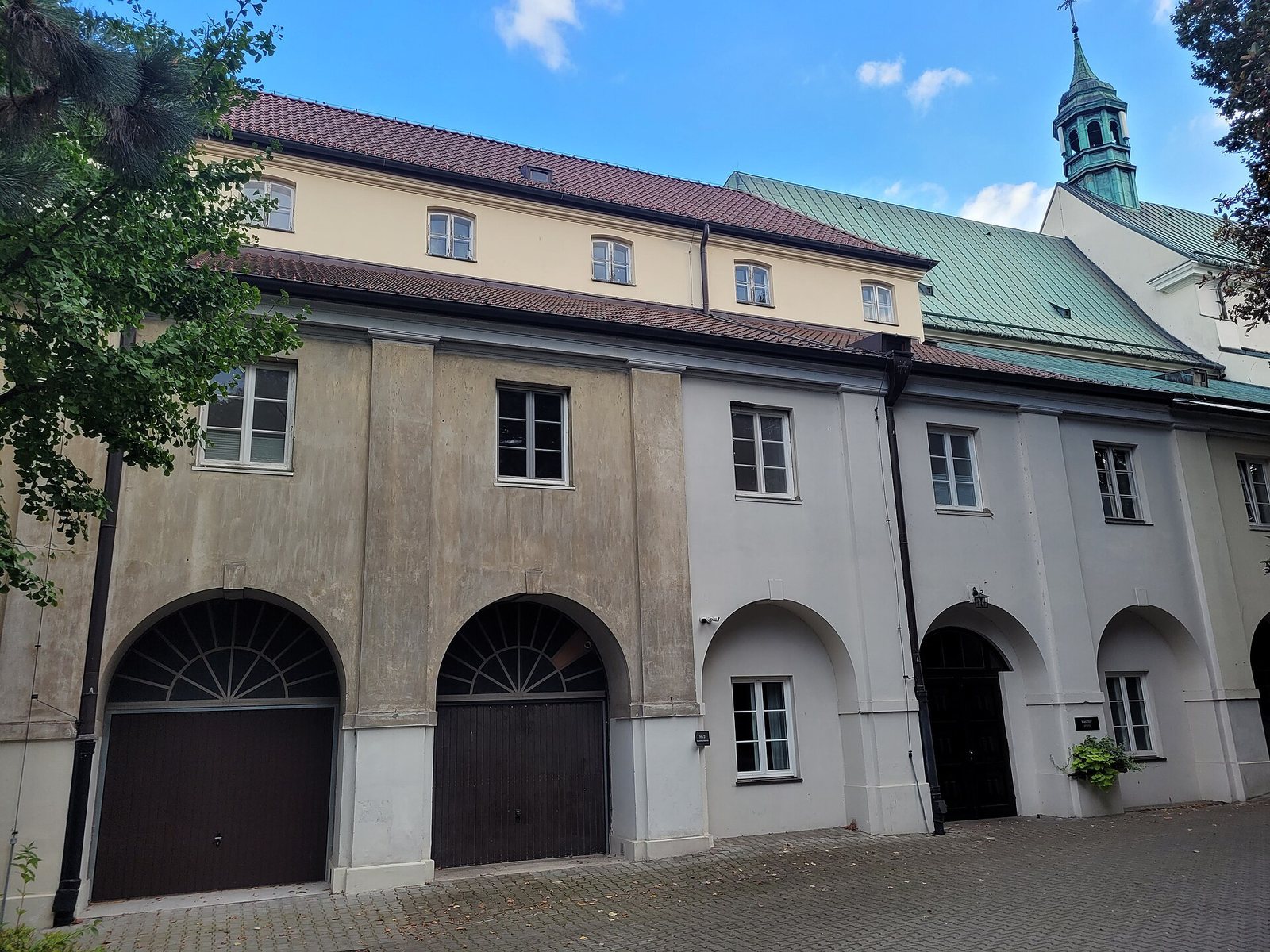
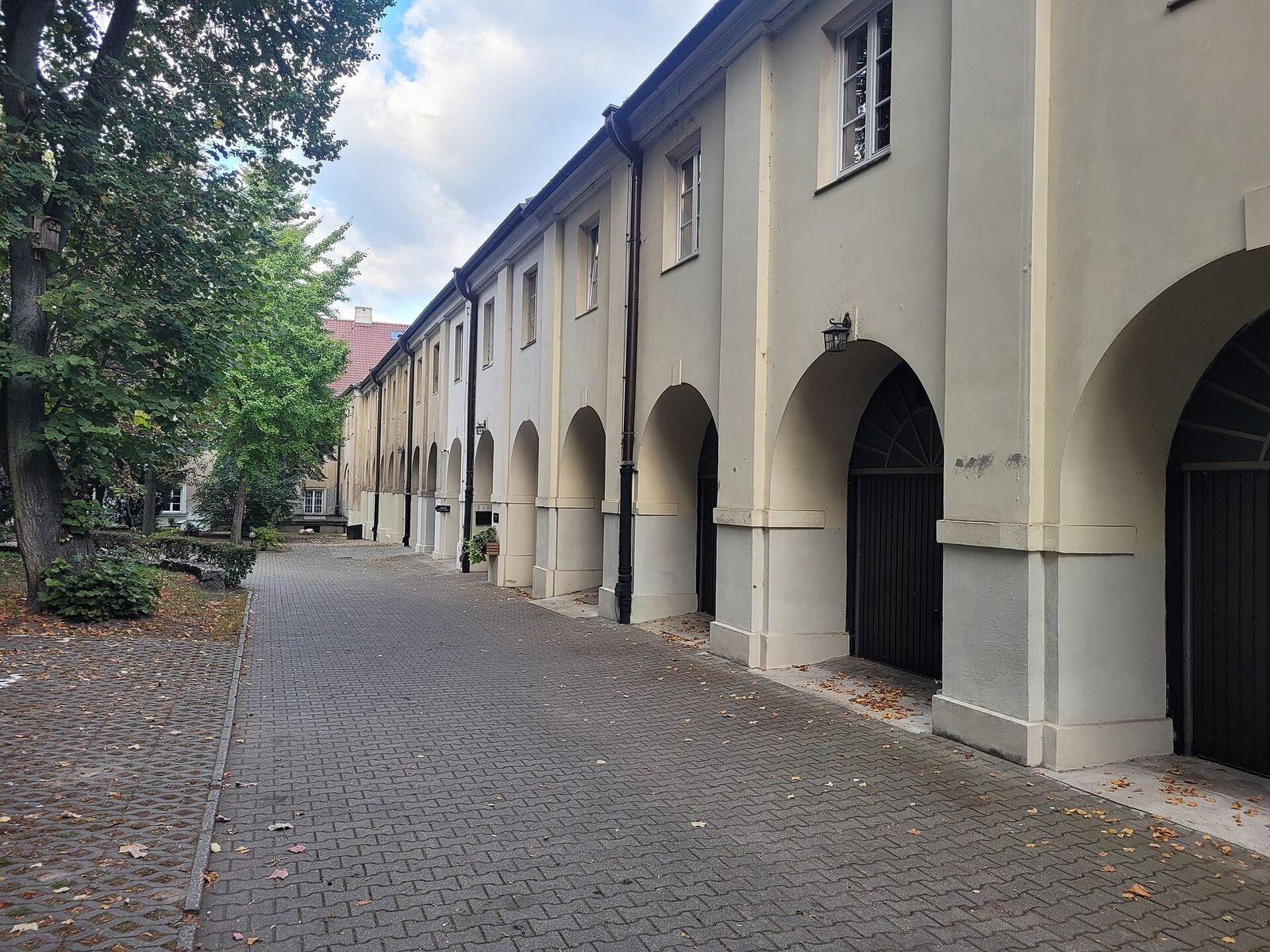
The complex covers about 7,000 square metres and consists of St Hyacinth’s Church and the adjoining monastery. The connected buildings extend nearly 130 metres from Freta Street on the west to Stara Street on the east. The monastery is 56 metres long and meets Stara Street in a T-shaped plan, with two side wings each about 15 metres long. Its main façade faces Stara Street. The church was rebuilt after its wartime destruction; the monastery survived the fighting in better condition, although its roof had burned and its windows were destroyed.
Refectory and library
The monastery refectory dates to 1647, and a library room was laid out above it. The refectory is also where Warsaw’s capitulation declaration was signed during the Swedish occupation.
Garden wall
In the monastery garden, a section of wall with its plaster removed marks the place where the 38 hospital staff members were shot in September 1944.