Pedra Moirinha: A Prehistoric Menhir in Portugal
Site at a Glance
- Popularity
- Low
- Country
- Portugal
- Primary era
- Stone Age
- Eras represented
- Stone Age
- Civilizations
- Unclassified
- Site type
- Civic
- Remains
- Megalithic Monument
On this page4 sections
History
Dating and proposed origins
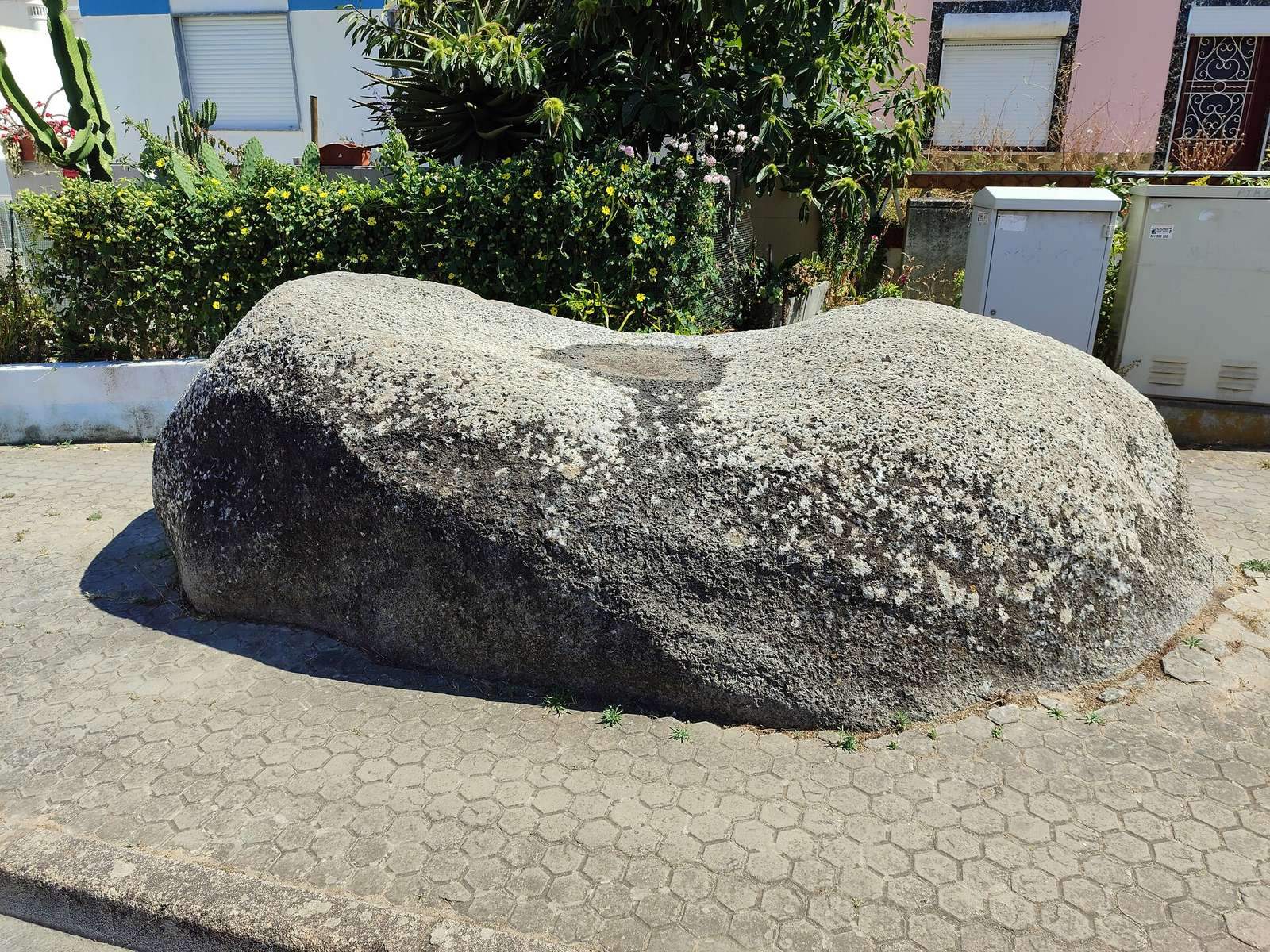
Pedra Moirinha is a menhir, a large stone set upright, in Portugal. It probably dates to the Neolithic–Chalcolithic transition between the late Stone Age and Copper Age. Its name seems to reflect a tradition of attributing ancient monuments to Islamic origins, and popular legends also became associated with the stone.
Carlos Teixeira argued that prehistoric communities had brought the stone from the Serra de Monchique, about 20 kilometres away, through the kind of collective effort used for shared projects. In 1969, physician Manuel Bentes proposed instead that it was a natural boulder transported from the mountains by glaciers. He interpreted deposits in the western Algarve as evidence of glacial action. Teixeira disputed this explanation, arguing that the region showed no evidence of glaciation or deposits formed by torrential flows; in Portugal, glaciation had reached only as far south as the Serra da Estrela.
Study and protection
Dr Rodrigo Boto brought the menhir to the attention of Dr António Rebello da Silva, who became the first to study it and drew public interest to the stone. Teixeira later investigated it and sought measures to protect it. Before the 25 April 1974 Revolution and the subsequent democratic transition, his approaches to Portimão’s municipal council to study and safeguard the monument were unsuccessful. A newspaper article published on 6 February 1969 had also called for its protection. In 1970, the Ministry of National Education classified it as a Property of Public Interest, a Portuguese designation for immovable cultural property recognized as having public importance.
After the transition, Teixeira wrote to the Minister of Commerce and secured the help of two employees of the Directorate-General of Tourism, along with a subsidy for the municipality to create a monument incorporating the menhir and an information plaque. He objected to a proposal that would leave the stone lying down and advocated an upright design. The monument was never built.
Remains
When first identified, the menhir stood alone on an outcrop of limestone from the Miocene epoch, about 23 million to 5.3 million years ago. Its setting was Rua da Pedra in Alfarrobal, northwest of Portimão, near National Road 124 and the Algarve railway.
The stone is nepheline syenite, a coarse-grained igneous rock containing nepheline, a mineral found in rocks low in silica. It originated in the Serra de Monchique, about 20 kilometres away, and shows very rudimentary shaping. Teixeira placed it among worked stones also found at megalithic monuments in the Évora region. Construction work at a villa later led to the menhir being moved, and one end was damaged during the move.