Akhsikath: An Ancient Silk Road City in Uzbekistan
Site at a Glance
- Popularity
- High
- Country
- Uzbekistan
- Primary era
- Medieval
- Eras represented
- Iron Age, Classical, Medieval
- Civilizations
- Samanid
- Site type
- City
On this page17 sections
History
Origins and Han Campaign
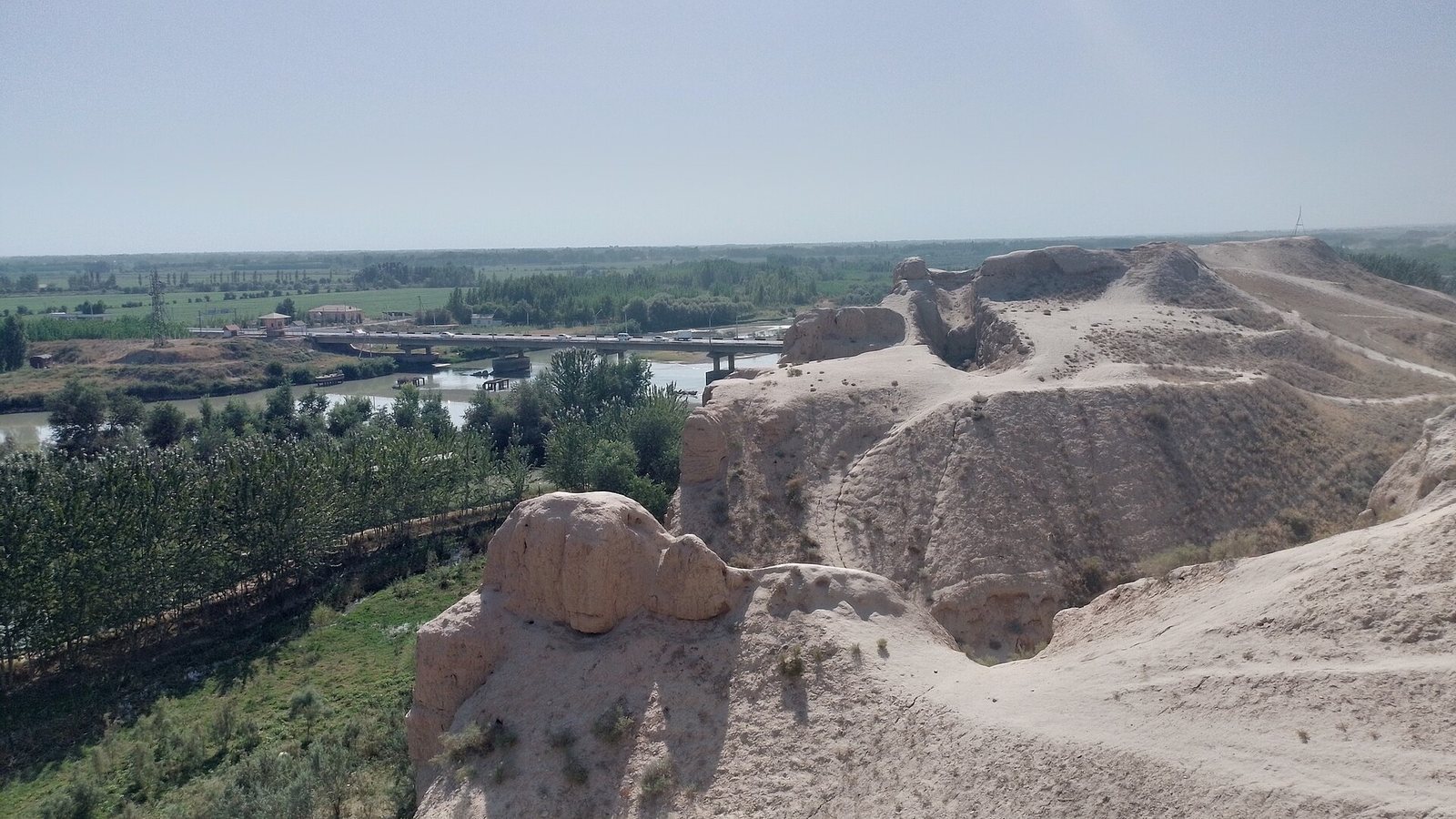
Akhsikath was an ancient city on the right bank of the Syr Darya in Uzbekistan’s Fergana Valley, in present-day To‘raqo‘rg‘on District. It was founded in the late third or early second century BC, while its earliest remains are broadly dated to the third century BC. Archaeologist A. A. Anarbaev identified it as the capital of Dayuan, the name used in ancient Chinese records for the Fergana Valley.
In 103 BC, a Han army commanded by Li Guangli besieged Akhsikath for 40 days with 60,000 soldiers. The campaign was part of the Han dynasty’s effort to gain control of Fergana’s prized horses, known as “heavenly horses.” The city was later conquered by the Kushans, whose empire extended across parts of Central and South Asia, and then by Turkic peoples. Muslim invasions also destroyed it, but the city recovered.
Trade and Medieval Rule
Akhsikath occupied a branch of the Silk Road and developed as a caravan stop, trading centre, and place of manufacture. Its products travelled to markets including Baghdad and Damascus, and the city became known for making high-quality Damascus steel.
Arabic chronicles from the seventh to early ninth centuries used the name Fraganik for the city; Feghana was another name used in the early medieval period. Akhsikath reached its greatest importance between the ninth and twelfth centuries and served as the Fergana Valley’s capital in the ninth and tenth centuries. Copper coins minted there circulated throughout the Samanid state, and local governors under the Samanids and the later Qarakhanid dynasty also issued coins.
The tenth-century geographer Ibn Hawqal described Akhsikath as Fergana’s capital, with a citadel and suburb. He estimated its length at about three farsakhs, a historical distance that in his estimate exceeded 17 km. From the mid-ninth century, the inner city walls became less important for defence as stronger central government reduced the need for them. The city was later attacked by the Qara Khitai, a Central Asian ruling power, and in 1219 Mongol forces under Jebe Noyan, a general serving Genghis Khan, sacked it. By then Akhsikath was already nearly abandoned.
Timurid Rule and Decline
A new city arose 5–6 km west of ancient Akhsikath, farther downstream along the Syr Darya. Archaeologists distinguished the older site from this later city, identified as Axsi, during work in the 1960s. Axsi has been proposed as Babur’s birthplace, although Andijan is the more common identification.
In the fifteenth century, Umar Shaikh Mirza II, a descendant of Timur and Babur’s father, made Akhsikath his principal residence and ruled Fergana from there. After Umar Shaikh died accidentally in 1494, his adolescent son Babur succeeded him. Babur later lost control of Akhsikath and Samarkand while attempting to conquer Samarkand. He also described the city in his memoir, the Baburnama. Babur went on to found the Mughal Empire in India in 1526.
Akhsikath declined in the early seventeenth century and was ruined by an earthquake around 1620–1621. Survivors moved to Namangan.
Archaeology and Protection
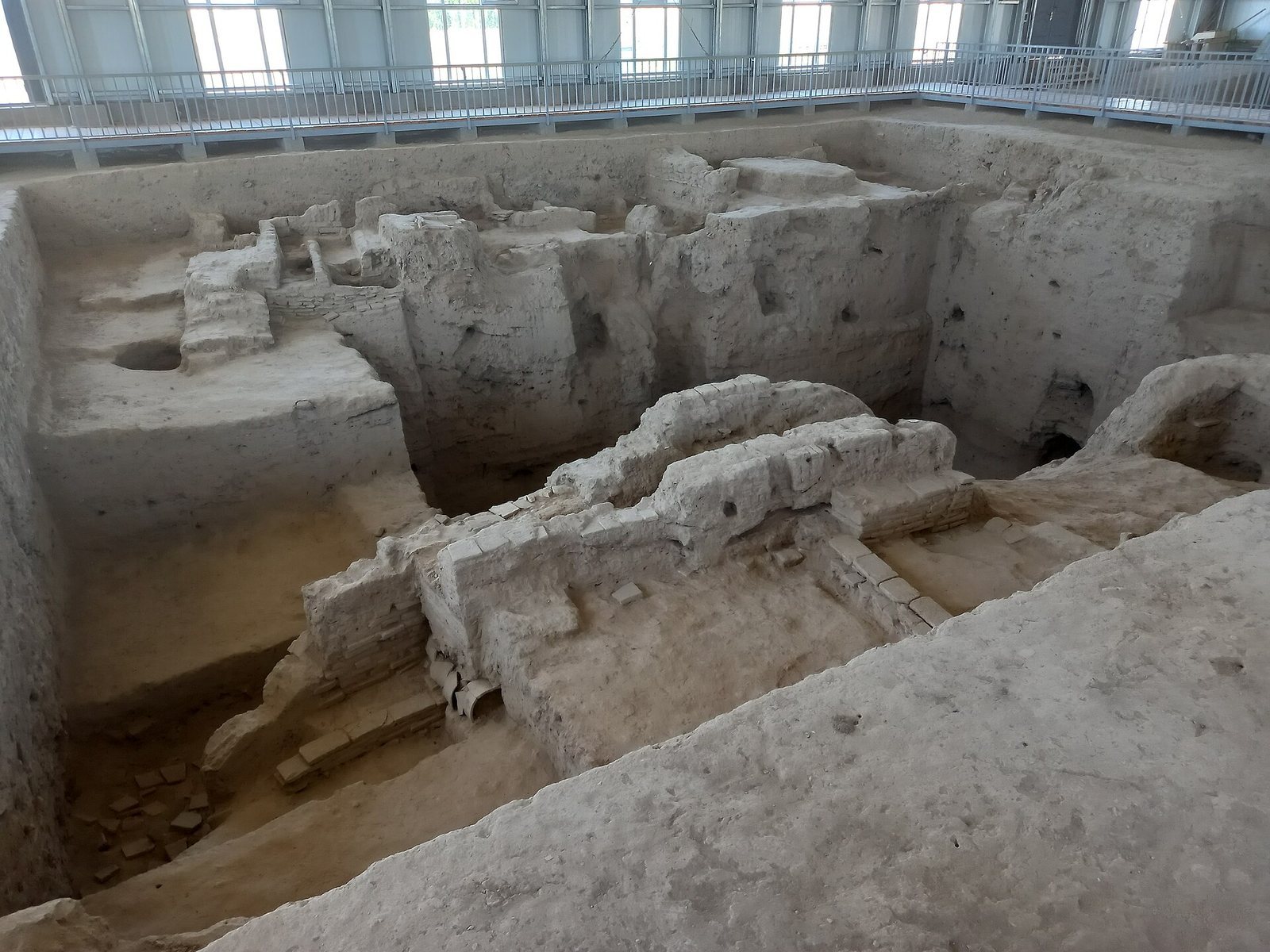
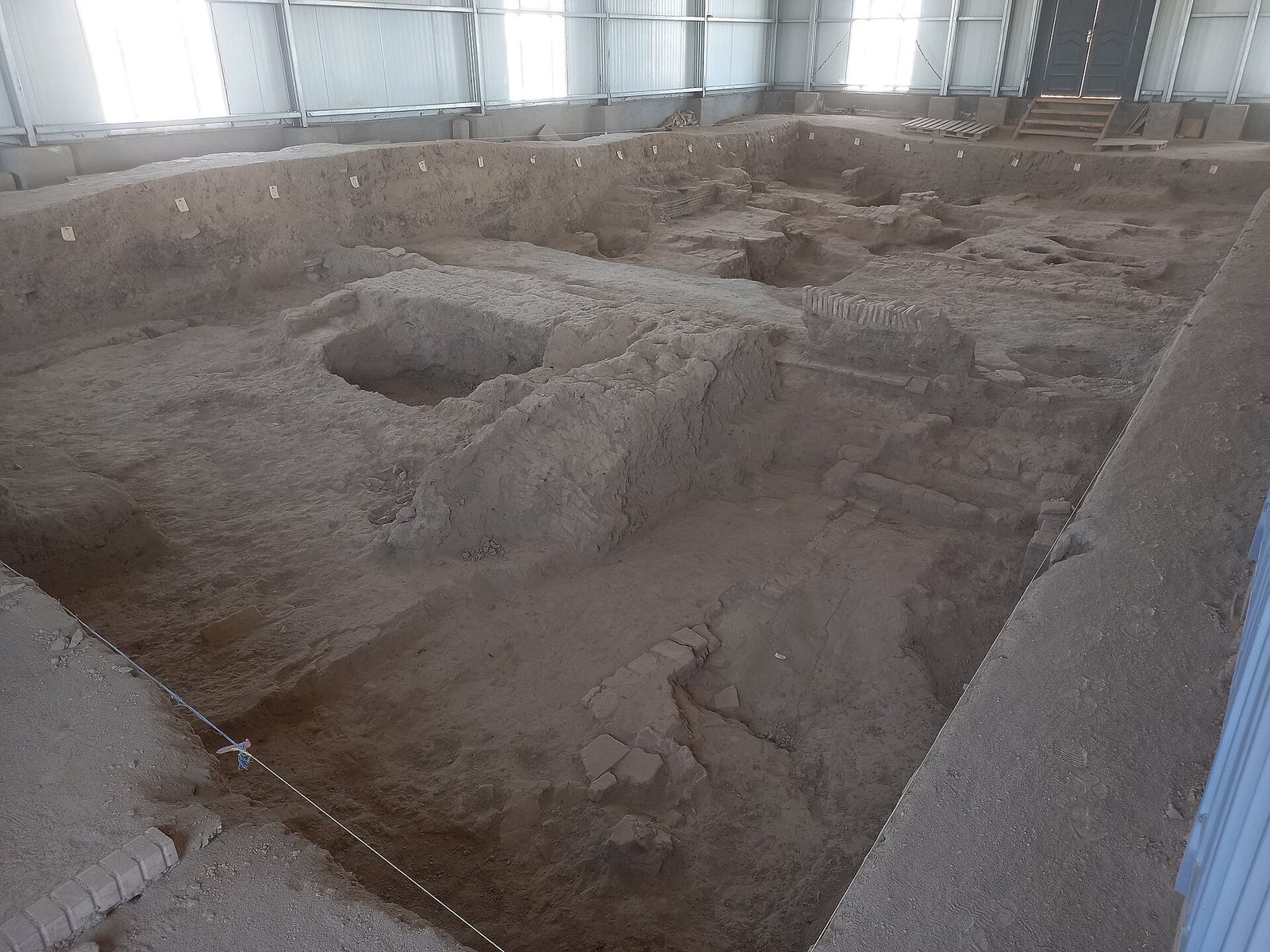
Archaeological investigations began in 1885 under Russian orientalist and archaeologist Nikolay Veselovsky. Further fieldwork took place in 1913–14, 1939, 1948, and 1957–59. A 1960 expedition identified a bathhouse in the outer settlement, although its date remains uncertain. Yahyo Ghulamov and archaeologist I. Ahrorov used the findings to distinguish ancient Akhsikath from Axsi.
A British–Uzbek expedition in 2002 investigated steel production and found heat-resistant kaolin crucibles, supporting the interpretation that Damascus steel was made at Akhsikath. The site has been under state protection since 1950, appeared on Uzbekistan’s Tentative List for UNESCO in 2018, and joined the country’s national list of immovable cultural heritage in 2019.
Remains
Urban Layout and Defences
Three-part plan
The city was arranged in three walled districts: a citadel, the shahristan, or inner urban area, and the rabat, an outer settlement with commercial and craft areas. The archaeological site covers about 30 hectares. Estimates place the early fortified city at roughly 40 hectares, while the broader urban area, including the outer settlement, extended across about 350 hectares.
Fortifications
Walls of rammed earth and unfired brick enclosed the districts. They stood about 20 m high, with five gates and deep ditches around the entrances. The inner district covered roughly 35 hectares, of which about 25 hectares survive. Two tower remains have been identified in its inner section, and around 20 more along the outer-city wall.
Citadel and inner district
The citadel contained the ruler’s palace and a prison. In the shahristan, an inner market, congregational mosque, fired-brick pool, and channels formed part of the urban facilities. The tenth-century city had at least two mosques, as well as a palace, prison, and caravanserai, a lodging and service complex for travelling merchants and caravans.
Outer settlement
The rabat included wealthy residences, gardens, workshops, craft quarters, and an outer market. A bathhouse was also found there, though its construction date is uncertain.
Homes and Water Supply
Domestic buildings
In the fifth to seventh centuries, houses commonly had five or six rooms. Their plastered walls were painted in different colours, and rooms were set aside for sleeping, storage, and cooking. Wells provided fresh water. Sleeping rooms had broad platforms along the walls and a low heating hearth resembling a sandal, a traditional household heater.
Water conduits
Akhsikath’s water came from Kosonsoy, 14–15 km away. Main pipeline remains were found in the 1960s, and underground conduits have been exposed at two points in the inner district. Built in the tenth century, the system used a surface trench in which workers constructed a half-domed fired-brick lining and laid large-diameter ceramic pipes along the bottom. Pipe fragments occur across both the shahristan and the rabat. The system supplied the city for more than 200 years.
Workshops and Finds
Metalworking
Industrial quarters contained metalworking workshops, including furnaces lined with kaolin, a heat-resistant clay. Crucibles made from the same material, found during the 2002 expedition, could withstand temperatures of up to 1,300°C. Juniper wood supplied fuel, while carbon-rich iron ore came from nearby spurs of the Tien Shan. This evidence supports the production of Damascus steel, renowned for its strength and flexibility.
Bathhouse and excavated objects
Finds from the bathhouse area include pottery vessels, pipe fragments, small coins, and glass objects. Excavations have also yielded locally made glazed dishes and fine glassware. Bronze objects from Akhsikath are held at Moscow’s State Museum of Oriental Art; other finds are in the Louvre and collections in Uzbekistan. In 1967, artist I. Smirnov presented pottery, bronze objects, and ornaments gathered from the ruins to the Moscow museum.