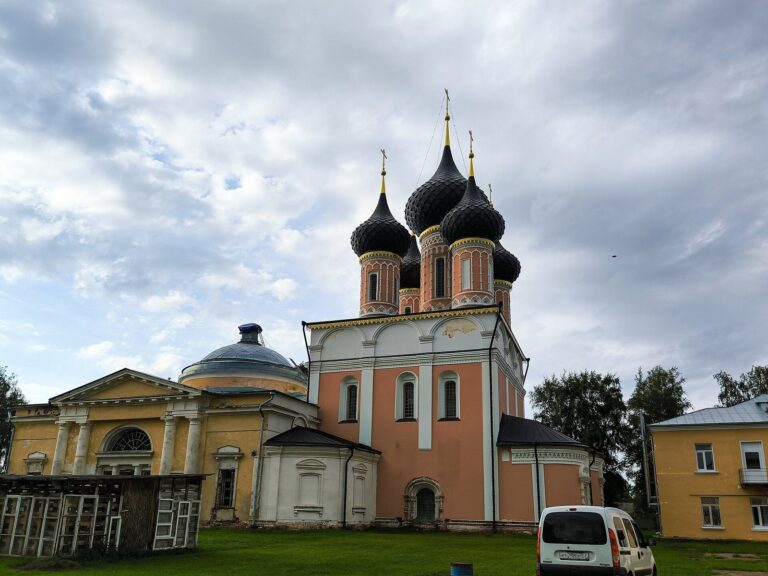
Church of the Resurrection on Debra: A 17th-Century Orthodox Church in Kostroma
Site at a Glance
- Popularity
- High
- Country
- Russia
- Primary era
- Early Modern
- Eras represented
- Early Modern
- Civilizations
- Russian
- Site type
- Religious
- Remains
- Cathedral
On this page12 sections
History
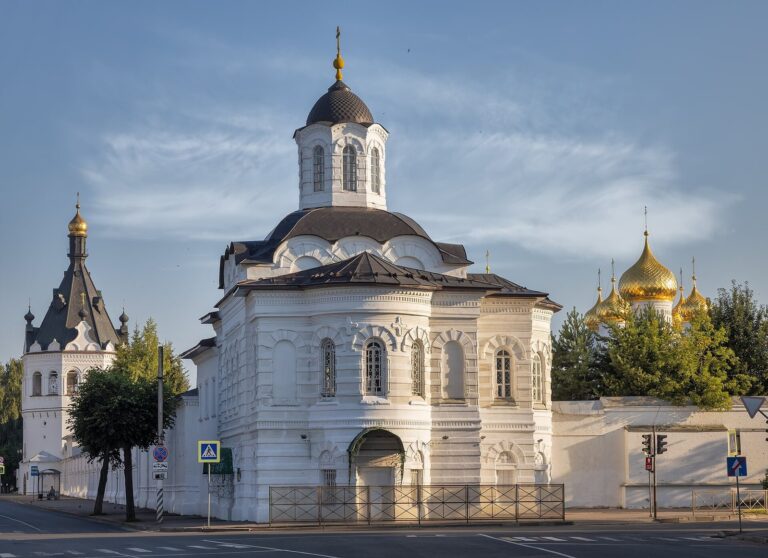
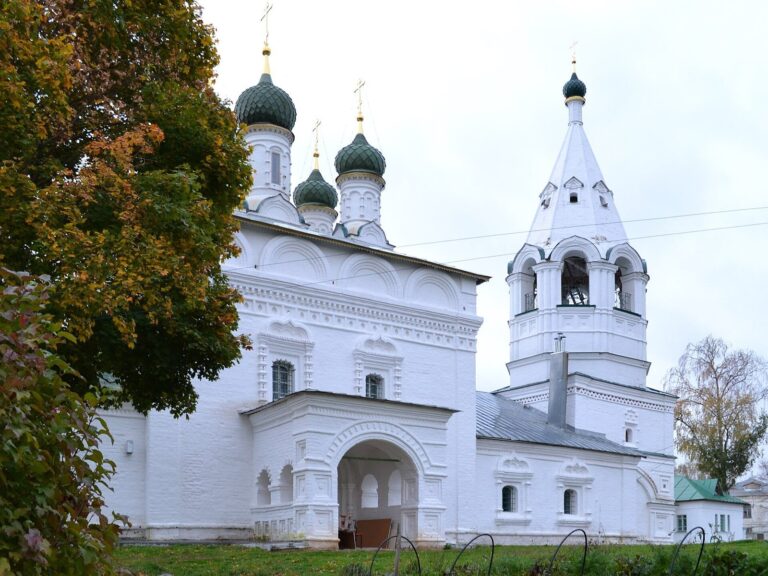
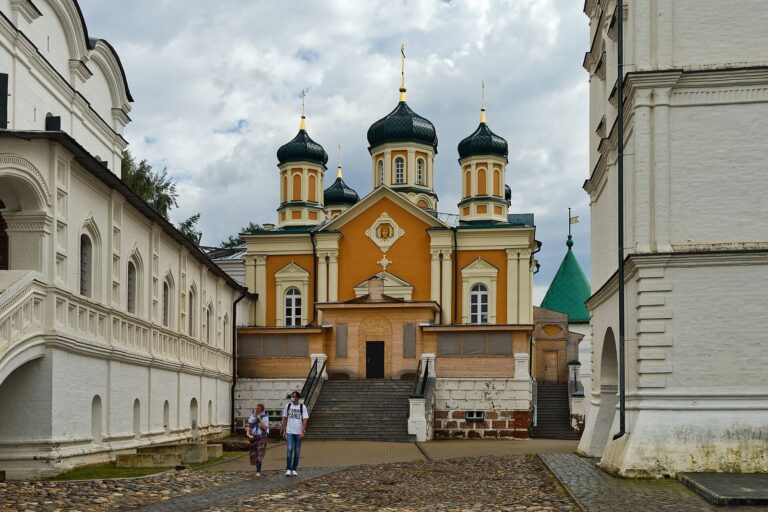
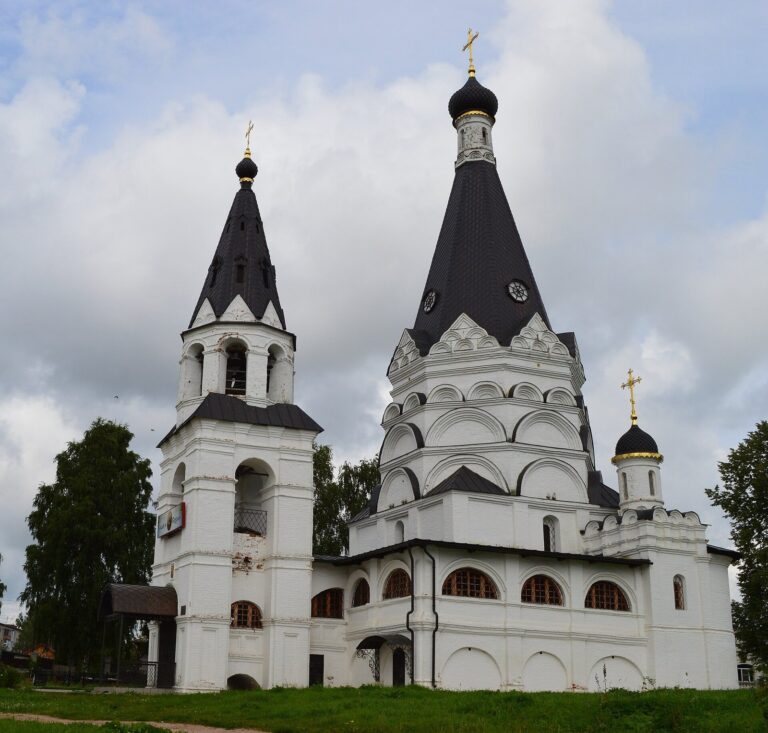
The Church of the Resurrection on Debra is a Russian Orthodox church in Kostroma, Russia, near the Volga. Built between 1645 and 1652, it is the only surviving 17th-century posad church in the city. A posad was an urban settlement associated with trade and crafts. The church belongs to the Kostroma and Galich Diocese, a regional church jurisdiction, and is designated a federal cultural heritage monument.
Origins and construction
Tradition links the first church on the site to Prince Vasily Yaroslavich, a 13th-century ruler associated with Kostroma. According to the story, he hunted near the Black River, moved his kennel there from Sula, settled his kennel keepers nearby, and built them a wooden church dedicated to the Resurrection. By the 15th century, settlement along the Volga had extended to this area, where many tanneries operated in the 17th century.
An early 17th-century wooden parish church stood here before the stone building. It included a chapel dedicated to Saint Catherine and a separate heated church for Cosmas and Damian, intended for use in cold weather. As the local population increased, residents decided to build a stone church. Work began in 1645 and was completed in 1652.
Kirill Isakov, a wealthy nearby merchant and member of the Gostiny Hundred, a privileged grouping of Russian merchants, provided the largest contribution. Tradition holds that he found gold coins in a paint barrel shipped from England and used them to help pay for the church. Builders came from Yaroslavl and Veliky Ustyug.
Alterations and later history
Changes to the church in the 1740s altered its openings and access arrangements. In 1801, its original bell tower was demolished during work on the neighboring Znamensky Church. Architect Dmitry Vasilyevich Mileev partly restored the building in 1911–1912. In 1913, Emperor Nicholas II, the last emperor of Russia, visited with his family and entourage during celebrations marking 300 years of Romanov rule.
The church remained open until 1930, when Soviet authorities closed it and used it to store grain; its lower level served as a military warehouse. It reopened in 1946 and became the Kostroma Diocese’s cathedral in 1964, a role it held for more than a quarter-century. The Feodorovskaya Icon of the Mother of God, brought from the Assumption Cathedral after that building was destroyed in 1934, remained at the church until 1991, when it was transferred to the Church of Our Lady of Saint Theodore.
A women’s Monastery of the Sign was established at the church in 1993, and the nearby, partly ruined Church of the Sign was placed in its care. The Resurrection church remains active.
Remains
Church plan and exterior
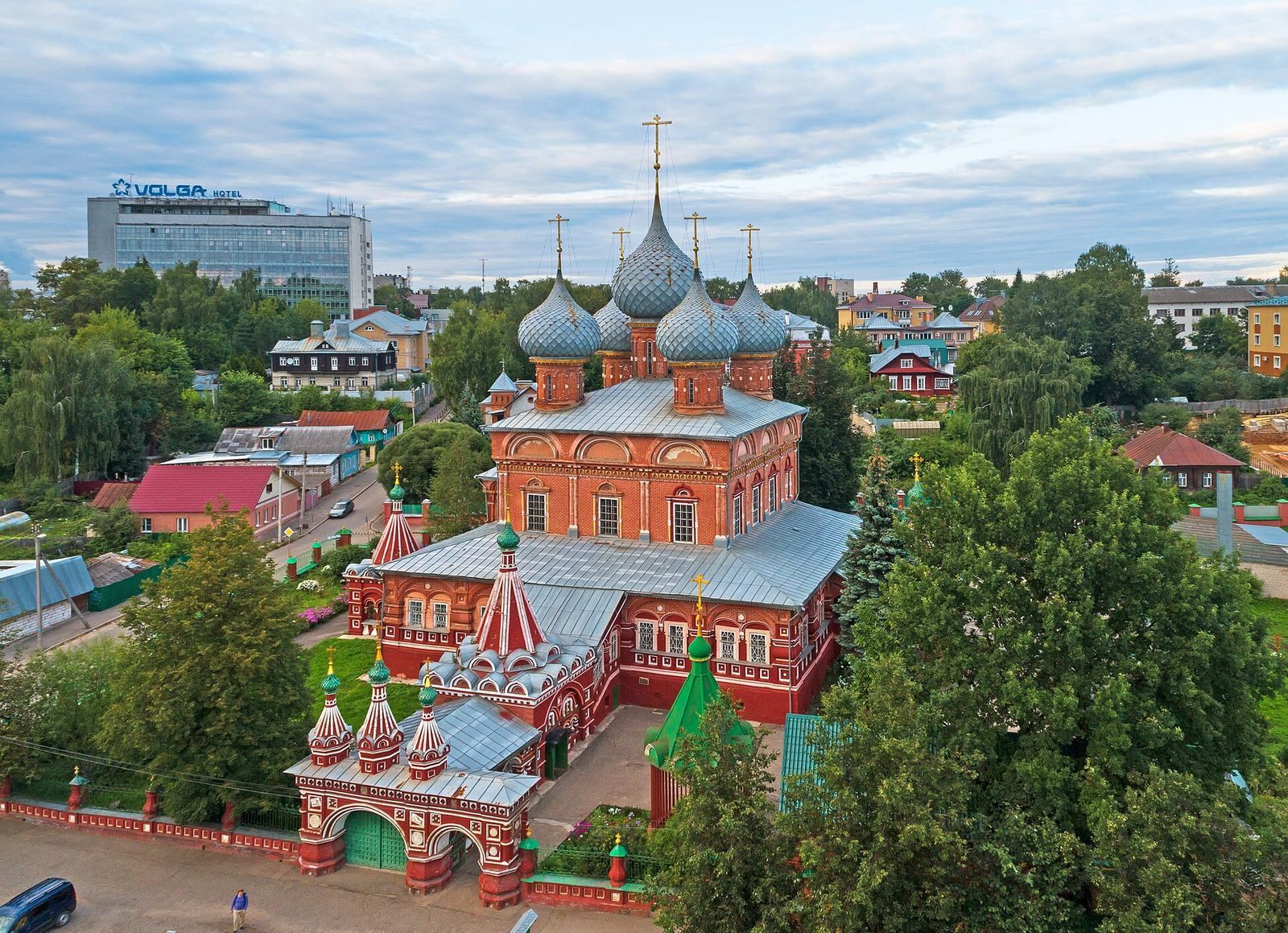
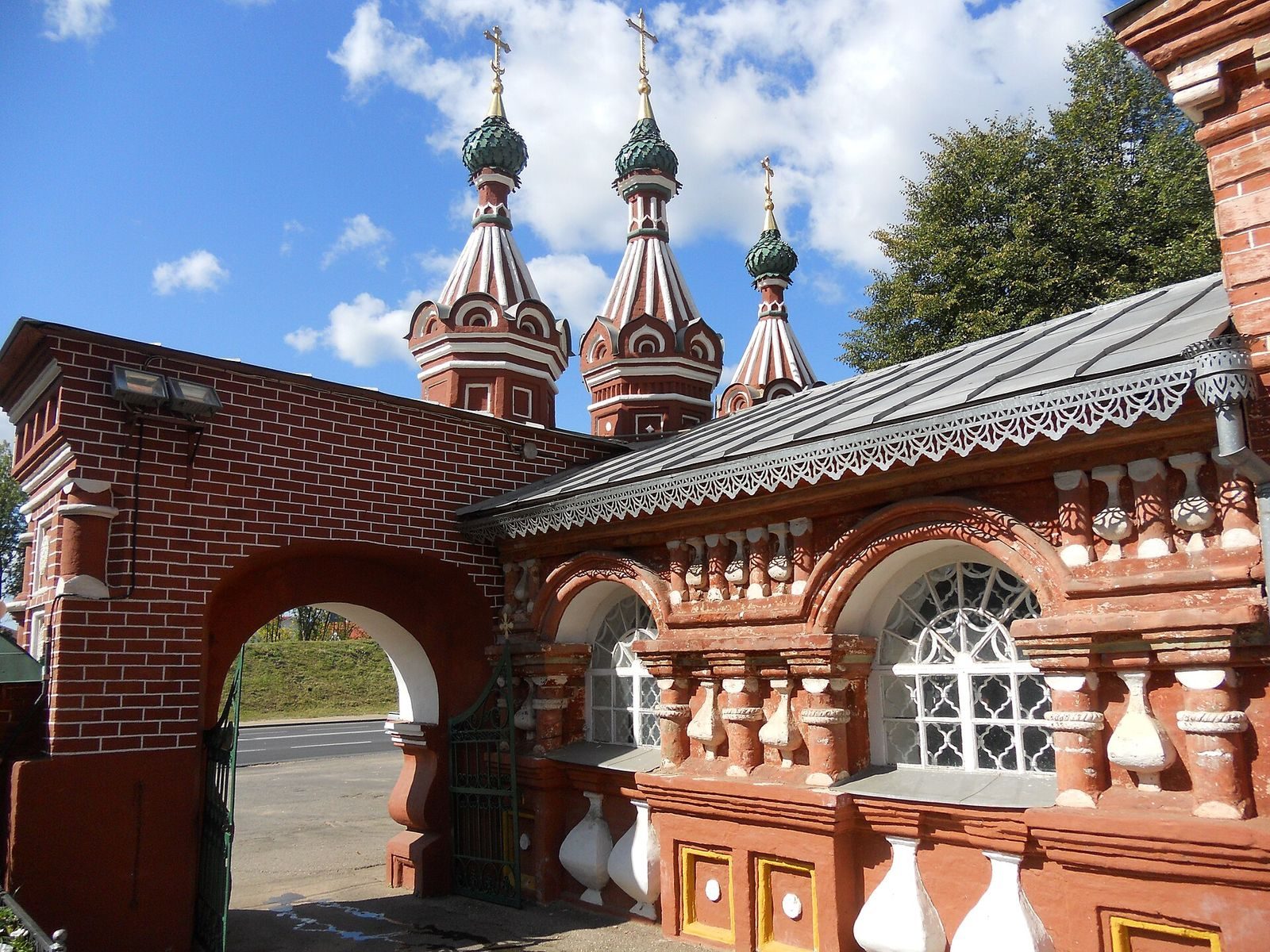
The stone church has a cross-shaped plan organized around four square supports, with five domes and three apses, rounded ends of the sanctuary. It rises above a lower level. Galleries encircle the building, and three porches reached by stairs have tent-like roofs. The square beneath the central dome is set slightly east of the building’s center.
Interior and decoration
Interior structure
Four square supports and their arches divide the interior into nine compartments. The galleries have barrel vaults, curved tunnel-like ceilings, with small curved openings above the arches. The porches have cross-shaped vaults, while the chapel has a closed vault. Barrel vaults cover the apses and end in conches, shell-shaped half-domes.
Church paintings
The church was painted between 1650 and 1652. These paintings are tentatively attributed to the workshop of Vasily Zapokrovsky, an artist associated with Russian church painting.
Three Hierarchs chapel
The north chapel, dedicated to the Three Hierarchs, Basil the Great, Gregory the Theologian, and John Chrysostom, has one dome and tiers of kokoshniks, decorative stepped gable-like forms. Its interior is the church’s oldest and most cohesive interior space. Frescoes there are attributed to Gury Nikitin and his workshop and date to 1670.
Gates and bell tower
Holy Gates
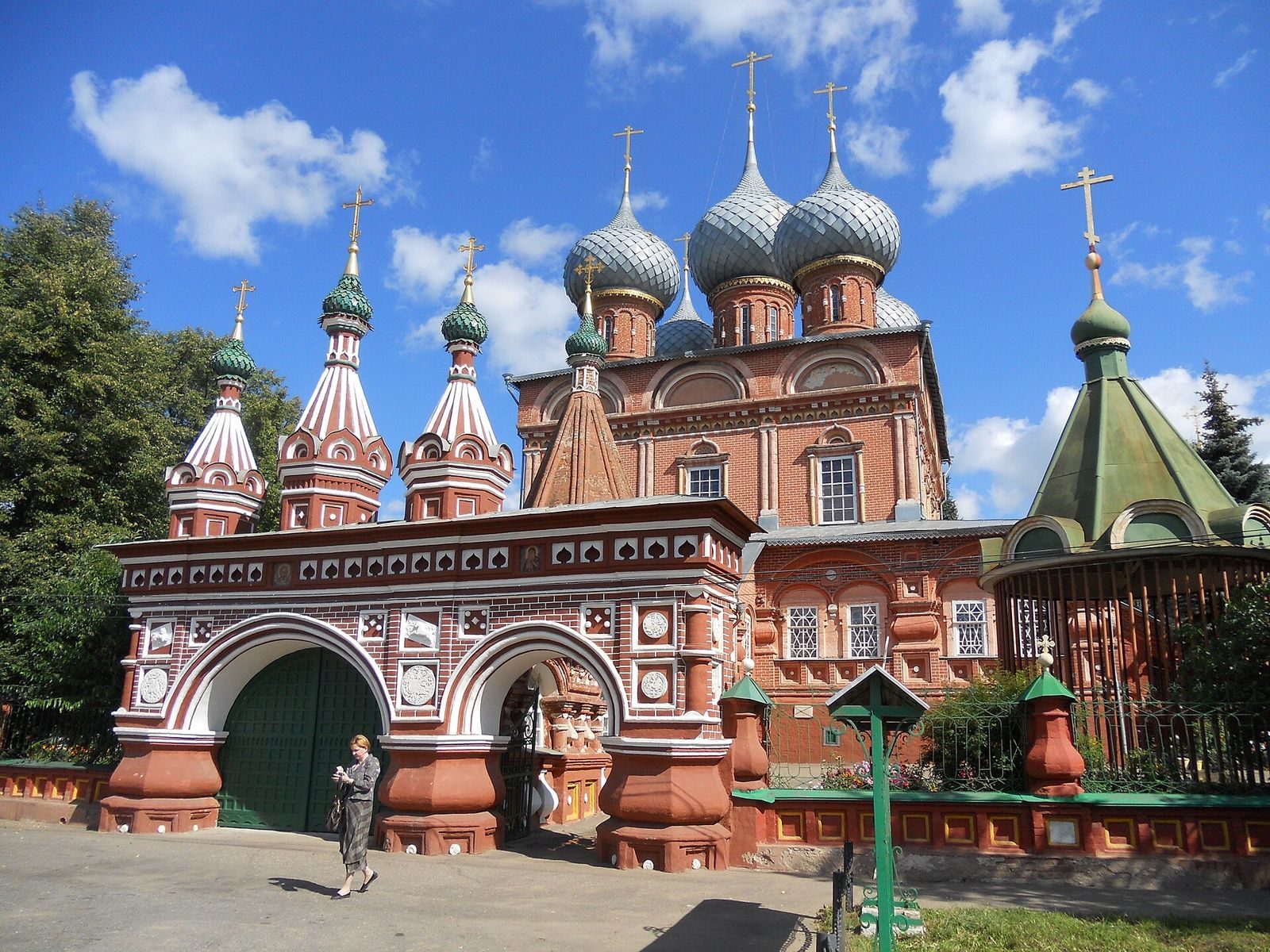
The Holy Gates stand along the street on the church’s west side. Built of brick with white-stone details, they form a two-span archway with a wide passage for carriages and a narrower one for pedestrians. Restoration of the entrance area and gates took place in 1967–1969.
Bell tower
A replacement bell tower was built adjoining the neighboring Znamensky Church after the Resurrection church’s original tower was demolished in 1801. Restoration of the Resurrection church has included rebuilding its five-tier bell tower.