Laüs: A Greek Colony and City-State in Magna Graecia
Site at a Glance
- Popularity
- Medium
- Country
- Italy
- Primary era
- Classical
- Eras represented
- Iron Age, Classical
- Civilizations
- Ancient Greek
- Site type
- City
On this page12 sections
History
Laüs was a Greek colony and city-state near Santa Maria del Cedro in present-day Italy, probably founded in the late sixth century BC by survivors of Sybaris. It belonged to Magna Graecia, the Greek-settled regions of southern Italy. Its history spans the Archaic Greek period, before the Classical age, and the Roman Republic, before imperial rule.
Foundation and Greek connections
Sybaris was destroyed by Croton in 510 BC, during a war between the Greek cities. Herodotus wrote that some survivors sought refuge at Laüs and Scidrus. Laüs had been established by 494 BC at the latest. A geographical work attributed to Pseudo-Scylax calls it a colony of Thurii, a tradition that may reflect Thurian influence rather than a separate founding. The city issued its own coins, and its estimated territory covered about 100 square kilometres. Its citizens were called Lainos, with Lawinos as an earlier form. Laüs may also have helped restore Sybaris in 453 BC.
Lucanian control and conflict with Thurii
The settlement probably moved from a location near the Lao River to San Bartolo hill, where it was rebuilt in the fourth century BC. The move may have followed its capture by the Lucanians, an Italic people of southern Italy. Around 390 BC, Thurii tried to recover the city. Its forces besieged prosperous Laüs but were ambushed and defeated. The attacking army may have included many Italic cavalrymen, who drove the Greek infantry formation toward the coast. A Sicilian fleet offshore declined to assist the Thurians.
Laüs then appears to have served as an important Lucanian stronghold on the Tyrrhenian coast. The Lao River marked the southern limit of Lucanian territory, and the Lucanians had established themselves at Paestum by the 420s BC.
Roman-era references and modern investigation
In the Augustan period, the Greek geographer Strabo described Laüs as still existing and mentioned a shrine to Draco, a companion of Odysseus, the hero of Greek epic. In the first century AD, the Roman author Pliny the Elder described the city as abandoned.
The first excavations took place between 1929 and 1932 during railway construction along the Tyrrhenian coast. Later work involved the Jean Bérard Centre, Calabria’s archaeological authorities, and the University of Salerno. Teams from the University of Paris 1 Panthéon-Sorbonne and the University of Salerno also surveyed the surrounding area. An archaeological park was established in 1994 to protect the site.
Remains
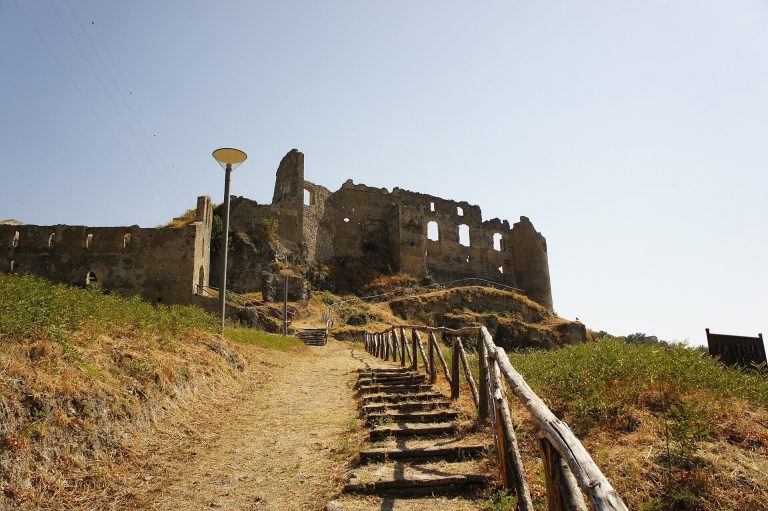
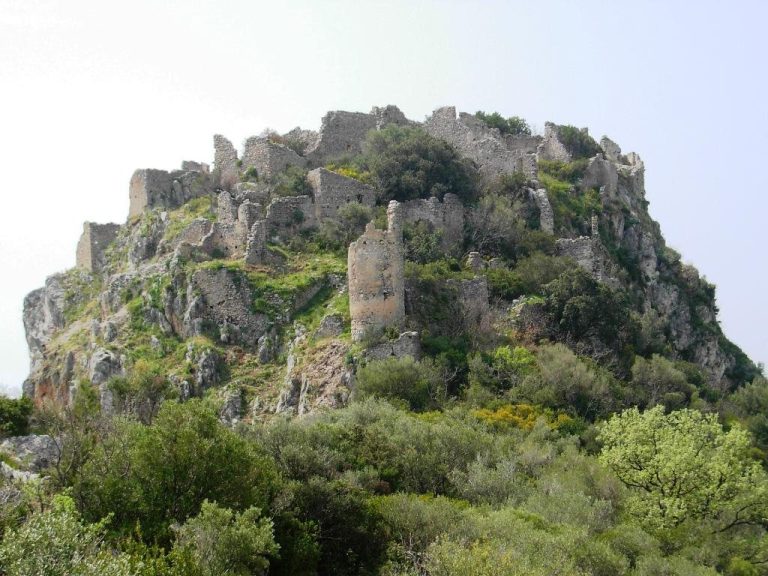
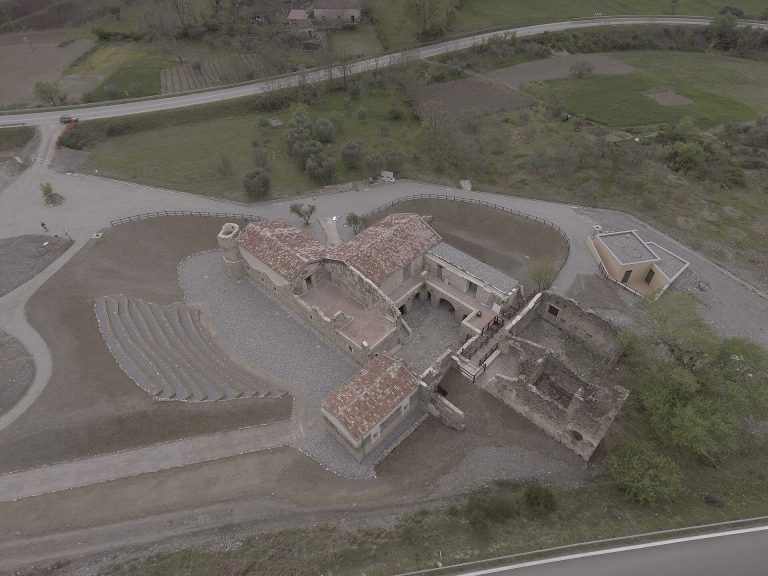
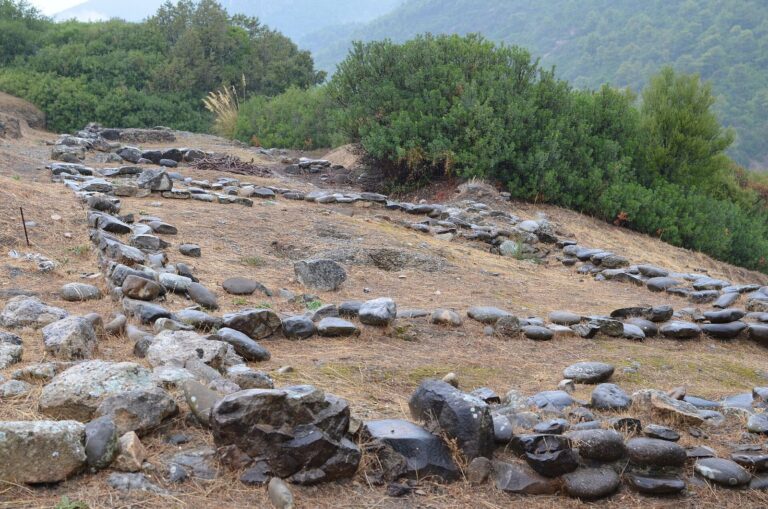
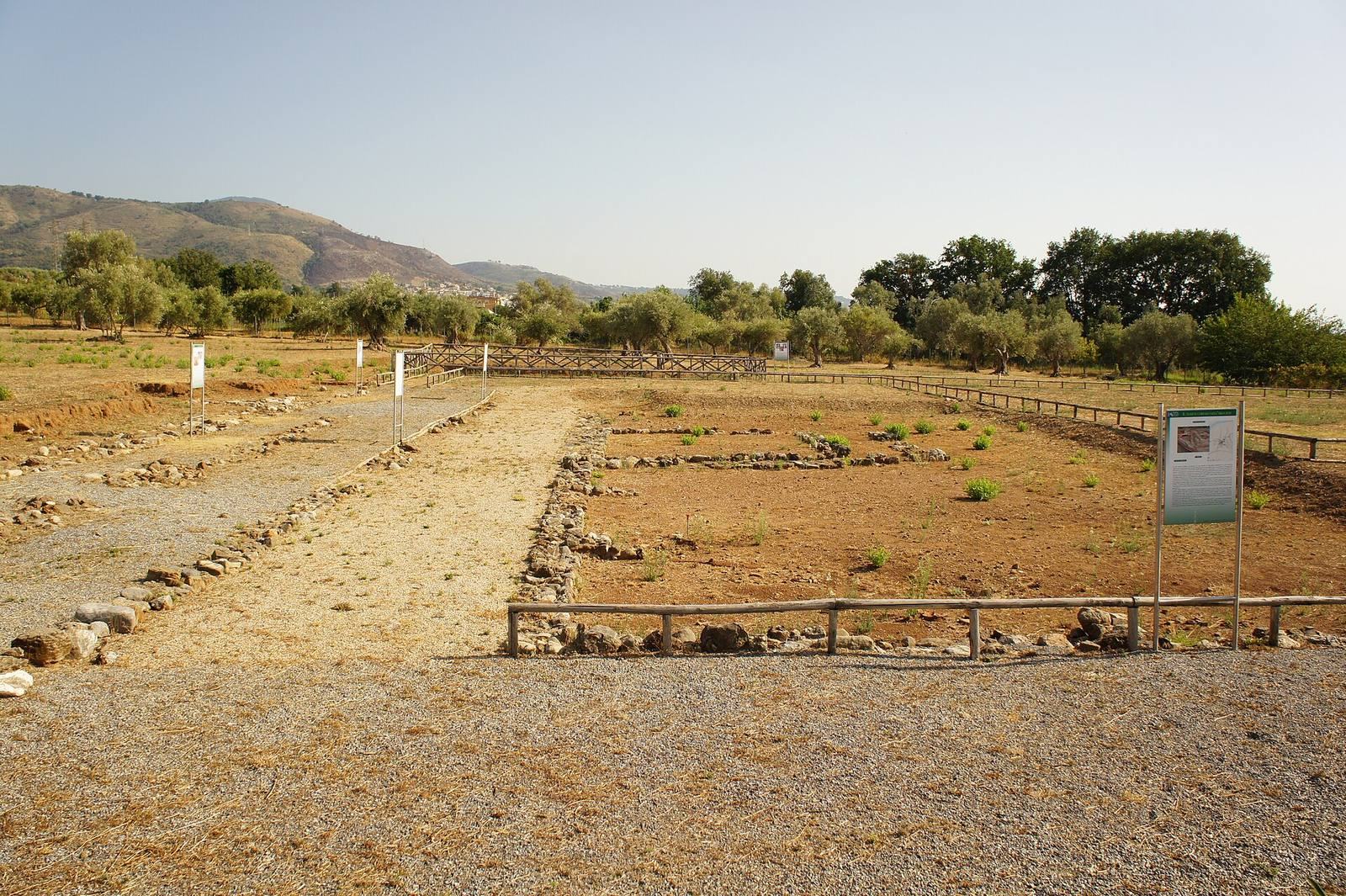
The archaeological park covers about 60 hectares on the southern bank of the Lao River, near its mouth on the Tyrrhenian coast. The river gave the city its name. The later settlement occupied San Bartolo hill, while the position of the earlier settlement remains uncertain. A fall in sea level and deposits of river sediment buried ancient landscape levels beneath about four metres of material, leaving the possible early settlement area inaccessible.
Urban layout and defenses
Street plan
The city followed a right-angled street grid. At least two main roads ran north to south, each about 12 metres wide. Cross streets, roughly 5 metres wide, met them at regular intervals of 96 metres. These roads divided the city into blocks, which were further separated by narrower lanes.
Fortifications
A defensive wall protected the city on at least three sides. The excavated section of the fortification dates to the Hellenistic period.
Production and burial areas
Ceramic kilns
An area containing kilns used to make ceramics lay in the southeastern part of the site, near the present-day cemetery.
Cemetery and tomb
The ancient cemetery lies beneath modern Marcellina, below San Bartolo hill. Burials from the same period were found in the area during the 1950s and 1960s. One richly furnished tomb, discovered accidentally near Marcellina railway station in 1961, dates to the second half of the fourth century BC. Its contents included dozens of red-figure vases, pottery decorated with figures left in the clay’s natural color against a dark background, along with bronze and precious-metal objects. A finely crafted bronze body armor, shaped to the human form, bears a relief of Pan, a Greek god associated with wild and pastoral life. The finds are displayed at the Museo Nazionale della Magna Grecia in Reggio Calabria.
Silver coins
Silver coins found at Laüs date from 500 to 440 BC. They carry the legend “LAFINON” and symbols resembling those used on coins from Sybaris.