Church of San Michele: A Medieval Catholic Church in Italy
Site at a Glance
- Popularity
- Low
- Country
- Italy
- Primary era
- Medieval
- Eras represented
- Medieval, Early Modern
- Civilizations
- Kingdom of Sicily, Spanish
- Site type
- Religious
- Remains
- Church
On this page7 sections
History
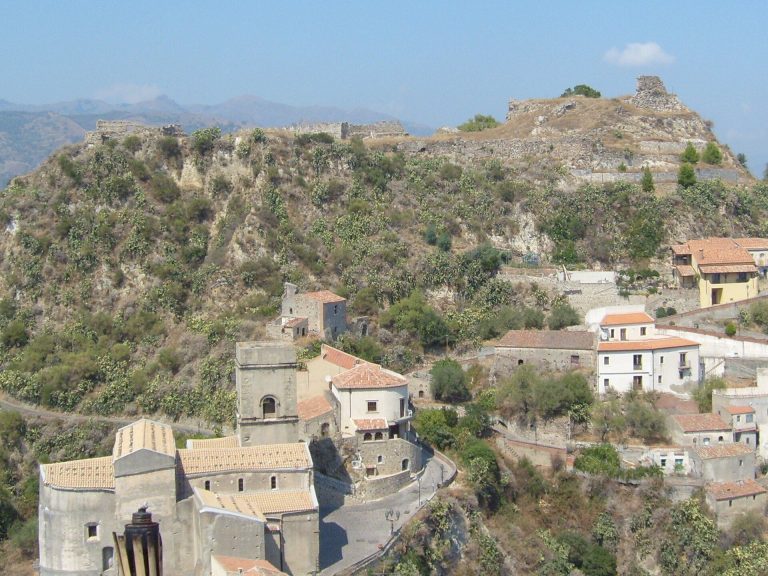
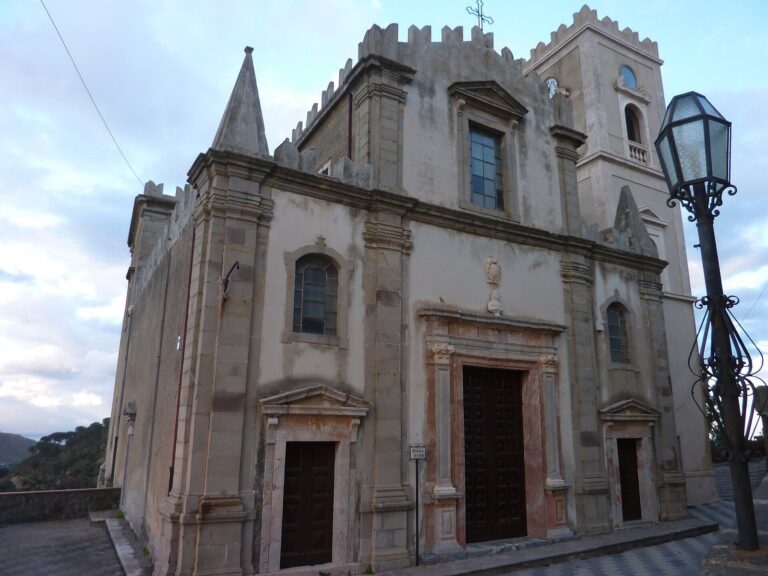
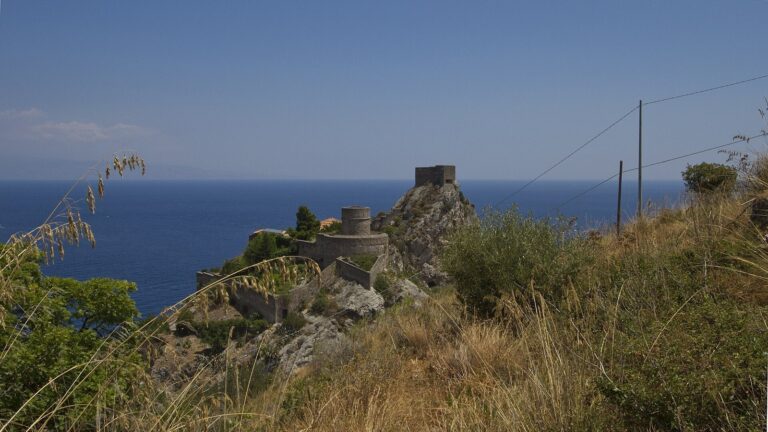
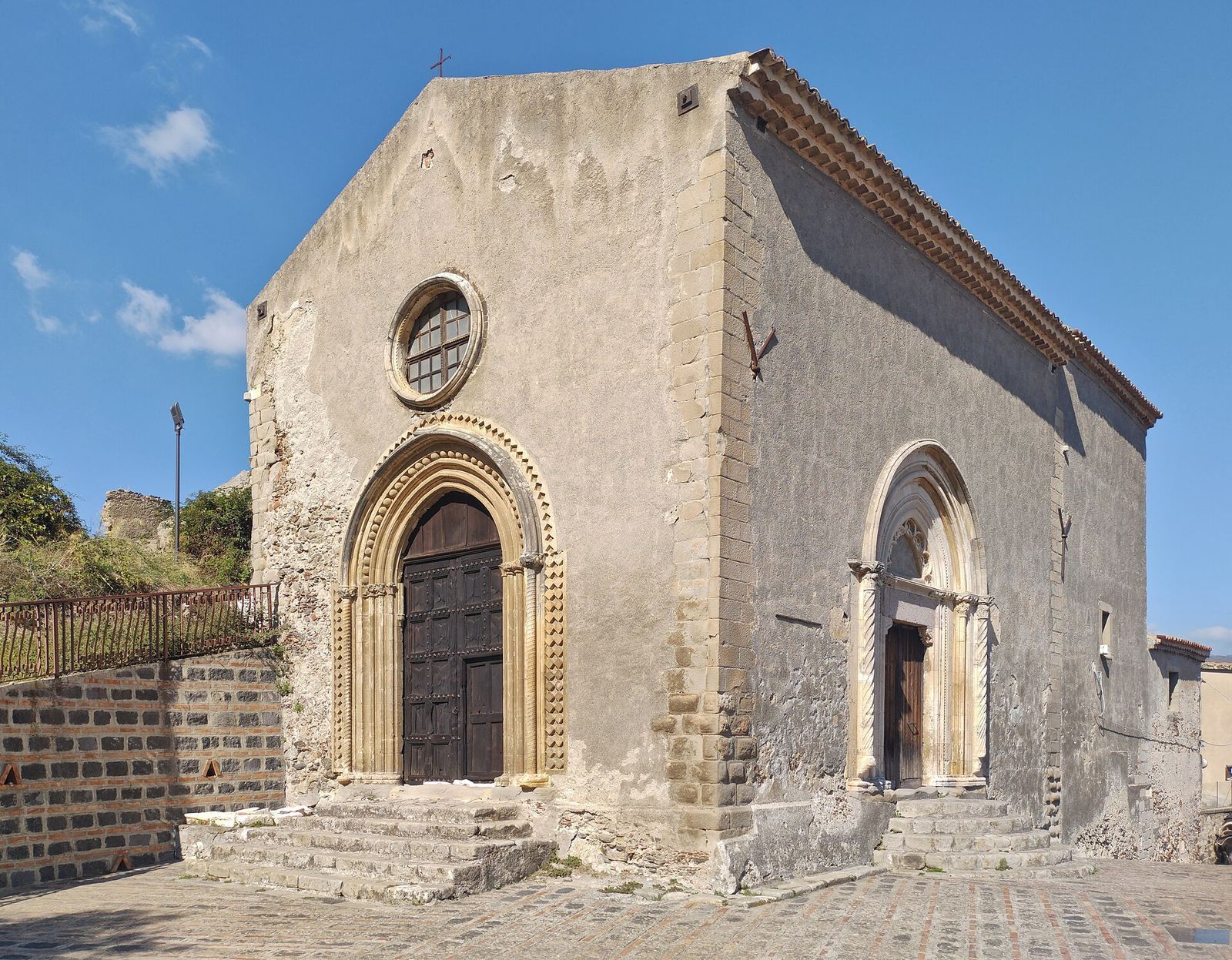
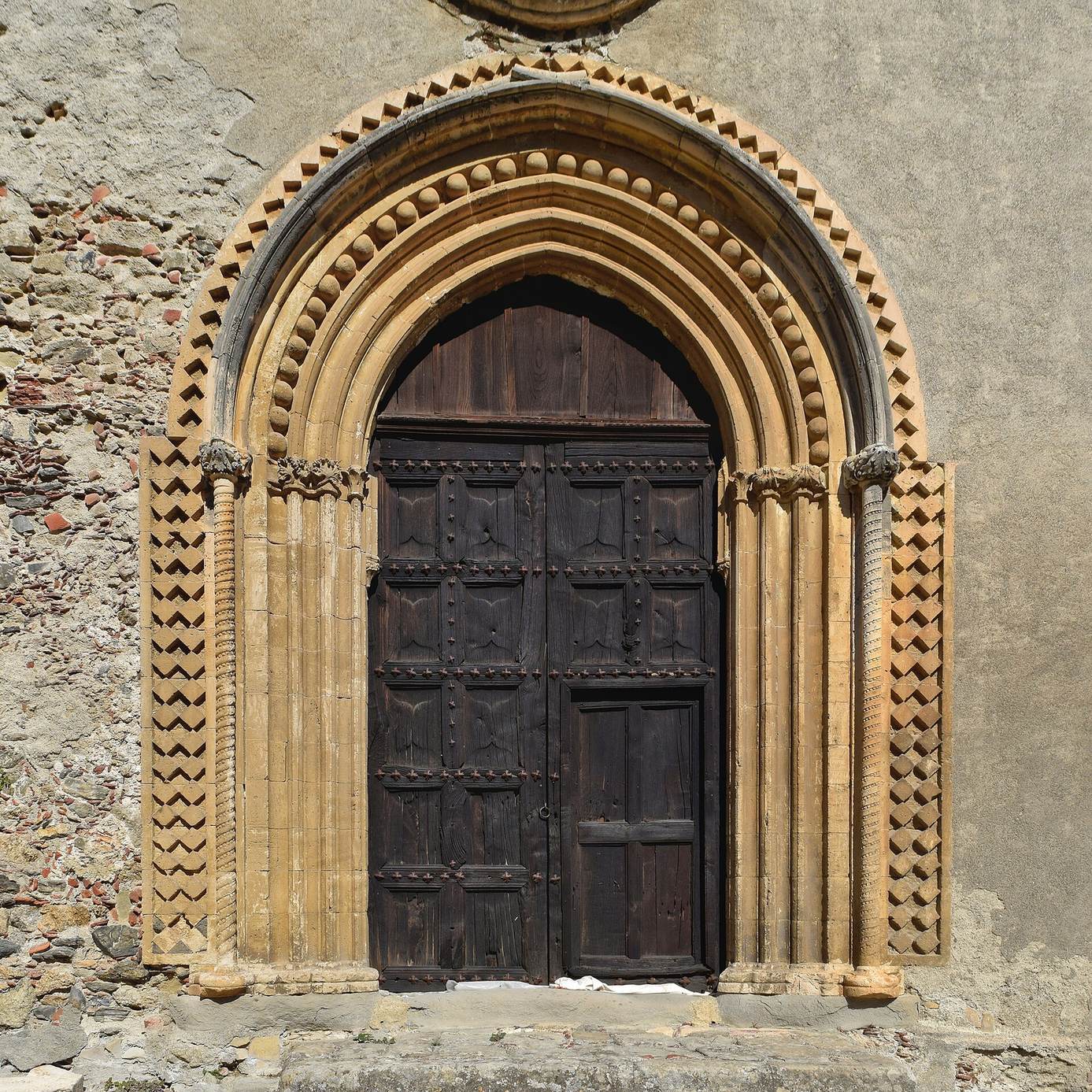
The Church of San Michele, named for Michael, an archangel in Christian tradition, is a Catholic church in Italy, built before 1250 to serve Pentefur Castle. Its exterior is in the Siculo-Chiaramontan Gothic style, a medieval Sicilian Gothic form, while its interior is in the Sicilian Baroque style.
Early worship and medieval development
An early phase of the church’s history centers on a small ninth-century building dedicated to Santa Maria dell’Idria, a title of the Virgin Mary. Basilian monks, members of an Eastern Christian monastic tradition shaped by the rule associated with Basil of Caesarea, maintained it. A manuscript from 1308 describes numerous Greek Catholic priests, belonging to a Catholic tradition that retains Eastern forms of worship, celebrating the Divine Liturgy there.
The church was commissioned by the archimandrites of Messina, senior monastic leaders. It was enlarged around 1420. A medieval custom, followed in later periods as well, required people converting from non-Christian faiths to climb the church steps on their knees as an act of penance before baptism.
Parish use and later history
The church remained a parish through the eighteenth century, and archival evidence from 1748 confirms that status. In 1624 it was closed for worship because its condition was considered unsafe; services were transferred to the nearby Church of Jesus and Mary.
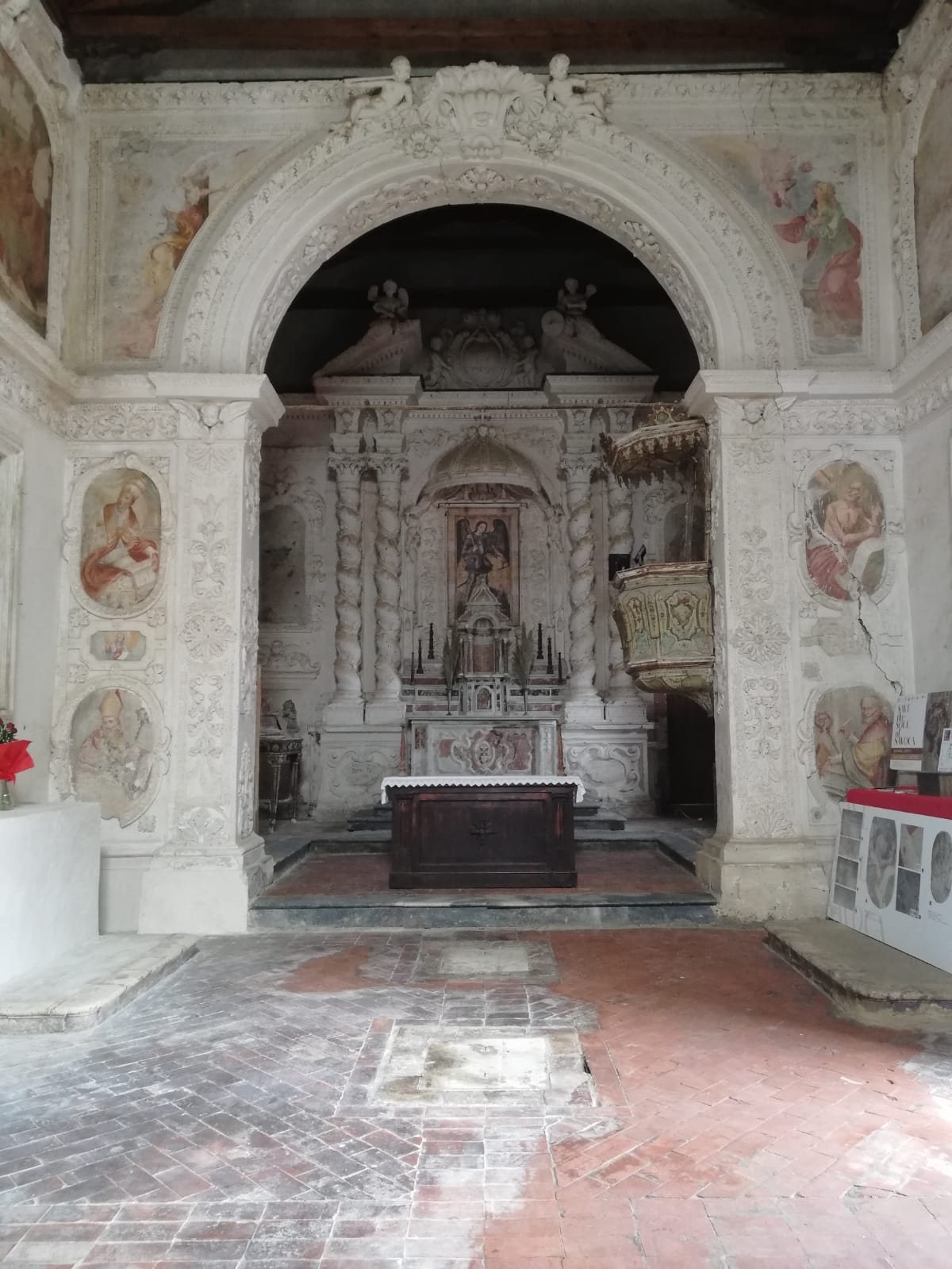
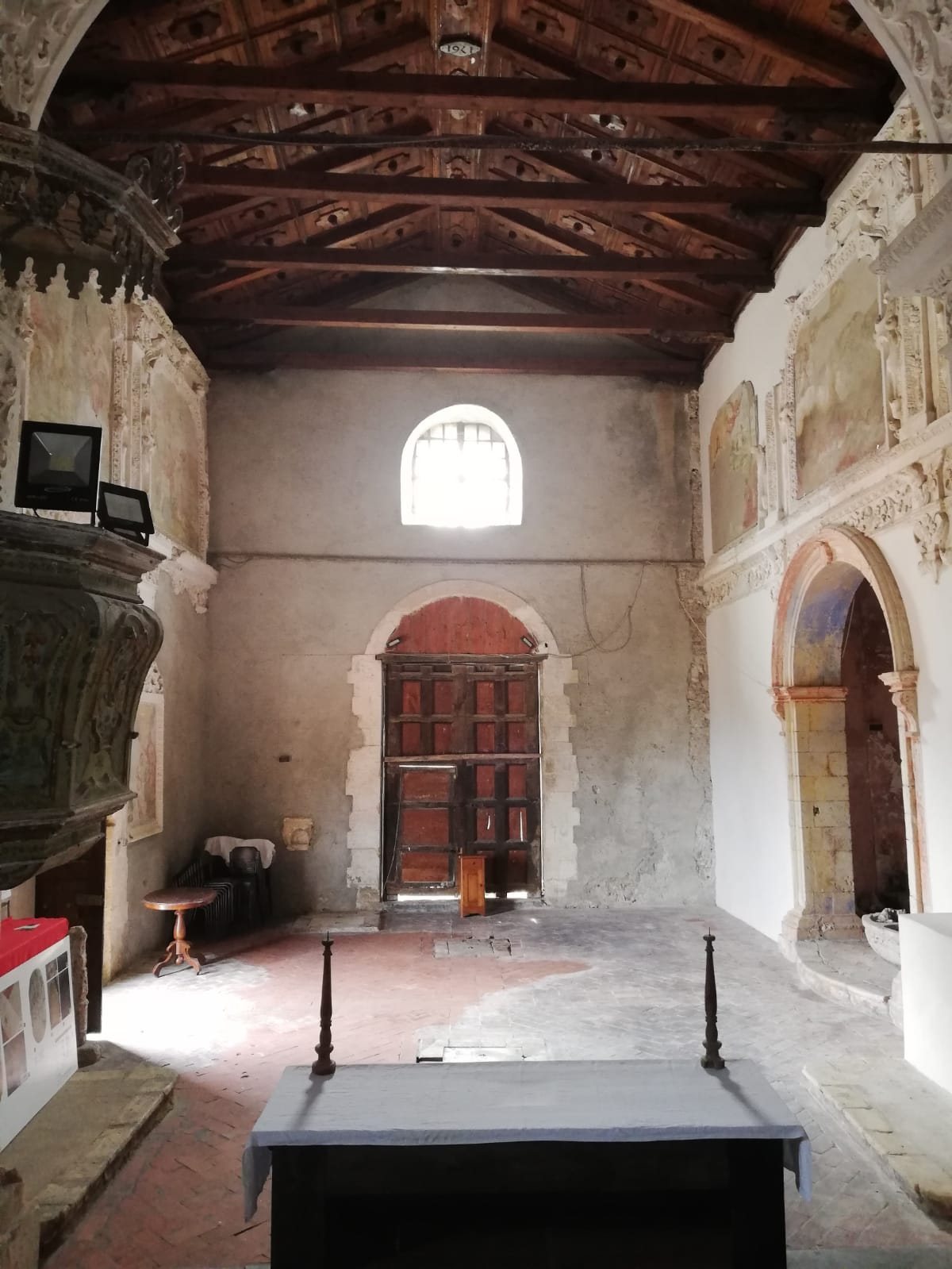
In the late seventeenth century, chaplain Vincenzo Miuccio initiated an elaborate restoration of the interior in the Sicilian Baroque style, completed in 1701. The timber framework supporting the roof was rebuilt in 1761, and the roof and wooden ceiling were restored in 1996. The church was declared a national monument in 2002. A later restoration addressed the deterioration of its Baroque interior.
An annual custom associated with the church precedes Savoca’s August celebration of Saint Lucia, an early Christian martyr. On the previous day, the girl who portrayed Lucia the year before gives a golden palm branch to the girl taking the role that year, and the celebrations then begin.
Remains
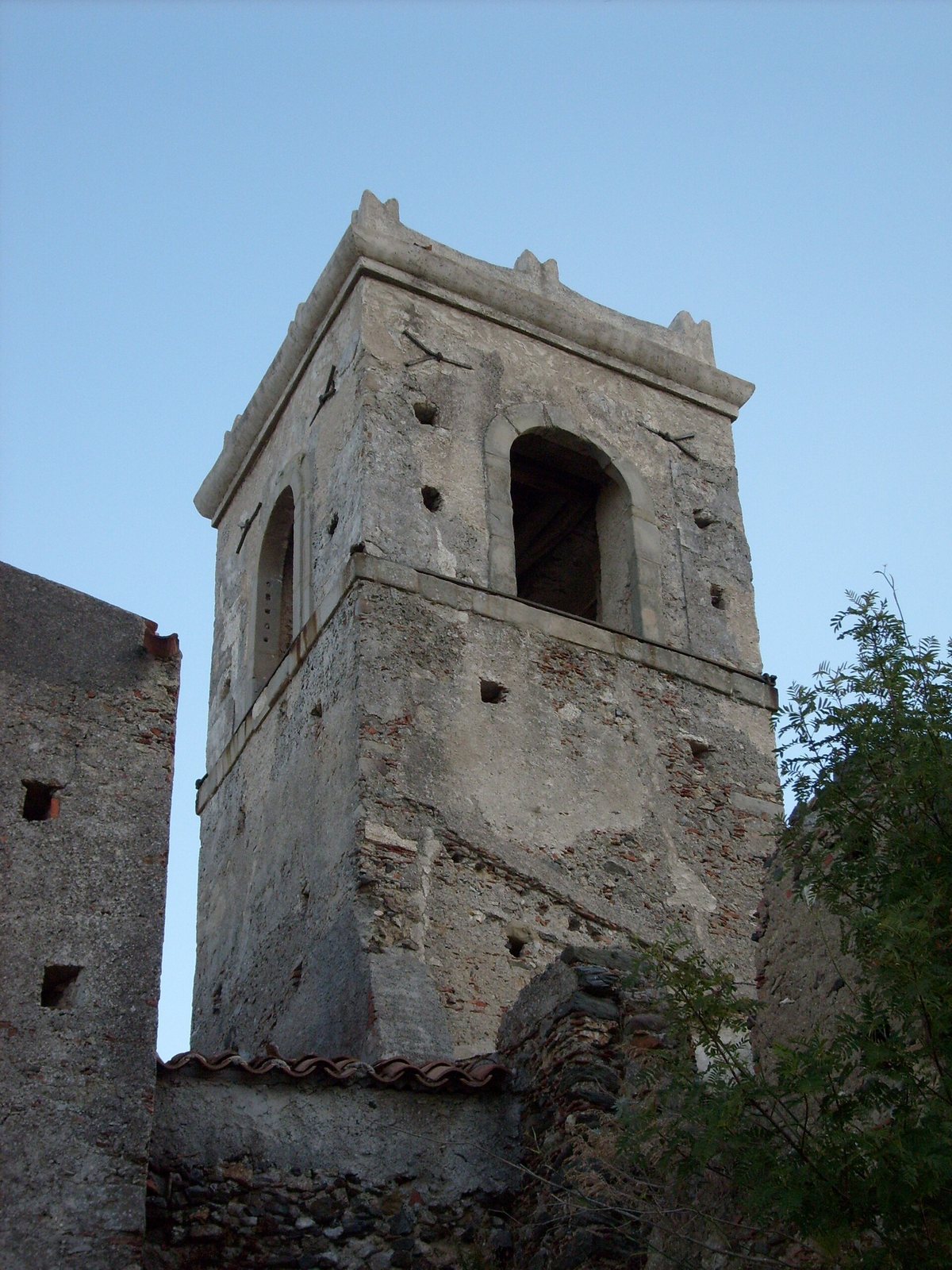
The church’s plan is organized around one main hall. Its roof rests on a timber framework, and a wooden ceiling covers the interior. The building also has a bell tower and seven steps.
Plan and medieval portals
Two Siculo-Chiaramontan Gothic portals were added during the enlargement around 1420. Together, they form the only example in eastern Sicily of work by artists from Picardy.
Baroque decoration and furnishings
The interior includes two wall paintings dated 1701. The larger depicts the Baptism of Jesus in the Jordan River; the smaller shows the Madonna of the Letter, a title of the Virgin Mary traditionally associated with Messina. Two other paintings from the same year depict Saint Michael and Saints Cosmas and Damian, Christian physician-martyrs. Three Baroque altars are dedicated to Saints Cosmas and Damian, Santa Maria dell’Idria, and Saint John. An eighteenth-century wooden pulpit also survives.
Tombs and memorial plaque
The church contains tombs of local notables, including the Crisafulli tomb, made in 1581, and the tomb of the family of Onofrio Cicala, dated 1749. A plaque in the small square before the church commemorates children who died without baptism and were buried there.