San Nicolò: A Catholic Church in Savoca, Italy
Site at a Glance
- Popularity
- Medium
- Country
- Italy
- Primary era
- Early Modern
- Eras represented
- Medieval, Early Modern
- Civilizations
- Kingdom of Sicily
- Site type
- Religious
- Remains
- Church
On this page15 sections
History
San Nicolò is a Catholic church in Savoca, Italy, built in the thirteenth century over the foundations of a ninth-century basilica. It belongs to the Archdiocese of Messina-Lipari-Santa Lucia del Mela, a major Catholic district led by an archbishop.
Parish and civic life
A document from 1308 records Greek chaplains celebrating the Divine Liturgy here, the principal Eucharistic service in Eastern Christian traditions. San Nicolò remained Savoca’s parish church until the end of the nineteenth century. Its parish jurisdiction also covered small chapels in the area then called Marina di Savoca, a name used until 1854.
The church served civic as well as religious purposes. In 1676, Savoca’s jurats, or municipal officials, and its mayor were elected inside the building each year on the last Sunday of August. Worship here also included devotions to Saint Barbara and Saint Agatha, both Christian martyrs.
Restoration and later change
Tradition has linked a major restoration in the late fifteenth century first to Cardinal Bessarion’s regency from 1456 to 1465, and later to Savocan architect Pietro Trimarchi, who lived from 1465 to 1534. Neither attribution is supported by reliable evidence. A further major restoration followed the 1693 earthquake. The work, undertaken in the early eighteenth century, substantially changed the church’s earlier appearance.
The church’s furnishings grew through the transfer of works from other religious buildings in Savoca. A landslide in 1880 destroyed the fifteenth-century Church of Santa Lucia and its attached convent of the Dominican order, a Catholic religious community founded in the thirteenth century. Works from those buildings came to San Nicolò. The seventeenth-century Church of the Immaculate Conception, now a philharmonic center, also supplied artworks after falling into ruin.
Modern repairs
The 1908 earthquake damaged San Nicolò and led to another restoration. Weather events in 2018 and autumn 2021 damaged the roof, and the church remained closed for several years. The roof was later reconstructed and the interiors restored.
Remains
Church and grounds
Main church
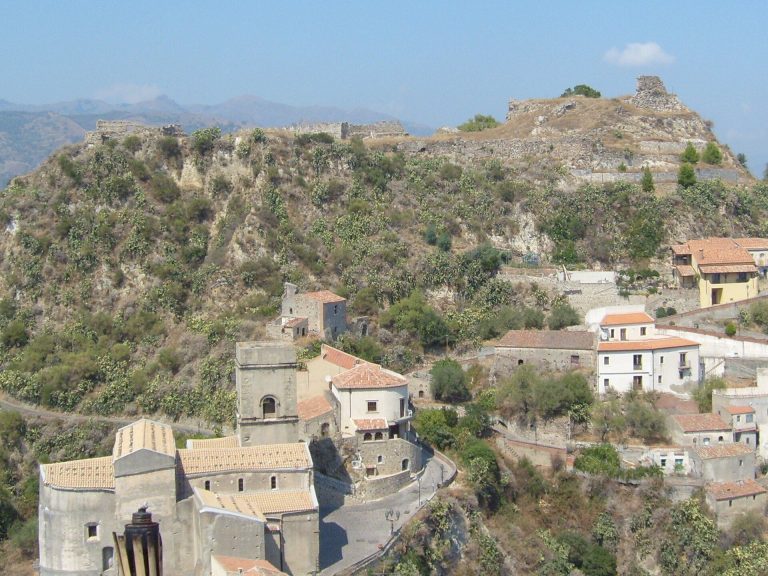
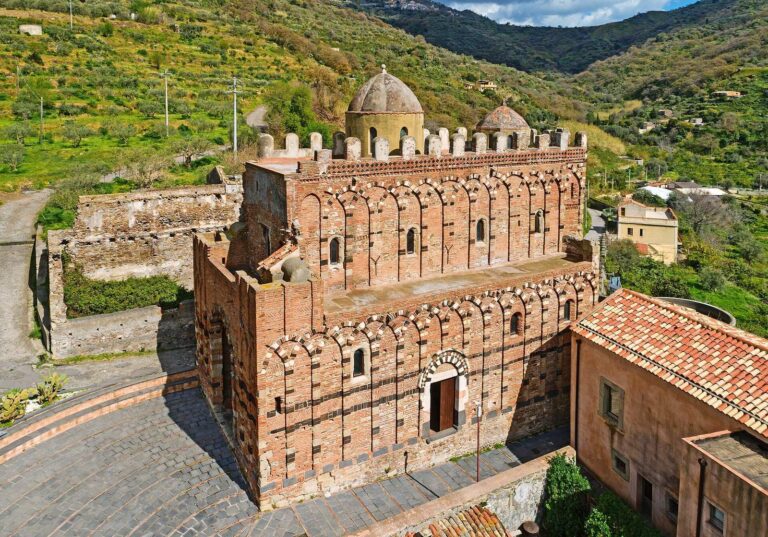
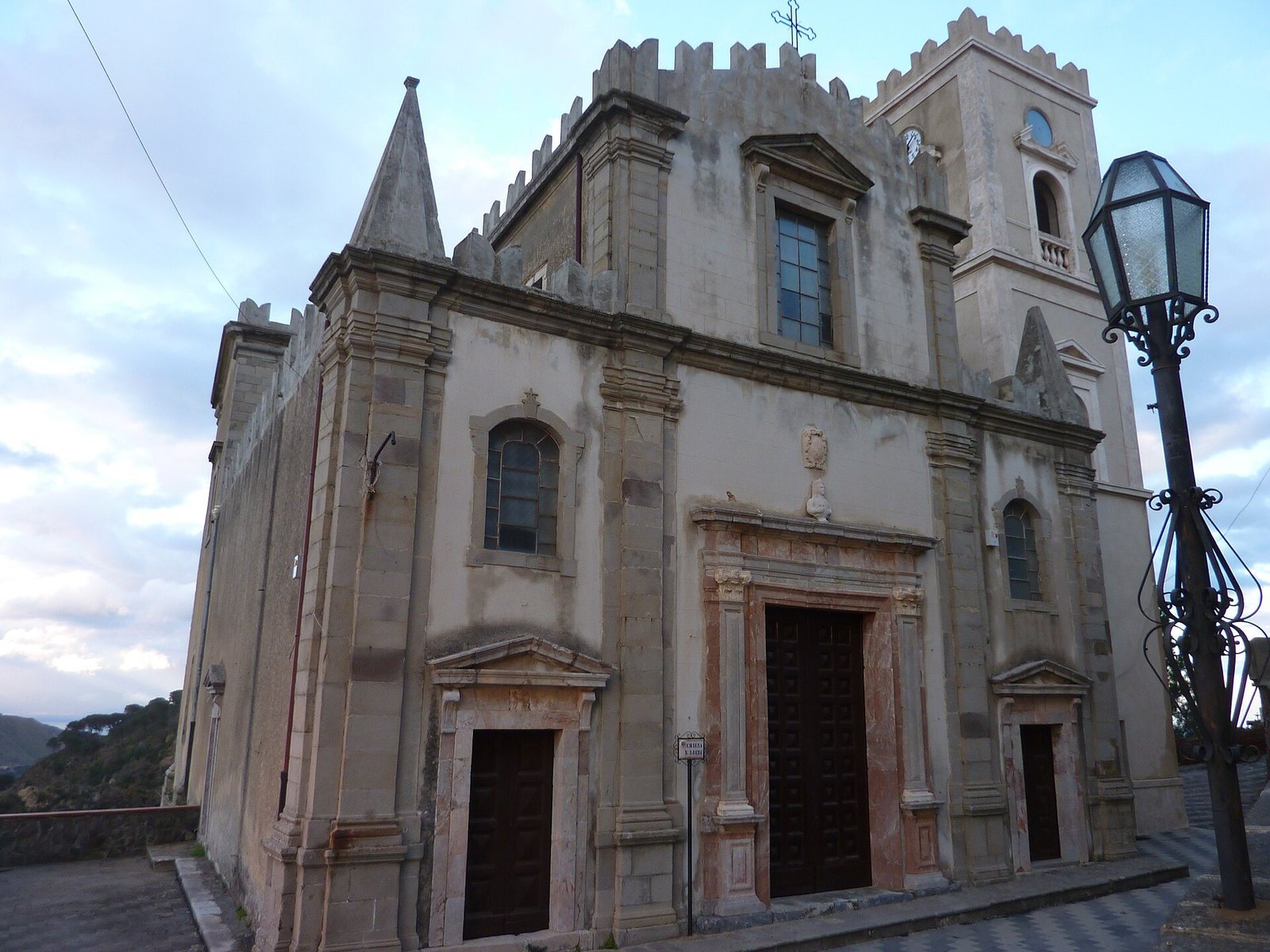
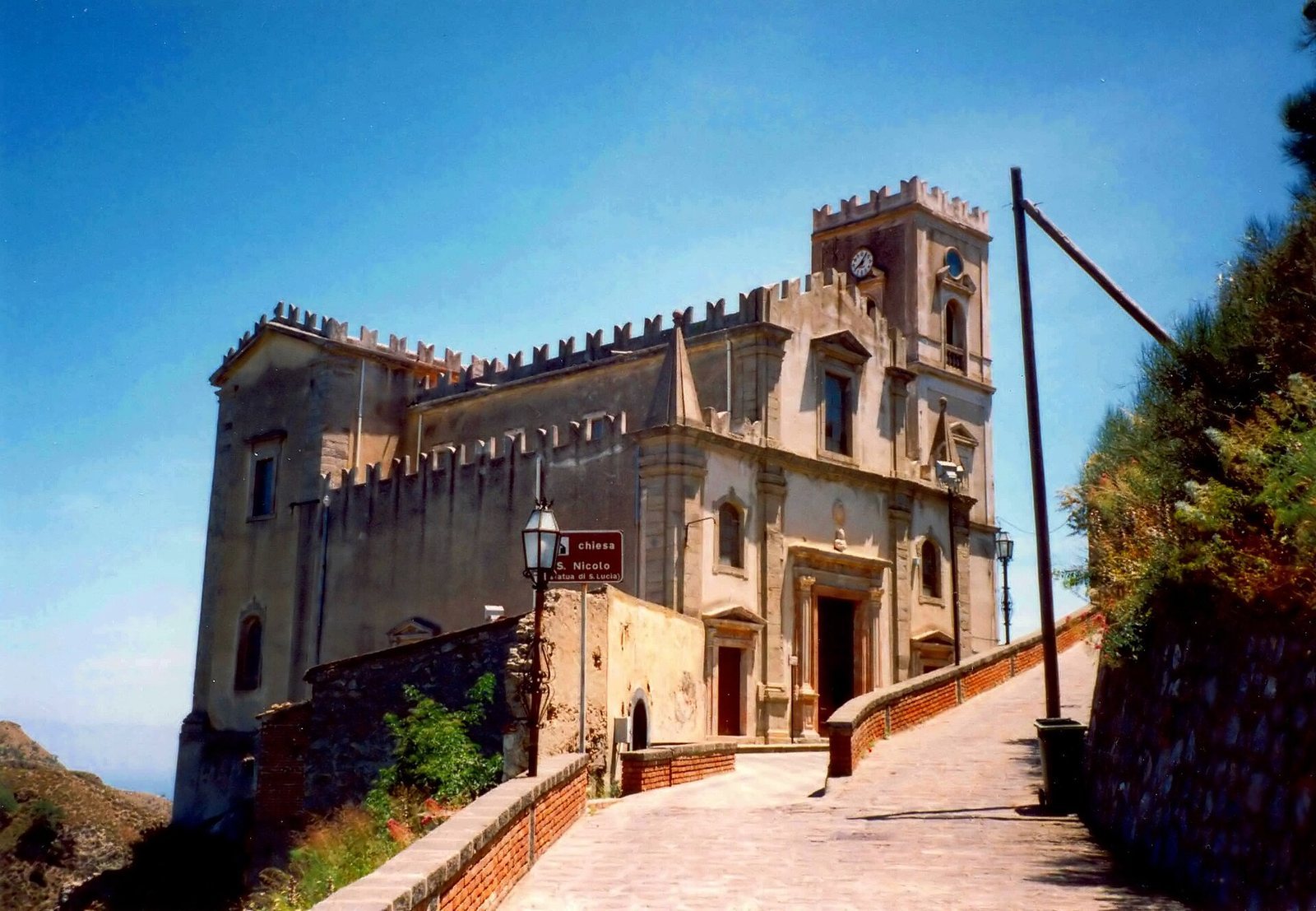
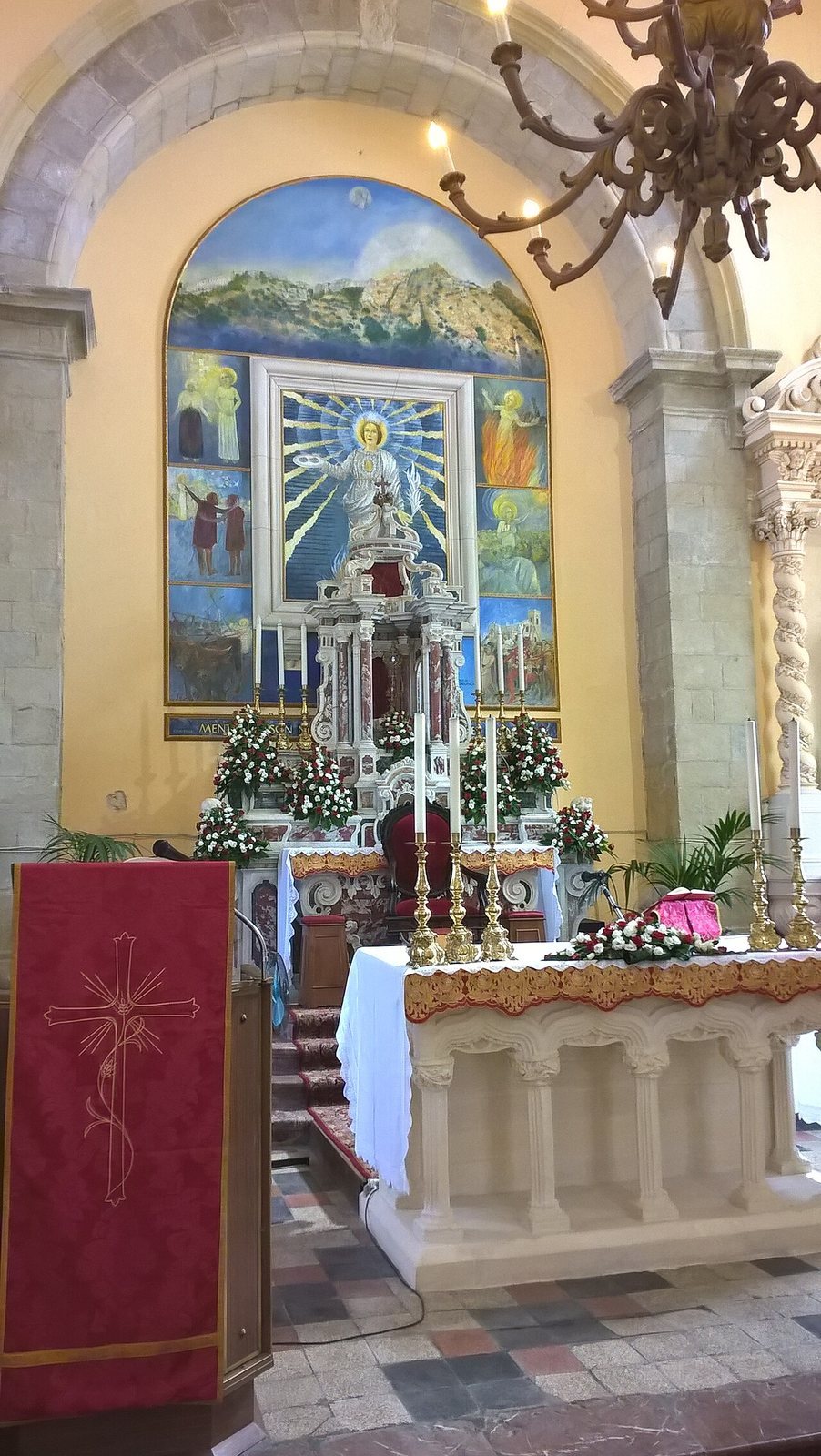
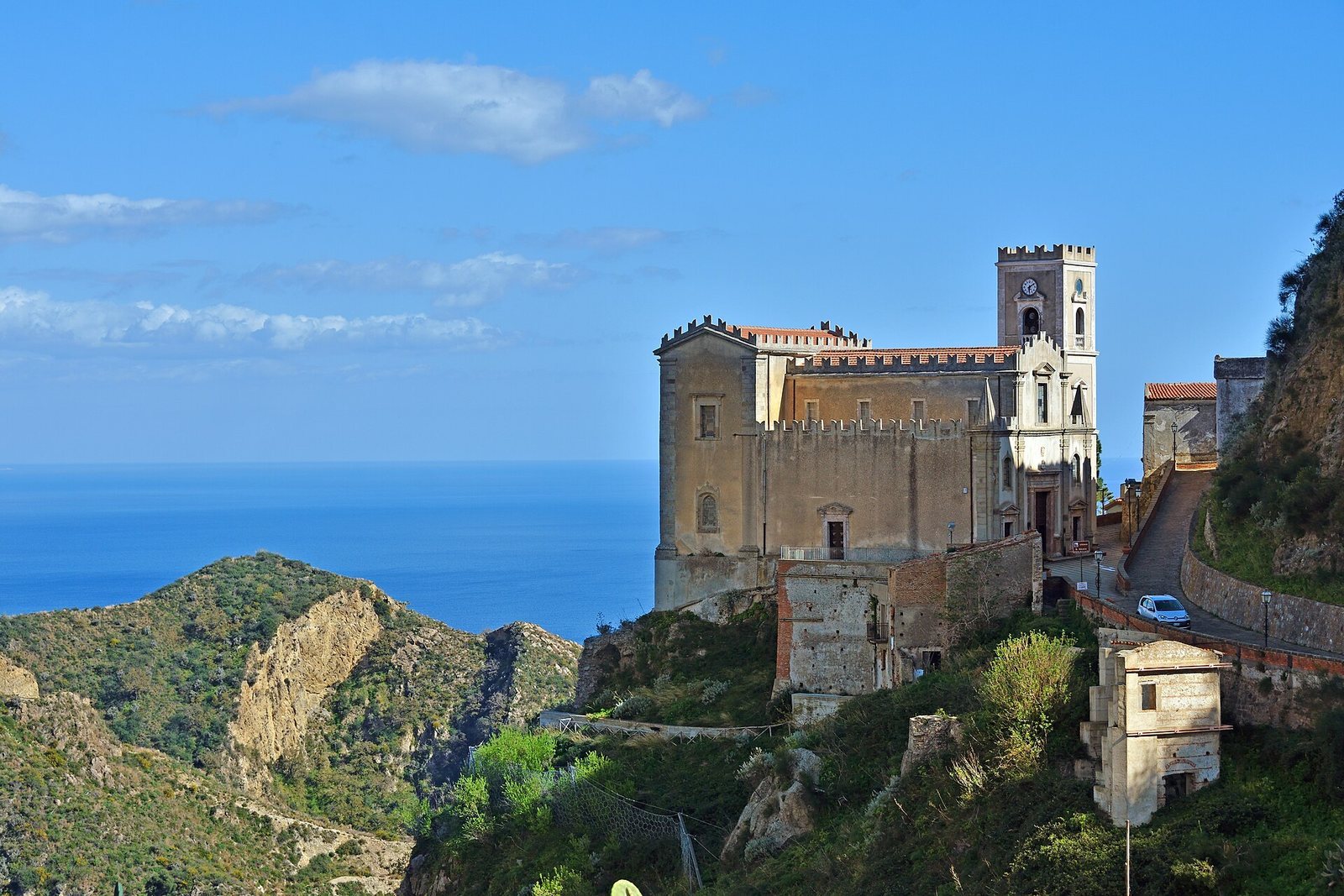
The church projects toward a deep ravine, and its crenellated outline has a fortress-like appearance. Inside, a three-aisled layout has a central nave flanked by two side aisles. Granite columns with capitals and altars of valuable marble form part of the building’s present eighteenth-century character. Bases from the ninth-century basilica remain beneath the pillars. The thirteenth-century interiors were richly decorated with Sicilian-Norman-style frescoes.
Bell tower
A bell tower stands to the right of the church and is topped by a clock. It was restored in 1981.
Burial remains
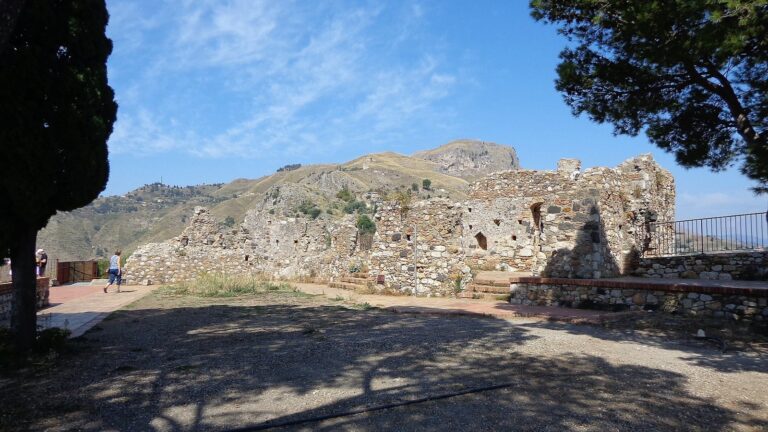
From the fourteenth through the nineteenth century, people from Savoca’s popular classes were buried outside the church, in the front and side areas of its churchyard. Burial crypts, or underground chambers, and ossuaries, repositories for human bones, lie beneath the paving of the square in front of the church and the smaller square around it. They contain the remains of hundreds of people who lived and died between the fourteenth and nineteenth centuries. Fragments of a neighboring crypt, an underground burial chamber that collapsed in a landslide around 1943, remain visible beside the church.
Paintings, sculpture, and metalwork
Medieval images
A fourteenth-century panel painting depicts Saint Michael the Archangel. Local legend says Savocans took it from the people of Forza d’Agrò toward the end of the fifteenth century. It remained in Savoca’s Church of Saint Michael until the twentieth century. Above San Nicolò’s central doorway, a small fifteenth-century marble bust of Saint Lucy occupies the middle of the horizontal stone beam across the façade.
Canvases and painted panels
Gaspare Camarda painted the large canvas of the Madonna of Childbirth in 1623 for the Trischitta family. The image presents Mary in her association with childbirth; the canvas measures 366 by 242. It originally hung in the Church of the Immaculate Conception and was moved to San Nicolò during the twentieth century after that church fell into ruin. The church also holds wooden paintings of biblical episodes by Licinio Fazio. Canvases by German artist Siegmund Wagner depicting Saint Lucy and her martyrdom were removed during restoration work in 2025–2026.
Wooden statues
A wooden statue of Saint Vincent Ferrer, a Dominican preacher and saint, was made in the second half of the eighteenth century by Filippo Quattrocchi of Gangi. It came from the Dominican convent. Quattrocchi also carved the statue of Our Lady of Mount Carmel, a title of Mary associated with the Carmelite religious order. Other eighteenth-century wooden statues depict Saint Anthony Abbot, associated with early Christian monasticism, and Saint Michael the Archangel. A wooden statue of Saint Lucy was made by Reginaldo D’Agostino.
Silver image of Saint Lucy
An unidentified silversmith from Messina made a silver image of Saint Lucy of Syracuse in 1666. A confraternity, a Catholic association devoted to shared religious observances, commissioned the work. Its decoration was formed by working designs into the silver in relief.
Stations of the Cross
Terracotta reproductions of the Stations of the Cross were made by Savocan artist Carmelo Salemi Scarcella, who lived from 1937 to 2019.