Church of Saint Michael the Archangel in Miłoradz: A Gothic Parish Church
Site at a Glance
- Popularity
- Very Low
- Country
- Poland
- Primary era
- Medieval
- Eras represented
- Medieval, Early Modern, Modern
- Civilizations
- Kingdom of Prussia, Teutonic Order
- Site type
- Religious
- Remains
- Church
On this page13 sections
History
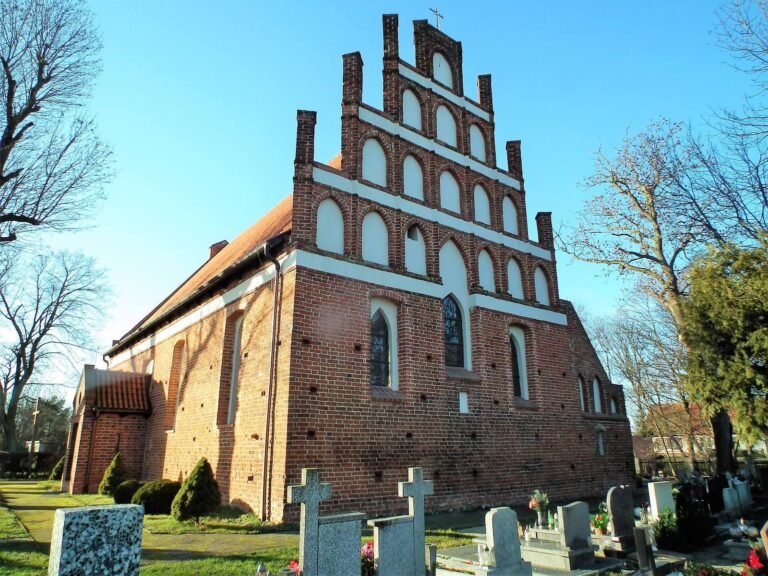
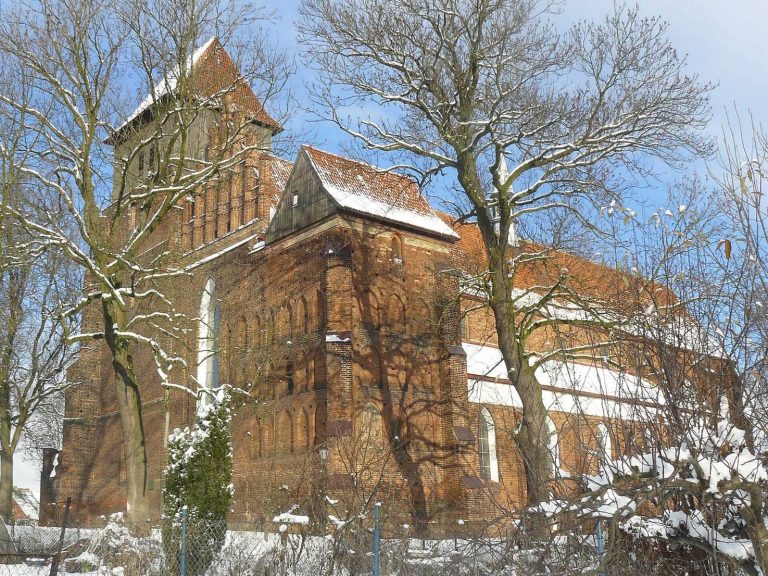
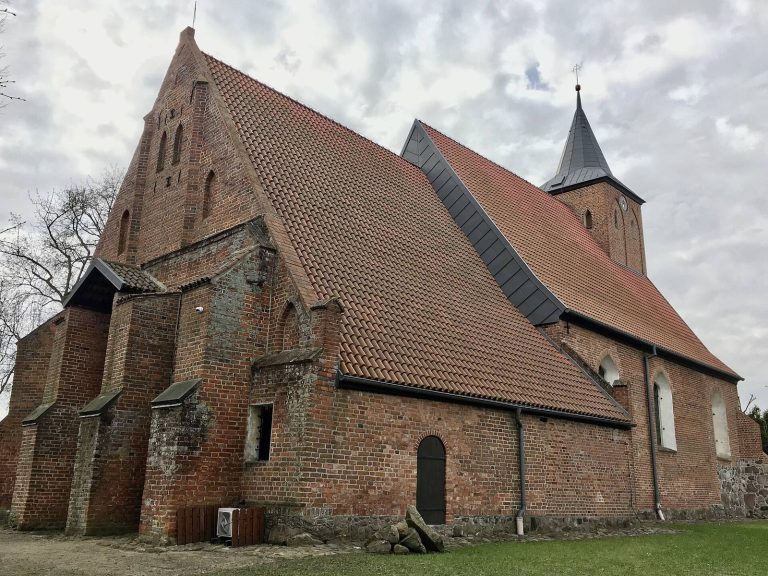
The Church of Saint Michael the Archangel in Miłoradz is a fourteenth-century Roman Catholic parish church in Poland, built in the Gothic style, a medieval European architectural tradition. It is dedicated to Saint Michael, an archangel in Christian belief, and belongs to the parish of the same name. The parish is part of the Malbork II deanery, a grouping of parishes within the Diocese of Elbląg, a territory under a bishop’s authority.
Nineteenth-century changes
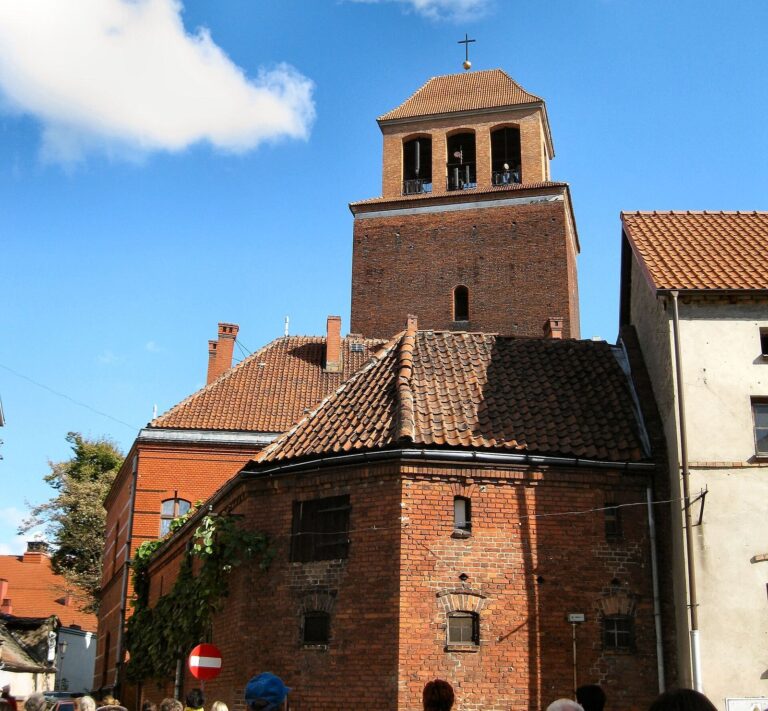
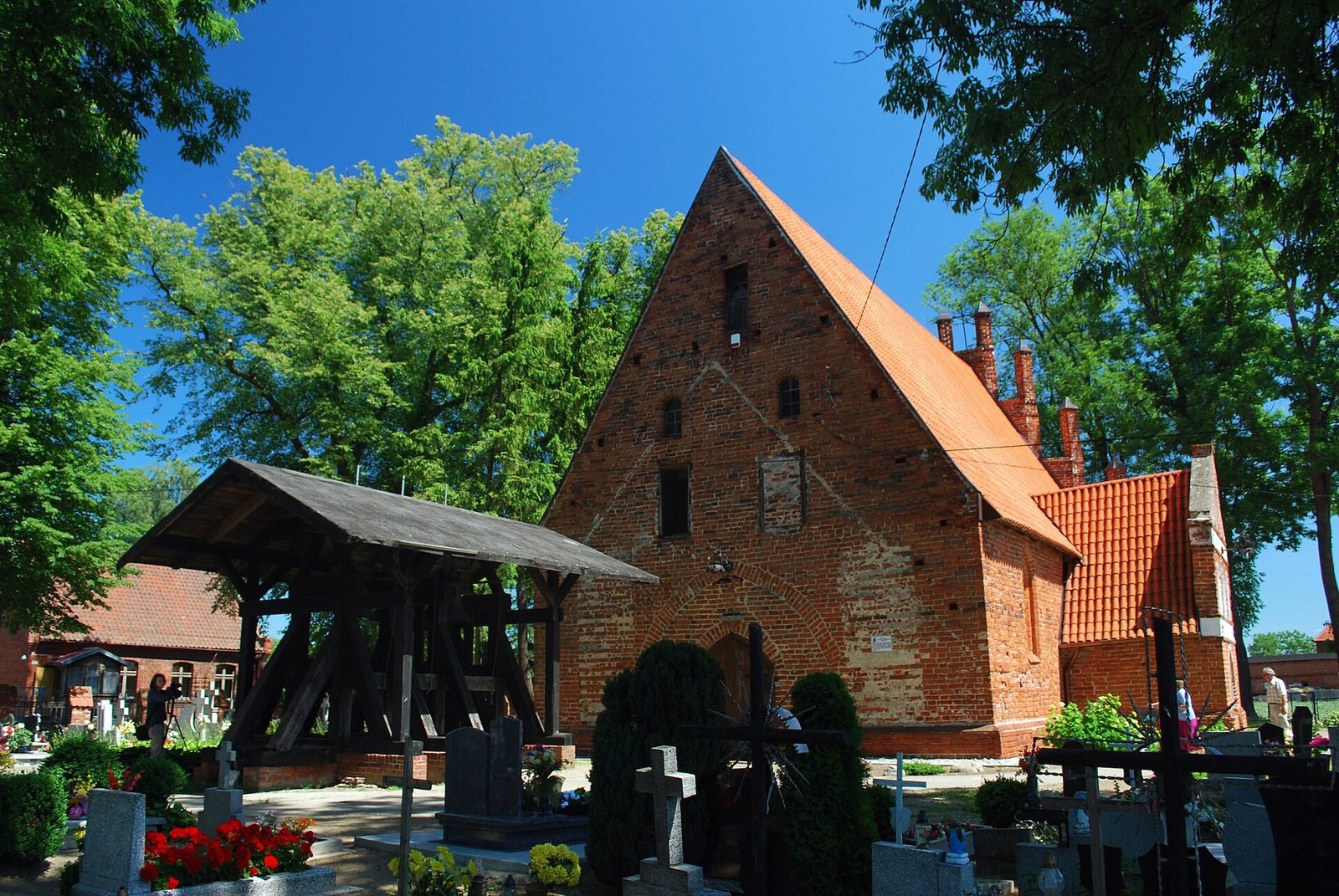
A structural disaster in 1818 caused the church tower to collapse. Nineteenth-century work rebuilt parts of the church, and a separate bell tower was erected in 1863. That tower was rebuilt in 1885.
Remains
Church structure and ceiling
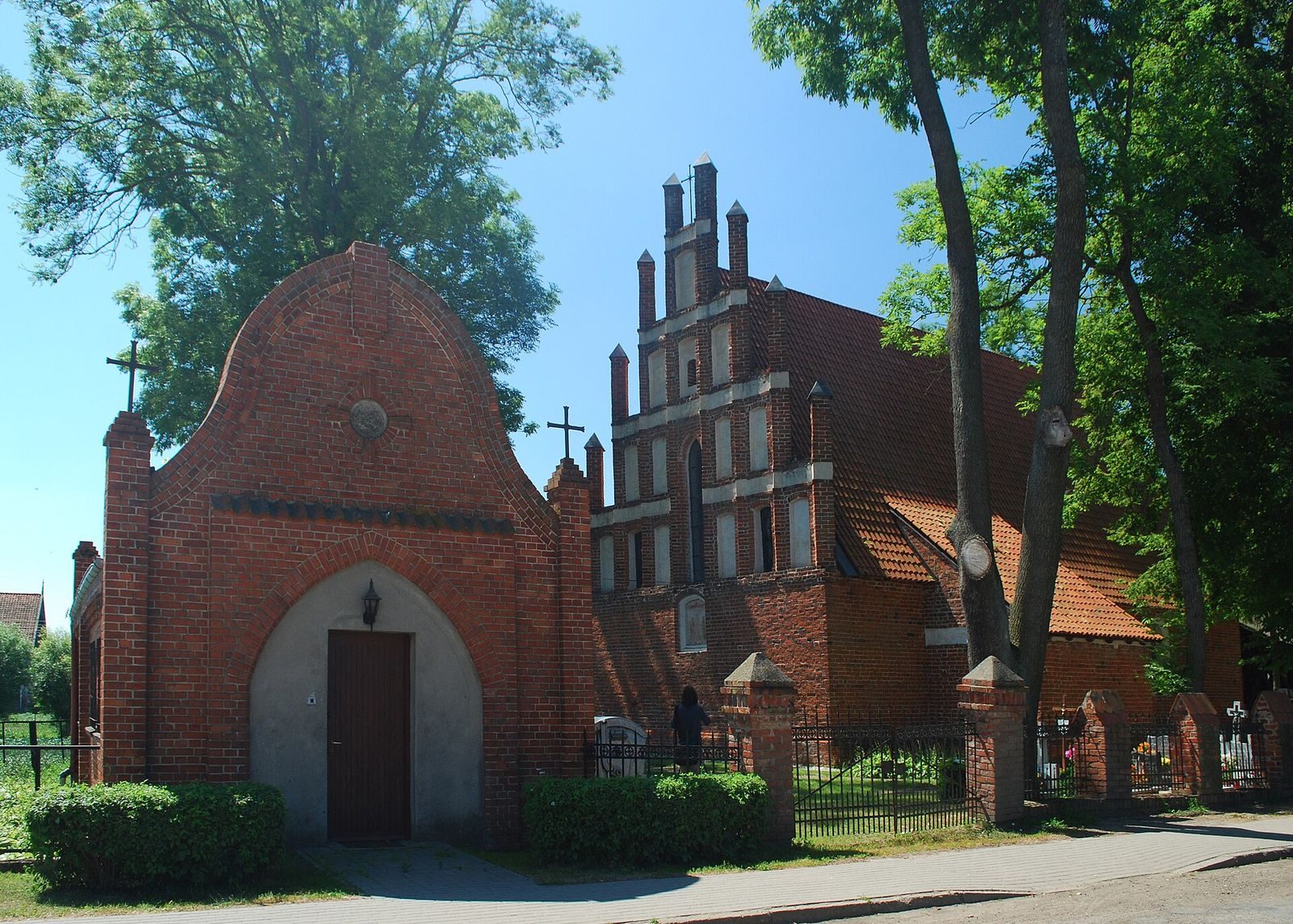
The church is a single-nave brick building, with one principal lengthwise space, and has three altars. Its medieval Gothic structure contains later Baroque furnishings, an ornate European style, and Rococo decoration, a highly decorative style associated with the eighteenth century. Traces of the former tower remain on the west façade. During nineteenth-century alterations, the upper parts of the nave walls were reconstructed and the eastern gable was enlarged. A wooden barrel ceiling, a continuous curved ceiling like the inside of a barrel, was installed over the nave in 1820. Its painted decoration was repainted in the twentieth century and is an exceptional example of Classicist painting, a style drawing on ancient Greek and Roman forms.
Altars
Main altar
The main altar carries an image of Saint Michael the Archangel and statues of Saints Peter and Casimir. Peter was one of Jesus’s apostles, while Casimir was a fifteenth-century prince of Poland and Lithuania venerated as a saint. The altar’s upper tier depicts the Baptism of Christ.
North-side altar
The altar on the north side of the nave centres on an image of Christ crucified. Above it is a depiction of the martyrdom of Saint Sebastian, an early Christian martyr, while Saint Mary Magdalene, a follower of Jesus, appears in the uppermost section.
South-side altar
The south-side altar shows Mary and the infant Jesus presenting a rosary to Saint Dominic, founder of the Dominican Order. Above this scene is an Ecce Homo image, showing Christ presented before his crucifixion.
Interior furnishings and devotional images
Pulpit
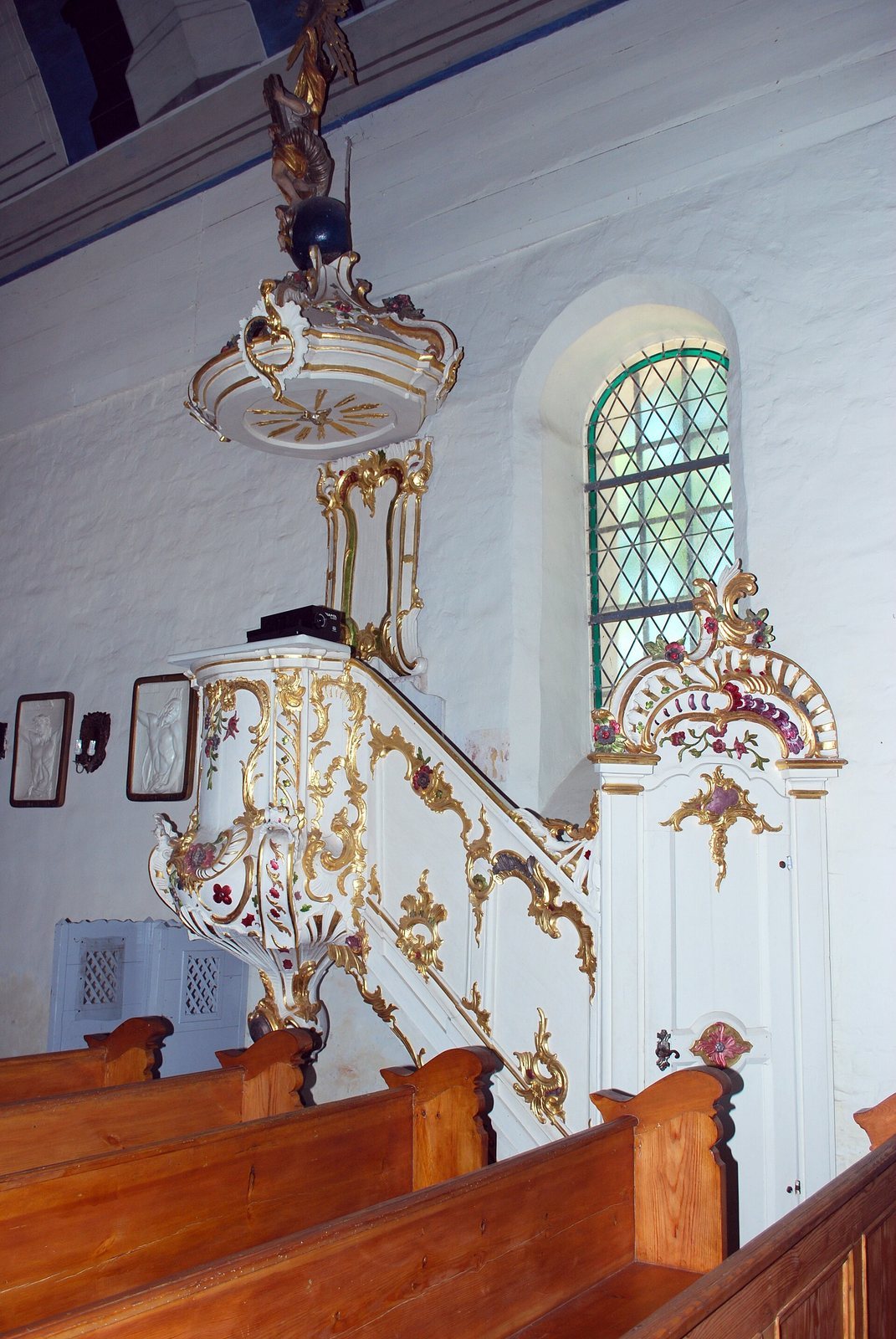
The Rococo pulpit has a richly ornamented canopy topped by an angel holding the tablets of the Ten Commandments.
Processional image
A portable Rococo image made in the second half of the eighteenth century depicts the Immaculate Conception, the Catholic teaching that Mary was conceived without original sin. Mary and the infant Jesus bless the world, while a crown of twelve stars above Mary is associated with the end times.
Organ and choir gallery
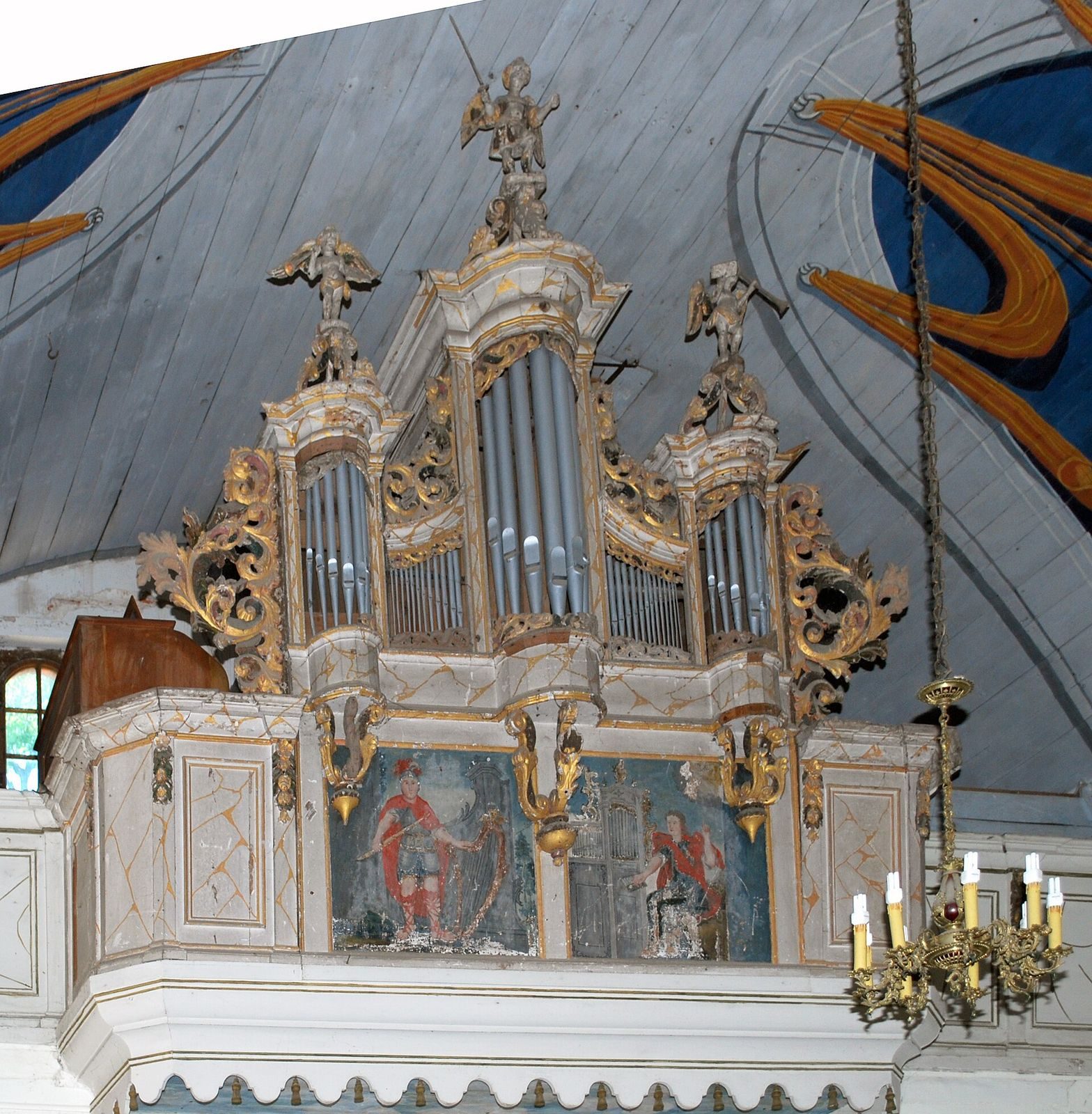
The Baroque organ case dates to the second half of the eighteenth century and is associated with a music-choir gallery. Its parapet depicts King David, a biblical king associated with the Psalms, making music, alongside Saint Cecilia, an early Christian martyr traditionally associated with music. The church’s benches and confessionals also retain late-Baroque features.
Bells
A cracked bell dated to about 1400 stands beside the bell tower. Three other bells, made in 1986 at the Janusz Felczyński foundry in Przemyśl, hang in the tower. From smallest to largest, they are named Saint Adalbert, a medieval missionary bishop and martyr, Saint Michael, and Queen of Poland, a devotional title for Mary.