Poseidon Sanctuary on Pallene: An Ancient Greek Place of Worship
Site at a Glance
- Popularity
- Very Low
- Country
- Greece
- Primary era
- Classical
- Eras represented
- Iron Age, Classical
- Civilizations
- Ancient Greek
- Site type
- Religious
- Remains
- Sanctuary
On this page11 sections
History
The Poseidon sanctuary was a place of worship on a sandy cape on the southwest coast of Pallene, Greece. Its use reaches back to the Sub-Mycenaean period, in the 11th century BCE, although an origin in the Proto-Geometric period of the 10th–9th centuries BCE is also possible. It is regarded as the earliest known sanctuary in northern Greece and among the earliest in Greece, and worship continued there for at least a thousand years.
Early worship and origins
Poseidon was honored at the sanctuary as a god of seafaring and earthquakes, and as a chthonic deity, meaning one associated with the earth or underworld. His protection was important to communities founded in the Pallene area. The sanctuary may have been established by settlers from Eretria, an ancient Greek city on the island of Euboea, where Poseidon was the chief deity.
Classical and Hellenistic periods
The sanctuary reached its peak during the Classical period, the fifth and fourth centuries BCE. At least during this time, it was under the control of Mende, an ancient Greek city-state.
Worship continued into the Hellenistic period, a later phase of ancient Greek history, when a pottery workshop operated at the site. Votive inscriptions name Poseidon and the people who made offerings to him; all the recorded donors were men.
Identification and excavation
The cape retained Poseidon’s name from antiquity. The historian Thucydides referred to the cape near Mende as Poseidonion. In 1989, archaeological tests near substantial building foundations uncovered pottery fragments inscribed with Poseidon’s name and a word meaning “dedicated,” confirming the sanctuary’s location.
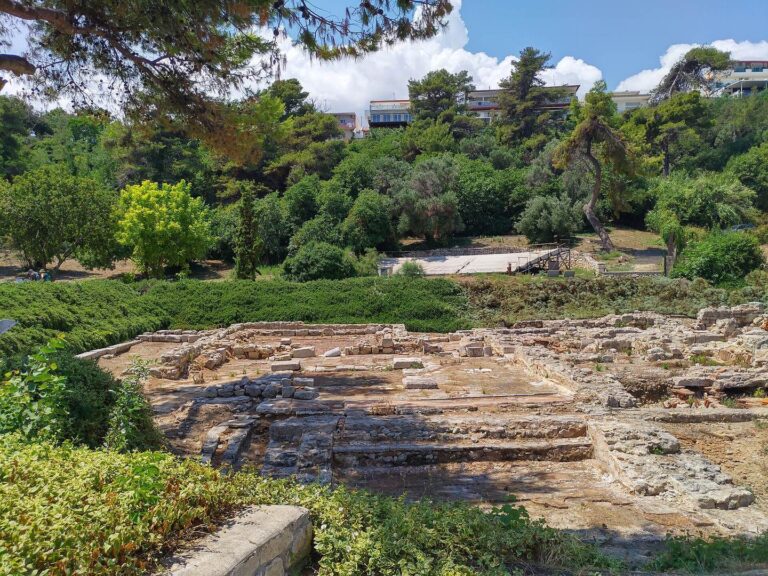
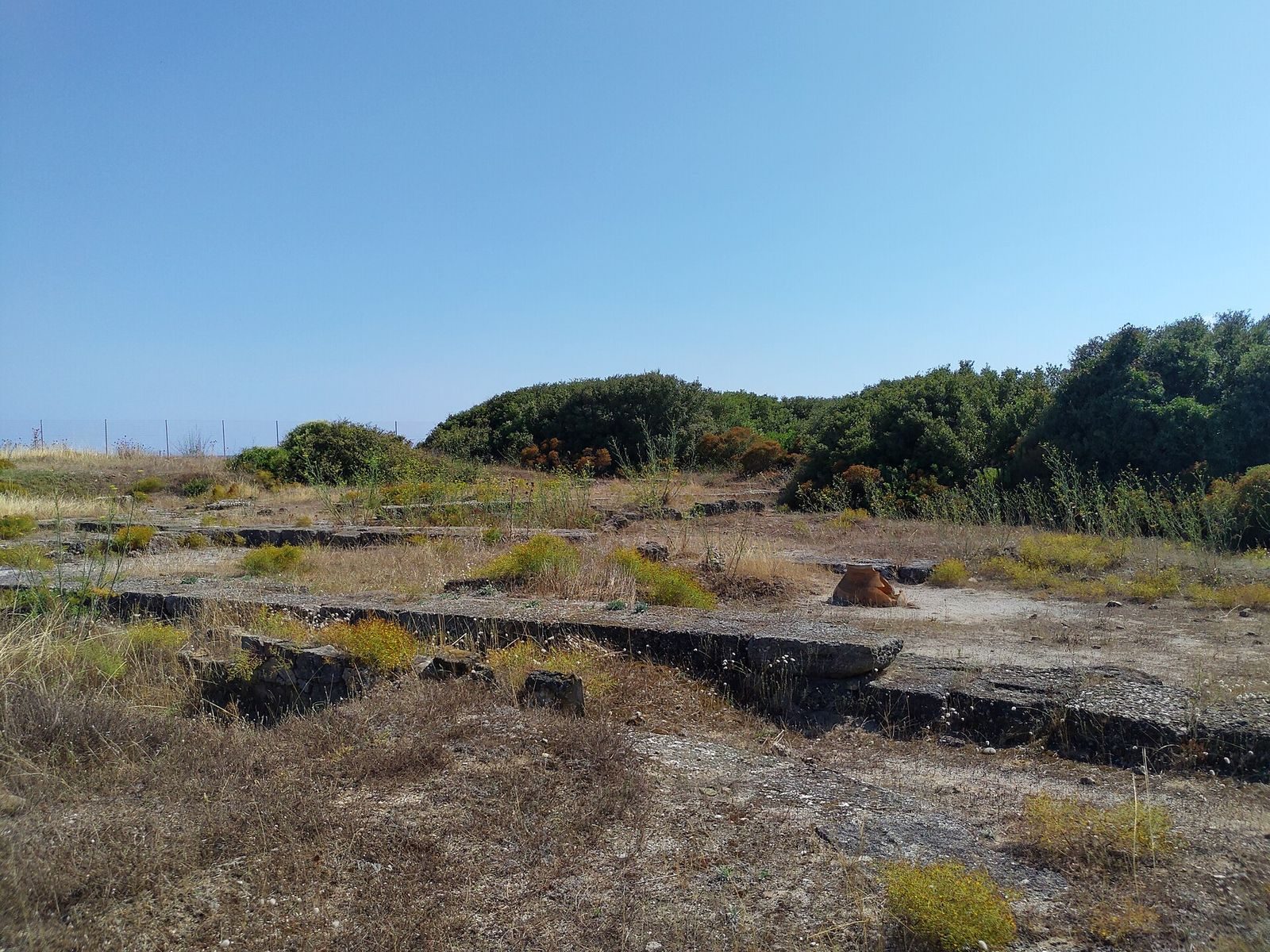
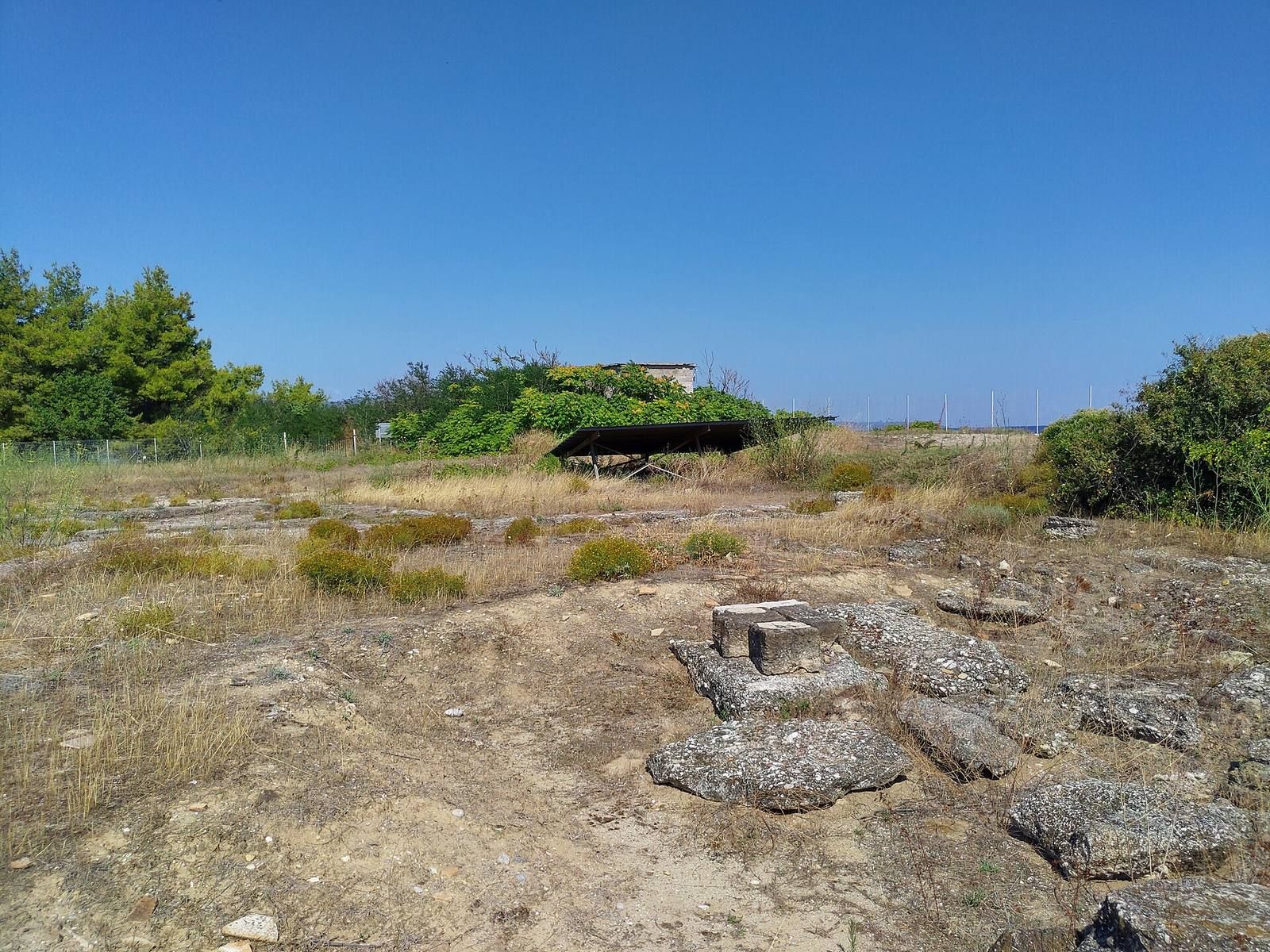
Excavations from 1990 to 1994 revealed the sanctuary’s buildings. In later times, all of them were used as sources of building material.
Remains
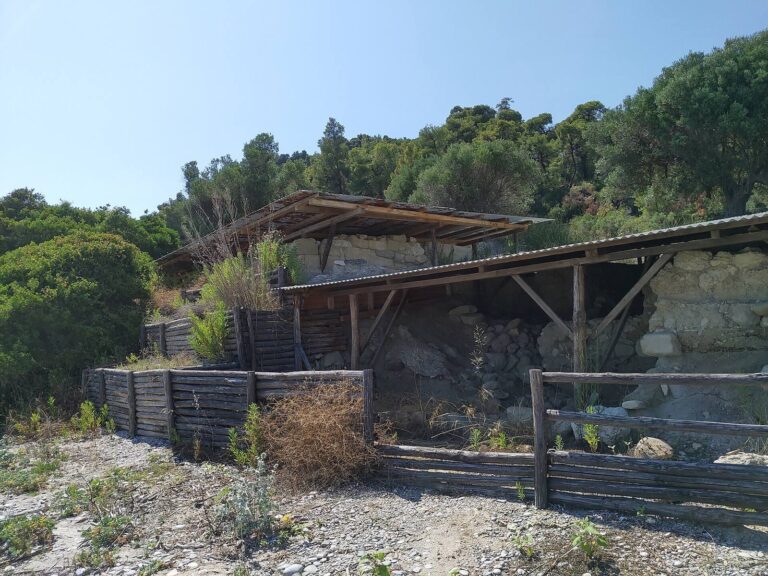
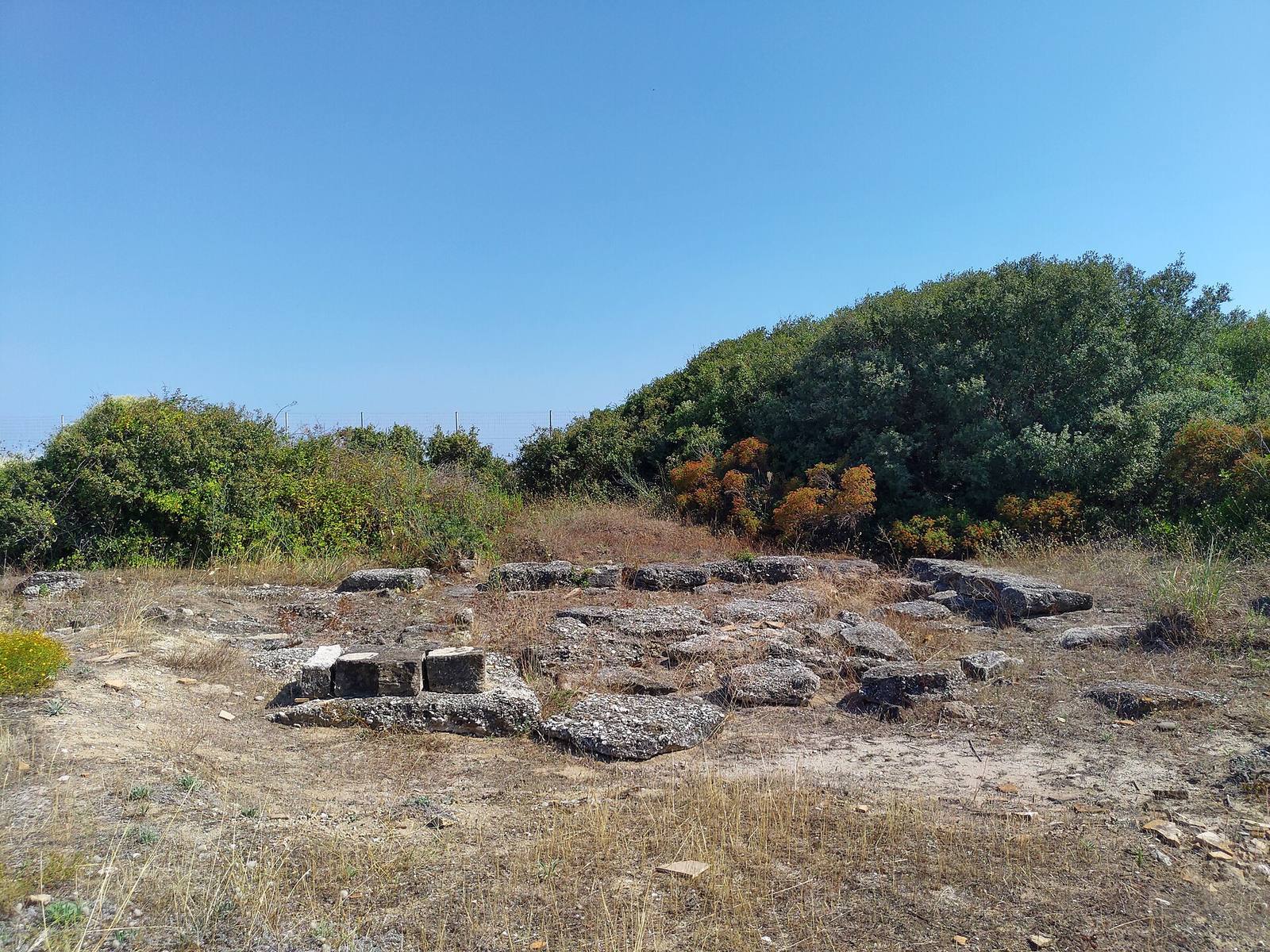
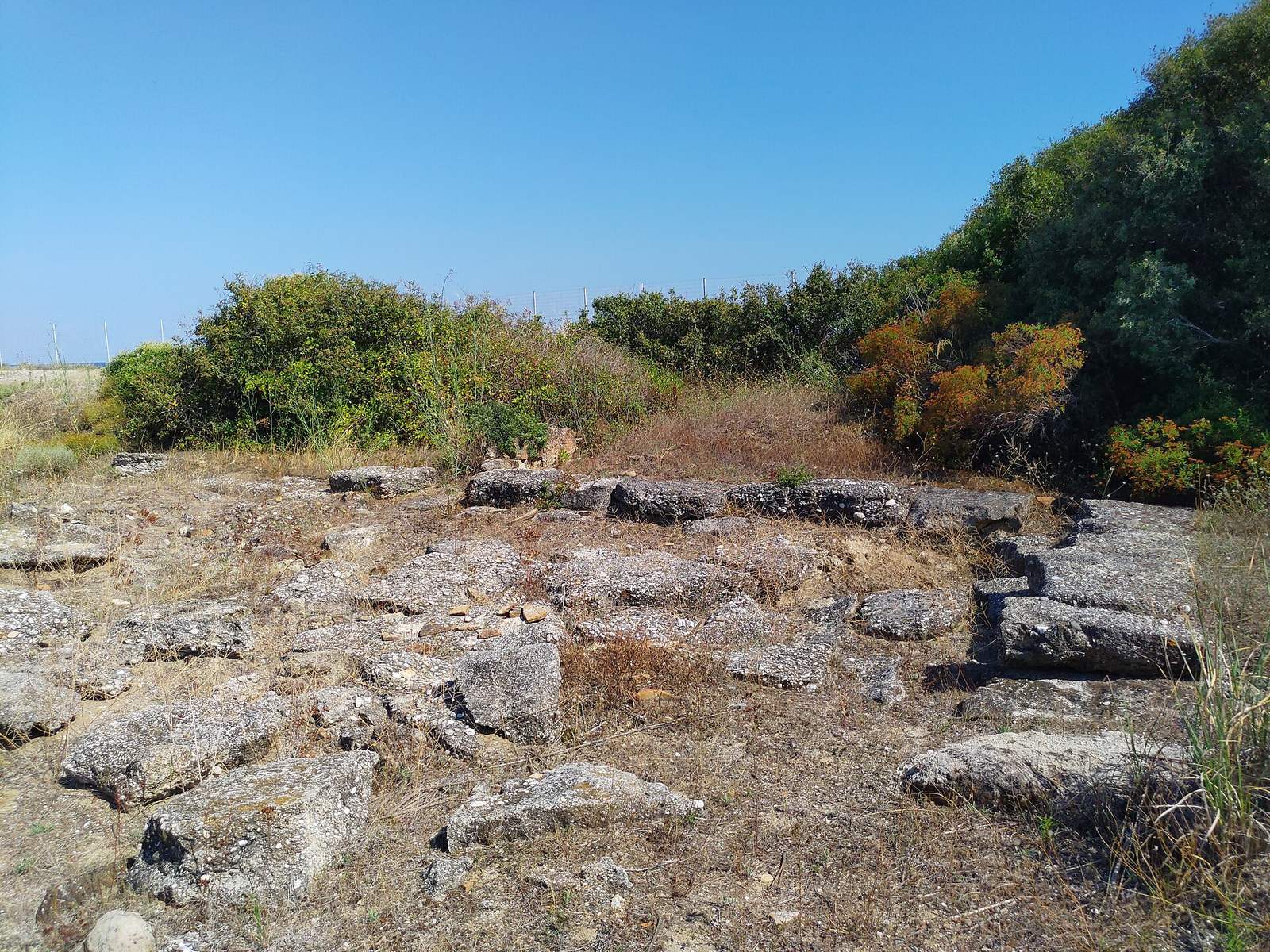
The sanctuary occupied a flat cape projecting into the sea, near the tip of a smaller headland. Its plateau was about 60 metres wide, and later deposits of sand altered the cape’s shape. A lighthouse was built there in 1864. The limited space shaped a close group of four major buildings, some of which adjoined or slightly overlapped. New construction did not always end the use of older structures.
Excavated buildings
Building 6
The oldest structure, building 6, measured 14 by 5.4 metres and had one end shaped as an apse. Its wall foundations were made of unworked stone, and its floor consisted of compacted clay. Numerous remains of sacrifices were found inside. The associated pottery belongs to the Sub-Mycenaean and Proto-Geometric periods, and sacrifices continued in the building into the sixth and fifth centuries BCE.
Building 5
This small, oval sanctuary building dates to about 575–550 BCE and remained in use into the Hellenistic period, through the second century BCE.
Building 3
Dating broadly to the Archaic period, building 3 was a long structure measuring 25 by 7 metres. It followed the northern curve of building 6 and took over its main functions. Large, roughly dressed stones formed its foundations and walls. Sacrifices took place there in the sixth and early fifth centuries BCE. Finds include sacrificial remains, pottery from Attica, Ionian drinking cups, incised figures and inscriptions, and iron knives.
Building 1
This rectangular temple was built around the middle of the fifth century BCE. It measured 23 by 8 metres and stood where sacrifices had been made in the sixth century BCE, joined to the west side of building 3. Its plan included a porch and a long main chamber. Offerings from the fifth and fourth centuries BCE were placed to its west, chiefly Attic black-figure vessels, decorated with figures in dark silhouette against the clay-colored surface. Engraved dedications on these vessels were rare.
Building 2
Building 2 measures 20 by 16 metres and has not been investigated, so its function remains uncertain. Its southeast corner coincided with the southwest part of temple 1.
Many vases from the sanctuary bear votive inscriptions to Poseidon. Finds from the site are held at the Archaeological Museum of Thessaloniki.