Acqua Fredda: A Bronze Age Copper-Smelting Workshop in Italy
Site at a Glance
- Popularity
- Very Low
- Country
- Italy
- Primary era
- Bronze Age
- Eras represented
- Bronze Age
- Civilizations
- Unclassified
- Site type
- Economic
- Remains
- Production Complex
On this page12 sections
History
Acqua Fredda is a prehistoric copper-smelting workshop at Redebus Pass, near Bedollo in Trentino, Italy. Bronze Age communities operated it from about 1300 to 1000 BC, during the Late and Final Bronze Age, the later phases of the prehistoric period when bronze was widely used. The workshop processed locally available copper ores, especially chalcopyrite, a mineral containing copper and iron.
Regional copper production
Copper objects were present in Trentino by the first half of the fourth millennium BC, while evidence for local use of chalcopyrite begins in the third millennium BC. Metal-production workshops are the known evidence for this activity in the region. Copper processing was especially active from the thirteenth through the eleventh centuries BC, placing Acqua Fredda within a broader period of Alpine production.
The precise sequence of work at the furnaces is not fully certain. Ore was probably heated in the open to remove some sulfur, then smelted at about 1,200 °C with air supplied by bellows. Ground quartz helped separate copper from other materials, particularly iron. The process produced slag and a copper-sulfide matte, an intermediate material that could be treated further. Workers crushed and washed coarse slag to recover remaining ore and matte for another smelting.
Communities and exchange
At the workshop’s height of activity in the thirteenth and twelfth centuries BC, communities in Trentino–Alto Adige, Tyrol, and the Engadine shared the Luco-Meluno culture, a Bronze Age cultural tradition. Their social organization has been interpreted as based on kinship, with elites directing mining and metal production. The high elevation of many smelting sites may have provided access to abundant firewood. Forest clearance may also have created grazing areas and helped supply food for seasonal workers.
Trentino copper entered exchange networks extending well beyond local communities. Analysis of lead isotopes, which can help trace the sources of metals, suggests that copper from the southern Central-Eastern Alps was used in weapons, tools, and ingots found across Italy and as far away as Scandinavia and Bulgaria. Frattesina, a settlement and trading centre in the Po delta, was among the buyers. Its trading links also carried Baltic amber and glass beads made in the northern Adriatic region.
Road widening at the pass brought the site to light in 1979. Nine archaeological investigations, completed in 1995, excavated 168 square metres, and geological coring helped examine the large slag deposit in the peatland below.
Remains
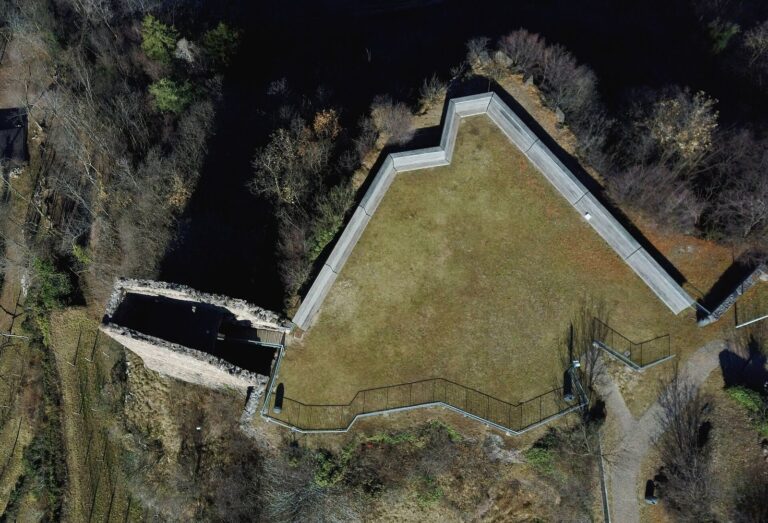
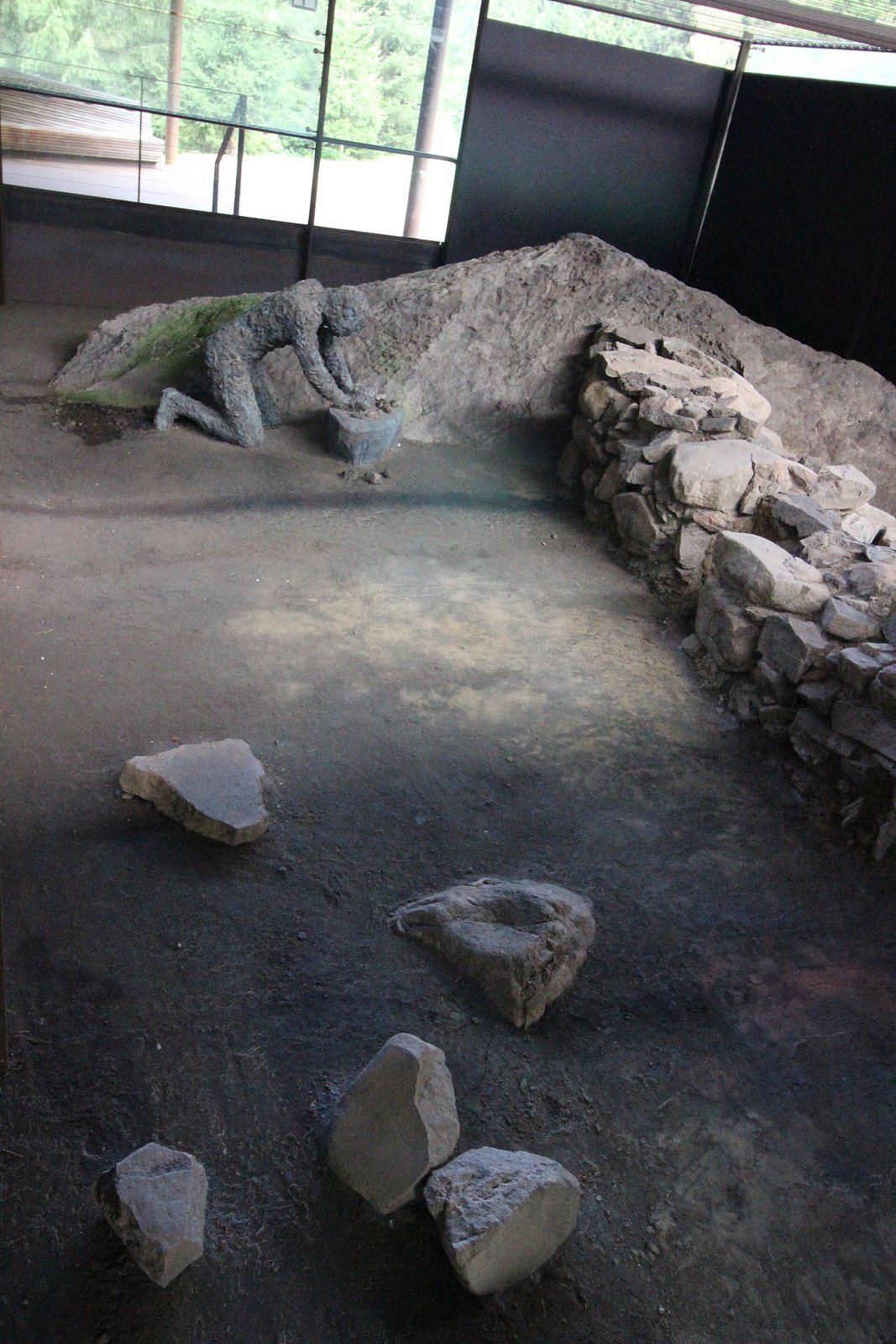
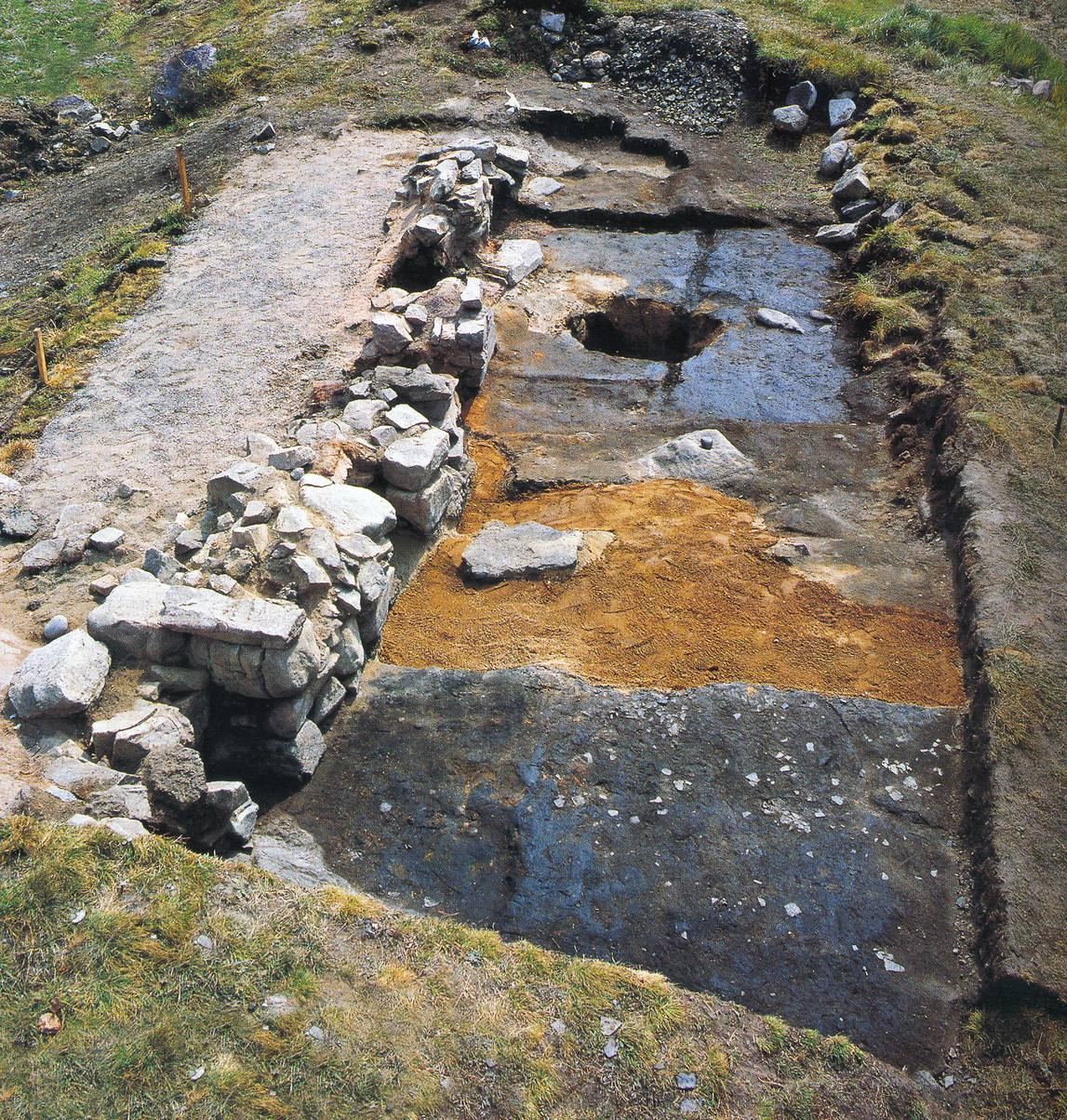
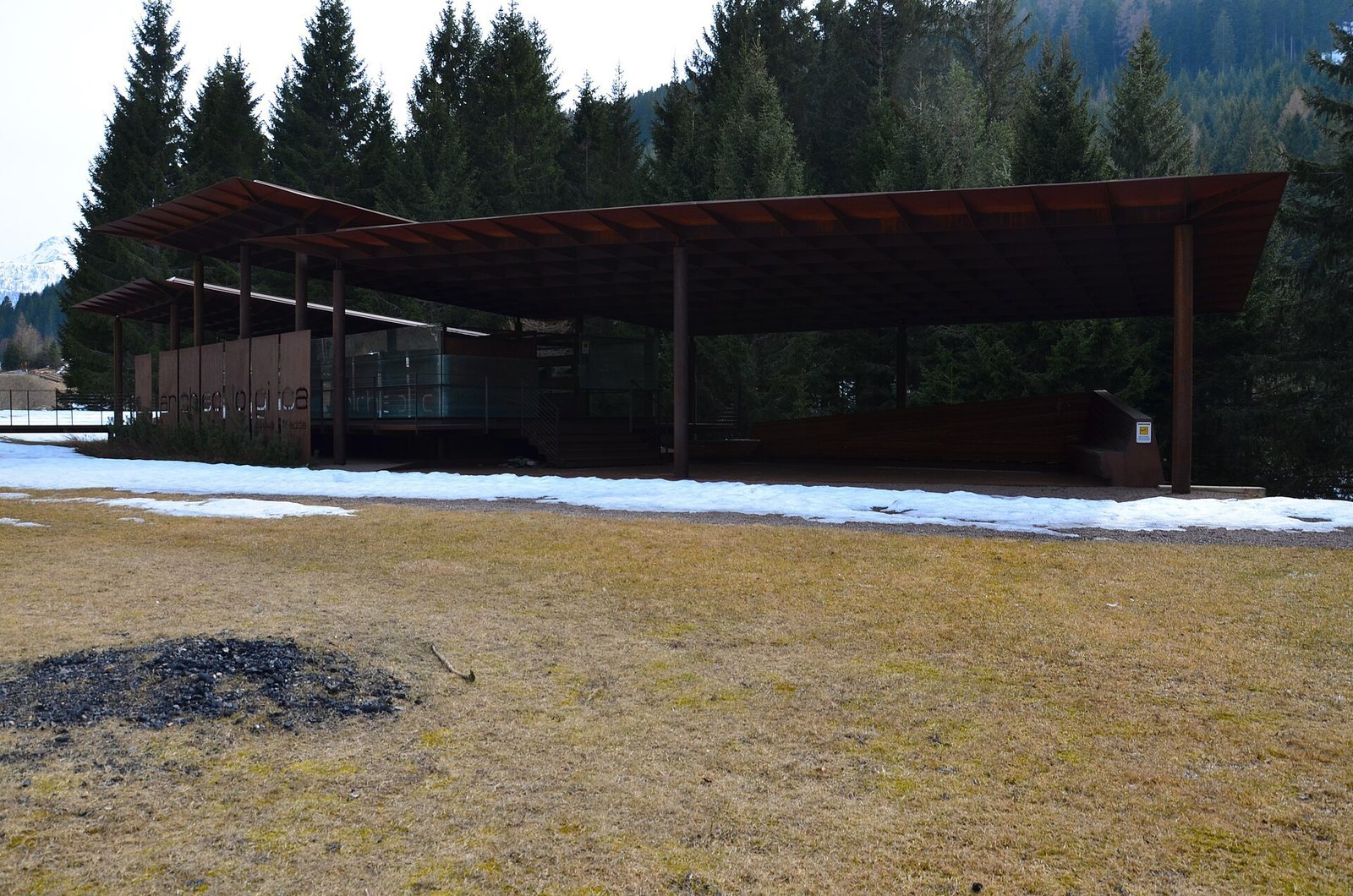
The remains occupy a plateau where furnaces and associated working areas were installed, with a large deposit of smelting waste downstream in the peatland. Evidence distinguishes three successive phases of use. A roofed structure shelters the excavated remains.
Furnace plateau
Main furnace group
Furnaces numbered 3 to 6 form the principal group. They stand within a stone wall built without mortar, which incorporates both stones and coarse slag. The furnace remains are exceptionally well preserved.
Other furnace remains
Nine furnace remains have been identified in total. Three pits, numbered 1, 2, and 9, contain traces of burning and may mark furnaces dismantled during later use. Furnaces 7 and 8 were rectangular structures built of masonry. Evidence of wooden structures was also found in the furnace area.
Walls and hearths
A complex of stone walls has an uncertain purpose. Five hearths were built against it, and traces of wooden structures were also found nearby.
Water channel
A channel belongs to the third phase of use. It was designed to divert water from the nearby Acqua Fredda stream for washing ore and intermediate products.
Production debris and equipment
Tools and structural materials
Finds from near the furnaces include fragments of large ceramic nozzles that directed air from bellows into the furnaces. Wooden posts, beams, and boards may have belonged to roofs or other work structures. Stone grinding tools were used to crush ore or coarse slag that still contained metal.
Slag deposit
Below the smelting area, the Acqua Fredda stream once formed a small marsh, now a peat bog. The slag deposit there covers about 2,200 square metres and consists mainly of crushed coarse slag, often called slag sand. Its deposits reach up to 2 metres thick in places, with an estimated total weight of 800 to 1,000 tonnes.