Nadlymanske Ancient Settlement: A Scythian Fortified Settlement in Ukraine
Site at a Glance
- Popularity
- Very Low
- Country
- Ukraine
- Primary era
- Classical
- Eras represented
- Iron Age, Classical
- Civilizations
- Scythian, Thracian
- Site type
- Military
- Remains
- Fortified Town
On this page8 sections
History
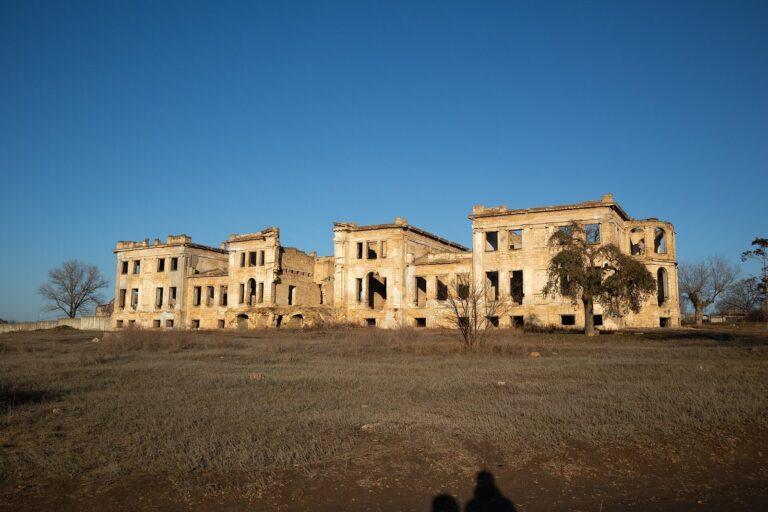
Nadlymanske Ancient Settlement is a Scythian fortified settlement in Ukraine, principally dated to the fourth and third centuries BCE. The archaeological site includes several nearby settlements from different periods, reflecting successive phases of occupation.
Earlier settlements
Nadlymanske III and IV date to the sixth and fifth centuries BCE. Their pottery was about 80 percent Scythian and 20 percent Thracian, linking the communities with ancient peoples of the Eurasian steppe and southeastern Europe. Both settlements declined in the second half of the third century BCE. Coins are extremely rare at Nadlymanske III, suggesting that money may not have circulated there regularly.
Nadlymanske VI and later activity
Nadlymanske VI emerged at about the same time as settlements III and IV, then flourished in the third and second centuries BCE. It may have been established by settled Scythians seeking to sell grain through nearby Nikonion, an ancient settlement on the Dniester estuary. This proposed exchange is associated with the appearance of a polis coin in the early fifth century BCE. A polis was a Greek city-state, and its coin was connected with that city.
Excavations took place in 1957 and 1959, and again during the 1960s, under M. S. Sinitsyn and G. A. Dzis-Raiko. The settlement is designated a heritage monument of national significance in Ukraine.
Remains
Settlement layout and defenses
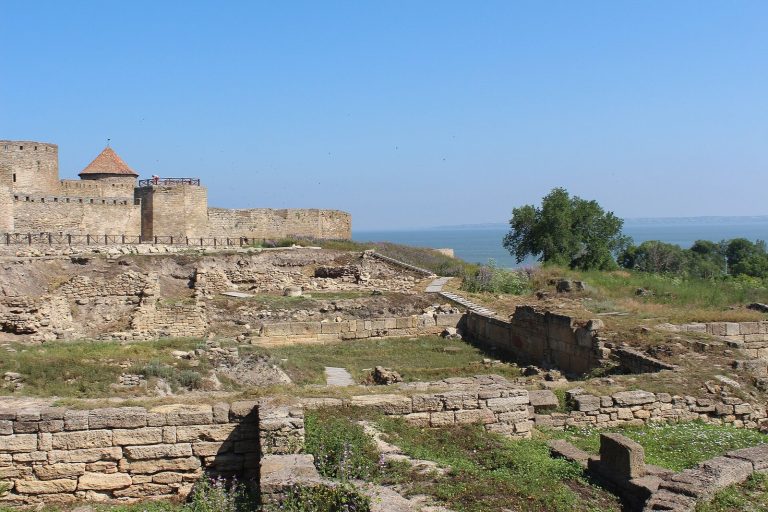
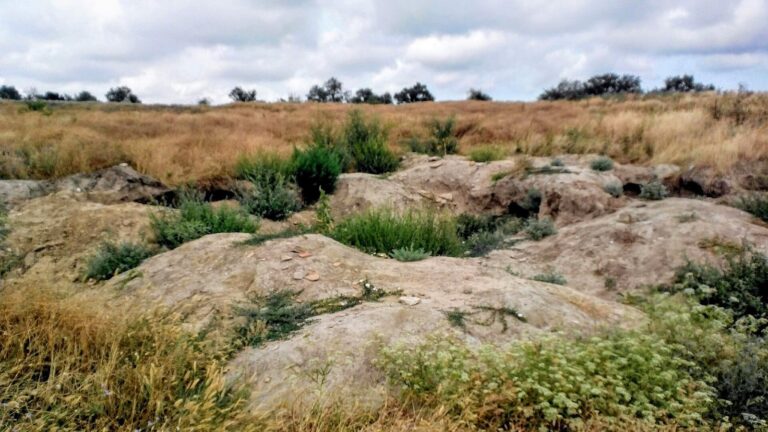
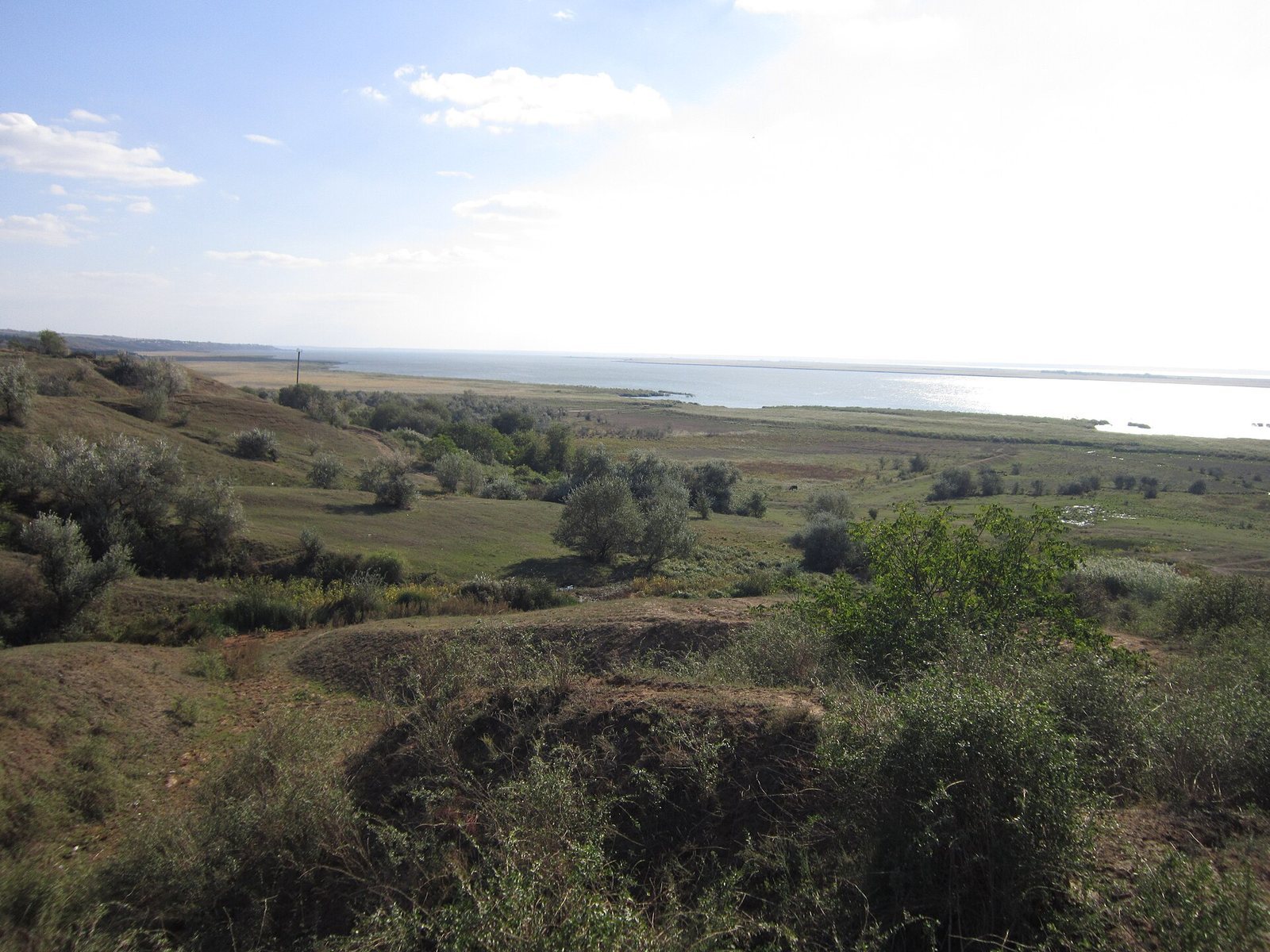
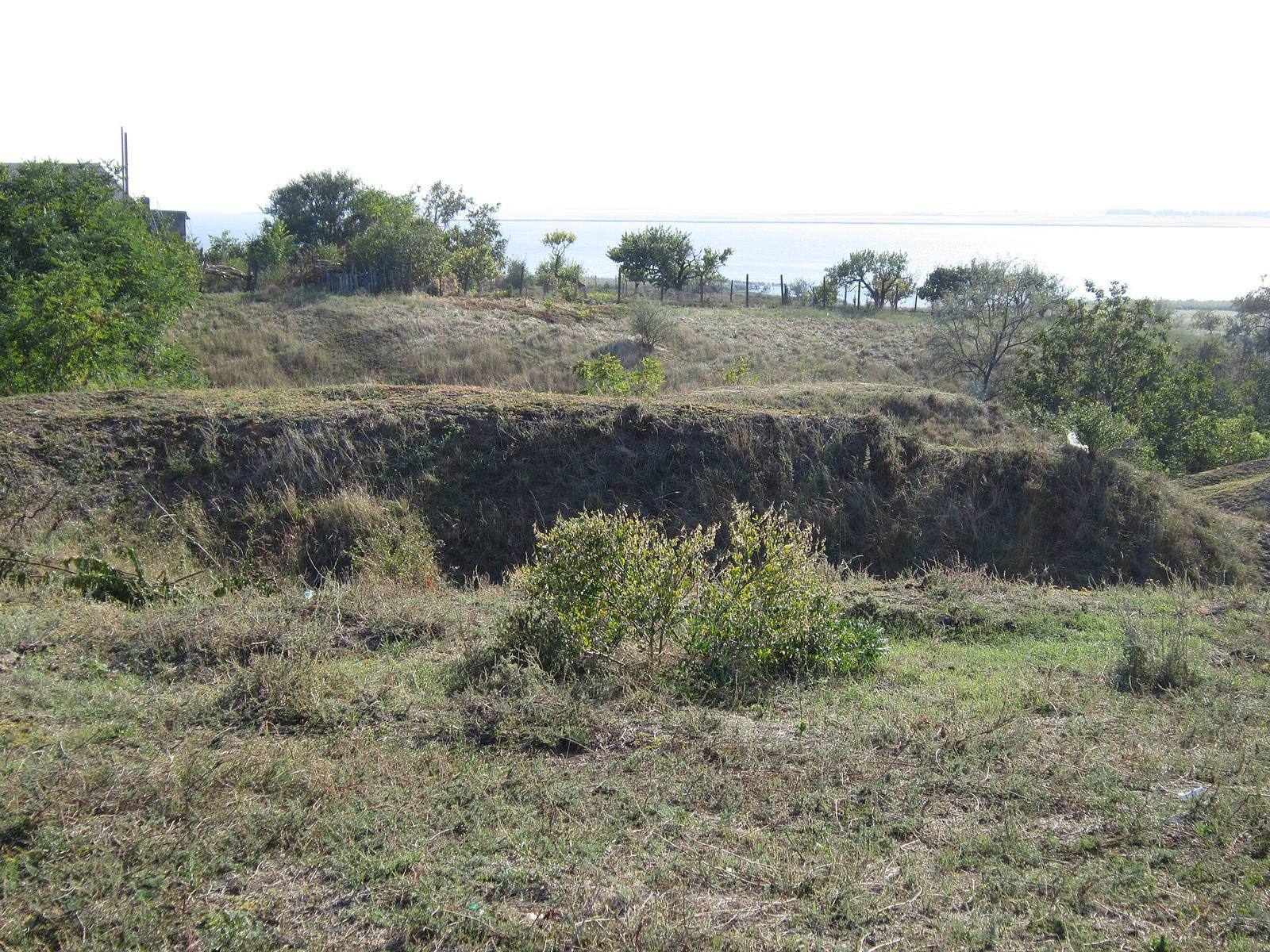
The settlement occupies a high promontory on the eastern bank of the Dniester estuary, near Nadlymanske village and north of Nikonion. Ravines bound the promontory. The site covers about one hectare, and its accumulated soil containing traces of human activity reaches roughly 1.5 metres in depth. Now in ruins, the settlement has an irregular layout with no discernible plan of construction. A ditch, rampart, and defensive wall protected it; only layered foundations remain of the wall.
Housing and domestic remains
Dwellings
Rectangular houses built at ground level were the main dwelling type. They had clay walls resting on stone foundations. Remains of round and rectangular dwellings set partly below ground were also found.
Domestic activity
Other remains include domestic buildings, ash deposits, and pits, among them pits used to store grain. A stone grain grinder provides further evidence of grain processing at the settlement.