Usatove Cemetery: A Cossack Burial Ground and Archaeological Site
Site at a Glance
- Popularity
- Low
- Country
- Ukraine
- Primary era
- Early Modern
- Eras represented
- Bronze Age, Early Modern, Modern
- Civilizations
- Ottoman
- Site type
- Burial
- Remains
- Necropolis
On this page8 sections
History
Usatove Cemetery is a burial ground on Shkodova Hill in Usatove, Odesa Oblast, Ukraine. The modern cemetery dates to the late eighteenth century, while the hill’s earlier burials connect it with the Usatove culture, a prehistoric archaeological culture of the northwestern Black Sea region.
Prehistoric burials
Burials in the area date to 2400–2000 BC. Shkodova Hill was a center of the Usatove culture, named after the nearby settlement.
Cossack foundation and later history
The cemetery arose in the 1770s, as Zaporozhian Cossacks migrated to the region and founded Usatove. The cemetery is recorded as opening in 1775. It first served migrants from the Zaporizhian Sich, the center of their military and political organization, and later became a burial place for Black Sea Cossacks, a later Cossack community in the region, and their descendants.
Archaeological investigations of Usatove culture sites brought the cemetery to attention in the early 1920s. It received little study for a long period, before public interest in cultural heritage helped renew attention to the necropolis in the late 1980s. From 1994 to 2001, efforts to slow its deterioration relied chiefly on care from Cossack organizations.
The cemetery is identified as an archaeological monument, and its central mound is included in the list of archaeological monuments. In October 2011, the Odesa regional organization of the Ukrainian political party Svoboda appealed to the president to add the cemetery to the cultural-heritage register and place it under state protection. Cossack-community attention later ceased, while local authorities showed little interest in preservation.
Remains
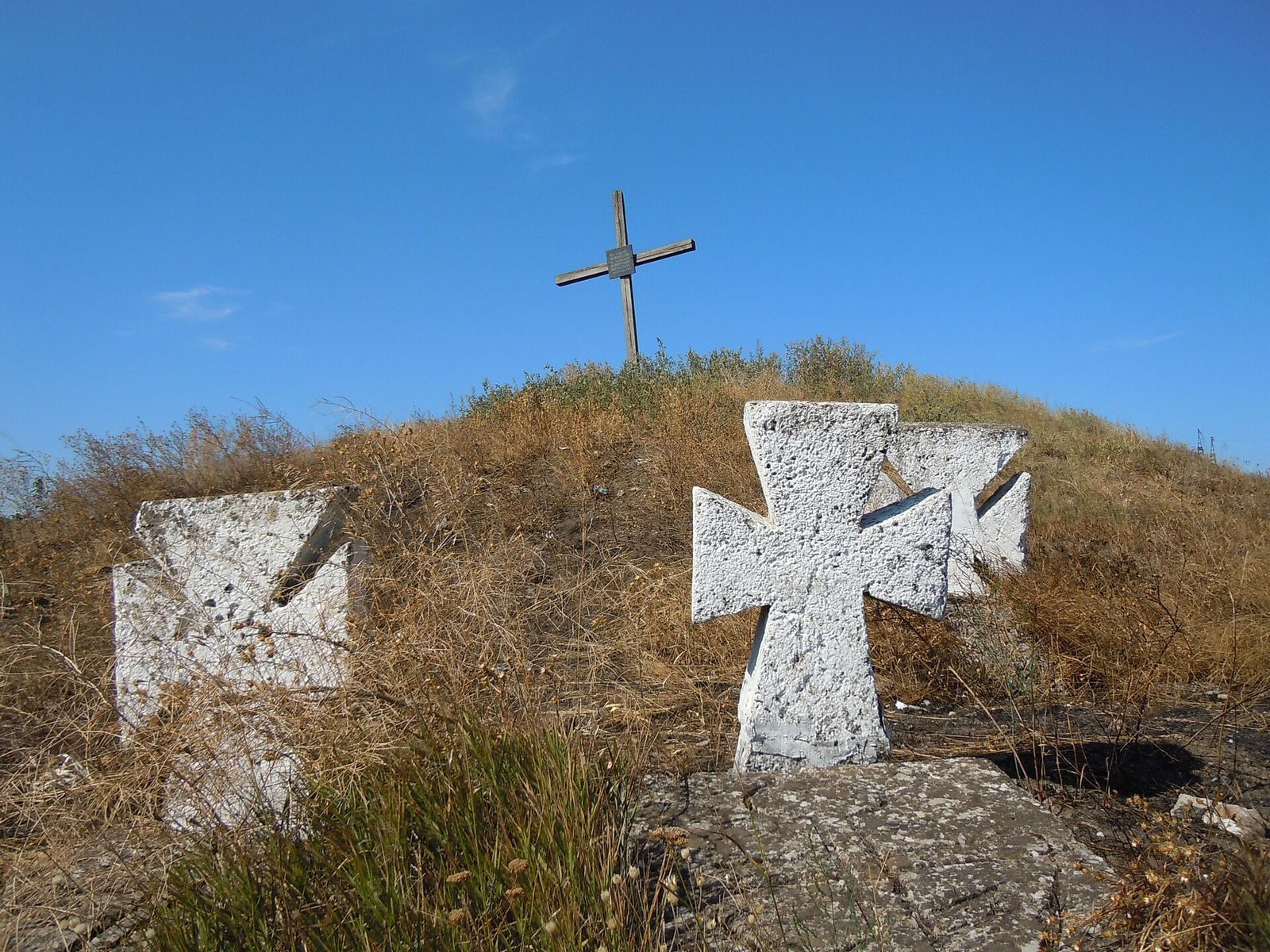
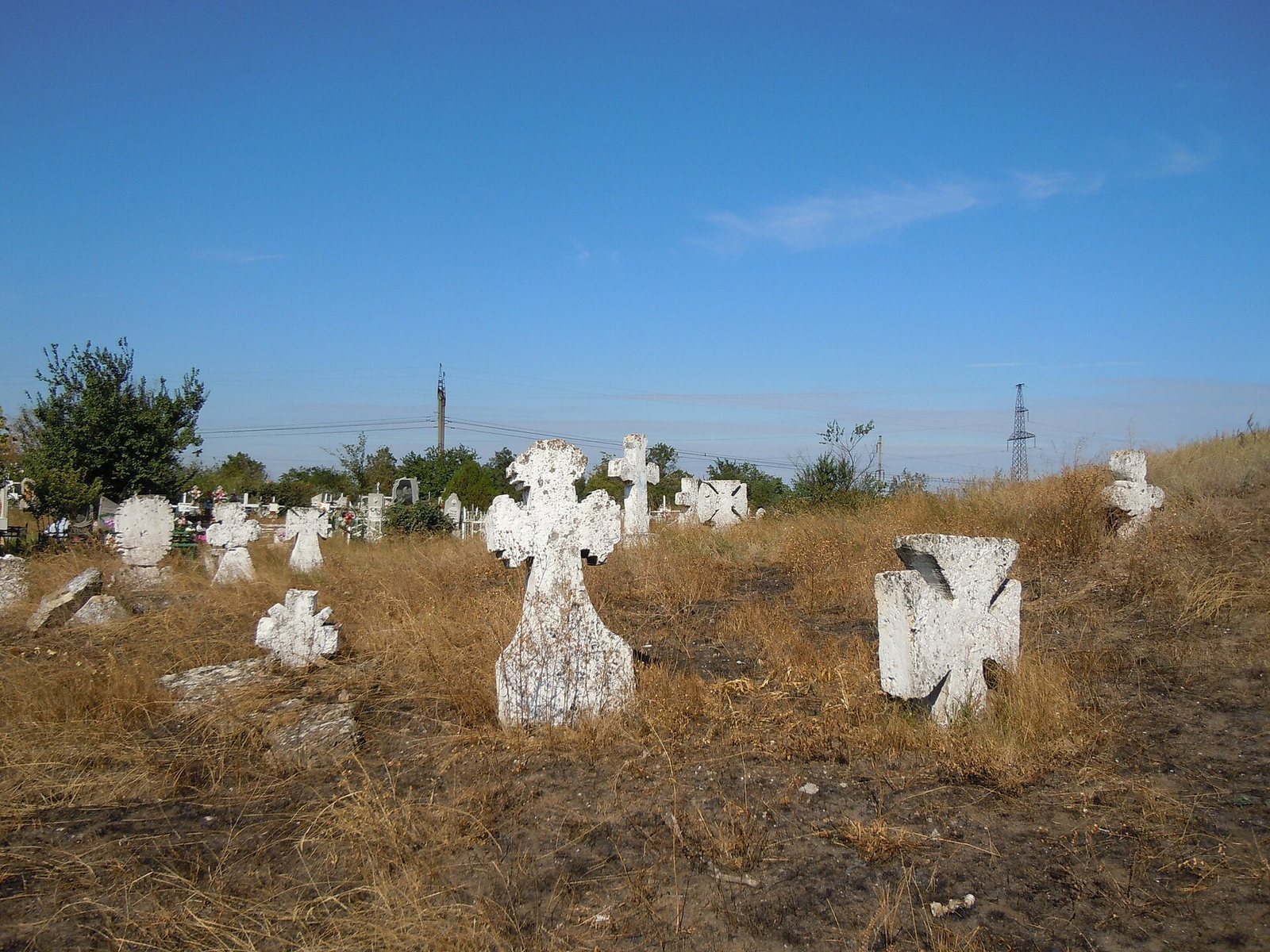
The cemetery occupies the summit of Shkodova Hill. A burial mound stands at its center, with Cossack graves around it. Excavations on the hill and nearby identified 18 burial mounds with stone circles, as well as two burial grounds arranged without mounds. Stone crosses mark the Cossack graves.
Prehistoric burials
In the prehistoric graves, people were placed in pits on their left sides, with their bodies drawn into a contracted position. Central graves beneath the mounds held clan leaders. Finds from these burials include copper daggers, axes and awls, along with pottery.
Cossack graves and memorial
Stone crosses
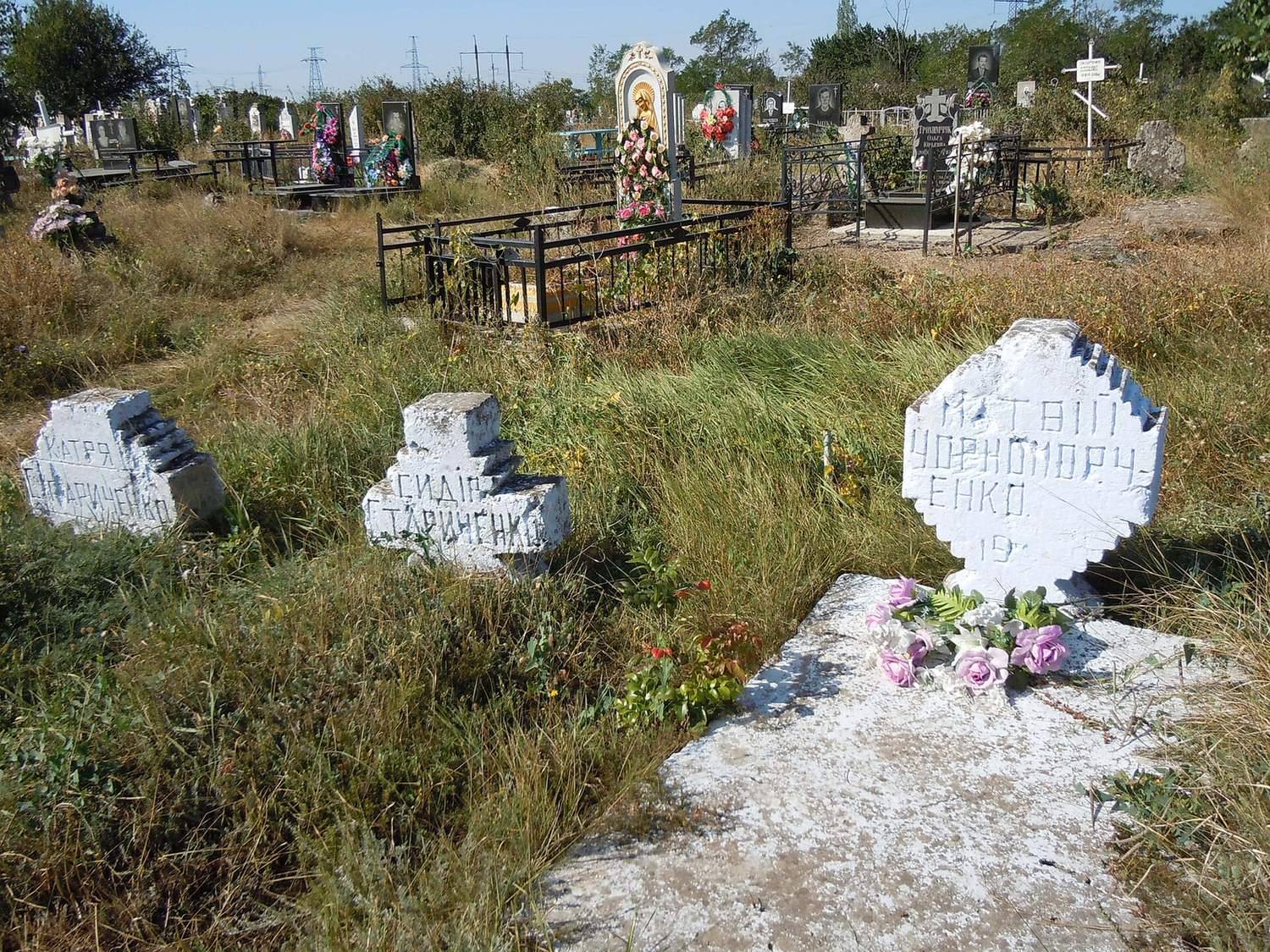
Researchers distinguish 32 types of Cossack gravestone crosses, which can indicate the deceased person’s social status. About 50 crosses remain intact; many others have fallen, suffered extensive damage or continue to deteriorate, mainly because of external effects. Some bear scratched trident symbols associated with efforts to promote Ukrainian identity.
Cossack memorial
A stone was installed at the cemetery as a Cossack memorial. An archaeological-monument marker is also present.