Church of Saint Michael the Archangel in Piersno: A Catholic Church with a Gothic Core
Site at a Glance
- Popularity
- Very Low
- Country
- Poland
- Primary era
- Medieval
- Eras represented
- Medieval, Early Modern, Modern
- Civilizations
- Habsburg, Holy Roman Empire, Kingdom of Bohemia, Kingdom of Prussia
- Site type
- Religious
- Remains
- Church
On this page8 sections
History
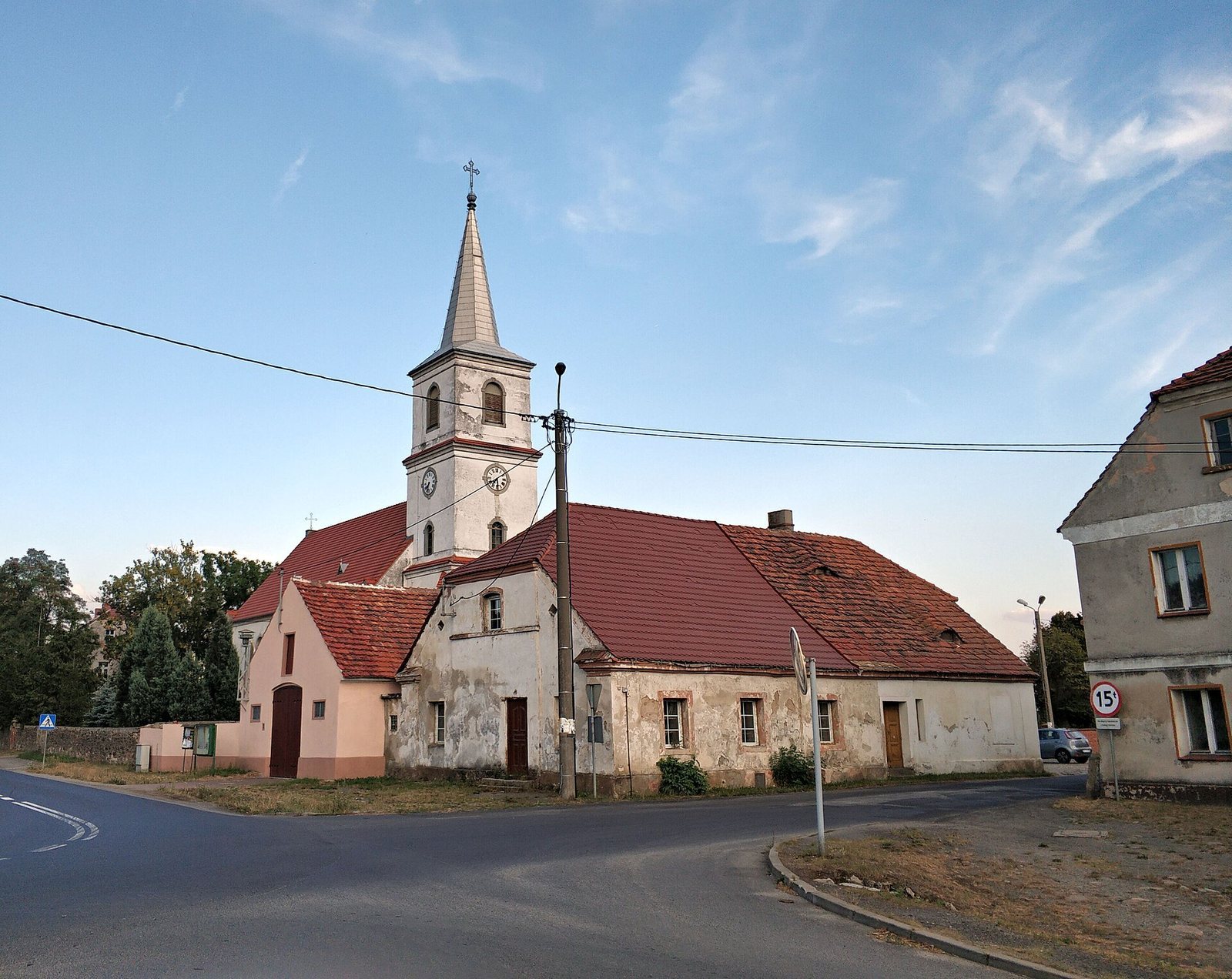
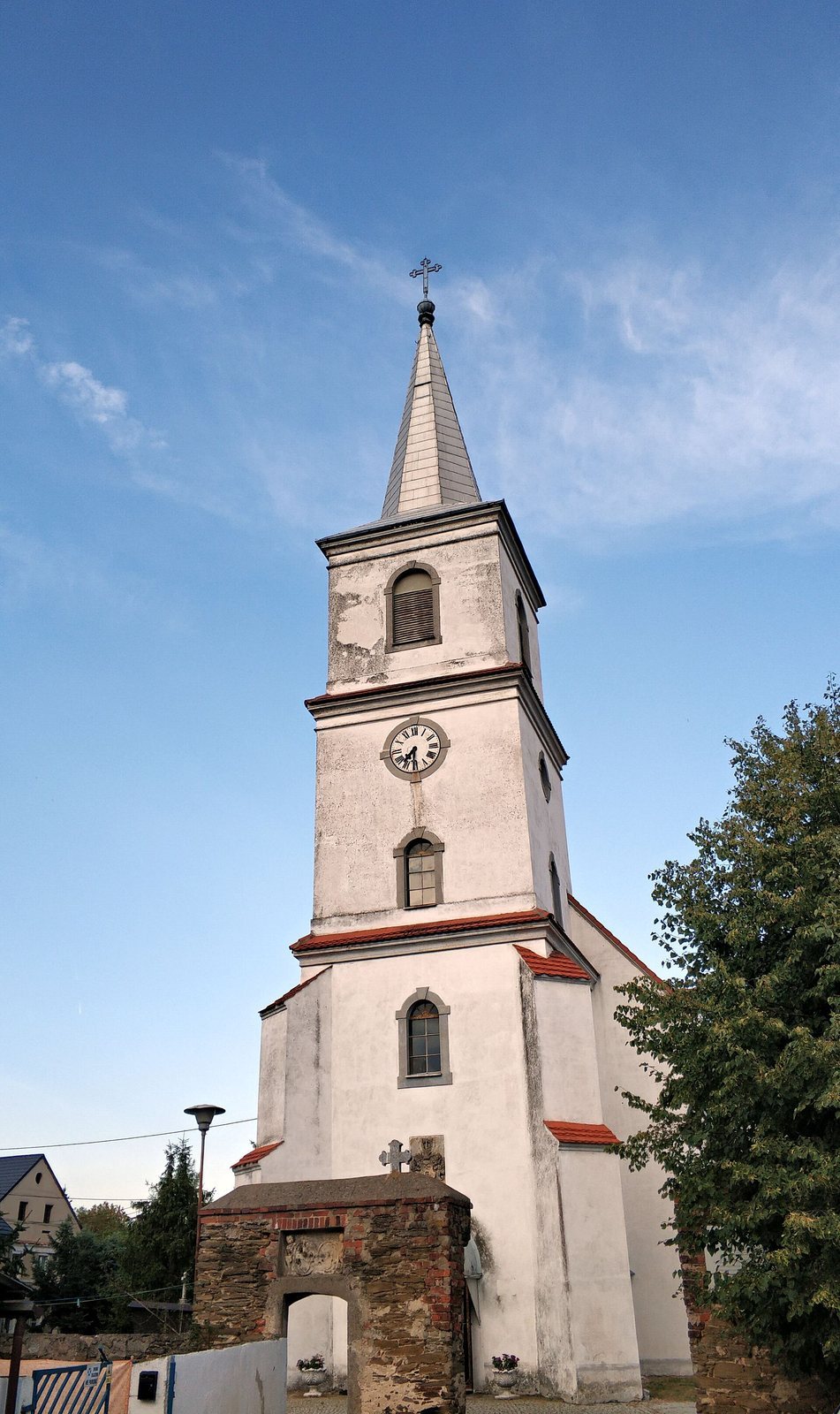
The Church of Saint Michael the Archangel in Piersno, Poland, is now a Roman Catholic filial church, a subordinate church served in connection with a larger parish. It was formerly an Evangelical Lutheran parish church. The village was once known as Pirschen, and the church’s surviving core dates to the fifteenth century.
Medieval church and confessional change
A register from 1335 names the church as ecclesia de Pirchino, meaning “church of Pirchino.” The register belonged to Galhardus, a papal diplomat. During the Reformation, the movement that led to the formation of Protestant churches, the church became Evangelical. It later returned to Catholic use during the Counter-Reformation, the Catholic Church’s response to the spread of Protestantism. After Pirschen’s exclusively Evangelical inhabitants lost access to their local church, they attended services at Groß-Baudis and, from 1742, at a newly built church in Rackschütz, now Rakoszyce. The church in Piersno then stood unused and had fallen into ruin by the first half of the nineteenth century.
Evangelical parish and restoration
In 1836, the Catholic parish was declared extinct and its property was confiscated, including a holding of three Hufen, a land measure whose size varied by region. It was then decided to transfer the ruined church to the Evangelical congregation. From 1 July 1848, Pirschen was a separate parish in the Neumarkt church district, a local grouping of congregations, within the Church Province of Silesia, a regional unit of Prussia’s state church. The restored church was dedicated on 29 April 1849.
The congregation held its own patronage rights, and the Prussian king provided 1,000 thalers, a historic Central European coin, toward the pastor’s support. A new rectory followed in 1852. The congregation numbered about 700 in the mid-nineteenth century. During the second half of that century, an Old Lutheran congregation built a separate church in western Pirschen. Old Lutherans rejected the Prussian Union Church, which brought Lutheran and Reformed traditions together in Prussia.
Later changes
From 1929, the Piersno congregation also served Metschkau pastorally; the village had previously been served by the Jerschendorf parish. After 1945, following the expulsion of the German population, the church returned to Roman Catholic use as a filial church. It was added to Poland’s register of protected monuments on 14 December 2009.
Remains
Building and additions
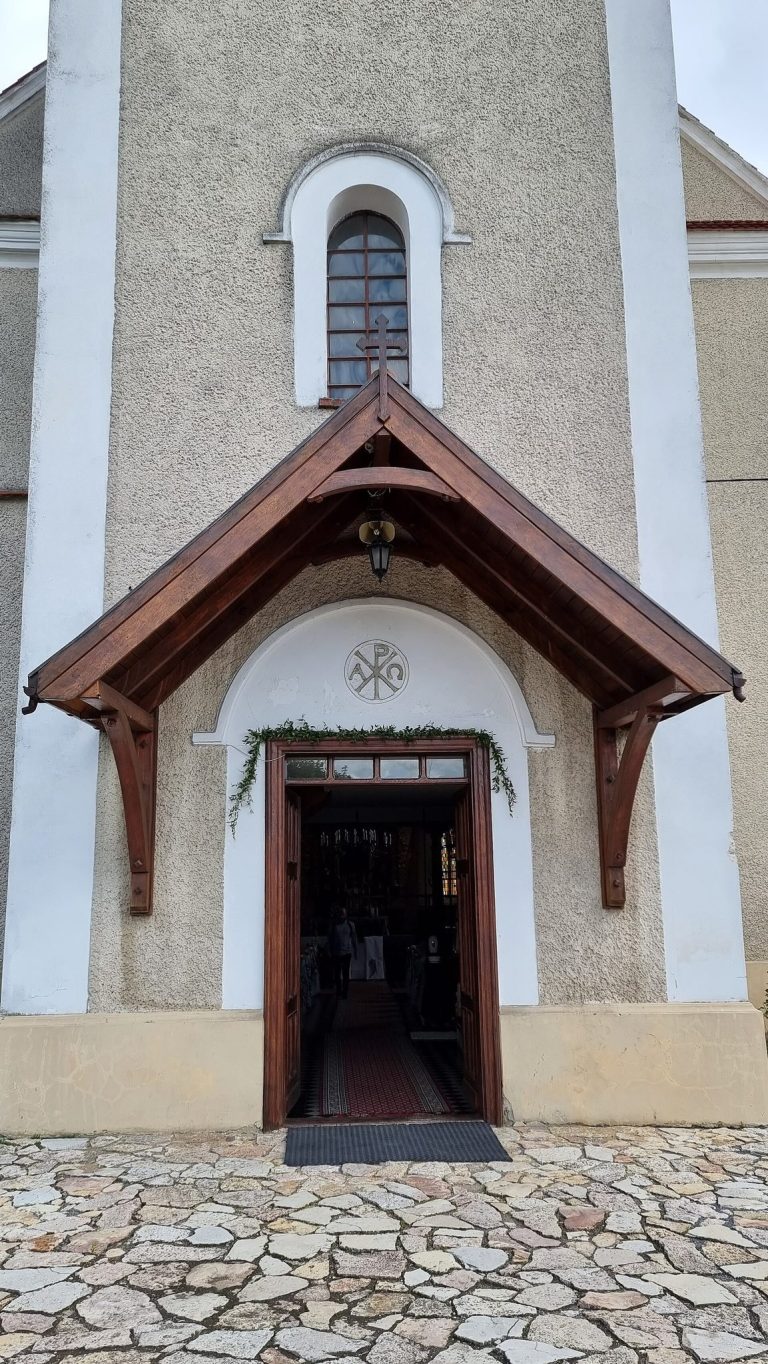
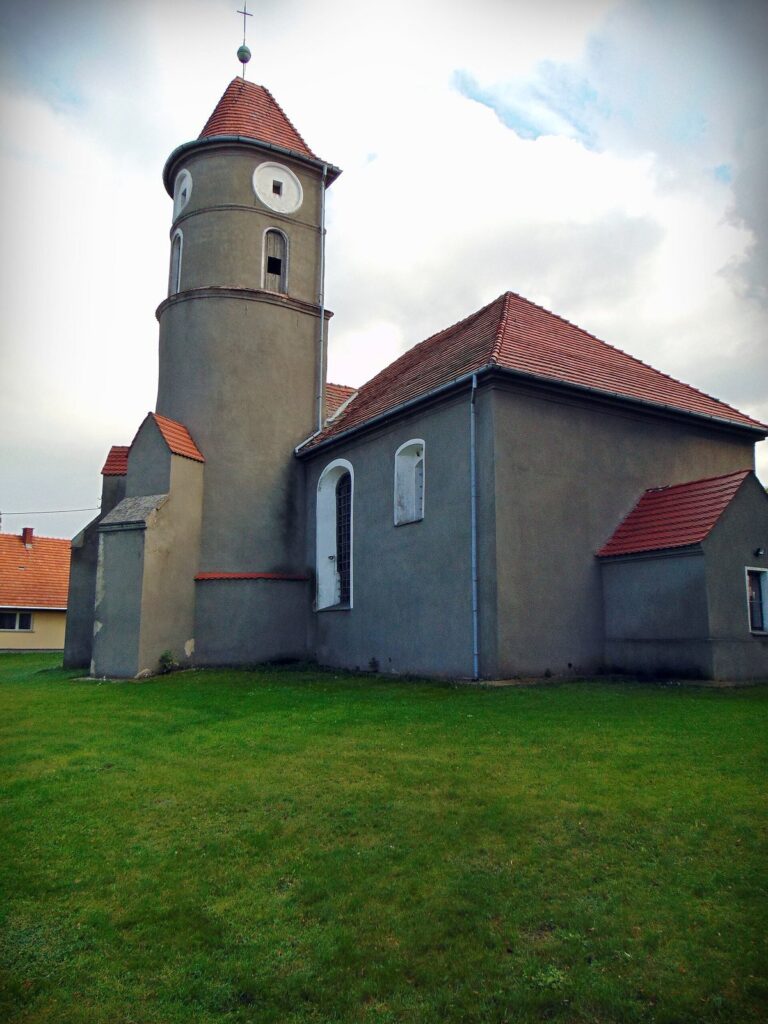
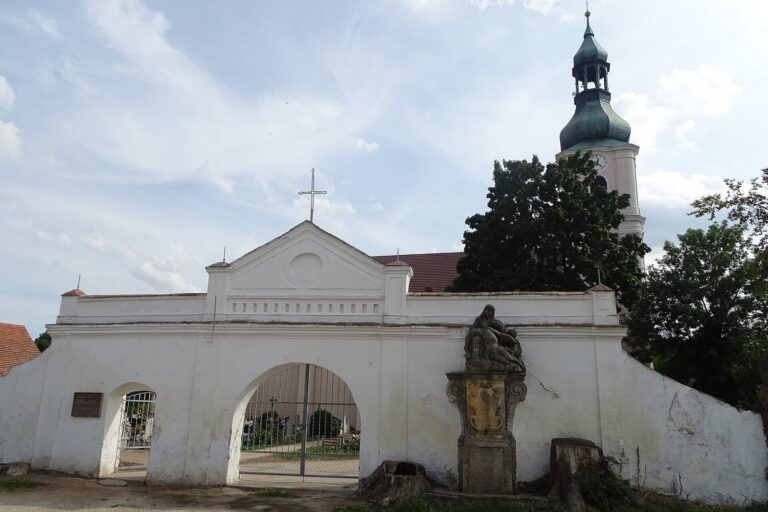
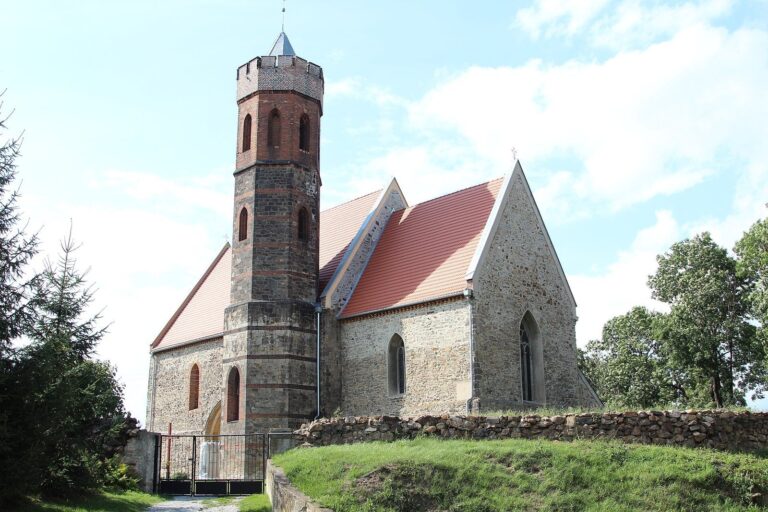
The church is a single-nave brick building with a Gothic core and a short, angular chancel. An enlargement in the mid-nineteenth century added a chancel and sacristy in the Late Classical style, which draws on ancient Greek and Roman forms.
Interior
The nave has a flat ceiling, while intersecting ribs support the chancel’s vaulted ceiling. Three galleries, a baptismal font, and several grave slabs form part of the interior.
Memorials and cemetery
Renaissance gravestones from the sixteenth and seventeenth centuries are set into the church’s exterior and interior walls. They include memorials to Nicolaus Kreischelwitz of Stusa and Pirschen (1555), Nicolaus von Schönfeld (1568), Hans von Kreischelwitz of Jockesdorf (1578), and Hans’s widow (1580). Other stones commemorate Barbara von Reichenbach, née Waldin von der Bielaw (1587), a child of Friedrich von Reichenbach (1590), Conrad von Reichenbach und Rudelsdorf of Stusa and Pirschen (1594), a child of Assmann von Waldau (1596), Margaretha von Reichenbach (1599), and Titzo von Mewald of the House of Lobendau (1608). Further memorials name children of Conrad von Reichenbach, Nicolaus von Schönfeld, and, from later dates, Maria Elisabeth von Schwobsendorf and Hans von Bock und Polach of Stusa and Pirschen, both commemorated in 1617, and Susanna Sabine von Bock, née von Axleben (1727). A cemetery surrounds the church within a wall, with an entrance gate; a small number of German gravestones remain there.