Kyiv St Nicholas New Maidens’ Monastery: A Russian Orthodox Monastery in Alatyr
Site at a Glance
- Popularity
- Medium
- Country
- Russia
- Primary era
- Early Modern
- Eras represented
- Early Modern
- Civilizations
- Russian
- Site type
- Religious
- Remains
- Fortified Monastery
On this page10 sections
History
The Kyiv St Nicholas New Maidens’ Monastery is a Russian Orthodox women’s monastery in Alatyr, Russia, affiliated with the Alatyr Diocese, a regional church jurisdiction. It was established in the city in 1639, and its architectural complex follows the Baroque style.
Origins and move to Alatyr
The monastery’s foundation date is uncertain. A statement submitted by the monastery in 1764 and an inventory give 1603, while a 1693 petition in a dispute over fishing rights on the Sura River claimed that a decree of 1573 had granted those rights to the community. A separate account of its formation places it in 1619 near Pryluky and the settlements of Ladina and Podgor, within the Polish-Lithuanian Commonwealth, a political union of Poland and Lithuania. It was first called the New Maidens’ Monastery of the Protection of the Mother of God at Ladina and Podgor. The Protection is an Orthodox feast commemorating Mary’s protection of the faithful. The name Kyiv was later added because the first nuns came from that city. “New Maidens” distinguished the community from another women’s monastery in Alatyr dedicated to St Nicholas, an early Christian bishop venerated in Eastern Orthodoxy.
In 1638, as persecution of the Orthodox Church by Catholic nobles intensified, the nuns fled to Russia. They stayed first in Putivl and Bryansk, then reached Alatyr in September. The monastery was founded there in 1639 by Elisaveta (Letinskaya), head of the Ladin-Priluki Monastery. She came with 52 nuns, some from Kyiv, and their spiritual adviser, Methodius, a male monastic superior.
Churches, fires, and rebuilding
In 1668, older churches dedicated to the Protection of the Mother of God, including one with a side chapel associated with Metropolitan Alexius and Mikhail Malevin, were dismantled and moved to the Pyatnitsa church site. A heated Church of St Nicholas was moved there as well. The site lay beyond the fort and above the Cossack settlement.
The monastery’s buildings burned during the 1671 uprising led by Stepan Razin, a Cossack leader whose revolt spread across Russia. They were rebuilt the following year with contributions from district peasants and Mordvins who had taken part in the revolt. Another fire destroyed the churches and buildings in 1690.
In 1691, a wooden Church of the Life-Giving Trinity was brought from the nearby Alatyr Trinity-Sergius Monastery. The Trinity is understood in Christian belief as one God in three persons. A heated Church of the Ascension was built on the former church site; the Ascension commemorates Jesus’ ascent to heaven. Abbess Elizabeth, the head of the monastery, built a Church of St Nicholas at the new site.
Later history
The monastery was classed as third-class in 1764. During the suppression of monasteries under Empress Catherine II, who ruled from 1762 to 1796, the neighboring Nikolaevsky Starodevichy Monastery was abolished, and its abbess and nuns were transferred to the Kyiv St Nicholas New Maidens’ Monastery. The community held 226 desyatinas, a traditional Russian land measure, as well as a mill and other farm buildings. By the late nineteenth century it comprised an abbess, 31 nuns, and 237 novices.
The monastery closed in 1919 and was transferred to the Russian Orthodox Church in 1993. By 2000, its Ascension and Protection churches had been restored and its St Nicholas gate church rebuilt. The monastery was then listed as active.
Remains
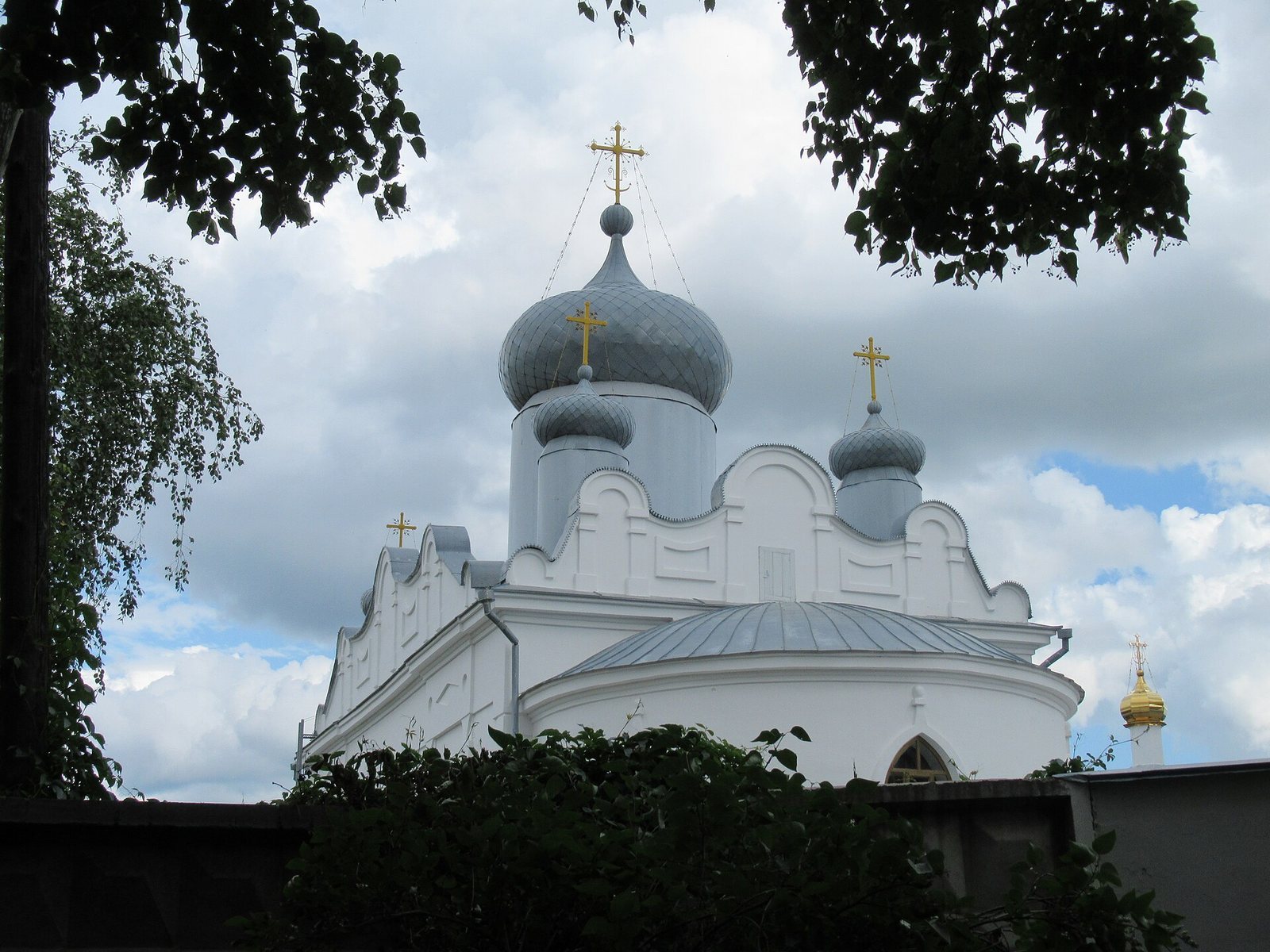
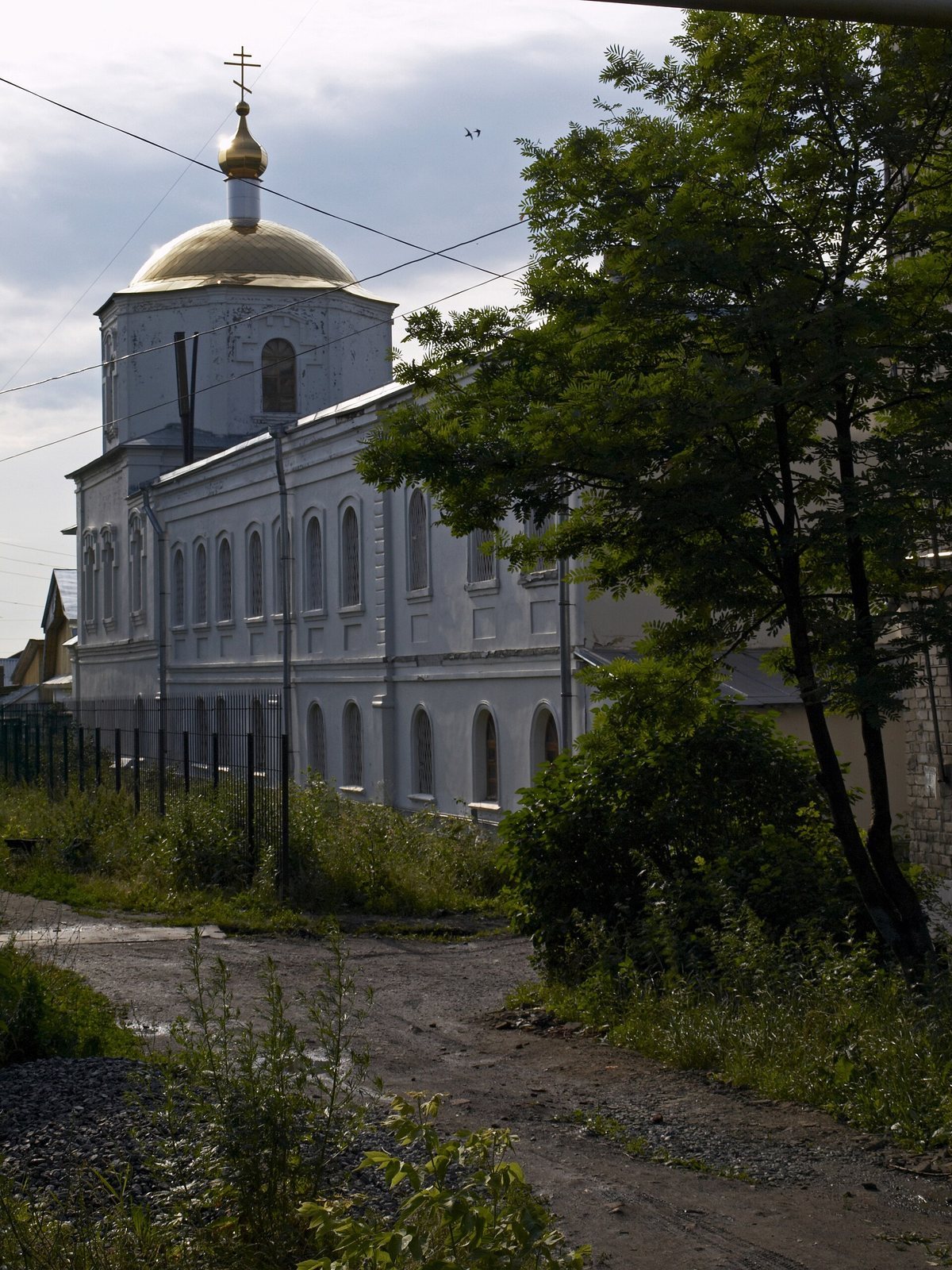
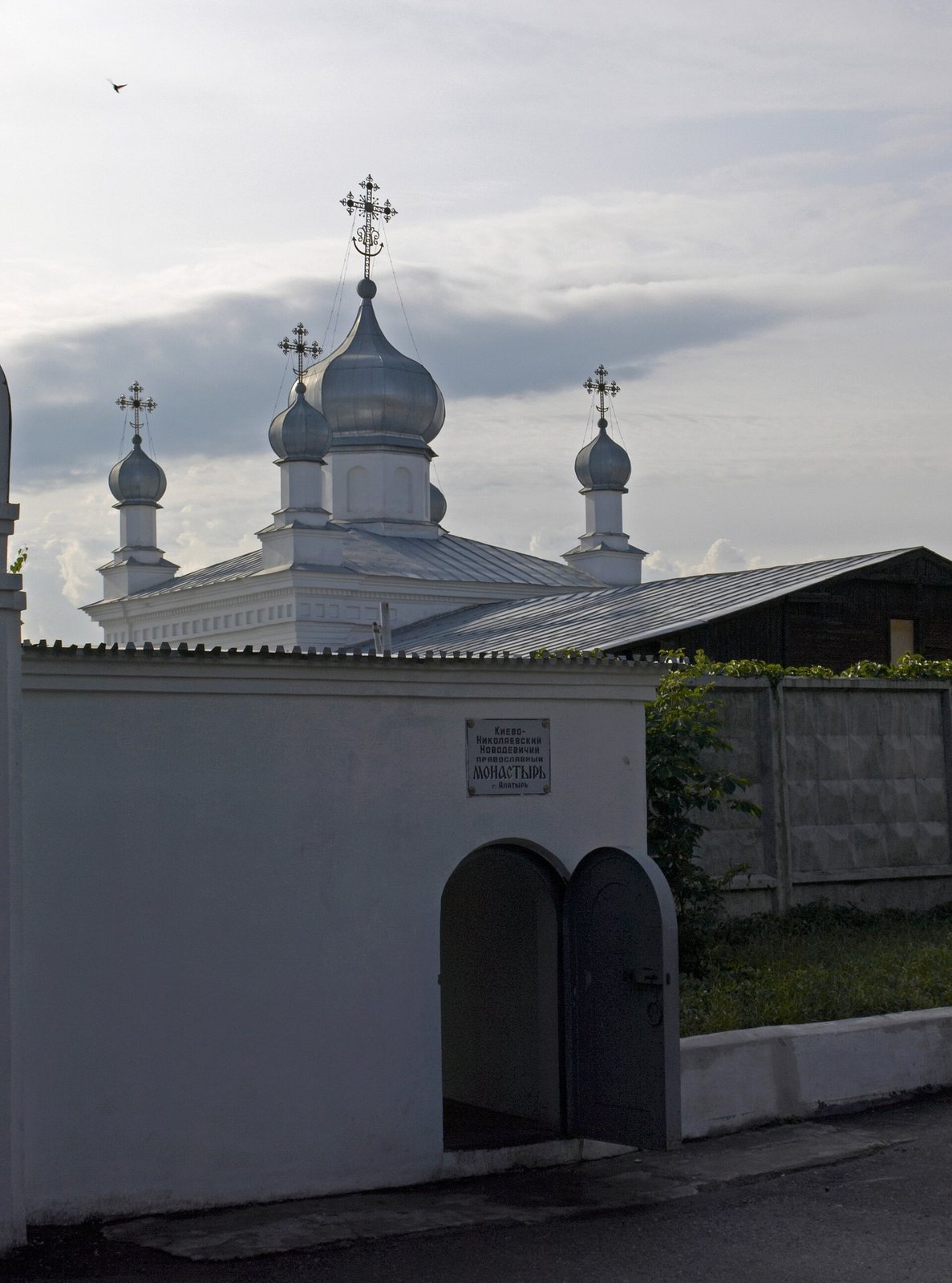
The complex includes the Ascension and Protection churches, a St Nicholas gate church, residential and service buildings, and a perimeter wall with corner towers. Its churches are stone structures, while the surviving ensemble also incorporates the history of earlier wooden buildings.
Churches and enclosure
Church of the Ascension
A stone church replaced the wooden Church of the Ascension in 1753. It has three altars, consecrated areas used in Orthodox worship, dedicated to the Ascension, St Tikhon of Zadonsk, and the Great Martyr Panteleimon. Tikhon was an eighteenth-century Russian bishop and theologian; Panteleimon was an early Christian martyr venerated as a healer.
Church of the Protection of the Mother of God
This stone church, with a single altar, was built in the 1760s. A smaller worship space, or side chapel, was added later and dedicated to Dmitry of Rostov, an Orthodox bishop and religious writer.
St Nicholas church
A stone Church of St Nicholas is dated to both 1737 and 1757. It is unclear whether these dates refer to one building or to successive structures. The present complex also includes a St Nicholas gate church, a church built into or above an entrance.
Monastery buildings and wall
Residential and service buildings form part of the complex. A perimeter wall encloses the monastery, with a tower at each corner.