San Michele in Borgo: A Roman Catholic Church in Pisa
Site at a Glance
- Popularity
- Medium
- Country
- Italy
- Primary era
- Medieval
- Eras represented
- Medieval, Early Modern, Modern
- Civilizations
- Grand Duchy of Tuscany, Holy Roman Empire, Italian, Republic of Pisa
- Site type
- Religious
- Remains
- Church
On this page11 sections
History
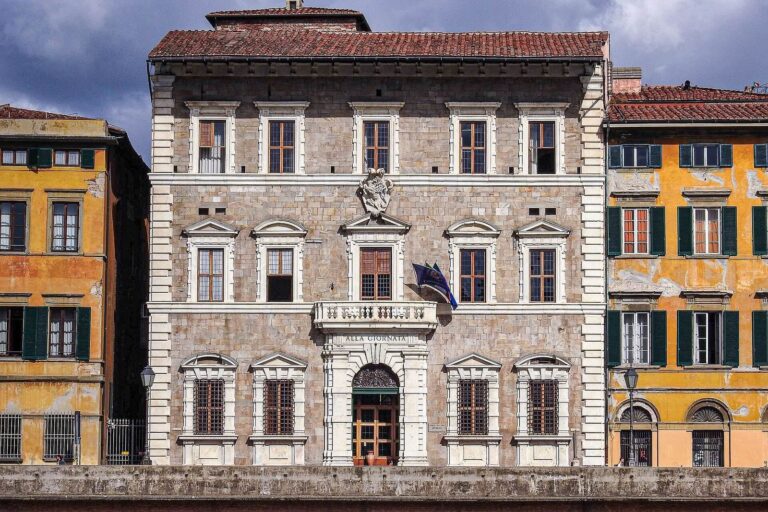
San Michele in Borgo is a Roman Catholic church on Borgo Stretto in Pisa, Italy. Built around 1016 outside the city walls, it stands over an ancient temple dedicated to Mars, the Roman god associated with war. Dedicated to the Archangel Michael, the church belongs to the Archdiocese of Pisa and later hosted the opening sessions of the Council of Pisa.
Monastic community and the Council of Pisa
The monastery associated with the church was first occupied by Benedictine monks, members of the Order of Saint Benedict. From the 12th century, it belonged to the Camaldolese, a monastic congregation within the Benedictine tradition. The church choir hosted the opening sessions of the Council of Pisa, a formal assembly of church authorities, before the council’s meetings moved to the cathedral.
War damage and changes to the precinct
The church underwent repeated renovation, particularly after air raids during the Second World War. The adjoining Benedictine monastery and cloister were lost through bombing or demolition. Construction of the Mattonaia complex on their site began in 1986, following a design by architect Massimo Carmassi, but the complex remained unfinished.
Remains
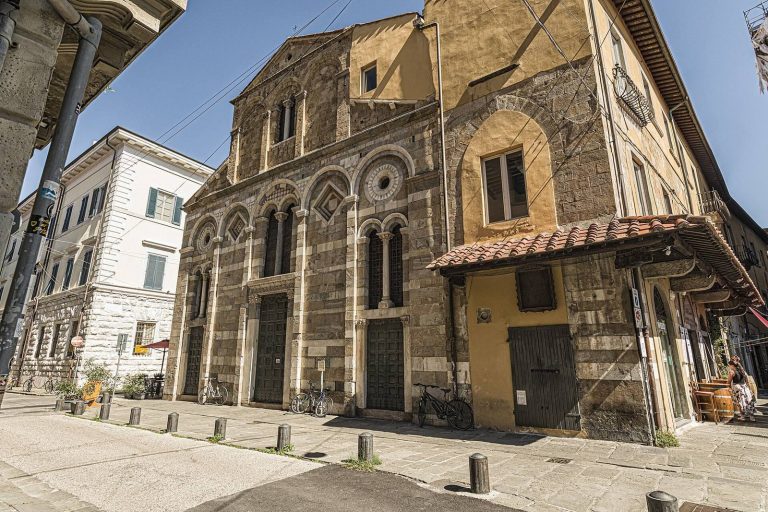
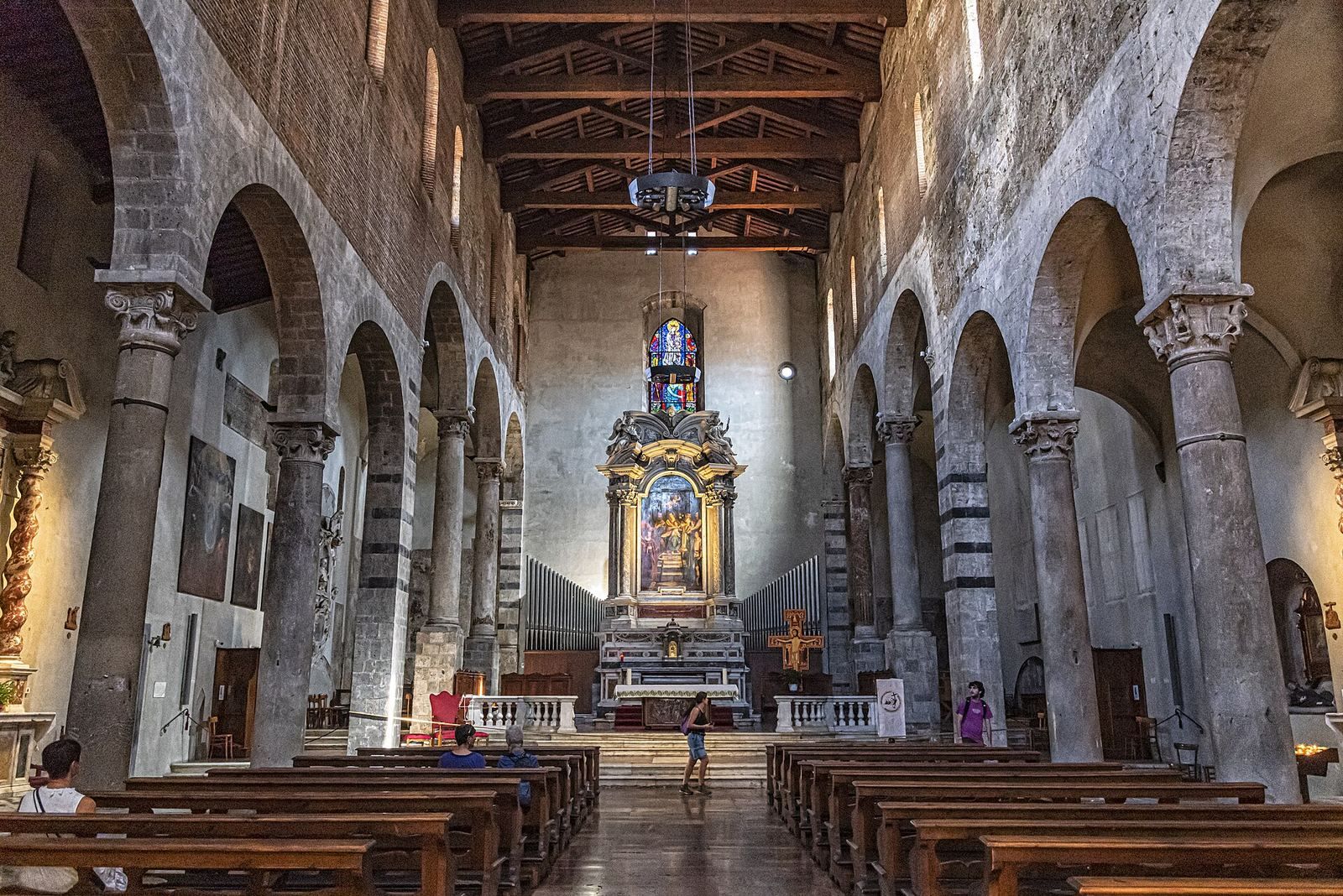
The church combines a marble facade with an interior arranged in three aisles and eight bays. Its interior has been substantially altered over time, while the raised area beneath the altar lies above the crypt.
Exterior
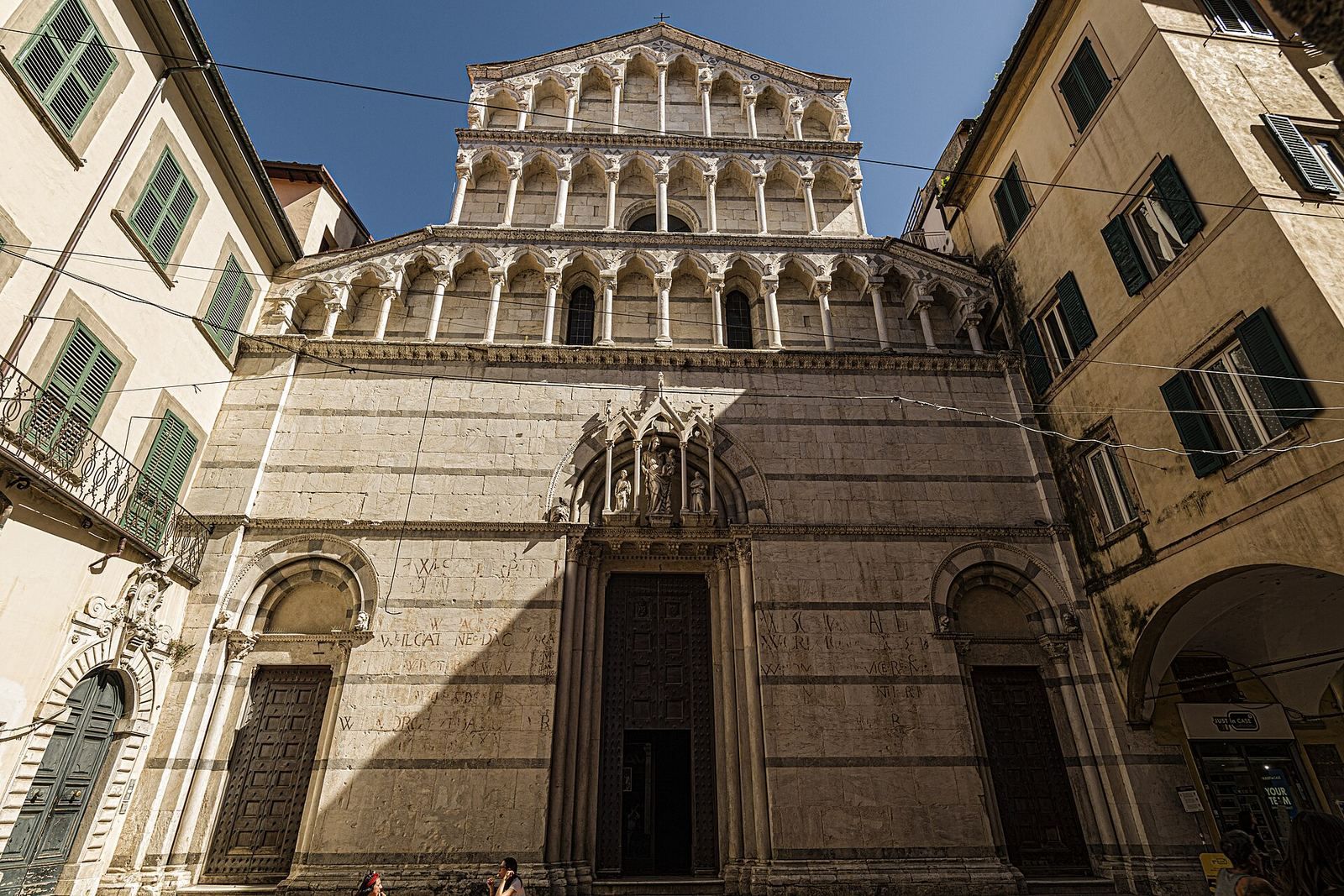
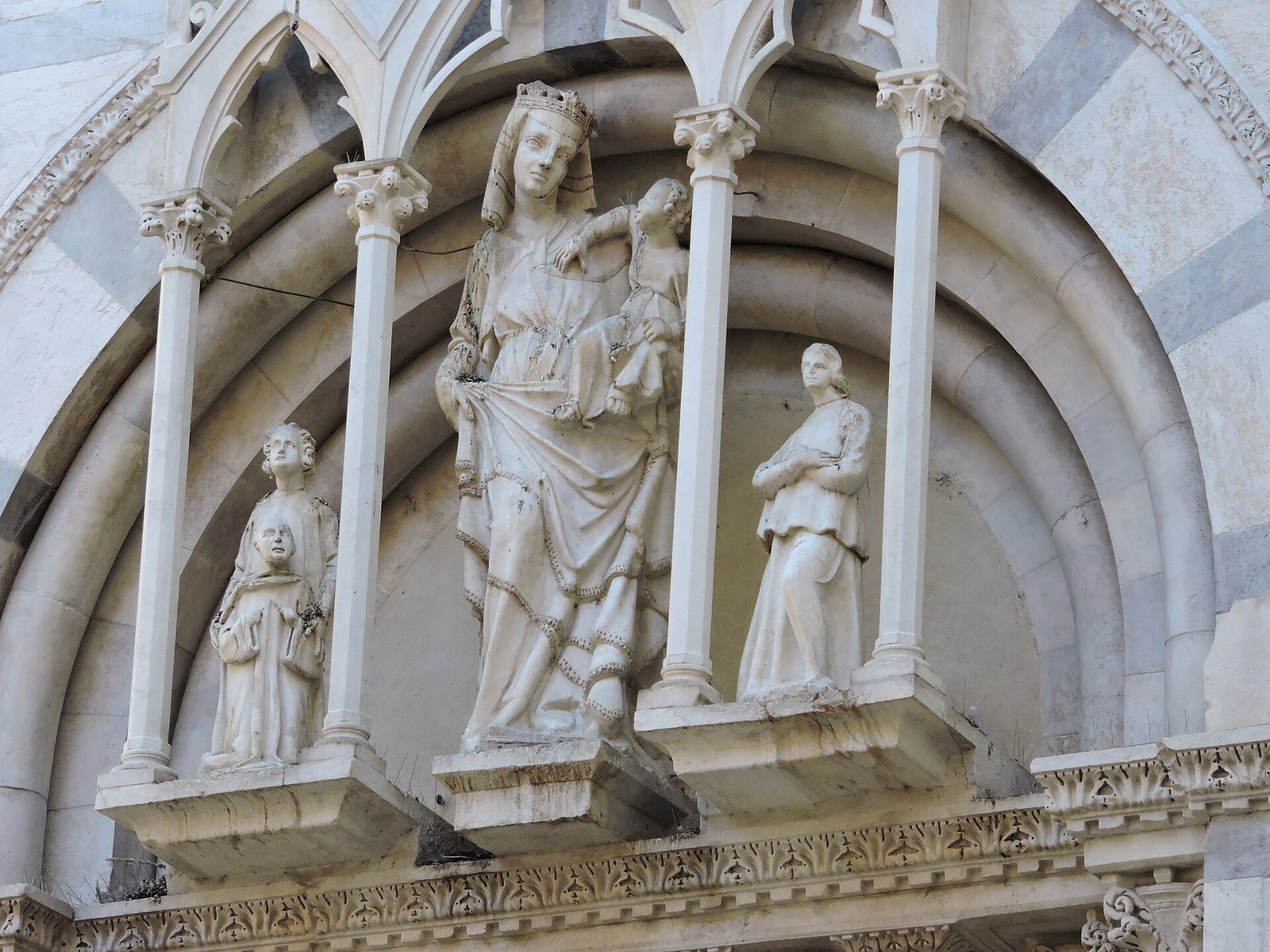
The facade combines Pisan Romanesque features with Gothic elements. Its lower section dates to the 13th century, while the upper section, built in the 14th century, has three tiers of open-sided galleries. Three Gothic portals have curved recesses above them. A small shrine above the main portal holds a copy of a sculpture by Lupo di Francesco showing the Madonna and Child, angels, and a donor abbot; the original is in the National Museum of San Matteo. Seventeenth-century inscriptions on the facade relate to the election of the rector of the University of Pisa.
Interior
Nave
Eight round arches mark the central aisle. The last three are raised to accommodate the elevated area beneath the altar. Of the seven columns, the fifth has been replaced by a slender support with a square base. A timber-truss roof covers the central aisle, while later roofing replaced the original trusses over the side aisles.
Crypt
The 11th- to 12th-century crypt lies beneath the presbytery, the area around the high altar. Its ceiling is formed by intersecting vaults, and it contains Roman capitals, the upper parts of columns. Paintings show fantastic animals, including a hippogriff, a lion, an eagle, and a winged sea horse. The crypt has been flooded for years. Pisan historian Alessandro da Morrona gave its first detailed description in 1791.
Altars and paintings
A marble crucifix attributed to Nino Pisano and dated to the 14th century stands at the left altar. The 18th-century main altar is made of polychrome marble and carries Baccio Lomi’s painting of the Madonna and Child with Saints Lawrence, John the Baptist, Francis, Clare, John the Evangelist, and Vitus. Lomi painted it between 1572 and 1574 for the main altar of San Lorenzo alla Rivolta, a monastery of the Order of Saint Clare. Other paintings include Matteo Rosselli’s Immaculate Conception between Saint Anne and Saint Joachim (1627); Aurelio Lomi’s Four Cardinal Virtues (1605) and Presentation in the Temple (1611); Giuseppe Melani’s Rest of the Holy Family (1733); and a 1651 Saint Michael the Archangel from the school of Aurelio Lomi. The church also retains remains of 13th-century frescoes, including Saint Michael in a curved recess on the inner facade, as well as other works from the 18th century and later.
Sculptural remains
Five Roman sarcophagi once kept inside the church were transferred to the Camposanto Monumentale, Pisa’s historic monumental cemetery. Fragments of a 14th-century pulpit, attributed by some to Andrea Pisano, are held in the National Museum of San Matteo.
Organ
A pipe organ built in 1978 by the Fratelli Ruffatti firm stands behind the altar.