Palazzo Lanfreducci: A Historic Palace in Pisa
Site at a Glance
- Country
- Italy
- Primary era
- Early Modern
- Eras represented
- Medieval, Early Modern
- Civilizations
- Grand Duchy of Tuscany, Republic of Pisa
- Site type
- Domestic
- Remains
- Elite Residence
On this page8 sections
History
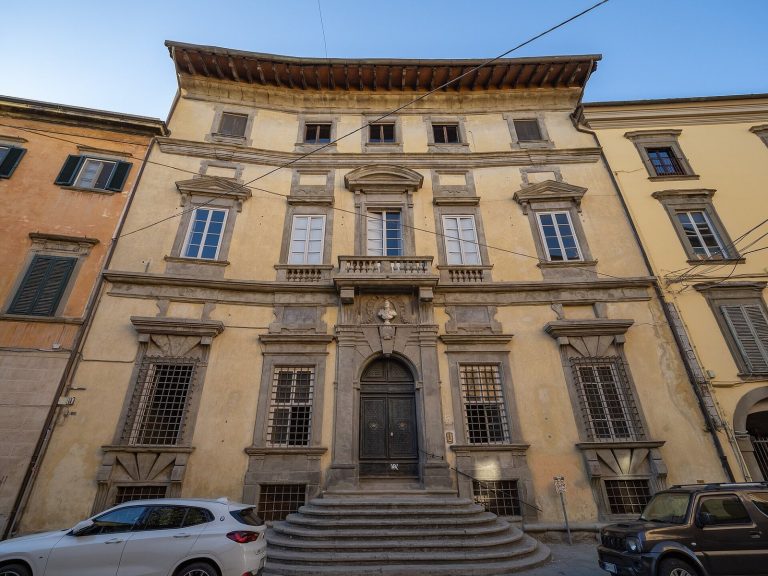
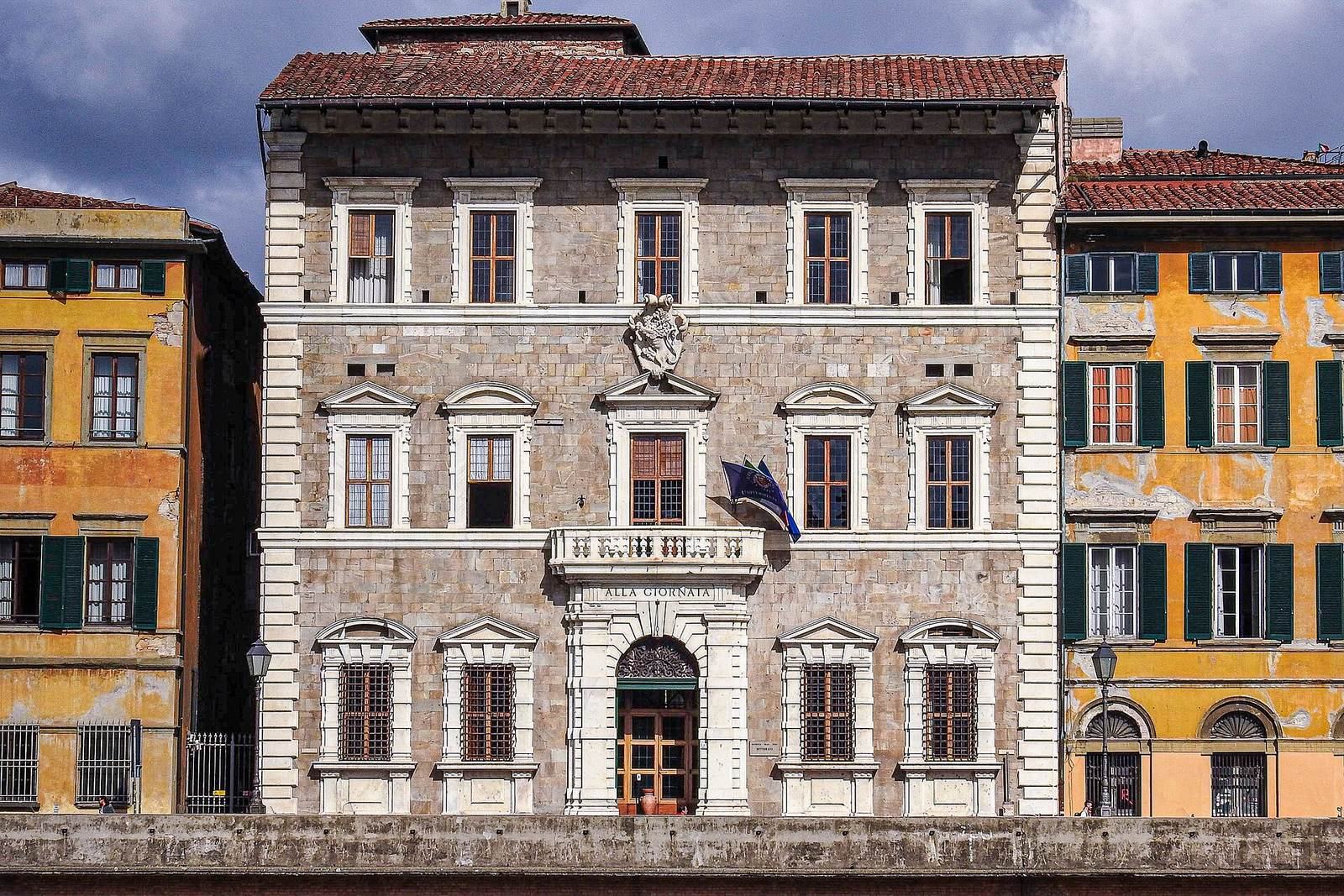
Palazzo Lanfreducci is a palace on the north bank of the Arno in Pisa, Italy, where construction began in 1607 in a style described as late Mannerist or early Baroque. Francesco Lanfreducci commissioned it after returning from a prolonged imprisonment in Algeria.
The Lanfreducci Commission
The Lanfreducci family was established in Pisa by the 13th century. Francesco belonged to the Order of Malta, a Catholic religious and military order also historically known as the Order of Saint John of Jerusalem. The design of the palace is attributed to Cosimo Pugliani, an architect from Siena.
The Motto and Later History
The words “Alla Giornata,” meaning “on the day of battle,” refer to Francesco’s challenge to an opponent who had defeated him unfairly in a late-16th-century struggle for influence within the Order of Malta. The phrase also expressed the idea that a person’s worth is tested in danger. A different interpretation comes from a legend connecting the motto to Francesco’s captivity in Algeria and treating it as a reminder of life’s uncertainty. The chain above the entrance is also associated with this legend.
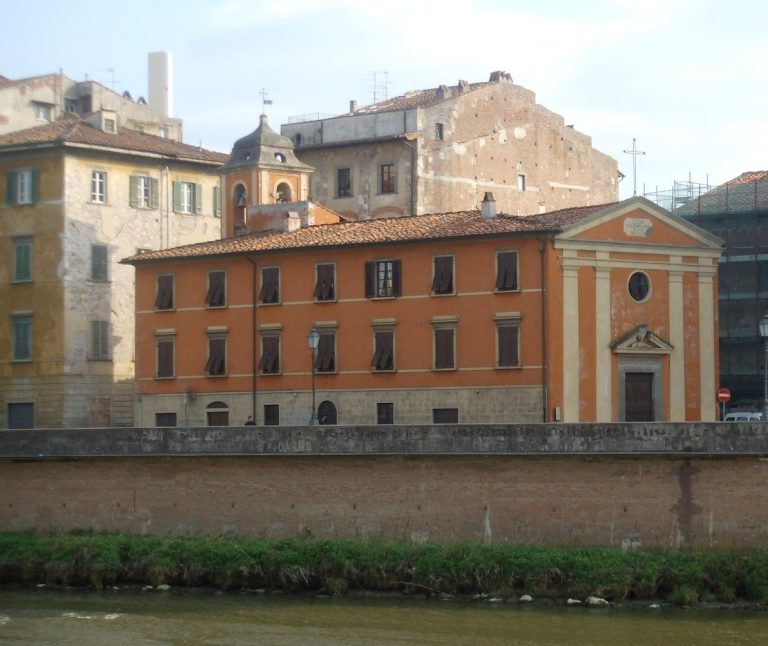
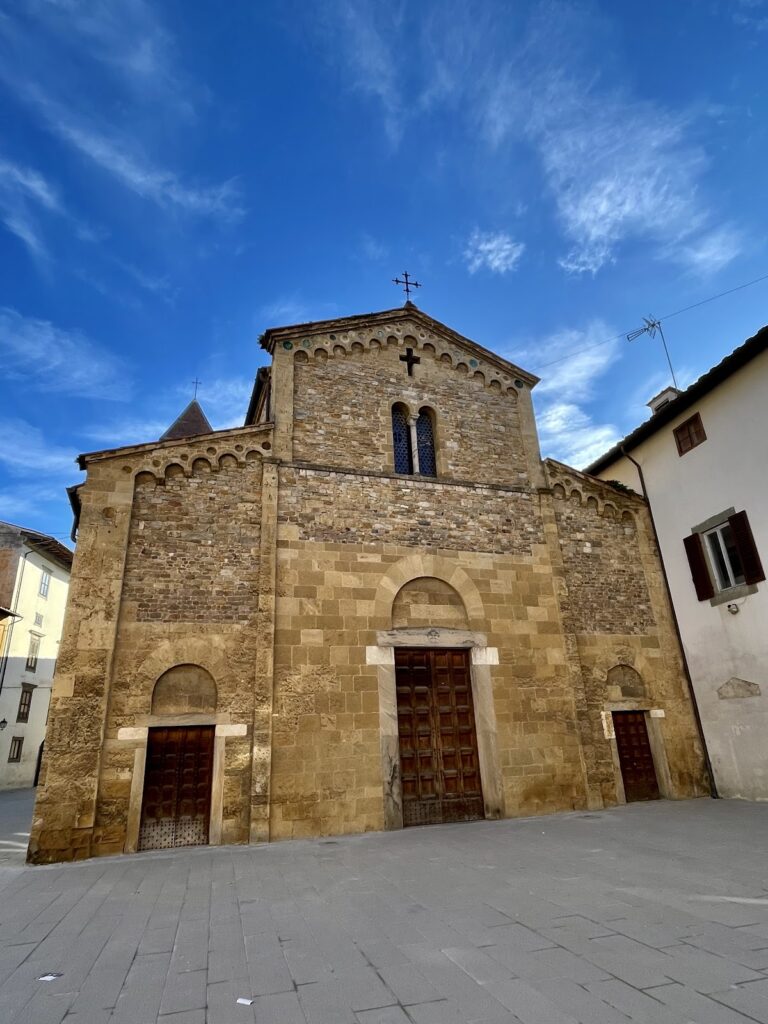
Behind the palace stood the Church of San Biagio delle Catene, which belonged to the Lanfreducci family. In the 19th century, the palace was known as Palazzo Upezzinghi, after its owners at the time. It now houses the Rectorate of the University of Pisa. The poet and writer Gabriele D’Annunzio referred to the palace and its inscription in his poem I camelli.
Remains
The Palace and Courtyard
The three-storey palace stands on Lungarno Pacinotti, along the Arno’s north bank. Its inner courtyard contains the Lanfreducci Tower, a substantially older structure within the palace grounds.
Entrance
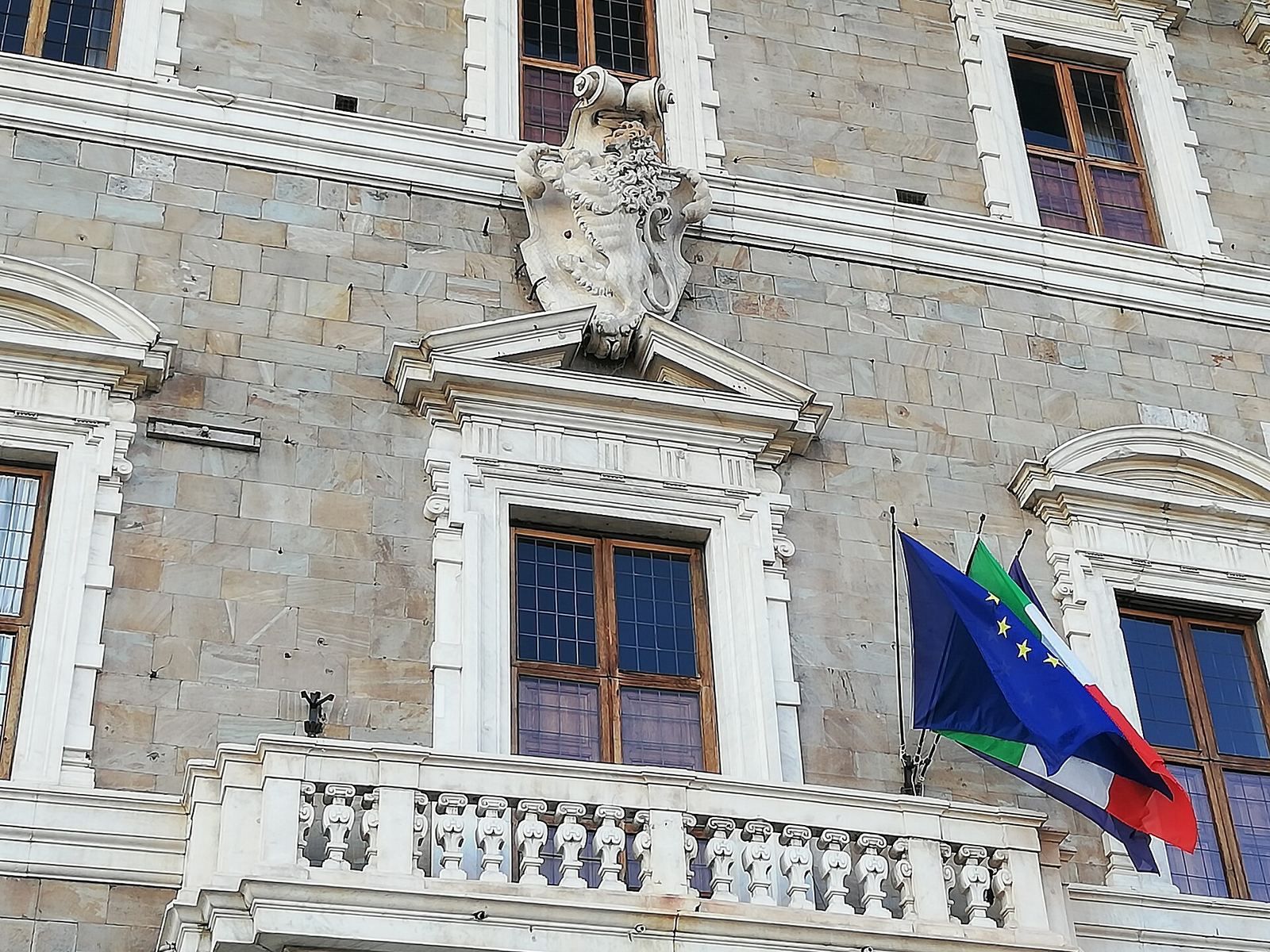
The entrance portal carries a coat of arms featuring lions and the inscription “Alla Giornata.” Three chain links are displayed above it.
Interior Frescoes
The Italian painter Giovanni Battista Tempesti painted frescoes inside the palace during the 18th century.
Lanfreducci Tower
The tower has a rectangular plan and rises through seven principal floors of varying heights. Its oldest section dates to the second half of the 12th century and is built of light-gray Verrucana, a building stone associated with the Pisa area, up to the fifth floor. The upper floors, made of red brick, date to the 14th century, and varied brick arrangements form decorative bands at the top. On the west side, a long, low pointed arch near mid-height redirects weight around an opening. The smaller, older windows are rectangular; other windows have a single opening beneath a small arch. On the floor just below the top, a two-opening window is divided by a masonry column with a capital, the upper block of the column.