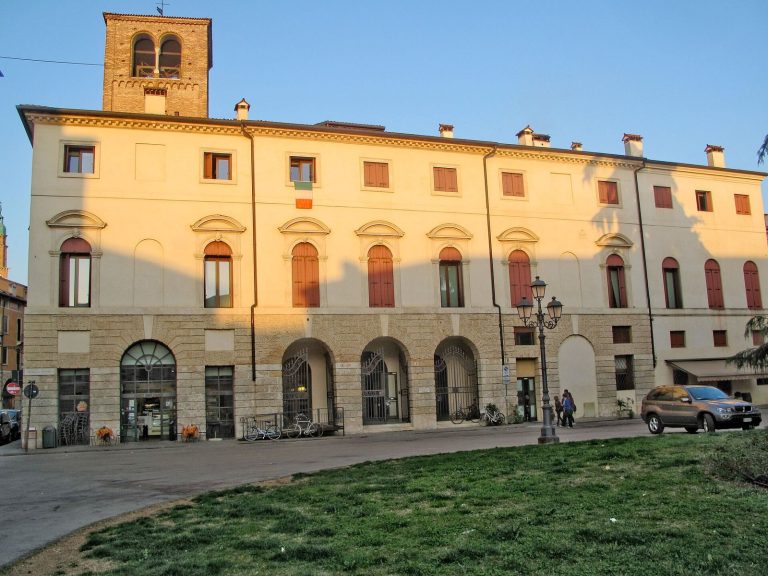
Oratory of San Nicola da Tolentino: A Catholic Place of Worship in Vicenza
Site at a Glance
- Popularity
- Low
- Country
- Italy
- Primary era
- Early Modern
- Eras represented
- Early Modern
- Civilizations
- Venetian
- Site type
- Religious
- Remains
- Chapel
On this page13 sections
History
Foundation and development
The Oratory of San Nicola da Tolentino is a Catholic oratory in Vicenza, Italy, begun in 1505 under the direction of a religious confraternity, or association. Its members had maintained an altar in the nearby Augustinian church of San Michele from the mid-fifteenth century. That church was destroyed in 1812. The oratory is dedicated to Saint Nicholas of Tolentino, a medieval Italian Augustinian friar and saint, and is affiliated with the Diocese of Vicenza.
The building was lengthened between 1634 and 1654 and later raised. Its facade was completed in 1678 and attributed to the Vicentine Carlo Bottiron. In the late eighteenth century, the priest Giuseppe Medici redesigned the facade. From 1810, the oratory depended on Santa Maria in Foro, also known as the church of the Servites, in the parish of San Michele.
Restoration and painted program
The oratory was restored in 1946 following wartime events, then underwent more extensive restoration during the first decade of the 2000s. The confraternity commissioned its paintings over time as funds allowed. Their central theme is Saint Nicholas’s intercession for souls in Purgatory, which Catholic teaching describes as a state of purification after death, and the saving power attributed to that intercession.
Remains
Exterior and interior architecture
Facade
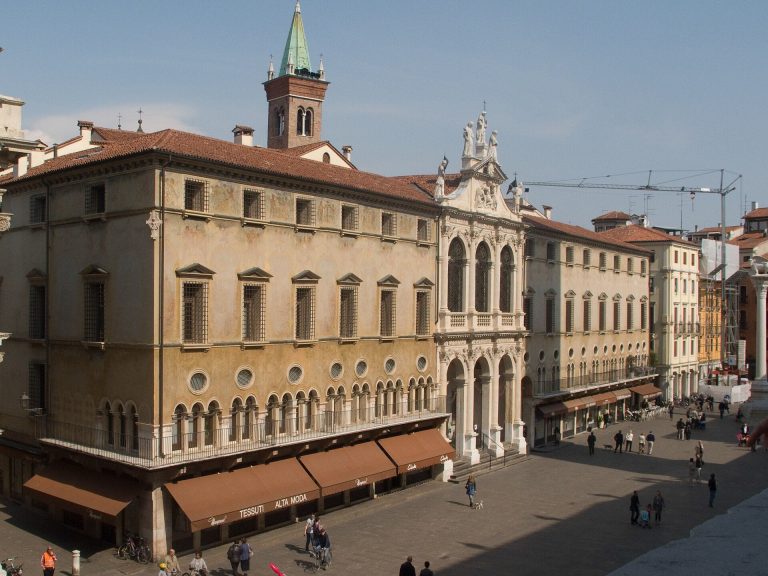
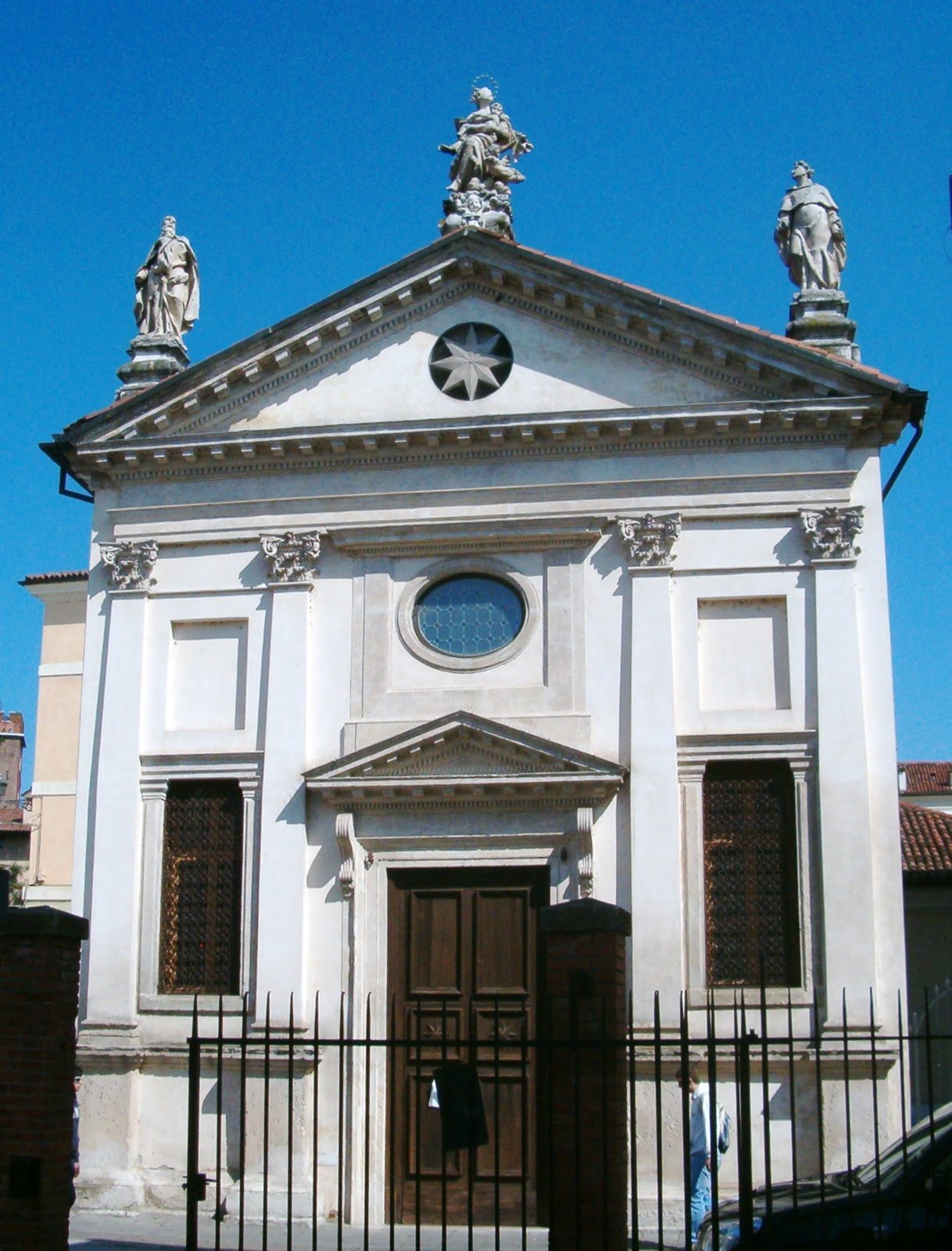
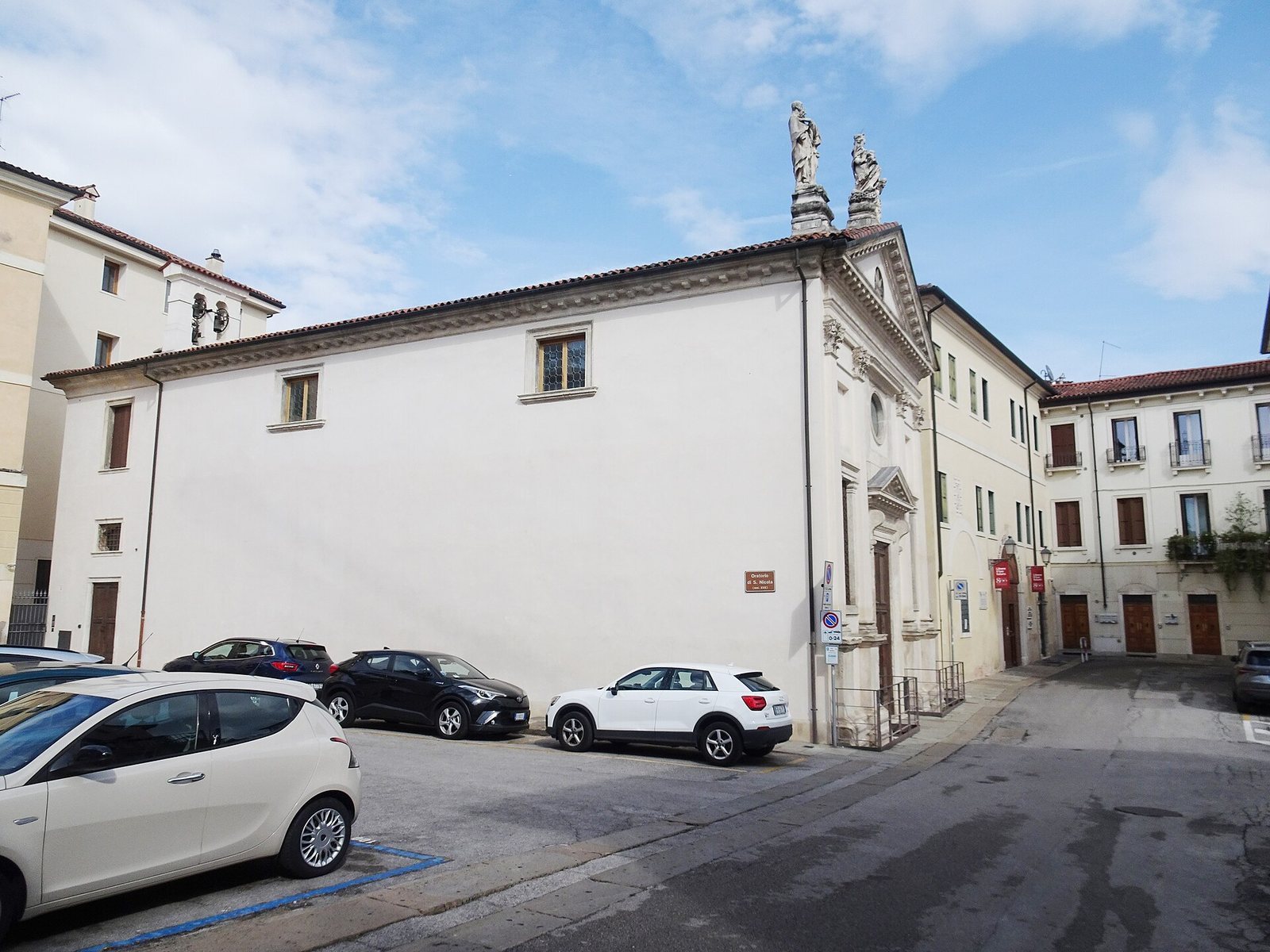
The exterior has a classical, chapel-like appearance. Four flat columns with Corinthian capitals, decorated with stylized foliage, rise from tall bases. Above them, a triangular gable bears an eight-pointed star associated with Saint Nicholas. Three statues stand above the gable: Saint Augustine, the Virgin and Child, and Saint Nicholas of Tolentino. Attributed to the sculptor Francesco Pozzo, they are dated to 1679.
Interior sculpture and altar
The rectangular interior is decorated in Baroque style. Four wall niches hold statues carved from soft stone: Saint John the Evangelist, traditionally identified as one of Jesus’s apostles; the Assumption, depicting the Virgin Mary’s bodily taking into heaven; Christ; and Saint John the Baptist, the preacher who baptized Jesus.
The main altarpiece, a mature work by Francesco Maffei, depicts the Trinity and was brought from the church of San Lorenzo. Beside it is Giuseppe Alabardi’s Saint Nicholas on the Seashore; on the other side is Maffei’s Saint Nicholas Visited by an Angel, painted in 1626 when he was 21. An Annunciation hangs above the Trinity. Part of it is cut off following the raising of the ceiling.
Painted decoration
Canvases showing episodes from the saint’s life and miracles line the walls and ceiling in two horizontal rows, each set within a molded plaster frame. The collection includes works by artists of the Venetian school, the artistic traditions associated with Venice and the surrounding region.
Ceiling
Giulio Carpioni’s ceiling cycle comprises eleven canvases dated to 1677–1678 and is surrounded by Baroque plasterwork by Rinaldo Viseto. In the central oval, the dead Saint Nicholas rises toward heaven. Above the entrance, angels carry his garment, belt, and instruments of penance upward; other scenes show angels celebrating the saint’s glory and include allegorical figures.
The central row features Meditation, represented by a man looking upward while two women gaze down at a skull, and Charity, shown holding a cross and chalice. On the right, Chastity crushes a small Cupid-like figure, Sobriety wears a bandaged mouth and holds a scroll reading Pauca vescor, or “A little is enough for me,” and Obedience carries a crucifix while bending beneath a yoke. On the left, Patience holds a cross, Gospel, and flame; Penance, wearing a hair shirt and carrying a scourge, confronts two wrongdoers beneath a flying devil; and Gentleness carries a lamb.
Inner facade wall
The upper row on the inner facade wall centers on Saint Nicholas and an angel rescuing a child from the devil. To the right, Nicholas causes water to spring from a cane planted in the ground; to the left, he heals an Augustinian friar’s amputated arm. The lower row contains Giuseppe Tomasini’s Saint Nicholas and the Angelic Melodies.
Right wall
From the entrance toward the altar, the right wall displays Antonio Zanchi’s The Miraculous Healing of Saint Nicholas, followed by Maffei’s Miracles of Perugia and Foligno (1656), in which the saint rescues a condemned man in the foreground. Giulio Carpioni’s Saint Nicholas Frees a Possessed Man, also dated 1656, completes the sequence.
Left wall
Giovanni Cozza’s Saint Nicholas Frees the Soul of the Confraternity Member Pellegrino da Osimo from Purgatory, dated 1662, begins the left-wall sequence. Maffei’s Saint Nicholas Prays for the Souls in Purgatory shows the saint observing the souls after celebrating masses for them. His Miracle of Cordoba depicts two processions, one carrying a crucifix and the other a statue of Saint Nicholas, seeking an end to a plague. When the processions meet, their figures come to life and embrace.
Upper wall rows
On the right, the upper row runs from the entrance toward the altar with scenes of Saint Nicholas healing a wound on Filippo dell’Amandola’s leg, the saint’s birth, and the young Nicholas receiving the habit and belt of the Augustinian Hermits, a religious order following the Rule of Saint Augustine. On the left are Saint Nicholas Disputing with Unbelievers, the Resurrection of Francesco of Treia, and the miraculous announcement of Nicholas’s birth. In that final scene, Saint Nicholas of Bari, a distinct saint also known as Nicholas of Myra, appears to the future parents of Nicholas of Tolentino.