San Domenico al Corso: A Former Monastery Church in Verona
Site at a Glance
- Popularity
- Medium
- Country
- Italy
- Primary era
- Early Modern
- Eras represented
- Early Modern
- Civilizations
- Venetian
- Site type
- Religious
- Remains
- Church
On this page8 sections
History
San Domenico al Corso is a church in Verona, Italy, built between 1537 and 1543 for a community of nuns. Their earlier monastery stood outside the city walls until the Venetian Republic ordered the demolition of buildings within a mile of the walls in 1517. The nuns acquired land in the Cittadella district for a new monastery and moved into it in 1543. Luigi Lippomano, bishop of Verona, consecrated the church on 11 November 1554.
Baroque transformation
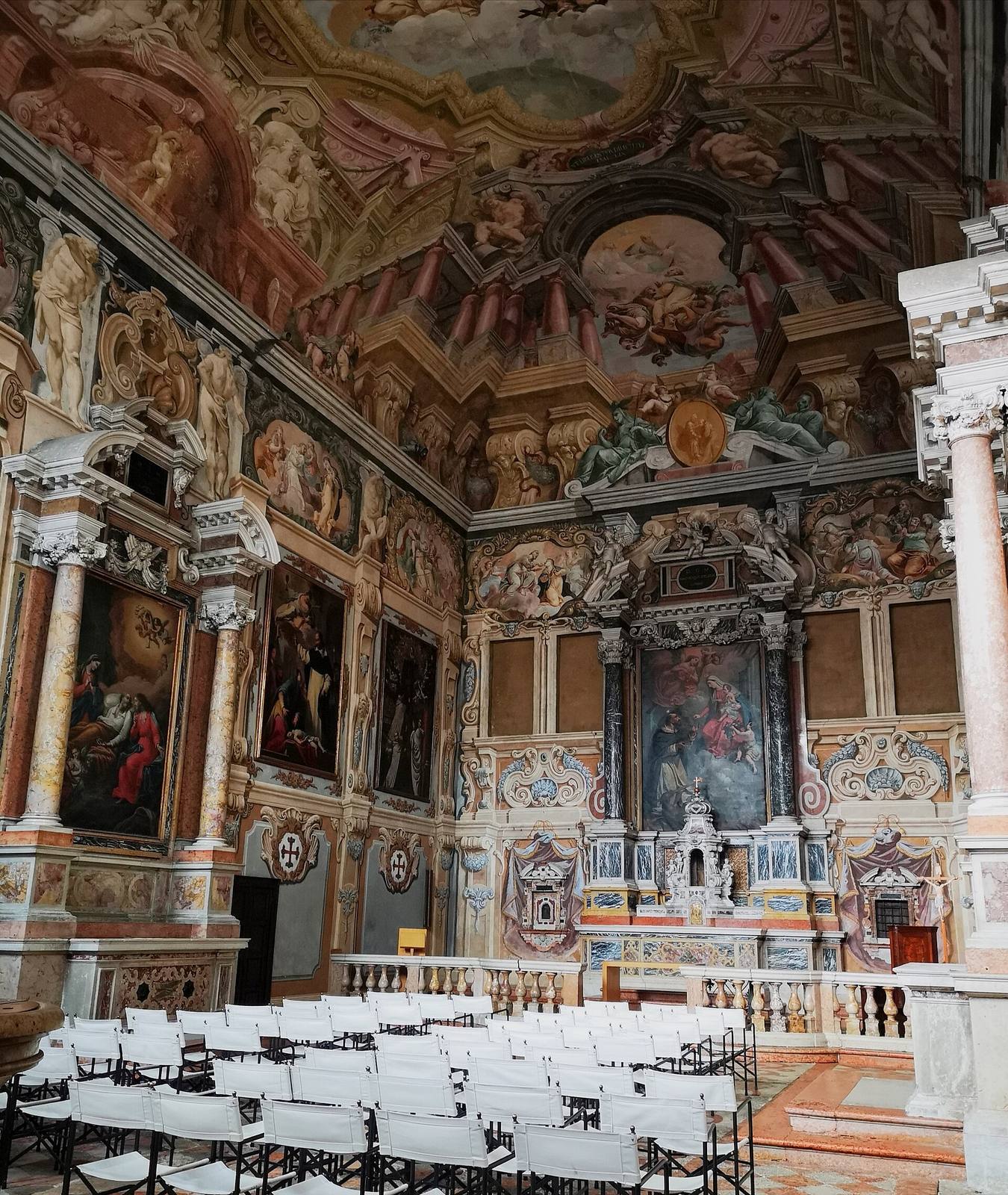
Around the turn of the seventeenth and eighteenth centuries, the church underwent extensive renovation in the Baroque style, an ornate European style of that period. The work raised the building, added paintings and painted its walls. It also replaced the sixteenth-century altars and furnishings, which were lost.
Suppression and changing uses
A decree under Napoleon suppressed the monastery in 1811 and transferred it to state ownership. Domenico Maboni later bought the complex. Between 1827 and 1831, Leopoldina Naudet, founder of the Sisters of the Holy Family, acquired it from him. The property subsequently passed to the Municipality of Verona, which divided it into lots for different purposes. These included a technical institute and, in turn, the fire brigade and municipal police headquarters.
War and religious use
The complex suffered considerable damage during the Second World War, and many spaces were later altered and restored. Since 2010, the church has served the Evangelical Lutheran community of Verona and Gardone. Lutheranism is a Protestant Christian tradition that emerged from the sixteenth-century Reformation; the church belongs to the Evangelical Lutheran Church in Italy. It was previously a Catholic place of worship.
Remains
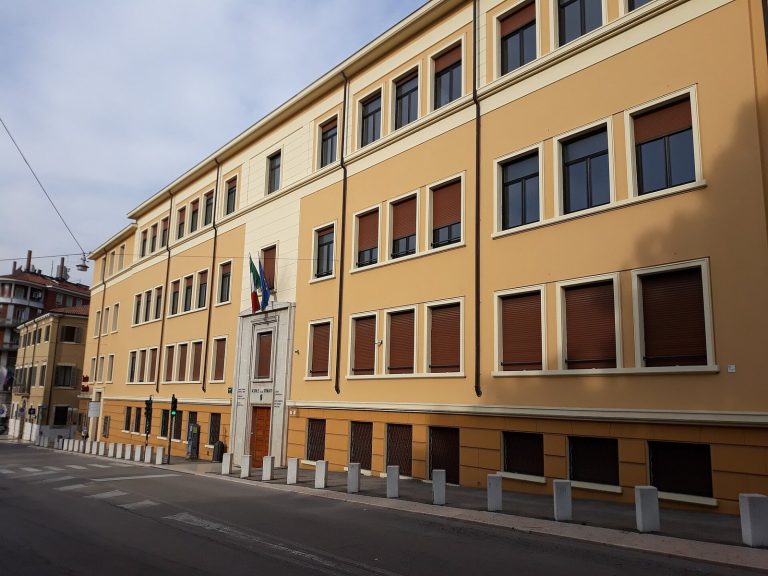
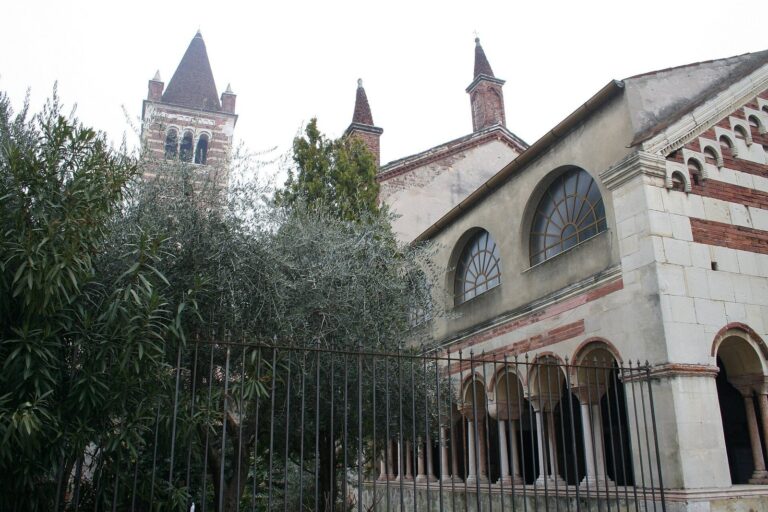
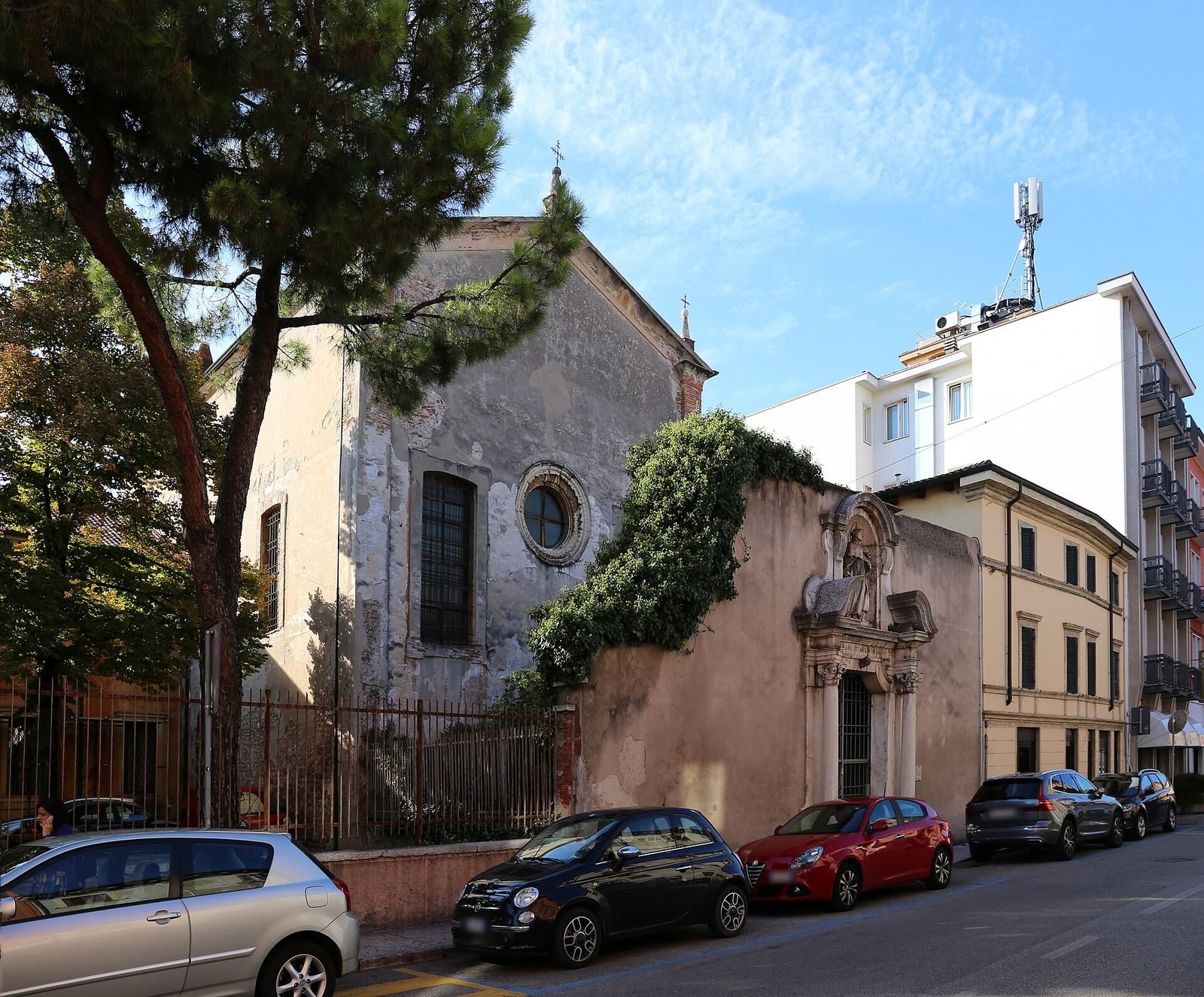
The former monastery occupied a full block along the road between Porta Rofiolo and the San Francesco bastion, a projecting part of a defensive wall. It stood on Via del Pontiere in the Cittadella district, near the former point where the Adigetto joined the Adige. The complex comprised the church, a cloister, a covered walkway around a monastery courtyard, gardens and seventeen residential buildings. The church is a small Baroque building with a plain, gabled front.
The church
Facade and entrance
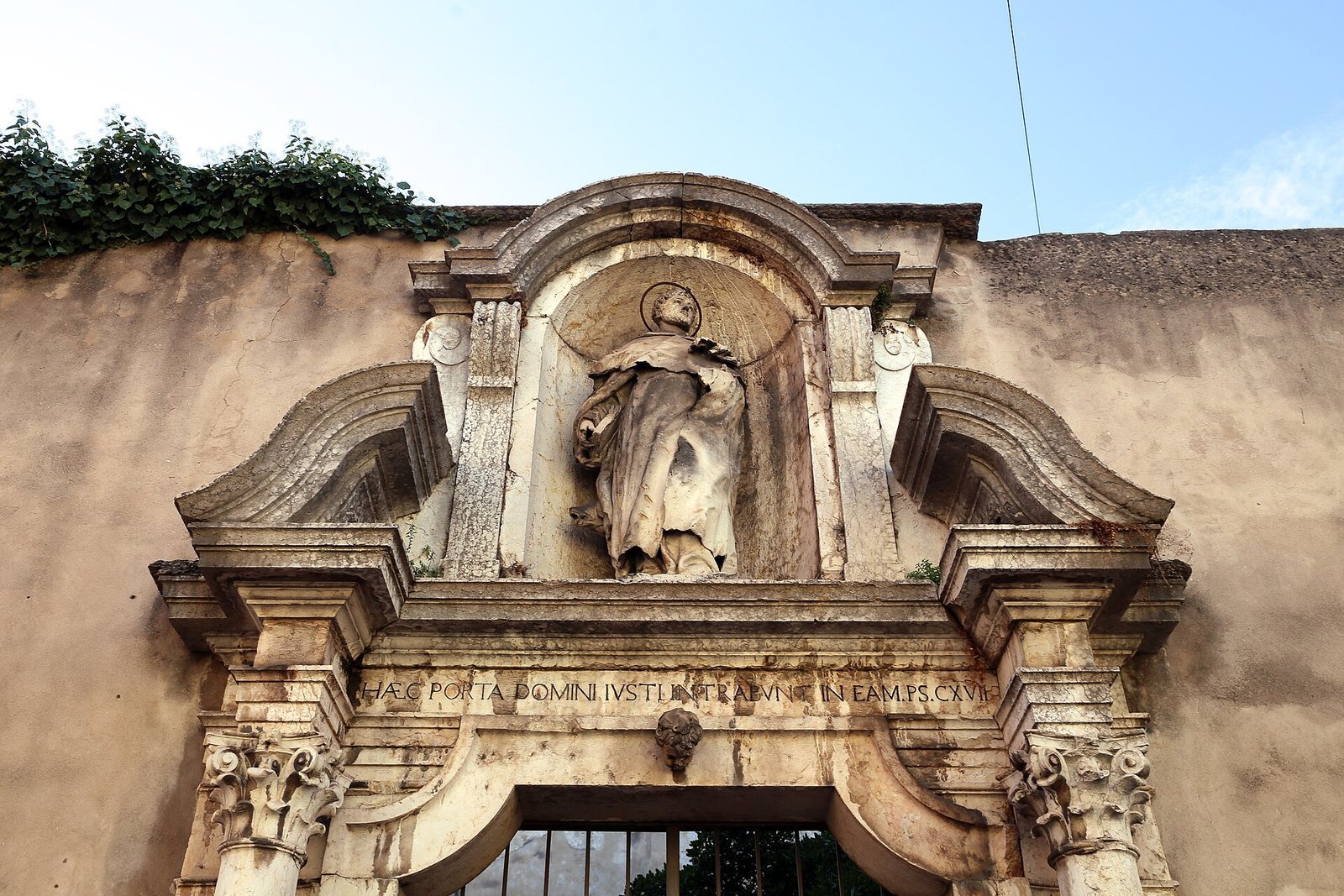
A small stone portal, made during the seventeenth- and eighteenth-century renovation, gives access to the church forecourt. A niche in the portal holds a statue of Saint Dominic by the Italian sculptor Orazio Marinali.
Nave and paintings
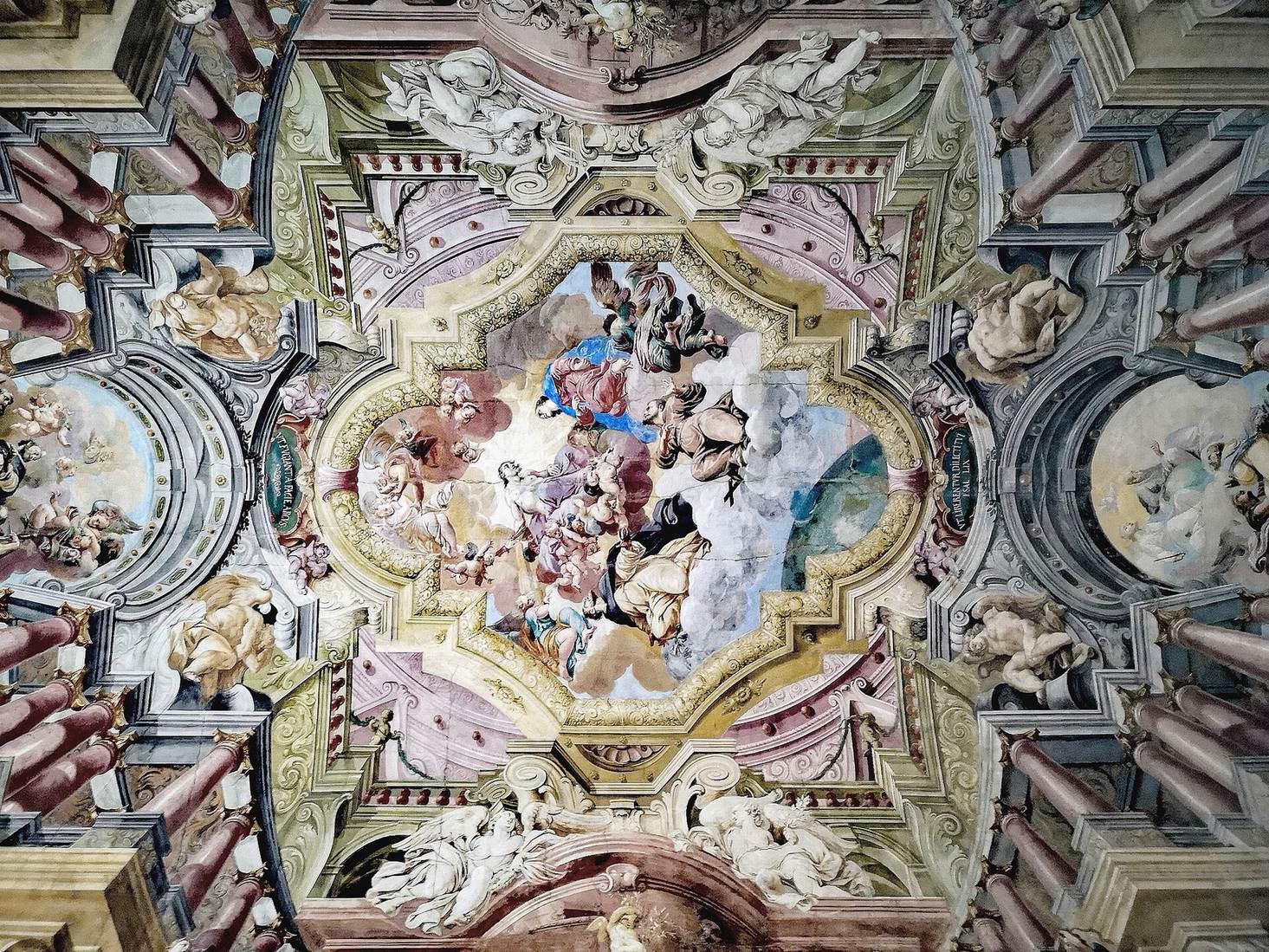
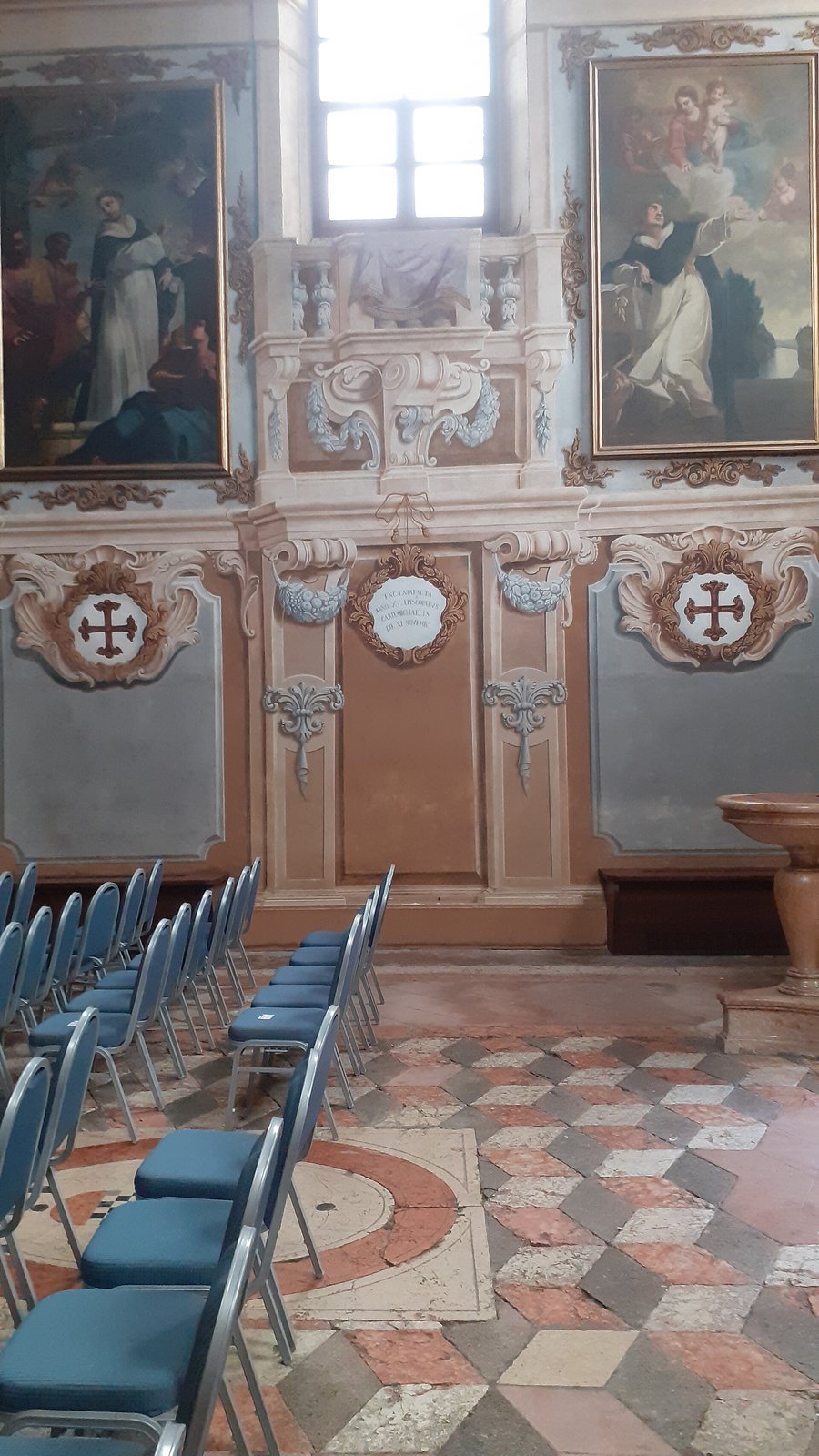
The interior has a single nave. Stonemason and architect Francesco Marchesini made its altars, while his son Alessandro painted the vault fresco, a work made on wet plaster, showing the Glory of Saint Dominic. Antonio Zanoni painted architectural frames on the walls for a cycle of eight pictures devoted to Saint Dominic, the medieval founder of the Dominican order. The cycle included Ludovico Dorigny’s French-style Miracle of the Fish, painted by the oldest artist involved; Sante Prunati’s Saint Dominic Preaching to Heretical Women and Saints Dominic and Ursula; Antonio Balestra’s Healing of Napoleon Orsini after a Fall from Horseback, now in the Castelvecchio Civic Museum; Simone Brentana’s Saint Dominic Resurrecting a Child; Odoardo Perini’s Saint Dominic Saving a Collapsing Building; Paolo Pannelli’s Saint Dominic Driving Out Demons by Scourging Himself; and Michelangelo Prunati’s Saint Dominic Burning Heretical Books. Michelangelo was Sante Prunati’s son. The church and cloister survived the Second World War intact.