Church of Pope Saint Gregory I: A Baroque Catholic Church in Palermo
Site at a Glance
- Popularity
- Low
- Country
- Italy
- Primary era
- Early Modern
- Eras represented
- Medieval, Early Modern
- Civilizations
- Habsburg, Kingdom of Sicily, Spanish
- Site type
- Religious
- Remains
- Church
On this page10 sections
History
Early traditions and medieval rebuilding
The Church of Pope Saint Gregory I stands in Palermo’s Capo district in Italy and belongs to the Catholic Archdiocese of Palermo, a major church district led by an archbishop. It is affiliated with the Discalced Augustinians, a reform branch of the Augustinian tradition based on the monastic rule of Augustine of Hippo, a Christian bishop and theologian. The present Baroque church and adjoining convent were built between 1687 and 1740.
Tradition places an early church and monastery on the site of a house associated with Saint Silvia, the mother of Gregory I, the late sixth- and early seventh-century pope also known as Gregory the Great. According to this account, Gregory’s personal interest prompted the church’s construction, and Silvia conceived him in the Palermo house. After his death, the church and monastery took his name. Arab forces destroyed the complex in 842.
Archbishop of Palermo Giovanni Orsini initiated the rebuilding of a church between 1320 and 1333. A Greek-inscribed stone found in 1615, during the dismantling of the Chapel of Saint Gregory, supplied a date for the original building. A devotional association, the Confraternity of Saint Gregory the Great, was founded in 1424 and dissolved in 1625.
Augustinian convent and Baroque church
In 1609, with the permission of Archbishop Giannettino Doria, the Discalced Augustinians of Saint Nicholas of Tolentino took over the complex. They turned the monastery into a convent and novitiate, a place of formation for people entering a religious order. Before its enlargement, the convent had 28 rooms and was supported by rent, alms, and payments in kind. The present church and adjoining convent were constructed between 1687 and 1740.
Suppression and continued use
After religious orders were suppressed in 1866, the church and convent served as a food depot and public school. The convent library’s holdings were transferred to Palermo’s municipal library at Casa Professa following the suppression laws. Since 1882, the Confraternity of Our Lady of Paradise has held patronage over the church. The Augustinians resumed worship on 15 August 1920.
The complex remains an Augustinian house and student residence. It has also hosted AGESCI Palermo 15, a local unit of Italy’s Catholic Scout and Guide Association, since 1956, and adult Catholic scouting groups MASCI Palermo 3 Aquile Randagie since 2016 and MASCI Palermo 1 Giuseppe Pipitone since 2020. The statue of Our Lady of Sorrows is carried in Palermo’s Good Friday procession, while the statue of Our Lady of Paradise is celebrated annually on the last Sunday of August.
Remains
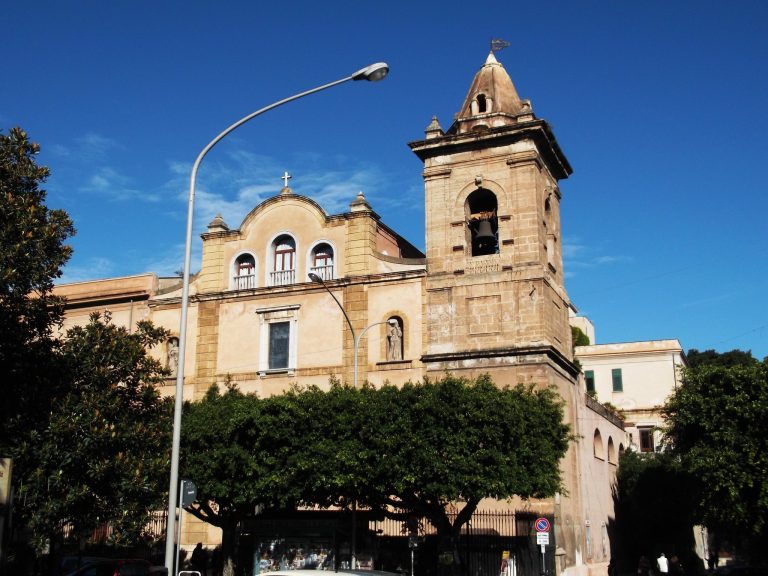
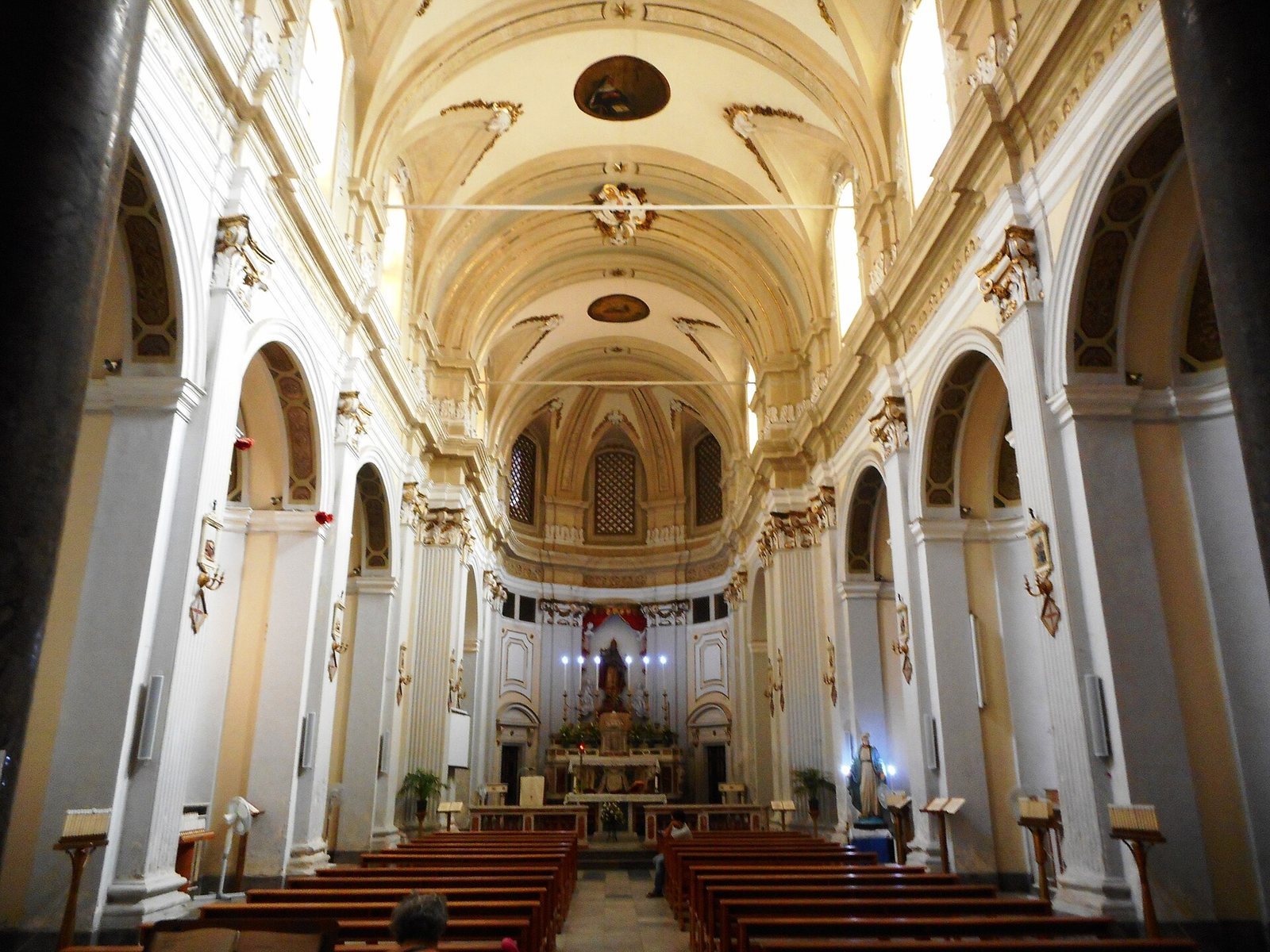
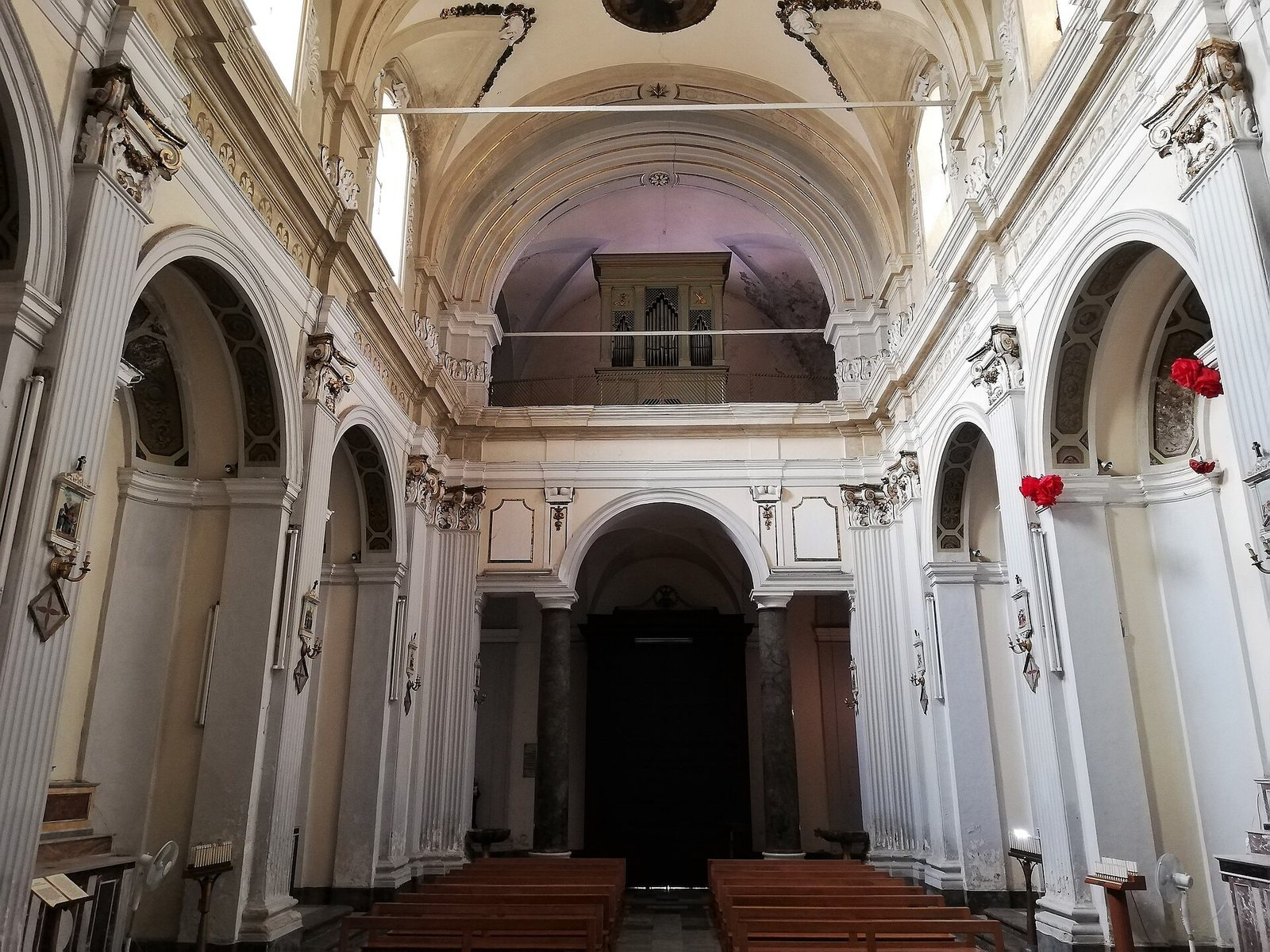
The church combines a carved-stone Baroque exterior with a single nave, six side chapels, and a semicircular apse at the altar end. A rectangular, columned crypt lies behind the apse.
Exterior
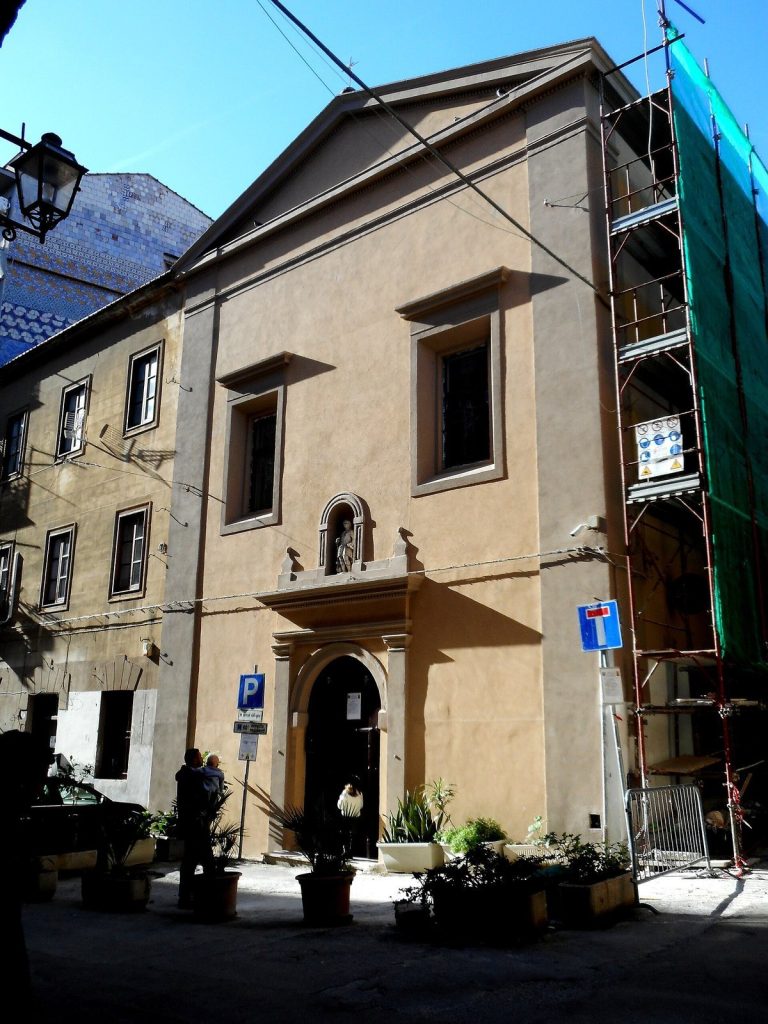
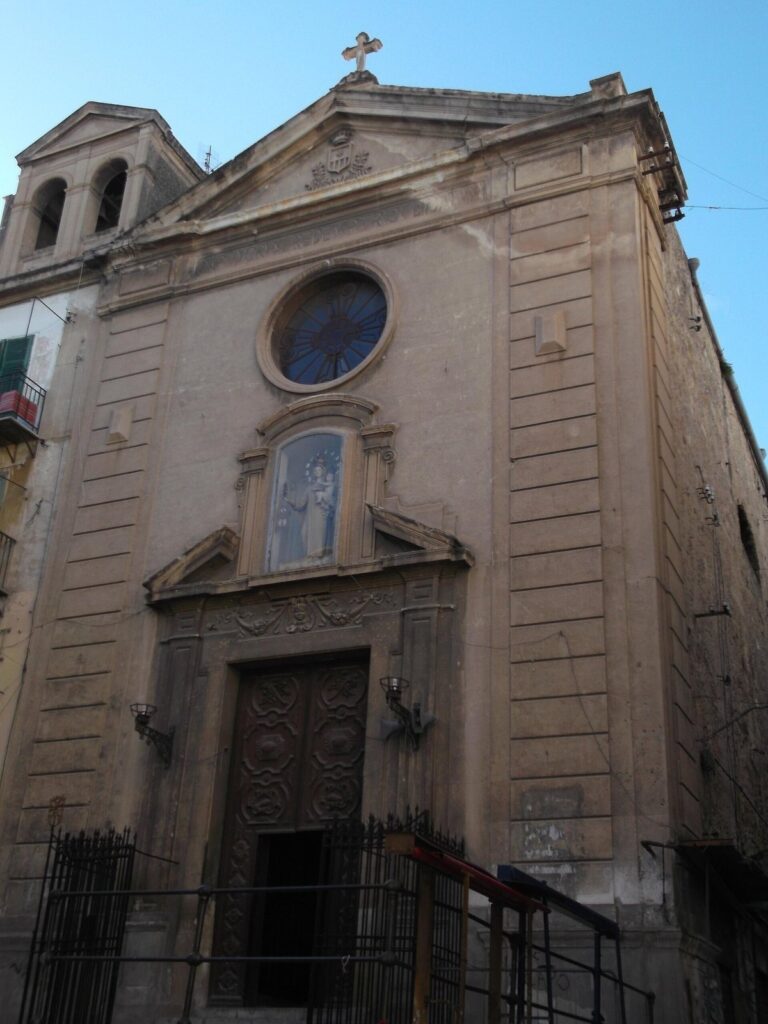
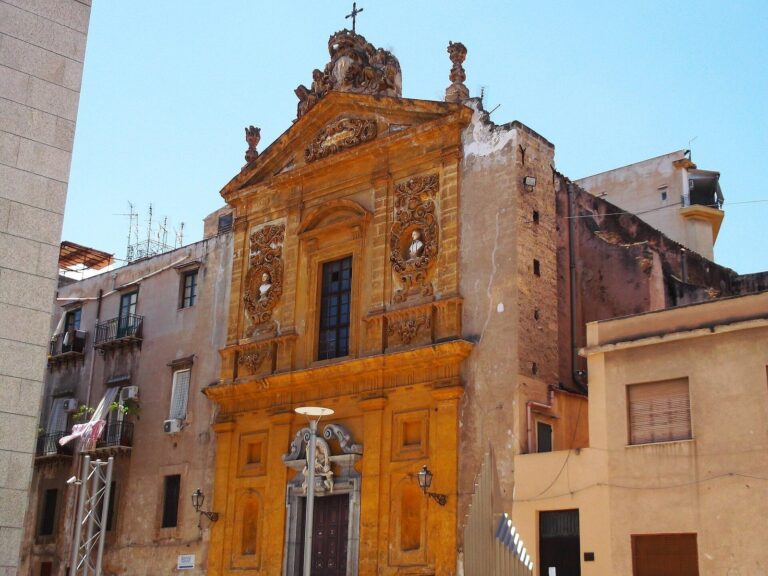
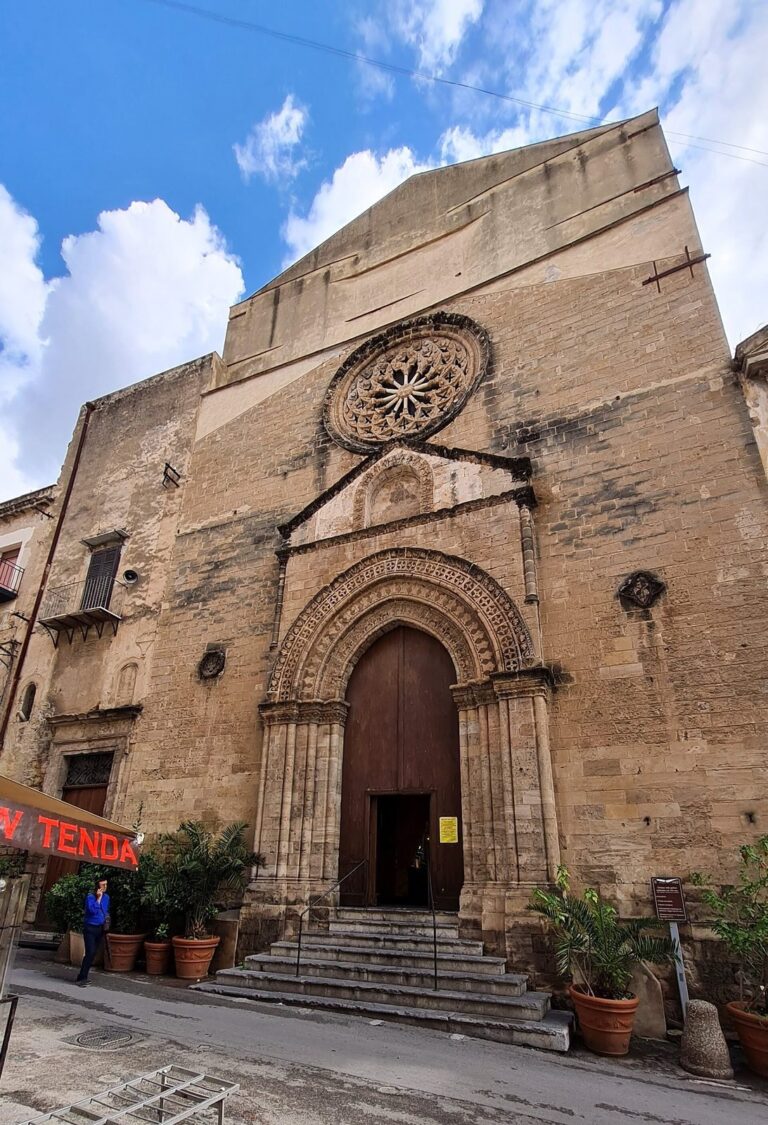
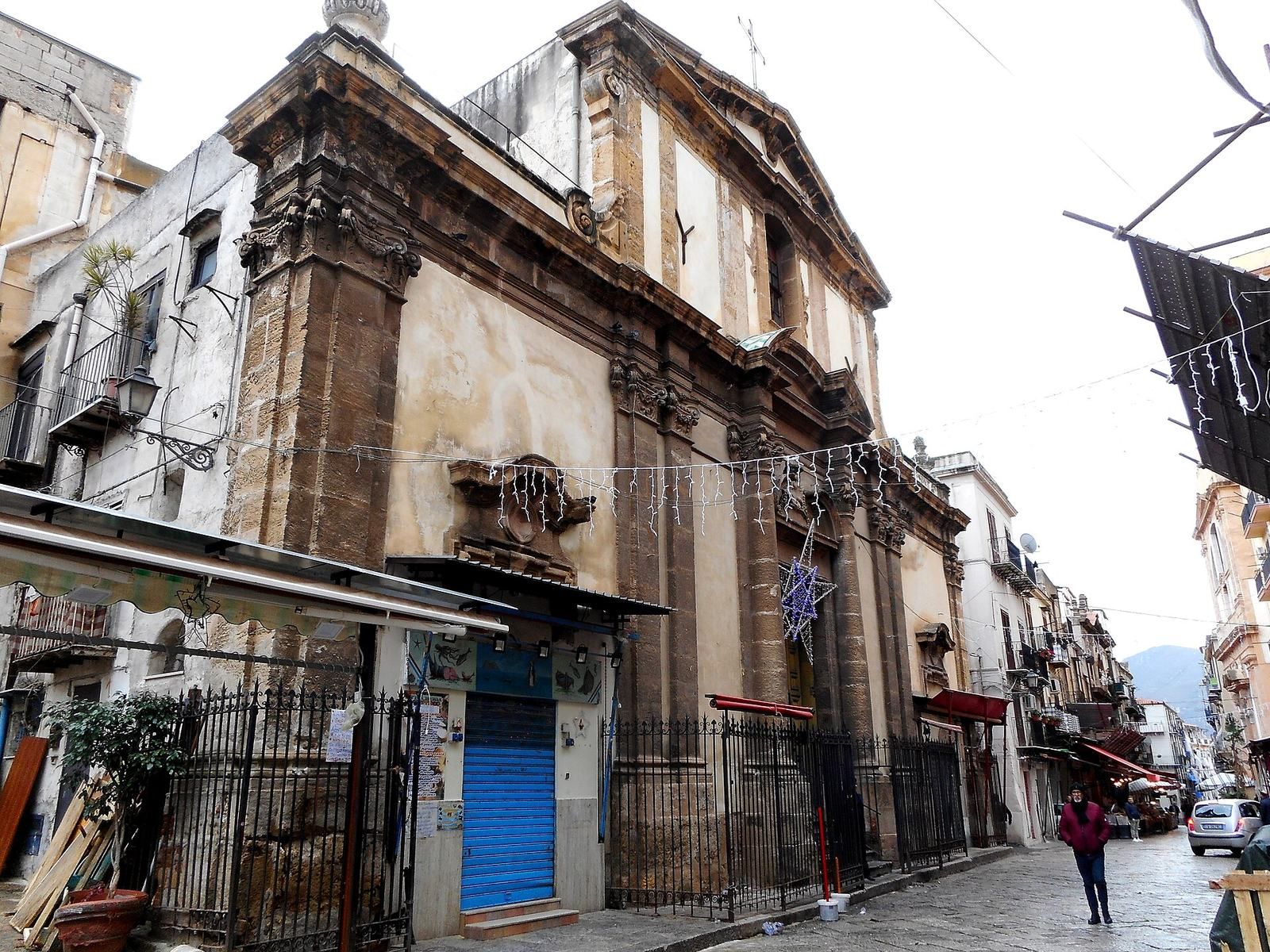
The church stands near Porta Carini. Its two-level façade is linked visually by scroll-shaped ornaments, while pairs of shallow, column-like pilasters divide the front into horizontal sections. At the center, single pilasters frame the main portal, which is topped by a broad horizontal band and a broken, gable-like feature with a window set between its parts. More pilasters articulate the upper level, crowned by a triangular gable. The side portals have curved gables above circular recessed panels. An iron grille protects the central section. The portal columns, with finely decorated tops, were brought from the Church of Saint Teresa at Porta Carini, demolished in 1740 during urban development. A heart pierced by an arrow, the Augustinian emblem, appears on the portal’s broken gable.
Interior
Nave and side chapels
The walls of the nave, the church’s main body, are divided by pilasters whose tops carry palmette and garland decoration. A continuous horizontal band joins them. Three side chapels line each side. On the right, the Chapel of Our Lady of the Girdle contains an eighteenth-century altarpiece showing Mary with Augustine and Monica, Augustine’s mother. The Chapel of Saint Joseph has an eighteenth-century wooden statue of Joseph with the Child, while an altarpiece in the Chapel of the Trinity and Saint Augustine depicts Augustine as Doctor of the Church. A separate niche holds a statue of Our Lady of Sorrows. On the left, the Chapel of the Virgin Mary and Saint Nicholas of Tolentino, an Augustinian friar, has an eighteenth-century painting of Nicholas. The Chapel of Saint Rita of Cascia, an Augustinian nun, contains her statue, and the Chapel of Our Lady of the Cave of Belvedere has a seventeenth-century painting. A separate niche holds a bust of Christ shown before his crucifixion.
Presbytery and altar decoration
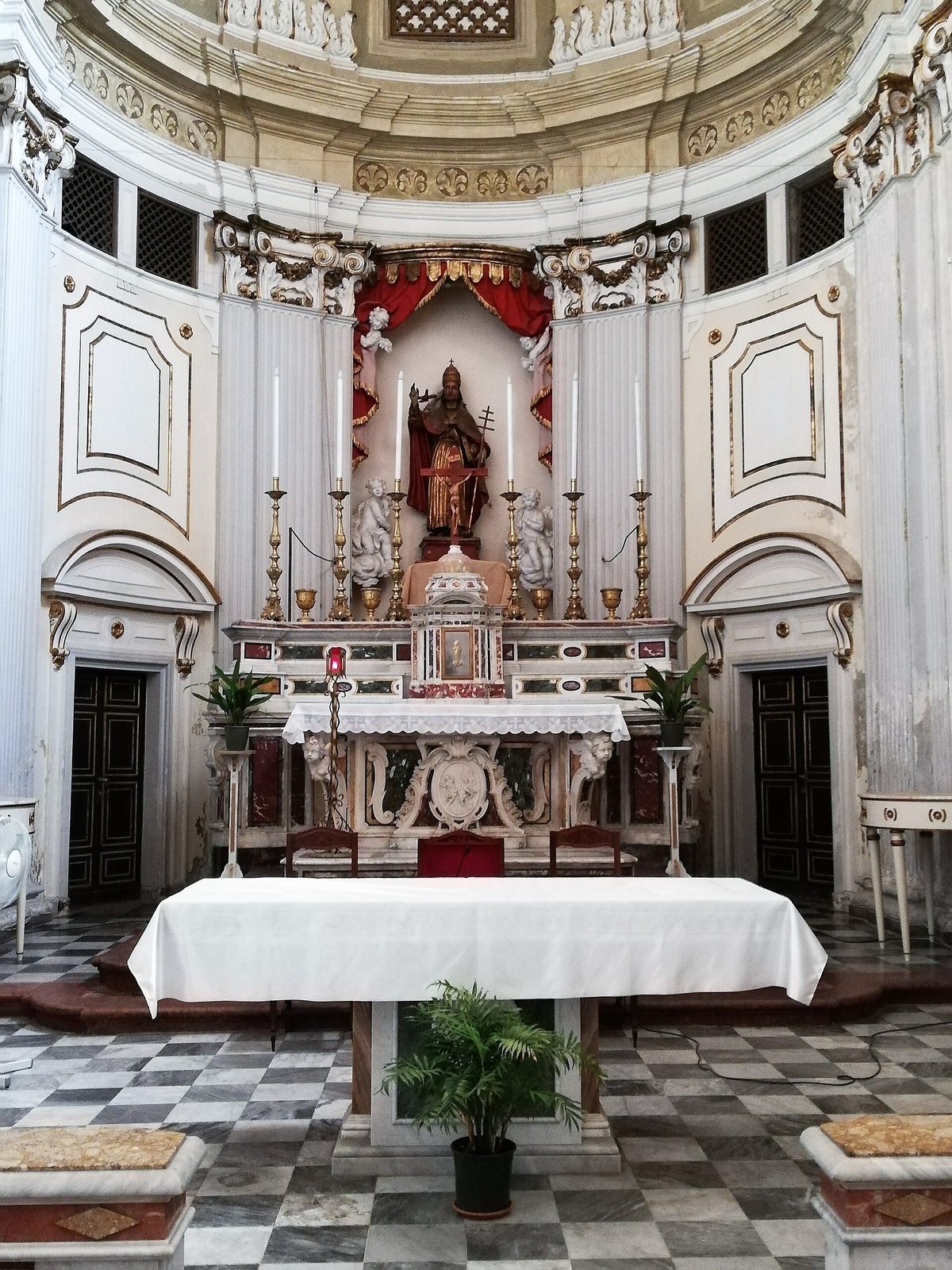
In the presbytery, the area around the altar reserved for clergy, the right-hand chapel is dedicated to the Most Holy Crucifix and has an eighteenth-century wooden crucifix on its altar. The Chapel of Saint Silvia on the left has elaborate eighteenth-century Baroque stucco arranged as a shrine, with canopy-like drapery around a central niche. An old wooden representation of Augustine now occupies the niche; a refined statue of Silvia formerly stood there. Stucco figures of Faith and Charity flank the shrine, and a blessing figure of God the Father appears above it. A painting of the Presentation of Mary in the Temple hangs on the chapel’s left wall, and a painting of Saint Silvia awaits restoration. Round frescoes on the vault depict Saint Nicholas of Tolentino, Augustine of Hippo, Saint Monica, and the Lamb of God. A wooden statue of Saint Gregory stands on the main altar, and the interior also includes an altar dedicated to Saint Augustine and a choir.
Sacristy and crypt
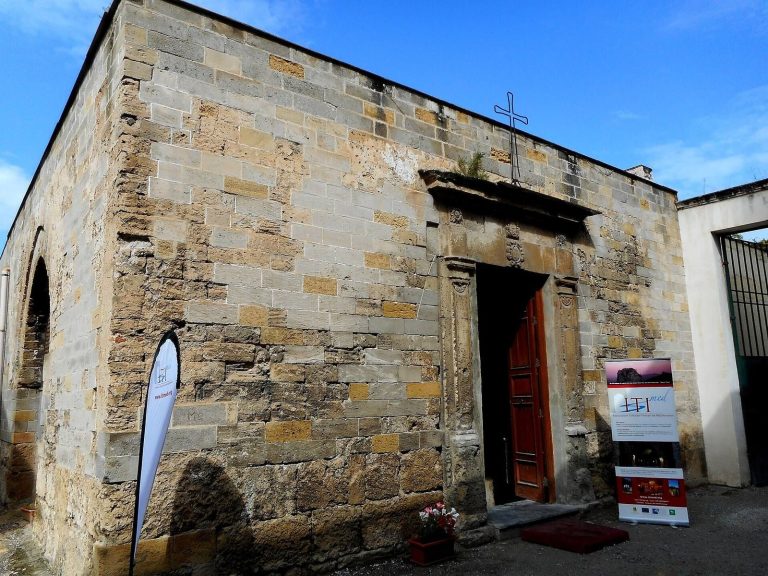
A side chapel beside the entrance contains a wooden statue of Our Lady of Paradise. An opening in the right wall leads to the sacristy, where artistically carved seventeenth-century ebony cabinets stand alongside paintings of Our Lady of the Girdle with Augustinian saints and Our Lady of Belvedere. Behind the apse, the rectangular crypt has columns and is reached from the rear courtyard through a trapdoor in the floor.