Church of Saint Nicholas in Golutvin: An Orthodox Church and Chinese Metochion in Moscow
Site at a Glance
- Popularity
- Medium
- Country
- Russia
- Primary era
- Early Modern
- Eras represented
- Early Modern, Modern
- Civilizations
- Russian
- Site type
- Religious
- Remains
- Church
On this page9 sections
History
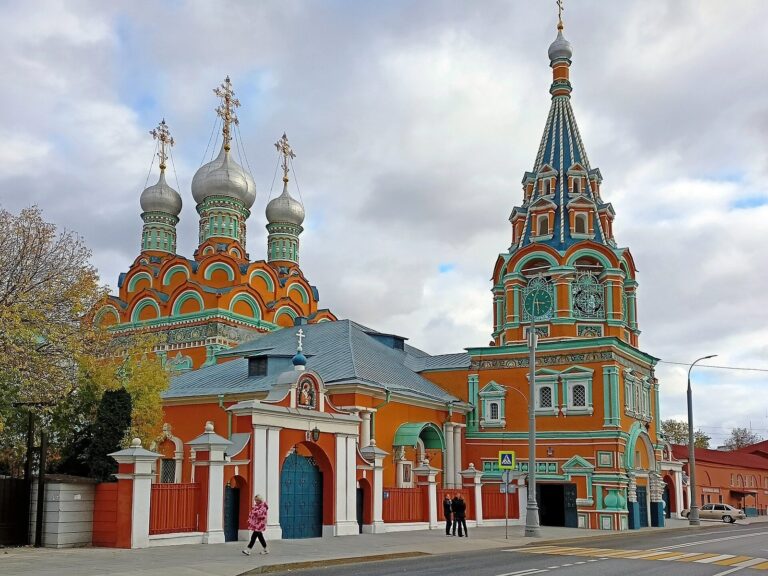
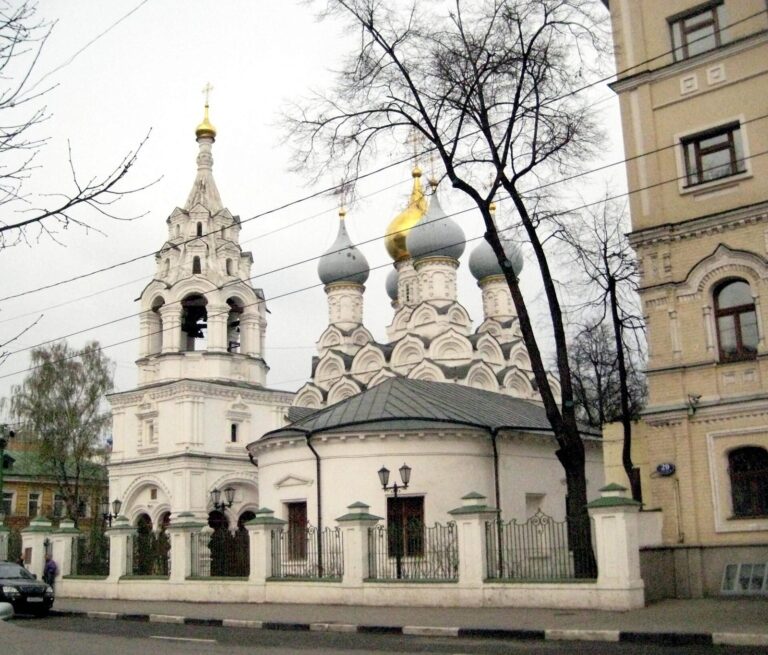
The Church of Saint Nicholas in Golutvin is a Russian Orthodox church in Moscow, Russia, whose stone building dates to 1686–1692 and whose later additions include Baroque and Empire-style work. Dedicated to Saint Nicholas of Myra, a fourth-century Christian bishop revered as a saint, it developed on an earlier monastic site and now serves Orthodox Christians connected with China.
Monastery and parish
A small Monastery of the Nativity of the Theotokos, an Orthodox title for Mary, stood in the Kolychevo settlement where the church now stands. Ivan III, Grand Prince of Moscow from 1462 to 1505, referred to the monastery in his 1504 will. By 1625, its church served as a parish church. Proposed explanations for the name Golutvin link it to a courtyard of Kolomna-Golutvin Monastery that existed there in 1472, to the monastery on the site, or to words for a forest clearing and the people who lived in what is now Moscow Oblast.
Stone church and later phases
A wooden church was replaced by the present stone building in 1686–1692. Additions and alterations in the eighteenth and early nineteenth centuries gave the church further architectural phases, described below.
Closure and restoration
The church closed in 1923. In the 1960s and 1970s, its premises housed the geophysics department of the Moscow Geological Prospecting Institute before later passing to the Tretyakov Gallery. Restoration began in the mid-1980s; services resumed in 1992, and the church was restored in 1993–1995 with city-budget funding. It is a federal cultural heritage site in Russia.
Chinese Orthodox ministry
The Moscow Patriarchate’s Holy Synod considered it useful to establish a metochion in Moscow in 2007. A metochion is an ecclesiastical outpost representing a larger church institution. Patriarch Kirill established this one by decree on 7 February 2011 and appointed Archpriest Igor Zuev, a senior priest, as rector. The church serves as the Patriarchal Metochion of the Chinese Orthodox Church and belongs to the Russian Orthodox Church’s Moscow Diocese, an ecclesiastical district, and the Moskvoretsky deanery, a group of parishes within that district.
The metochion provides Chinese Orthodox Christians with a place in Moscow for worship and sacraments, including baptism and marriage. The community also includes descendants of Russians in China, an estimated 18,000 of whom traditionally identify as Orthodox. Restrictions on foreign clergy conducting religious activity in China add to the importance of this Moscow ministry.
Services are held in Chinese. Their music draws on traditional Chinese melodies, Russian traditional chant, and ancient Bulgarian and Byzantine chant, with some pieces combining these traditions and others composed in a Chinese folk style. Except at Easter and during Bright Week, the week following Easter, the church follows the Orthodox Typikon, or liturgical rulebook, for the canons, structured hymn sequences, at Matins, the morning service. These include the Biblical Odes, scriptural canticles, rather than the supplicatory refrains commonly used in parish churches.
Remains
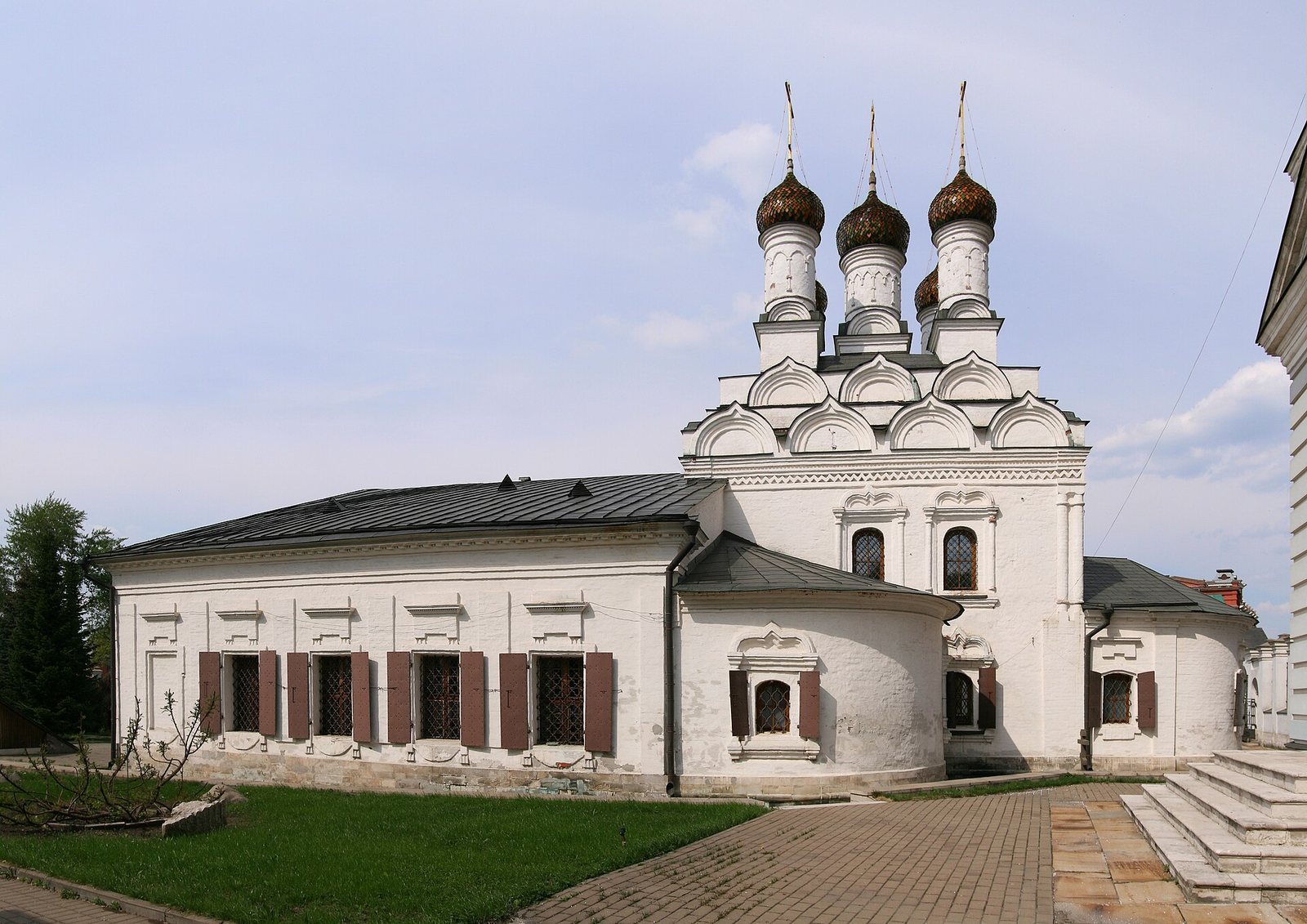
The stone church is arranged with a refectory, a communal dining hall, an apse, the curved sanctuary end, and north and south chapels, smaller places of worship. It stands in Moscow’s Yakimanka district near the 97-metre monument to Peter the Great.
Church and chapels
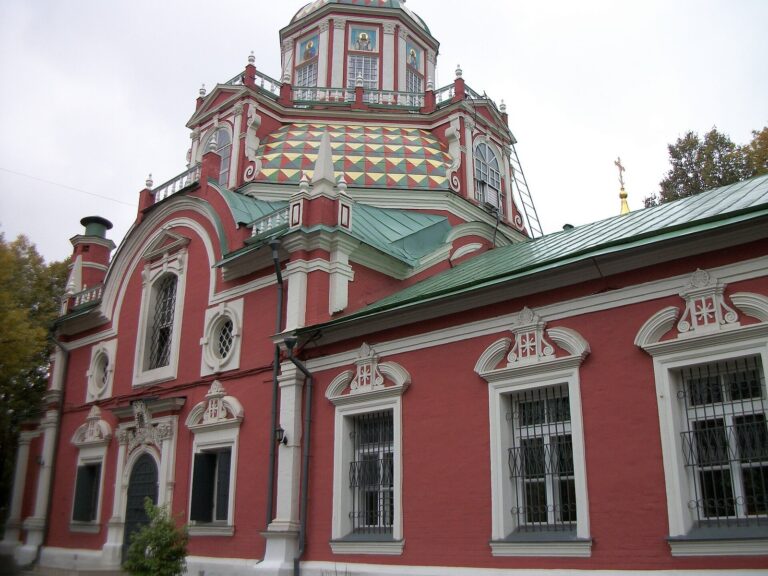
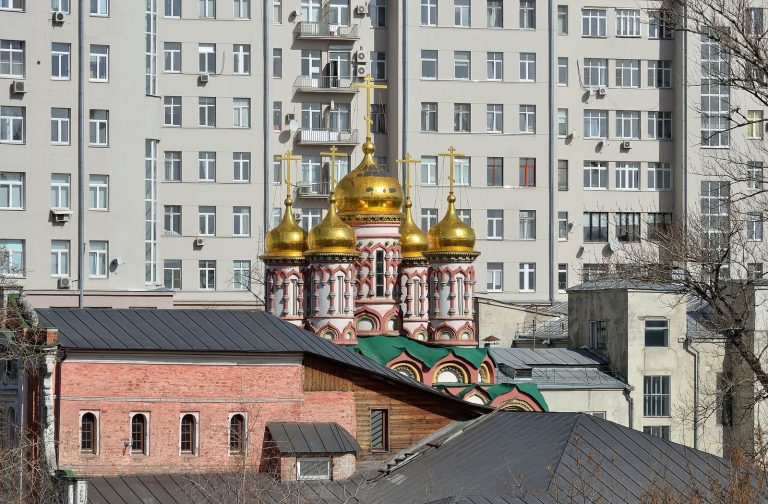
The south chapel and apse were partly remodeled in 1772 in the Baroque style, an ornate architectural style. A north chapel was added in 1823 in the Empire style, a classical style associated with the early nineteenth century. A small vestibule stands before the refectory’s west entrance. Restoration rebuilt the church’s five domes on their pedestals and two rows of arches on the roof, and also restored the Saint Nicholas chapel.
Bell tower and grounds
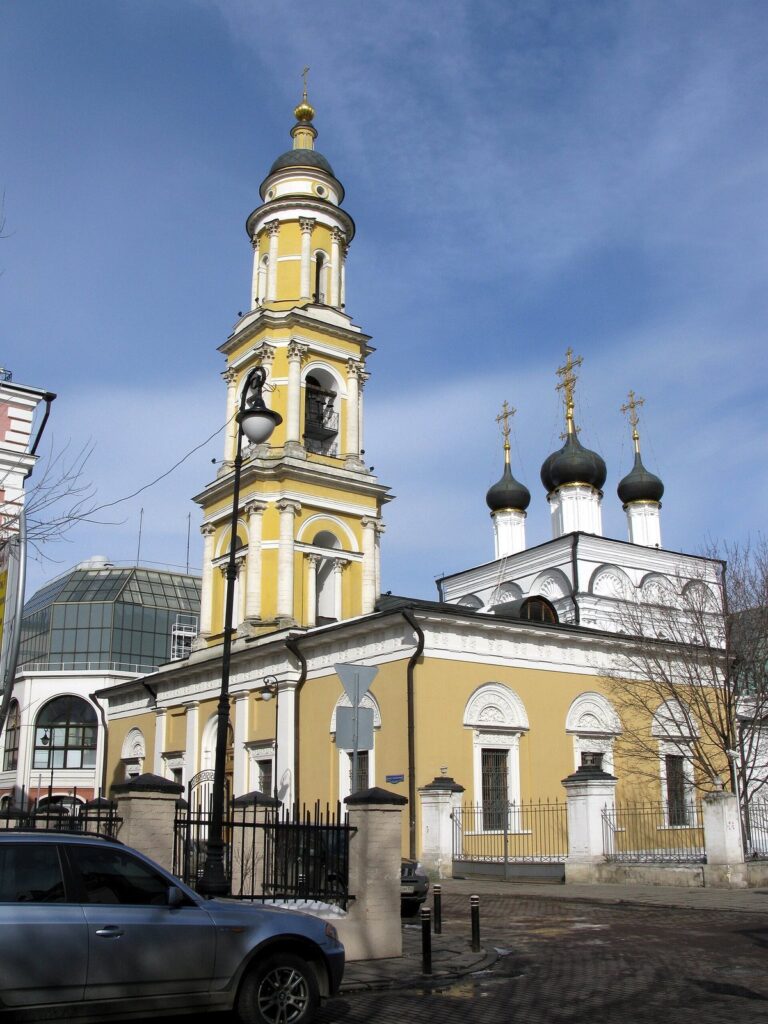
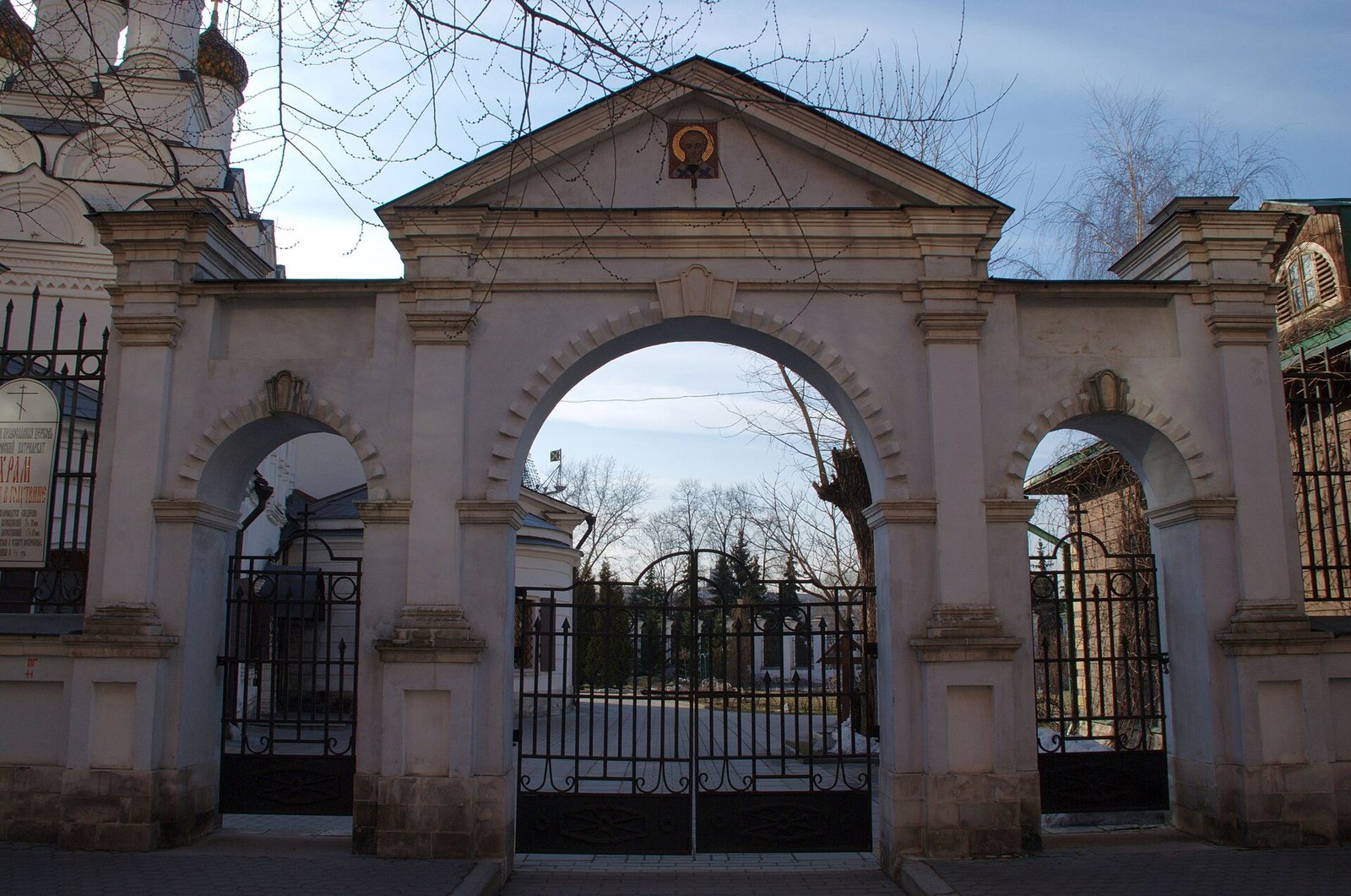
A bell tower built in 1760 was demolished in the 1930s. An over-gate bell tower, built above a gate, was later reconstructed. The site formerly had a fence and gates, as well as a clergy house; these were dismantled during the 1960s and 1970s. A wooden priest’s residence was later built beside the church.
Icons and furnishings
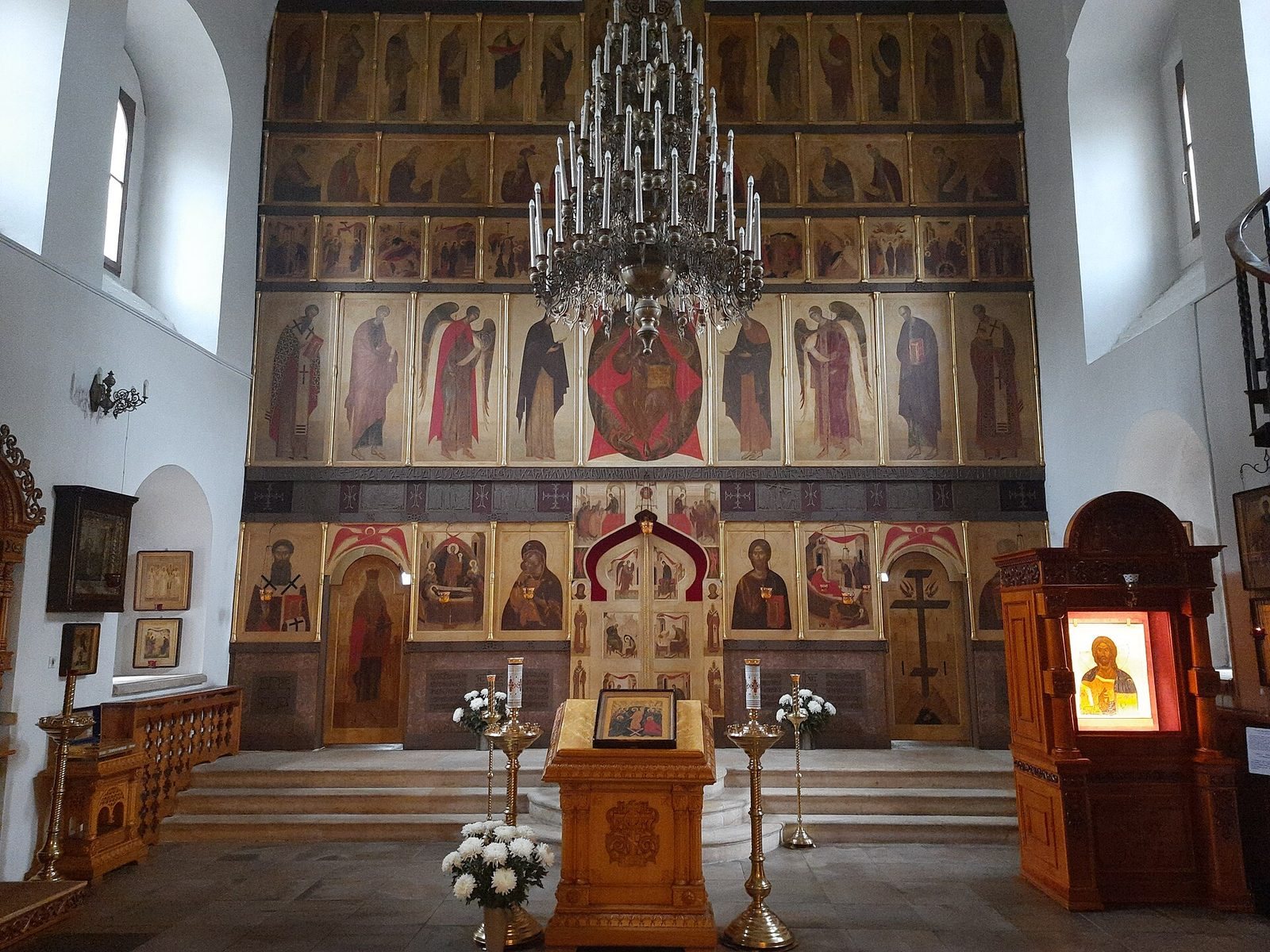
The late-seventeenth-century iconostasis, a screen of icons separating the sanctuary from the main church, was transferred to the Tretyakov Gallery in 1933. The icons of Christ Pantocrator, depicting Christ as ruler of all, and John the Theologian, an apostle traditionally identified with the Gospel of John, went there as well. An Annunciation icon, depicting the angel Gabriel’s announcement to Mary that she would bear Jesus, was sent to the museum at Novodevichy Convent, a historic Orthodox convent in Moscow.